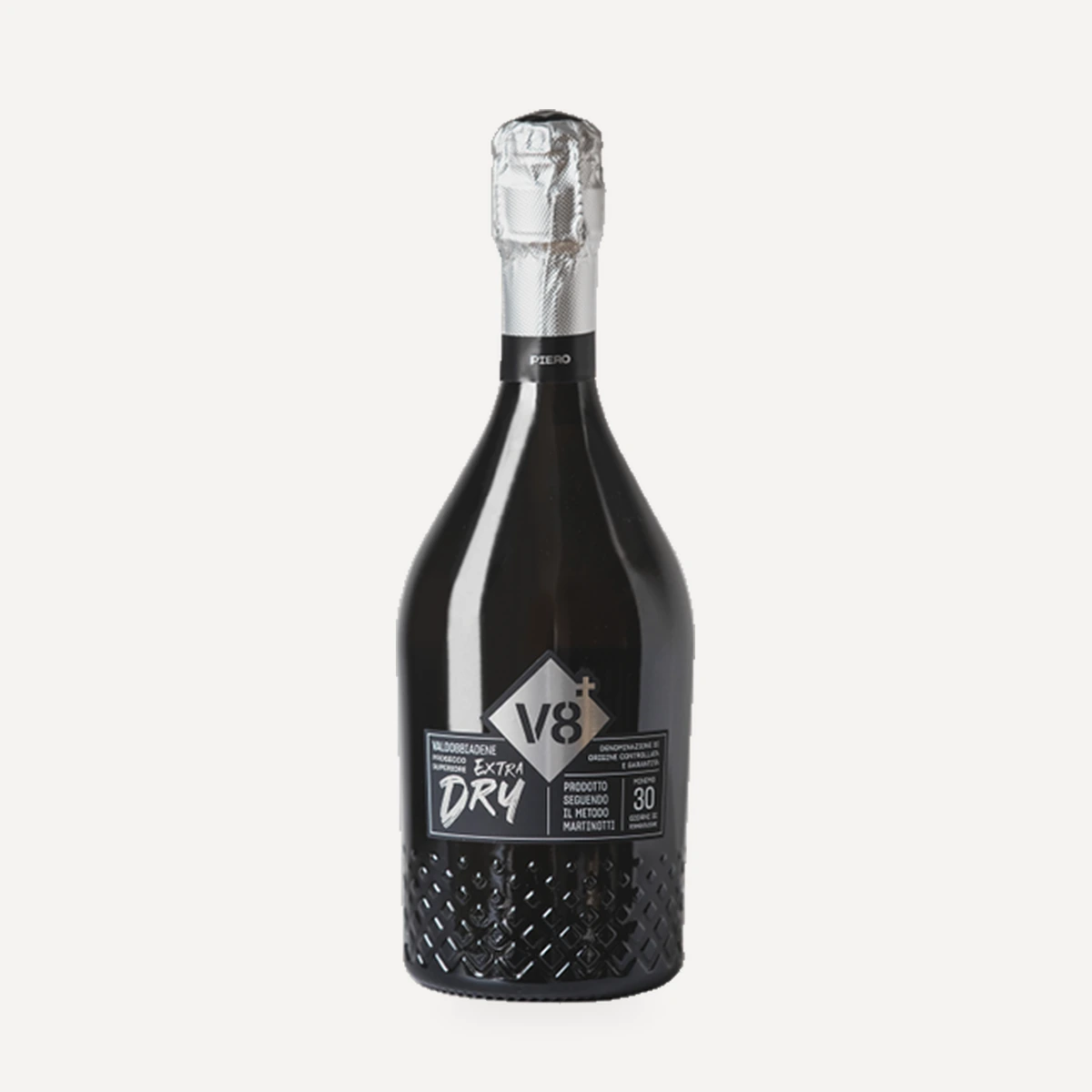
Chi è
V8+ Prosecco is a winery in Veneto, Italy.
History, winemaking, wines and news for this producer are being prepared. Meanwhile, visit the official website.
Terroir
South-eastern Veneto
The Glera source vineyards in south-eastern Veneto stand at approximately 30–40 m above sea level. Their moderately deep, alkaline silt-clay soils rest on an ancient carbonate-rich paleosol known as caranto. The terrain is flat and exposed to winds. Proximity to the sea contributes to a generally temperate, humid climate, while the alternation of the cool Bora and warm, humid Sirocco produces marked temperature shifts.
Friuli Venezia Giulia
The Glera used for Bruno comes from the upper western Friuli plain at 30–40 m above sea level. Its deep, stone-free soil has a silty-clay texture dominated by fine silt and moderate resistance to drought. The vineyard rows face north-east.
Pinot Nero for Lele comes from the upper western Friuli plain around Spilimbergo. Its alluvial soils are principally gravelly or stony and are locally described as claps.
Valdobbiadene and Cartizze
The wider sourcing area reaches the hills of Valdobbiadene, including Conegliano-Valdobbiadene and the Cartizze cru. The Cartizze vineyards occupy a single hill in the municipality of Valdobbiadene at 250–300 m above sea level. Their varied soils combine moraines, sandstone, clay and limestone; they are lean, dry and shallow, especially at the higher elevations.
Vinificazione
V8+ works with source vineyards across the plains of Veneto and Friuli and the hills of Valdobbiadene. Glera is selected from Prosecco production zones in Veneto, including Conegliano-Valdobbiadene and Cartizze, while Pinot Nero for the Rosé comes from the upper western Friuli plain around Spilimbergo.
Published vineyard specifications identify several training systems. South-eastern Veneto Glera is trained to free cordon and double overturned systems at 3,600–4,000 vines/ha. The Friuli Glera used for Bruno is double-inverted at 3,300 vines/ha. Pinot Nero is Guyot trained at 4,000 vines/ha. Cartizze Glera uses double-inverted and Sylvoz systems at 2,500–3,500 vines/ha.
Stated yields are approximately 180 q/ha for Glera in south-eastern Veneto and the upper western Friuli plain, 100 q/ha for Pinot Nero around Spilimbergo and 120 q/ha for Cartizze Glera. The best Glera grapes of a given harvest are selected in the vineyard for the millesimato wines. Cartizze grapes are harvested by hand.
The Martinotti process
V8+ specialises exclusively in Prosecco and uses the Martinotti method throughout the range. The method is intended to retain the freshness and floral and fruity aromas of Glera while producing a fresh, approachable sparkling wine with relatively low alcohol.
After harvest, the grapes are crushed and softly pressed in pneumatic presses. The must is separated rapidly from the skins and undergoes its first alcoholic fermentation in stainless steel at controlled temperature, generally 15–16°C. The resulting base wine is transferred to large stainless-steel pressure tanks. Selected yeasts and sugar initiate the second alcoholic fermentation under controlled pressure and temperature. The carbon dioxide produced during this stage remains dissolved in the wine and creates the perlage.
At least 30 days are allowed for the carbon dioxide to form a stable bond with the wine. Berto, Sandro, Carlo, Gino and the documented Cartizze protocol receive a minimum 30-day sparkling cycle. Lele and Bruno receive a minimum 60-day second fermentation.
Millesimato Extra Brut protocol
For Bruno, soft pneumatic pressing is followed by the separation of only the first-press must obtained from draining. The first fermentation takes place in steel at 14–15°C. The second fermentation proceeds at 15–16°C; the slower process is intended to develop a finer, more persistent perlage and a stronger aromatic profile. The wine then remains on its lees for 3–4 months with continuous bâtonnage.
Rosé protocol
Lele’s varieties are vinified separately. Glera is crushed and softly pressed, with rapid separation of the must from the skins, then fermented in steel at 15–16°C. Pinot Nero undergoes a 24-hour maceration at 8–10°C followed by fermentation at controlled temperature. The components are assembled before the wine undergoes the Martinotti process in a pressure tank for at least 60 days.
Cartizze protocol
Cartizze Glera is crushed and softly pressed in pneumatic presses, followed by static settling of the must. Fermentation takes place at 17–19°C with selected yeasts to emphasise the characteristic aromas of the Cartizze grapes. The wine then completes a minimum 30-day second fermentation in steel pressure tanks.
Filosofia
Prosecco specialisation
V8+ defines itself through exclusive specialisation in Prosecco. The brand treats this narrow focus as the foundation of its production expertise, consistent standards and attention to quality throughout the process. Glera is selected from established production areas in Veneto, including Conegliano-Valdobbiadene and Cartizze, and every expression is made by the Martinotti method.
Storytelling, informality and accessibility
The three stated values are storytelling, informality and specialisation. V8+ aims to explain Prosecco’s culture, rules and stylistic distinctions in a direct, accessible manner. Its identity places the wines in sociable settings—clubs, parties, meals, visits among friends and other shared occasions—and presents quality as open rather than ceremonial.
Prosecco is described as V8+’s alter ego: light-hearted, sparkling, versatile and made for bringing people together. The range is designed to interpret the category in multiple forms, from Brut, Extra Brut and Extra Dry to Dry, millesimato, Rosé, Valdobbiadene Superiore and Cartizze, while retaining freshness and ease of drinking.
Vini
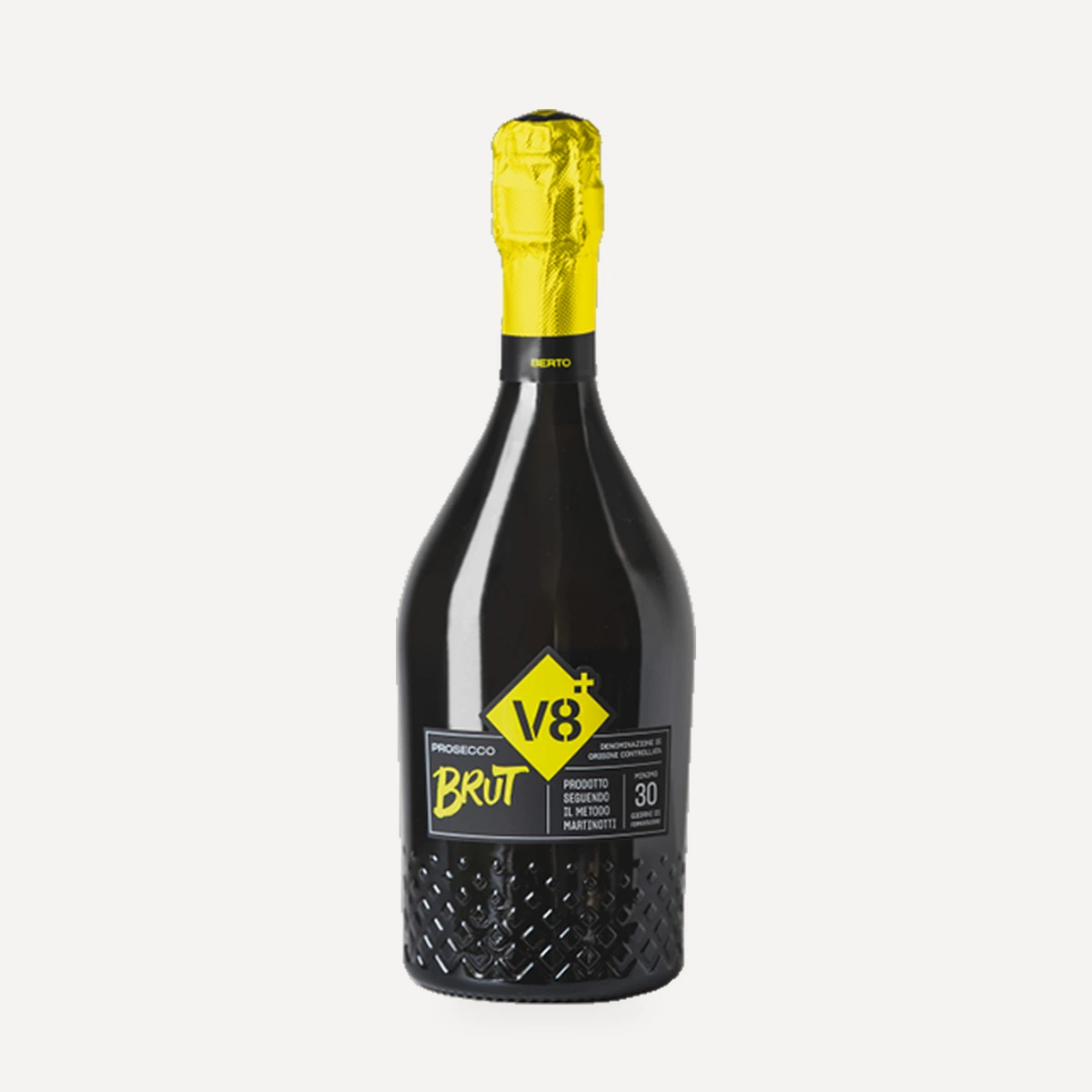
BERTO. Prosecco DOC Brut
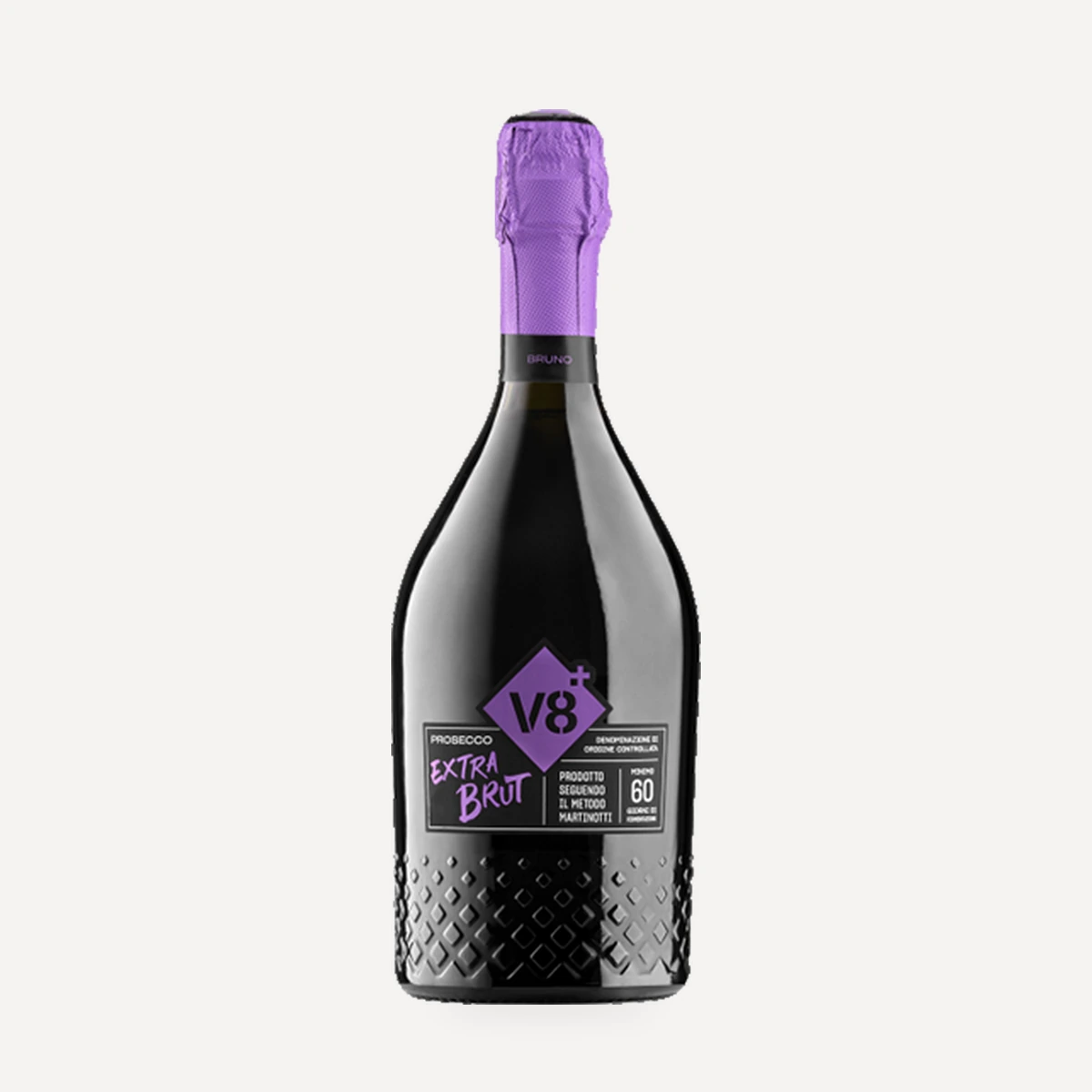
Bruno. Prosecco DOC Millesimato Extra Brut
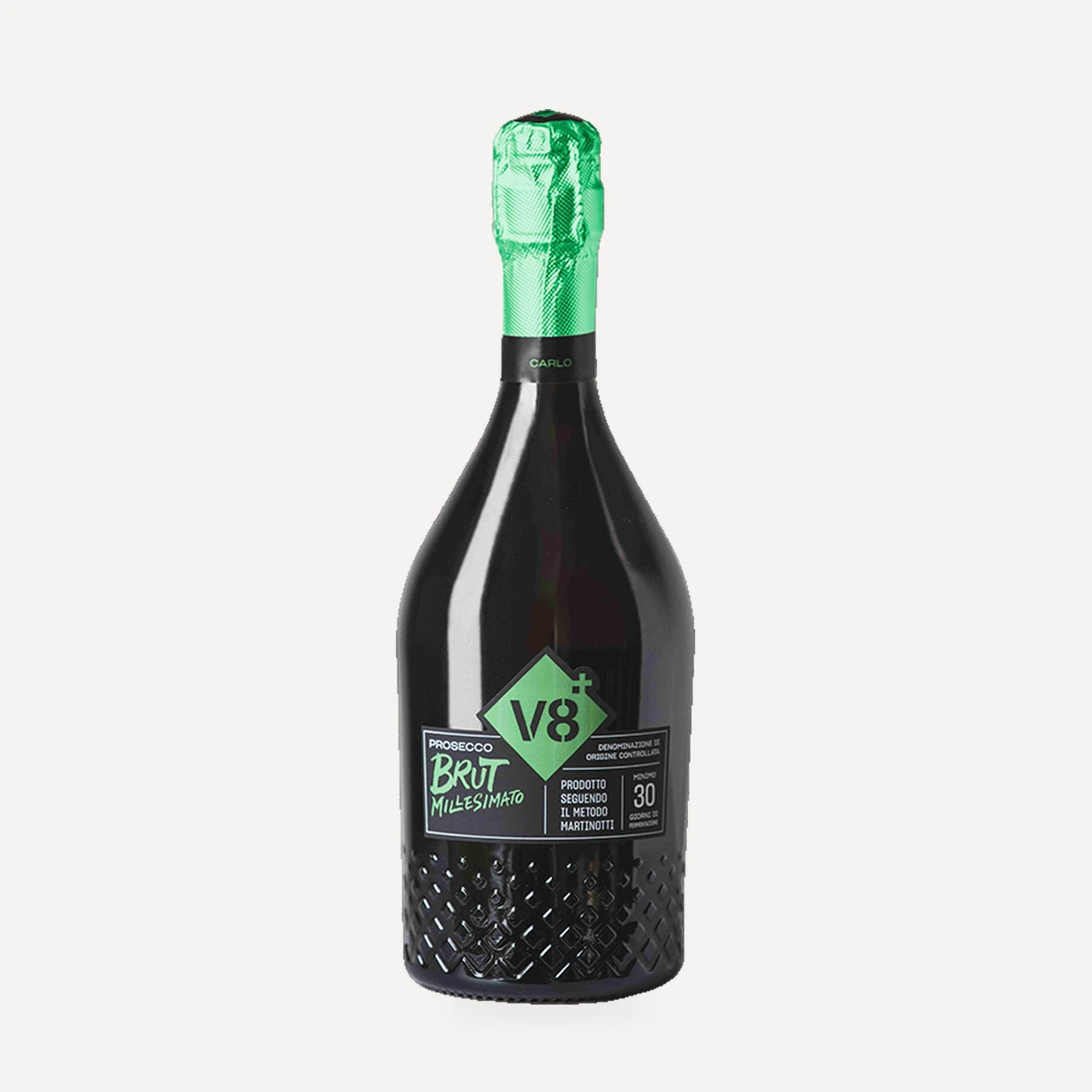
Carlo. Prosecco Brut Millesimato DOC
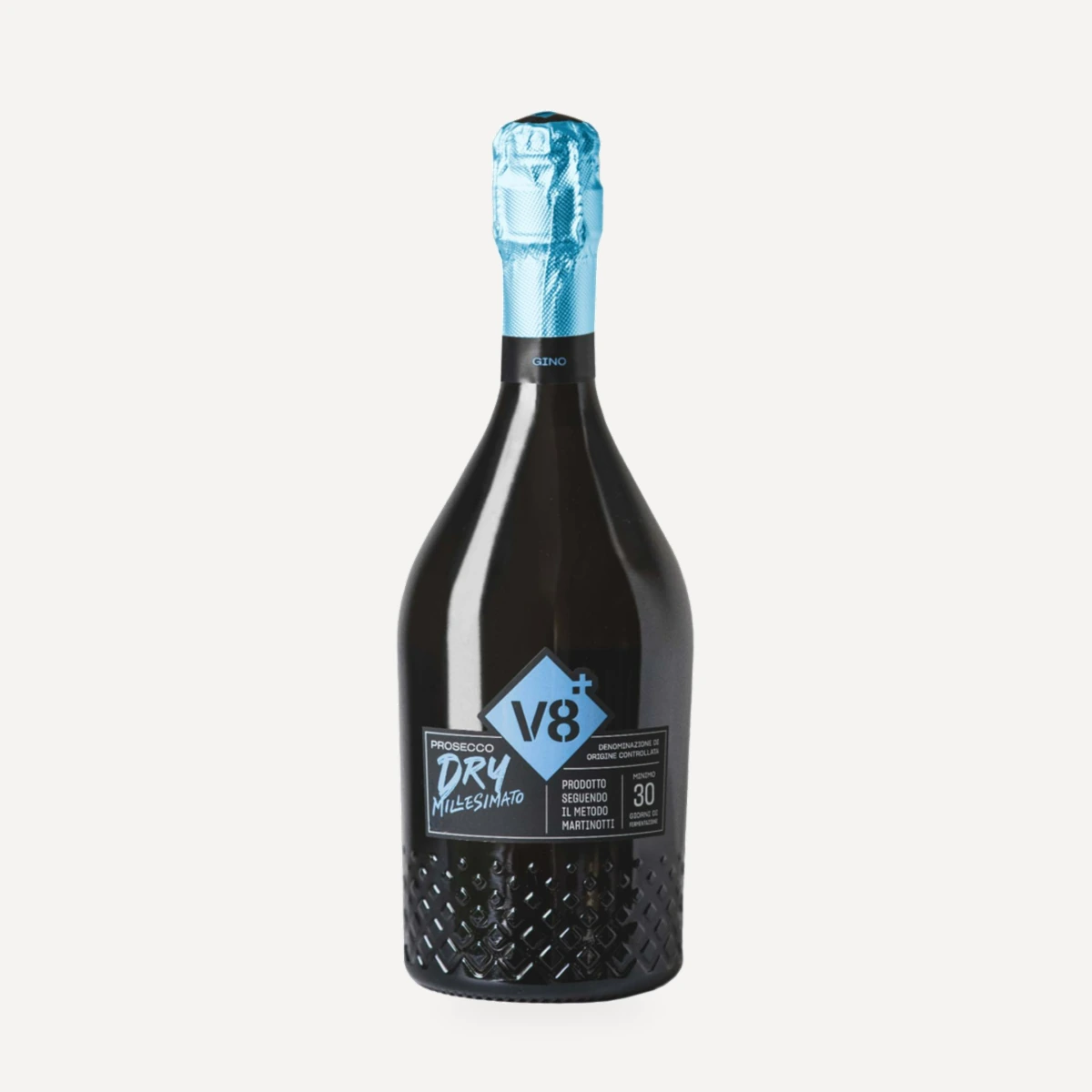
Gino. Prosecco DOC Millesimato Dry
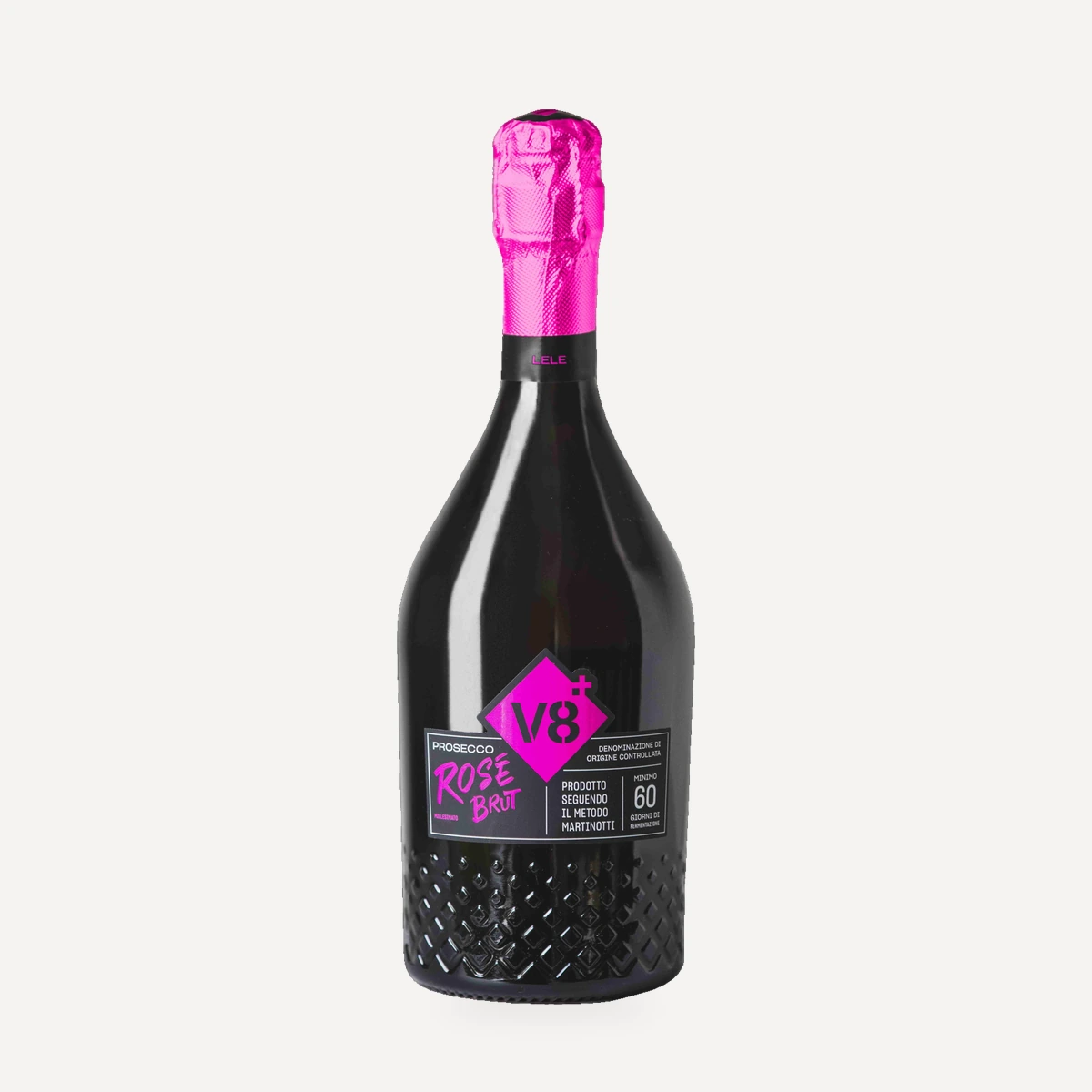
Lele. Prosecco Rosè Millesimato Brut DOC
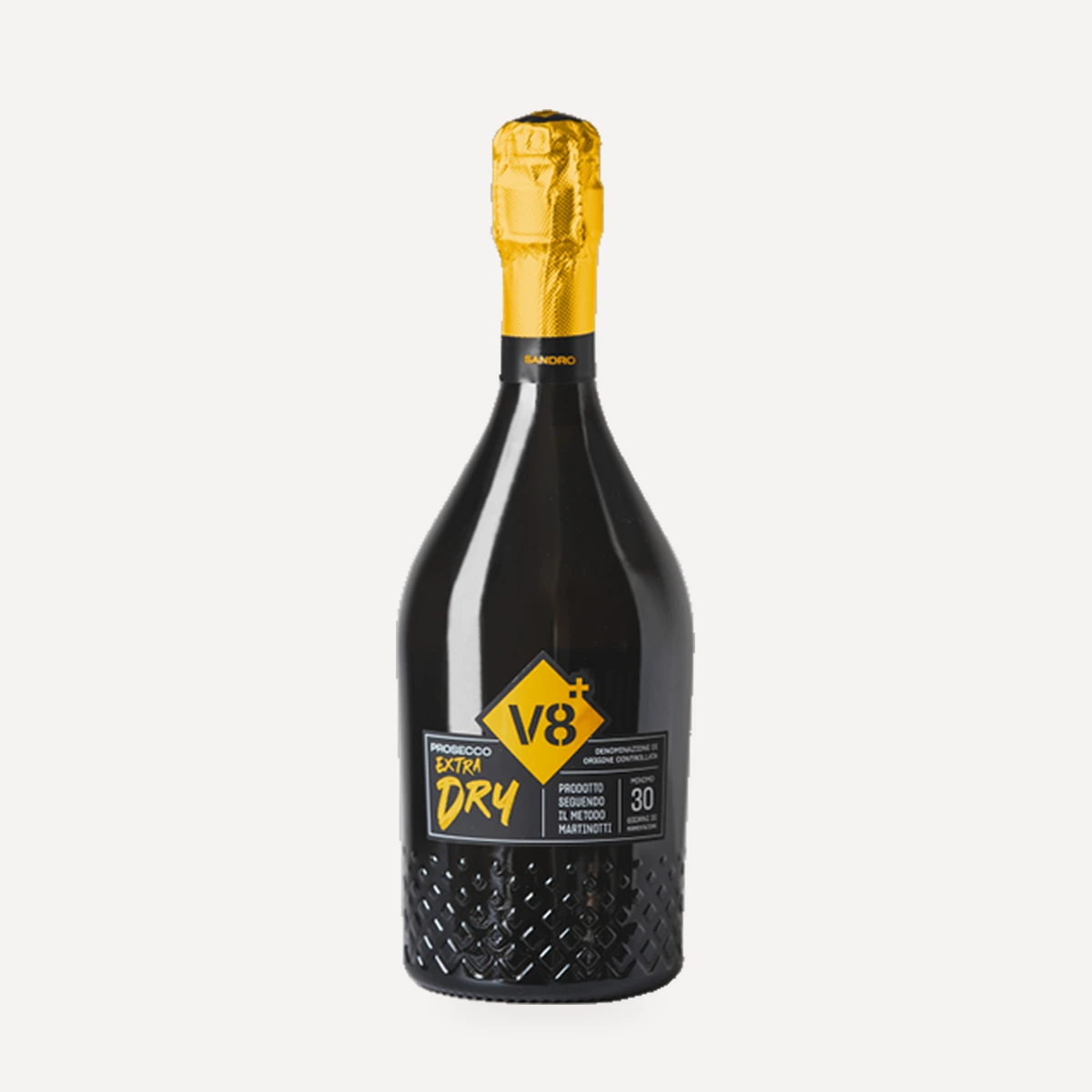
SANDRO. Prosecco Extra Dry DOC
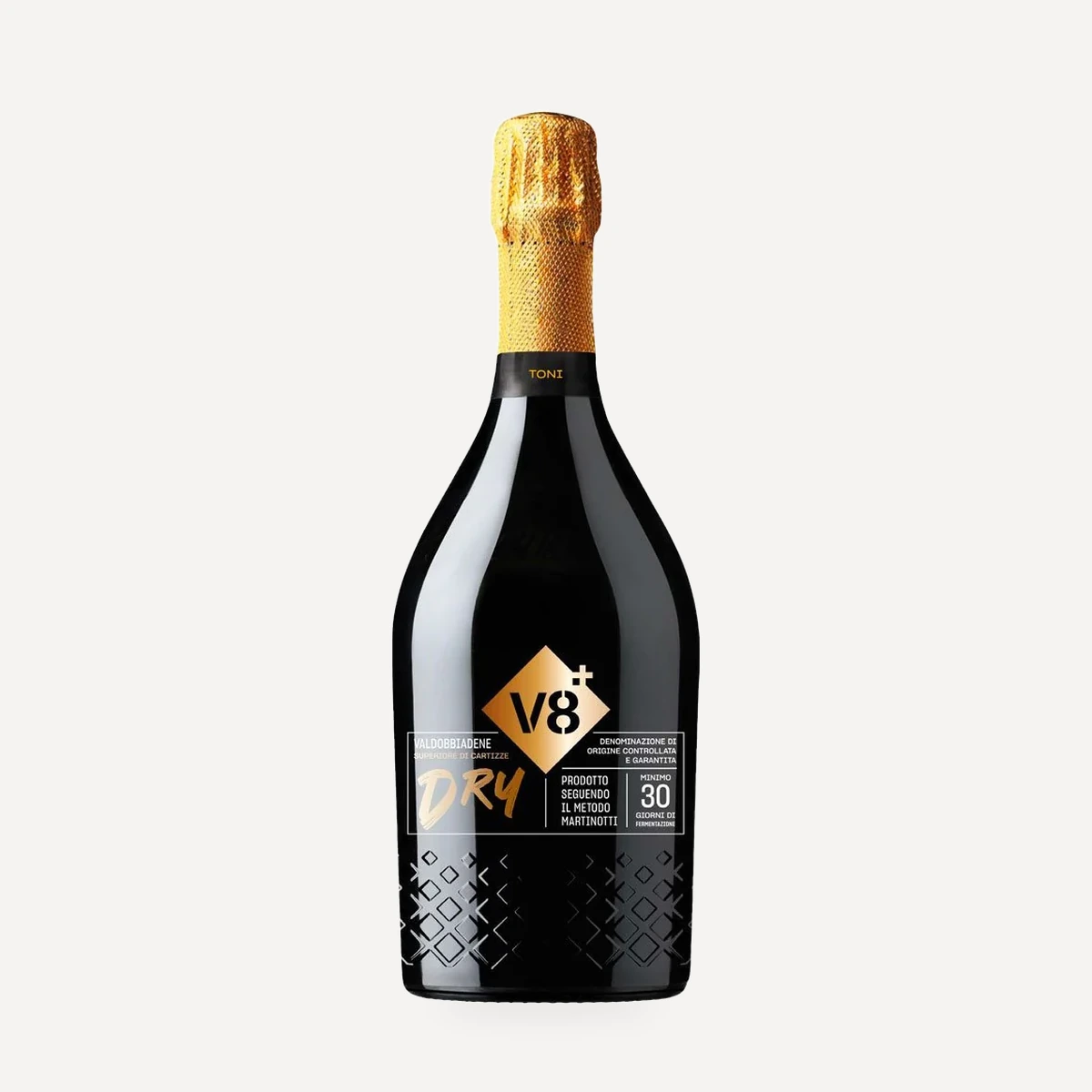
Toni. Valdobbiadene Superiore di Cartizze DOCG Dry