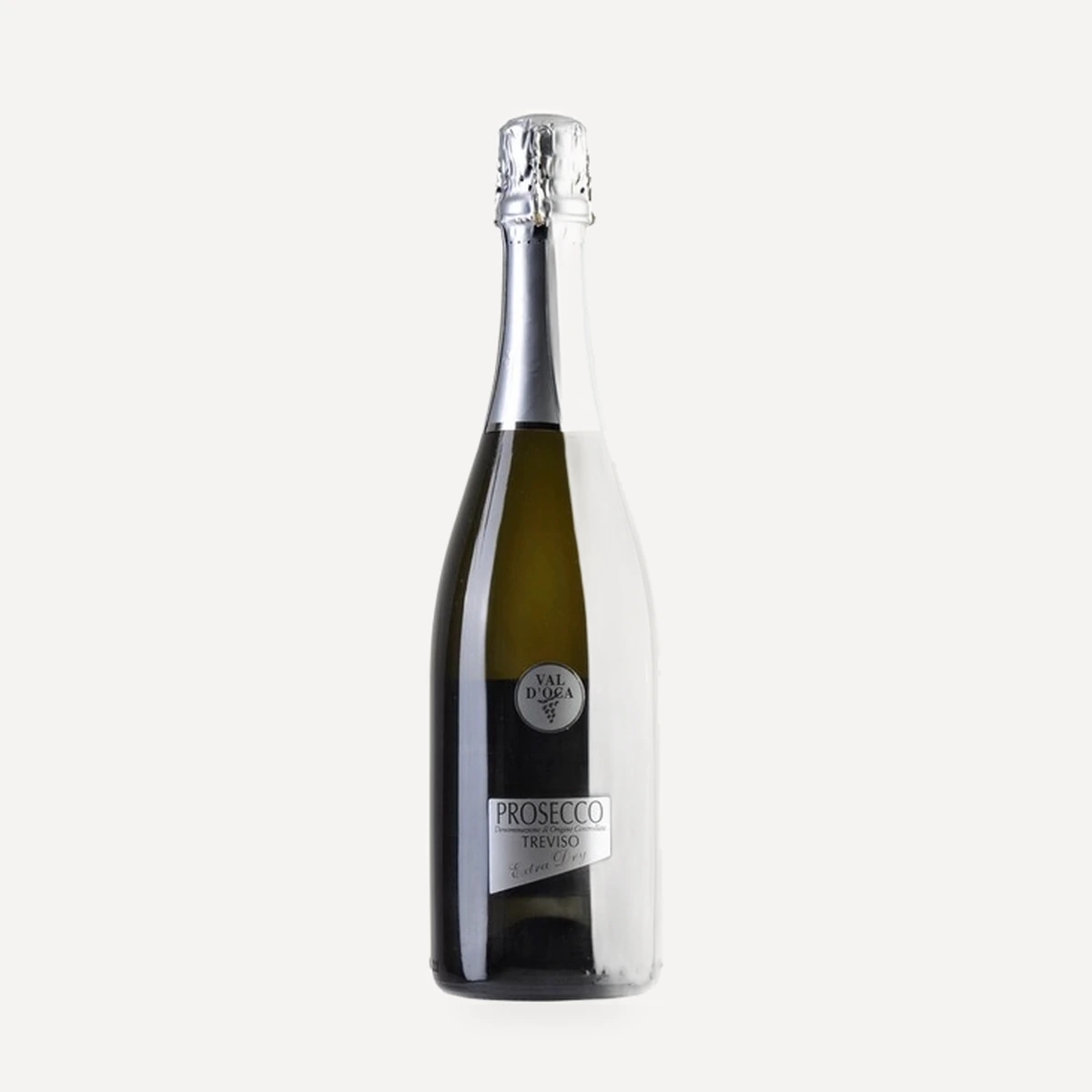
Storia
Cooperative roots, 1952
Val d’Oca developed from the commercial activity of Cantina Produttori di Valdobbiadene, a cooperative founded in 1952 by 129 farmers. The founders joined forces in the aftermath of the Second World War to rebuild the local agricultural economy and create a shared structure for processing and marketing their grapes. Membership subsequently grew to more than 600 growers cultivating over 1,000 hectares. The cooperative model remunerates members according to the quantity, quality and provenance of the grapes delivered, while requiring members to consign their complete production.
Creation of the Val d’Oca identity, 1990–1999
A structured commercial network was established in 1990, and the Val d’Oca brand emerged in the early 1990s, initially directed principally toward the restaurant trade. Valdobbiadene Prosecco Superiore DOCG Extra Dry Millesimato entered the market in 1991.
In 1997, Val d’Oca became the first producer to present its principal wines in a satin-finished black bottle. The design received a best-packaging award at Vinitaly in 1998 and became a lasting visual signature for the Classic Cuvées and Valdobbiadene Superiore di Cartizze DOCG. A separate account places the bottle’s introduction in 1998 and its Vinitaly recognition in 1999.
Formation of the company, 2007–2008
Val d’Oca S.r.l. was formed as a controlled commercial company dedicated to bringing the cooperative’s bottled wines to consumers through organized Italian and international sales networks and modern marketing and distribution. The 2024 sustainability reporting identifies 2007 as the year of formation, while the company’s organizational model and e-commerce history use 2008.
Val d’Oca subsequently developed distribution in more than 50 countries. It was also an early adopter of direct online sales: one company history dates its proprietary e-commerce channel to 2010, while the 2024 sustainability report records online selling from 2012.
Wine Center and investment in infrastructure, 2011–2018
In 2011 Val d’Oca promoted construction of the Wine Center beside the cooperative’s production complex. Its architecture evokes Prosecco bubbles, and its approximately 1,000-square-metre space was conceived for retail, tastings, hospitality and cultural and gastronomic events. The bioarchitectural building incorporates recycled and certified materials, photovoltaic and geothermal systems, thermal insulation, selective-glass windows and an external LED lighting installation.
The production partner progressively modernized grape reception, pressing, flotation, vinification, laboratory control and secondary fermentation. In May 2018, a €13 million automated logistics centre opened. Built underground to a depth of 14 metres, it can hold 7,000 pallets managed by two stacker cranes and five shuttles. Materials are supplied from the store to the production lines, while finished bottles rest at controlled temperature before dispatch.
Certification and brand renewal, 2020–2022
The wider supply chain obtained VIVA certification in 2020. Val d’Oca’s Equalitas Sustainable Organization certification was first issued on 11 May 2022. In 2022, the black-bottle range entered a wider rebranding programme with a new identity and a logo derived from fruit set—the stage when a vine flower begins developing into a grape.
The 2022 harvest was conducted during a hot, dry season. August rainfall aided ripening; sugar levels were satisfactory and acidity was slightly below the preceding five-year average. High-hill Rive and Cartizze grapes benefited from temperature variation and breezes from the Prealps. All Glera was picked by hand, including in areas where mechanical harvesting would have been permitted.
New management and ownership, 2023–2024
Stefano Gava became general director in August 2023, bringing oenological training from the University of Padua and managerial, operational and technical experience in north-eastern Italy’s wine sector. His stated objective was to translate the vineyard work of more than 600 families into the highest possible quality in the glass.
In June 2023, Cantina Produttori di Valdobbiadene transferred 98% of Val d’Oca S.r.l. to Valdobbiadene Impresa società cooperativa. The network agreement and operating relationship between Val d’Oca and Cantina Produttori continued: the former remained responsible for commercialization, marketing, promotion and consumer communication, while the latter supplied wine and controlled primary production.
A new board was appointed in February 2024. Val d’Oca adopted its organizational, management and control model under Italian Legislative Decree 231/2001 on 17 May 2024. From 2024 the business gained greater commercial autonomy, including authority to market third-party products, while retaining its relationship with the Valdobbiadene production chain.
Portfolio expansion, 2025–2026
In March 2025 Val d’Oca announced a partnership to distribute Bella non-alcoholic drinks, expanding its offer in response to growing demand for alcohol-free products. From 2024 onward, the company’s certified activities also encompassed non-alcoholic, must-based beverages.
On 11 April 2026, Val d’Oca announced that it had become the exclusive Italian distributor for Champagne Encry. The agreement extended the company’s commercial activity into limited-production Grand Cru Champagne and strengthened its focus on the premium Italian HoReCa channel.
Terroir
Valdobbiadene and the UNESCO cultural landscape
Val d’Oca is based in Valdobbiadene in the Veneto, within the hilly viticultural corridor extending east from Valdobbiadene toward Conegliano and Vittorio Veneto. The UNESCO area covers 15 municipalities and almost 19,000 hectares. Its defining landform is the hogback: steep, narrow ridges separated by small parallel valleys.
Cultivation adapted to these inclines through grassy ciglioni, earth rather than stone terraces that provide usable vineyard surfaces while contributing to hydrogeological stability. Small vineyard plots alternate with woodland and uncultivated ground, forming an interconnected agricultural mosaic and ecological network.
The steepest vineyards demand prolonged manual work. Labour can reach 800 hours per hectare, compared with approximately 150 hours per hectare for mechanized vineyards on the plain, giving rise to the description “heroic” viticulture.
The Rive
Val d’Oca’s supply chain cultivates grapes in nine of the 43 officially delimited Rive. Together these represent approximately 120 hectares, more than one-quarter of the denomination’s total 494 hectares. The Rive are treated as separate expressions rather than a standardized source: altitude, orientation, substrate, temperature and exposure vary markedly even between neighbouring sites.
Cartizze
The Cartizze area covers only 108 hectares and is distinguished by steeply inclined vineyards. Val d’Oca has long had a substantial grower presence there and interprets the area through a classical approach. The grapes’ recognized characteristics permit Cartizze to appear as a specific geographical designation.
Wider production zones
The Conegliano Valdobbiadene hills lie close to the Prealps; high-hill Rive and Cartizze vineyards benefit from diurnal temperature variation and cool breezes. Asolo Prosecco Superiore comes from hills around the historic village of Asolo, at the foot of Monte Grappa. These high hills lie between the Piave River, the Dolomites and Montello. The wider Prosecco DOC supply area extends across the province of Treviso and into the north-eastern Italian territory between Veneto and Friuli.
Vinificazione
All Glera supplying the established production chain is harvested by hand in both hillside and plain vineyards. Manual picking is compulsory for Rive and Cartizze but is also retained in DOC areas where mechanization would be permitted, with the aim of preserving berry integrity. The cooperative’s internal rules extend hand harvesting to grapes destined for both DOCG and DOC wines.
More than 600 growers work under tailored vineyard-management plans supported by classroom and field training. Subjects include pruning, plant-protection techniques, sustainability, technical and agronomic management and other good agricultural practices. Online pruning tutorials have also been produced.
A digital Quaderno di Campagna records vineyard operations, plant-protection treatments, fertilization and irrigation. A dedicated office assists growers with the transition to digital records and checks compliance with the system’s requirements. The agronomic service monitors ripening curves weekly in the different production areas and prepares a zone-by-zone harvest calendar. This permits picking at the desired point of maturity while distributing deliveries according to the winery’s reception capacity.
The SQNPI programme applies integrated-production principles: production factors are coordinated to reduce effects on the environment and consumer health without sacrificing grape quality. A 2023 account records SQNPI certification across 100% of the associated vineyards; the December 2024 update describes an ongoing three-year programme promoting certification among members.
Organic certification is held within the organization, and the Asolo vineyards highlighted in the territorial presentation supply organically grown fruit under a cultivation protocol.
Circular practices include returning pruned vine shoots to the soil as amendments. Grape stalks are sent to Bioman’s cogeneration plant for renewable-energy production, pomace goes to distillation and tartrates are supplied for tartaric-acid production. Vineyard stewardship also preserves the landscape’s mosaic of grassy terraces, wooded areas and uncultivated ecological elements.
Val d’Oca is the commercial and consumer-facing company; primary winemaking and bottling for its established wine range are carried out through the continuing network relationship with Cantina Produttori di Valdobbiadene. The production complex covers 32,974 m², comprising 14,256 m² of covered space and 18,718 m² outdoors.
After hand harvesting, grapes are delivered and destemmed. Pneumatic presses act gently on the berries to obtain only the free-run-quality must. Ten tanks receive selected draining musts. Selected yeasts initiate alcoholic fermentation in stainless-steel tanks at a controlled 18–20°C for 15–20 days. The resulting base wines mature before secondary fermentation; the plant layout identifies dedicated base-wine storage and autoclave areas for sparkling-wine production.
Following secondary fermentation, bottling is performed isobarically. Finished bottles then mature for one to three months before release. The process includes defined areas for grape reception, pressing, selected-must drainage, temperature-controlled fermentation, base-wine storage, secondary fermentation, bottling and finished-product storage.
Production protocols cover crushing and must preparation, pre-fermentation treatments, fermentation, blending, tartaric and protein stabilization, wine conservation and pre-bottling operations. Analytical controls are documented in cellar records. Suppliers of oenological products are evaluated against quality, environmental, occupational-safety, food-safety and social-responsibility standards. Product traceability links grape variety, lot number and commercial brand to analytical results, work records and the relevant wine mass.
Grape reception, pressing, flotation, vinification and secondary-fermentation departments have undergone technological modernization. The BolLeancine lean-management project focused on two bottling lines, L1 and L9, to identify weaknesses, reduce waste and inefficiency and promote continuous improvement.
The automated logistics centre opened in 2018 after a €13 million investment. Extending to a depth of 14 metres, it stores 7,000 pallets using two stacker cranes and five shuttles. It supplies production materials to the lines and keeps finished bottles at controlled temperature before dispatch.
Packaging procurement favours certified, recycled or recyclable materials. Cartons and labels carry FSC or PEFC certification, some labels use recyclable LD-PE, and disposal information includes glass colour where national recycling systems require it. More than 90% of bottle procurement comes from suppliers incorporating recycled glass; the three largest suppliers use 54–95% recycled content. Lighter glass and cardboard save approximately 214 tonnes of glass and 39 tonnes of cardboard annually.
Filosofia
Val d’Oca defines its identity as “Contemporary Classic”: inherited knowledge and attachment to the Valdobbiadene landscape are filtered through contemporary design, communication and technology. Tradition is treated as a living foundation rather than a fixed style.
Its declared quality objective is to translate the work of the grower families into the best possible expression in the glass. Transparency, control, innovation and sustainability are intended to apply throughout the chain, from vineyard management and supplier selection to processing, packaging and communication.
The Rive are approached as distinct terroirs. Differences between hills are not to be standardized away; nature shapes each identity, while growers select the agronomic response appropriate to the season and site.
The company’s sustainability model combines economic continuity, employee and community welfare, reduced consumption and waste, renewable energy, emissions measurement, responsible packaging and protection of the surrounding landscape. Val d’Oca characterizes certification and reporting as a pact of transparency with consumers.
Following the 2023 ownership change and greater commercial autonomy from 2024, Val d’Oca retained the principles of collective enterprise and dialogue among viticulture, people and landscape. Its organizational model adds respect for law, professional conduct, collaboration, honesty, complete information, equality, avoidance of conflicts of interest and operational traceability to this framework.
Vini
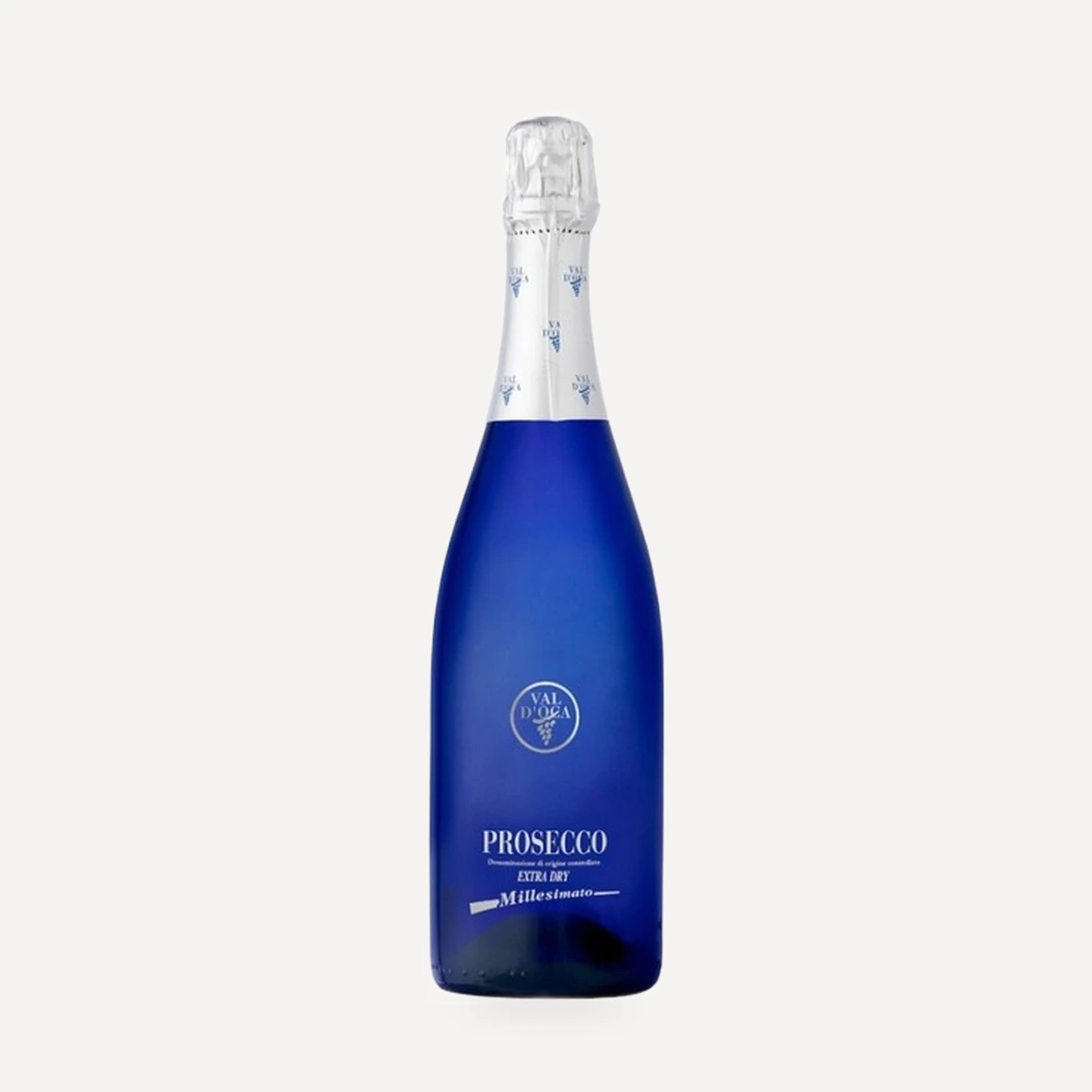
Blu Prosecco Millesimato Extra Dry DOC
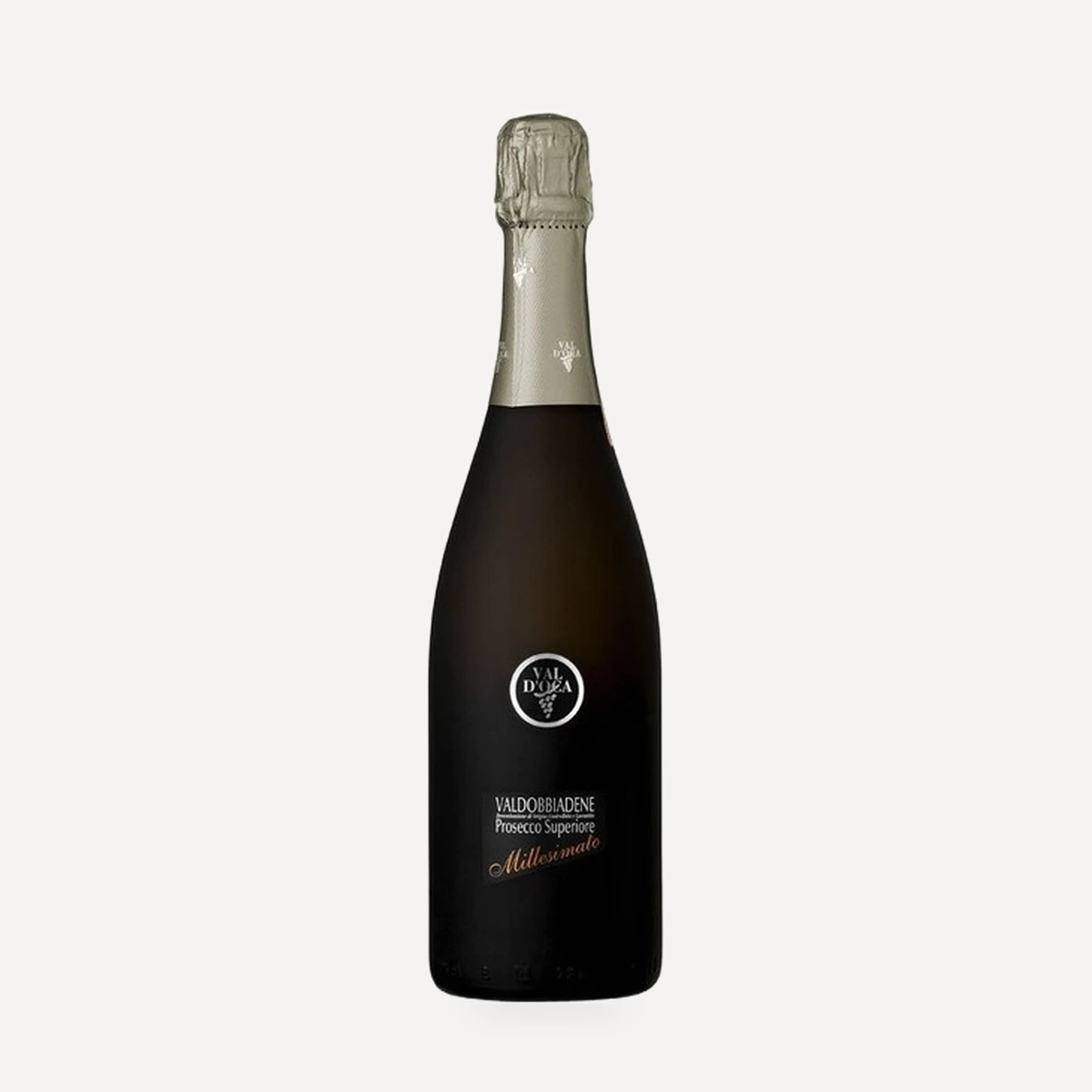
Millesimato Extra dry Valdobbiadene Prosecco Superiore DOCG
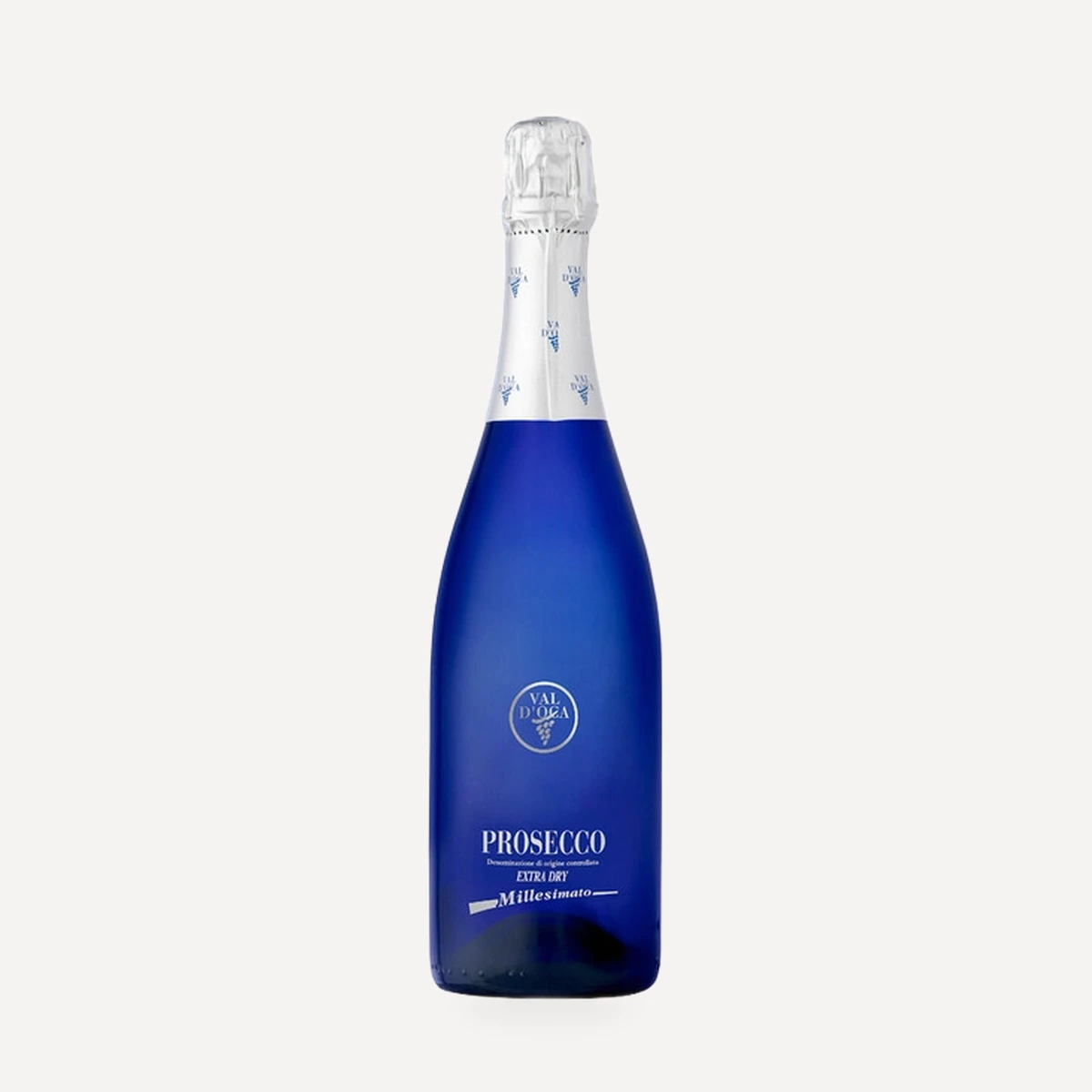
Prosecco Millesimato Extra Dry Kosher DOC
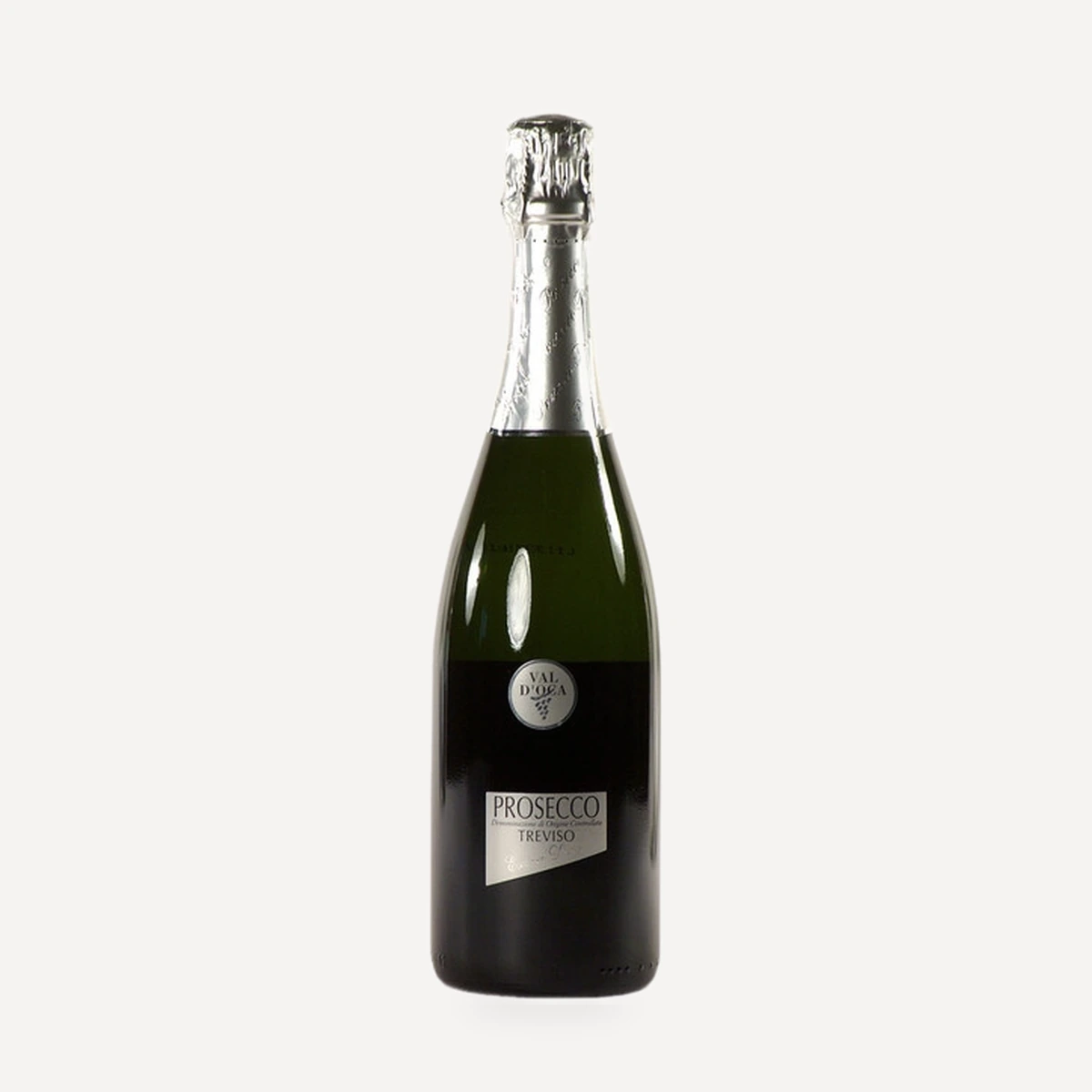
Prosecco Extra Dry Kosher DOC
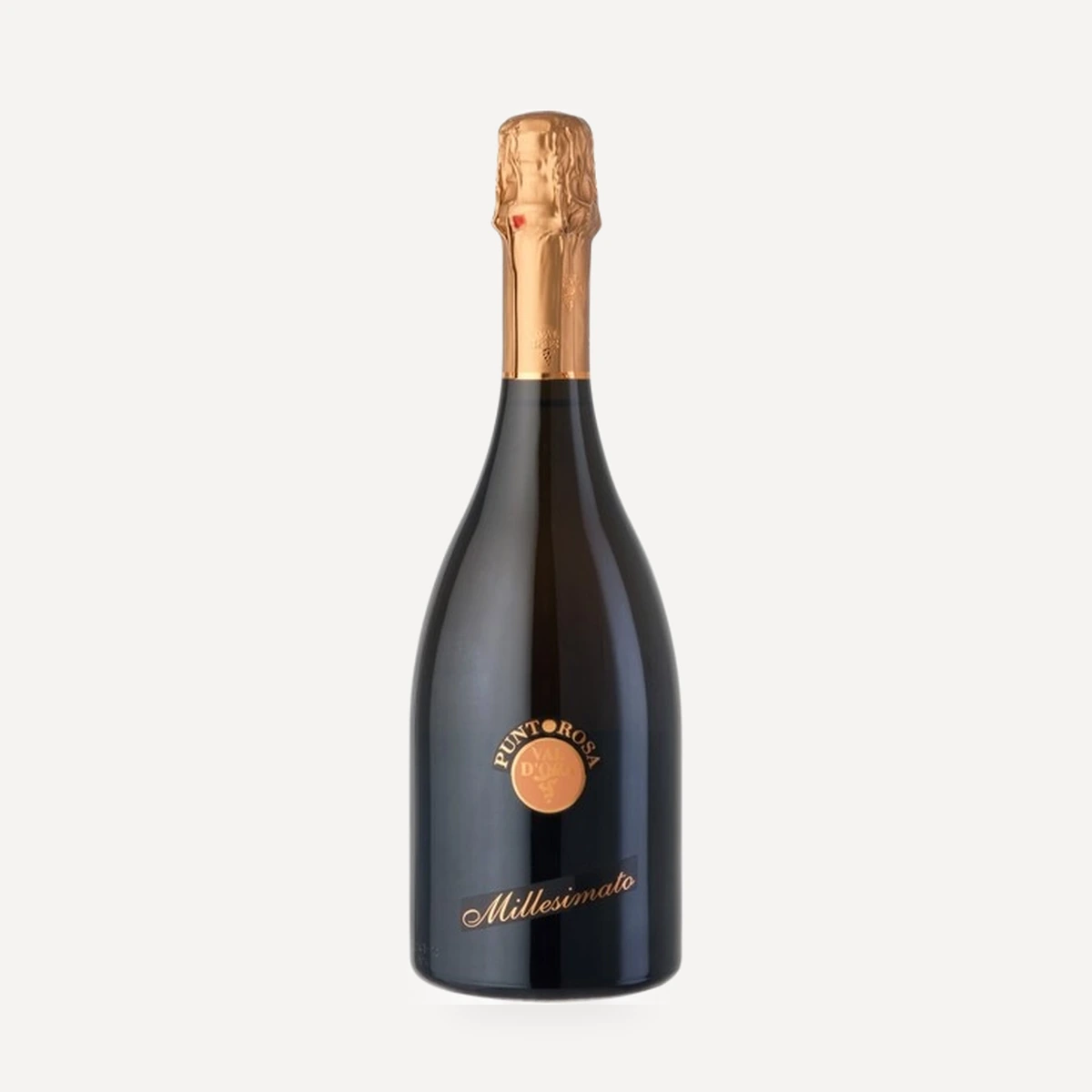
Punto Rosa Millesimato
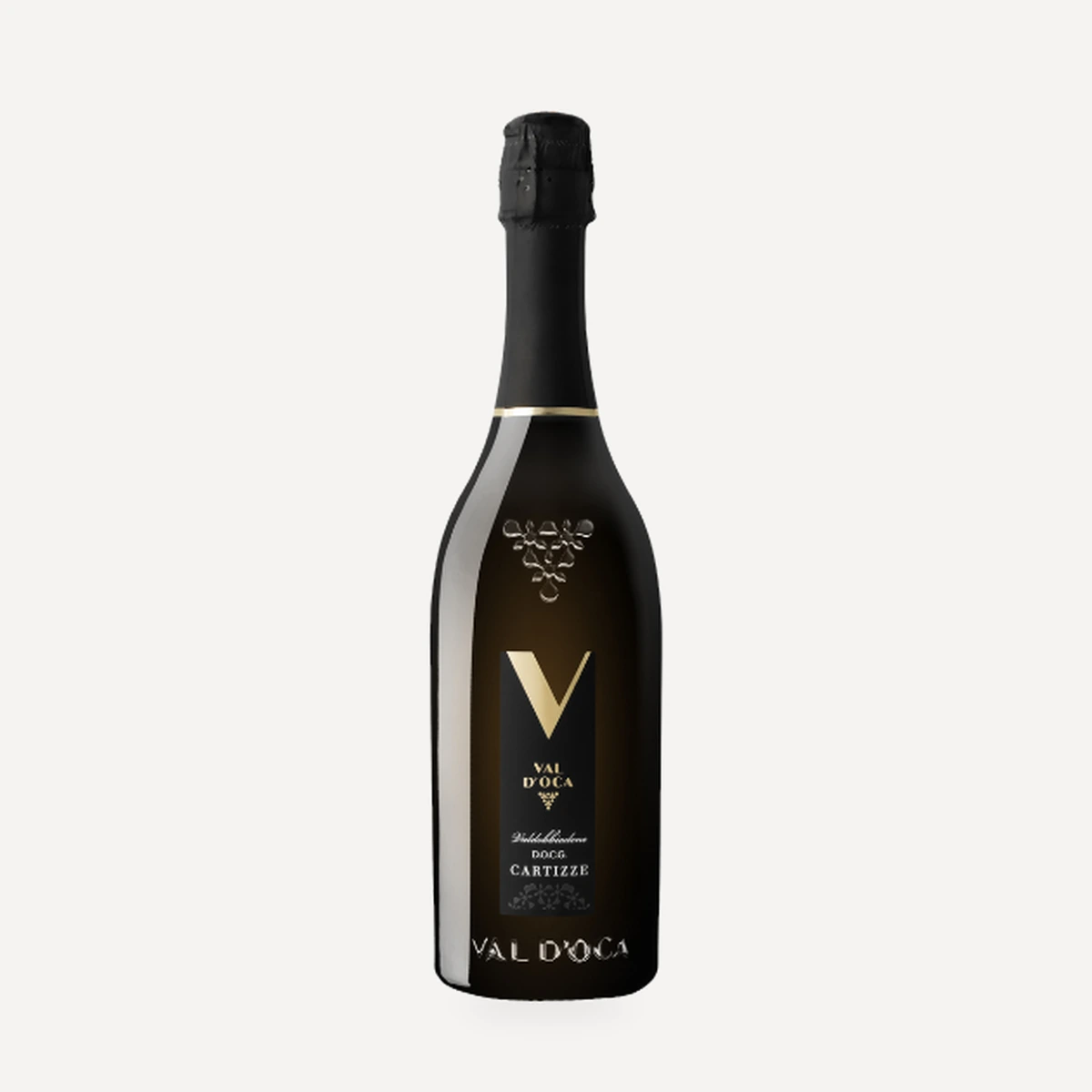
Valdobbiadene Superiore di Cartizze DOCG Dry
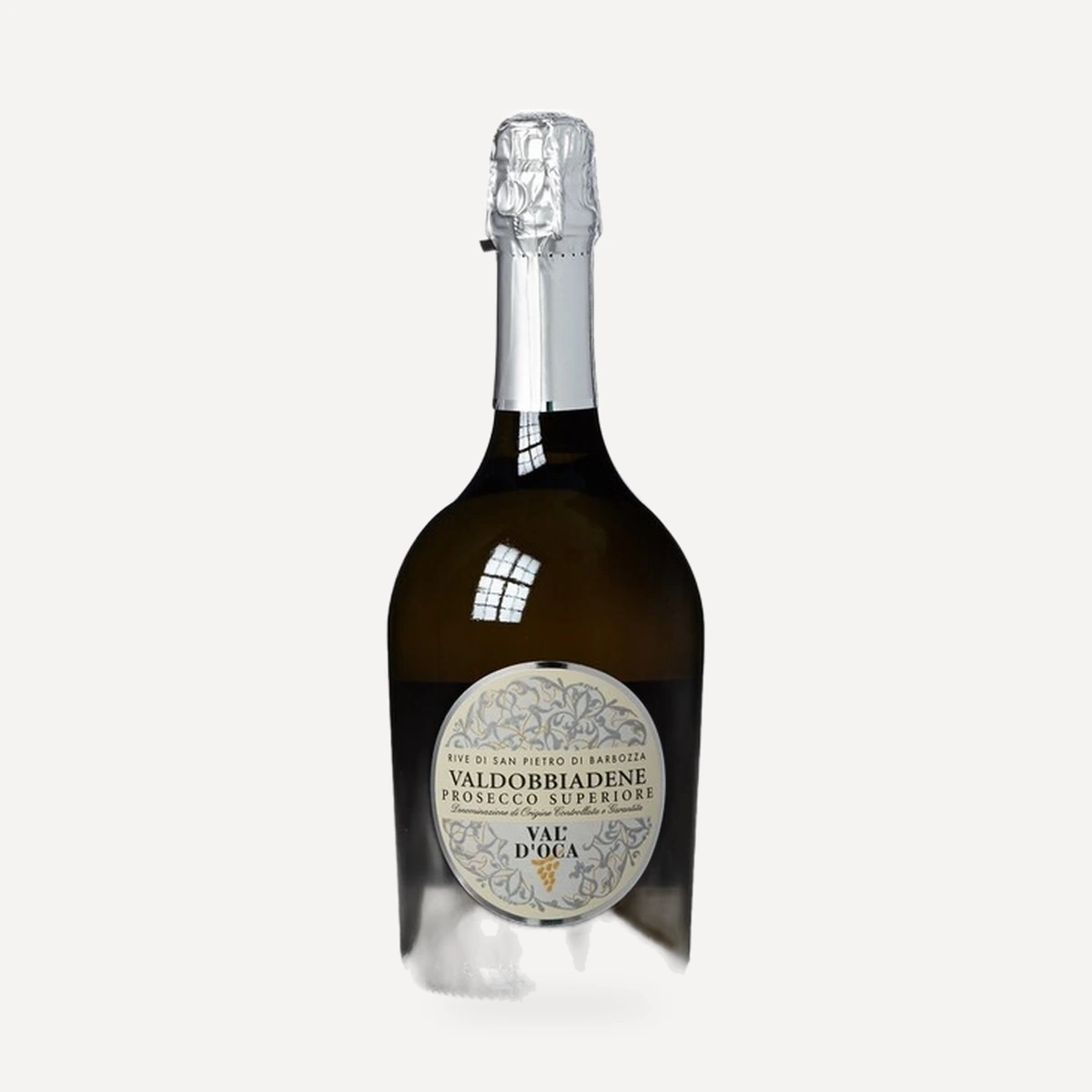
Rive di San Pietro di Barbozza Brut Prosecco Superiore Valdobbiadene DOCG
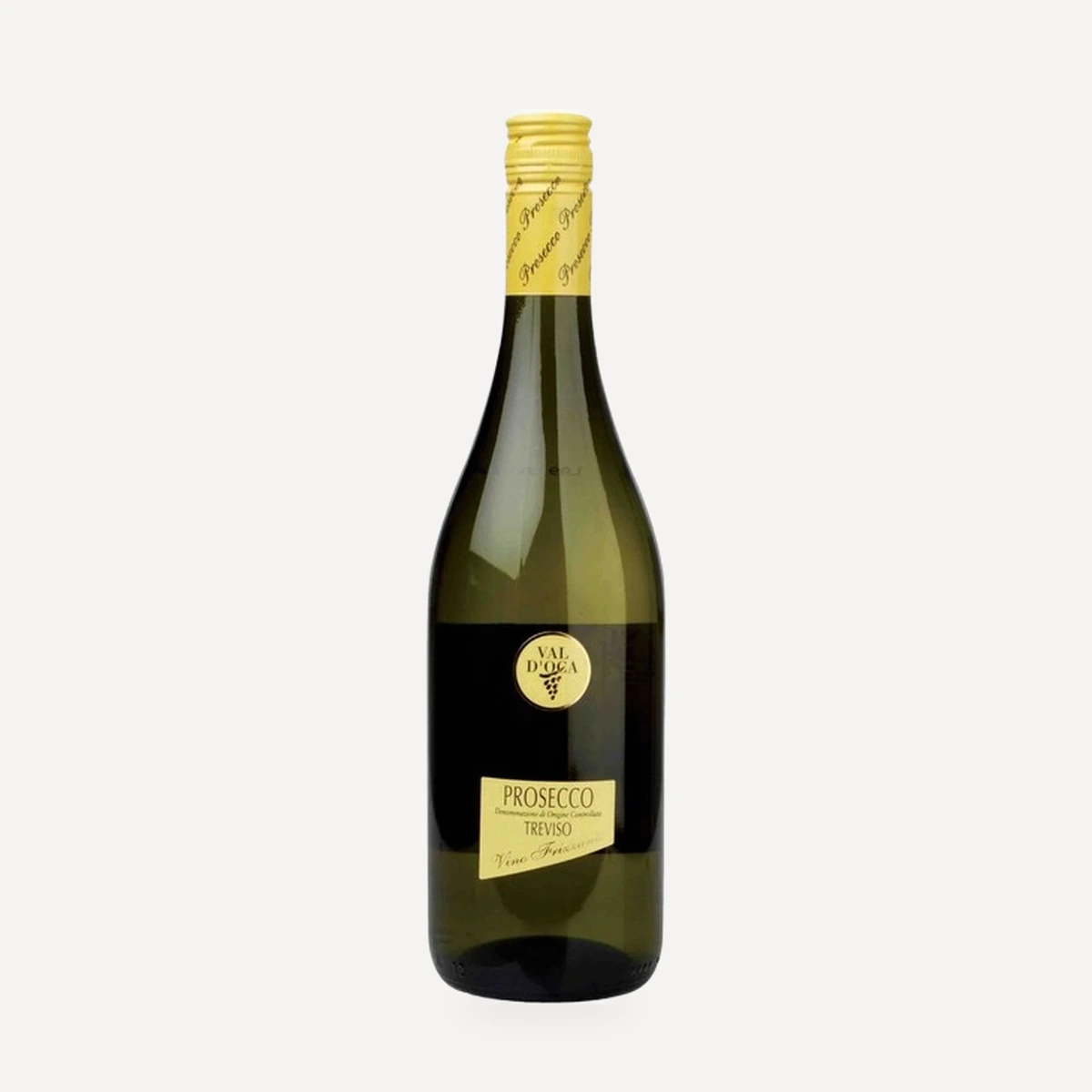
Val d'Oca Prosecco Treviso Frizzante DOC
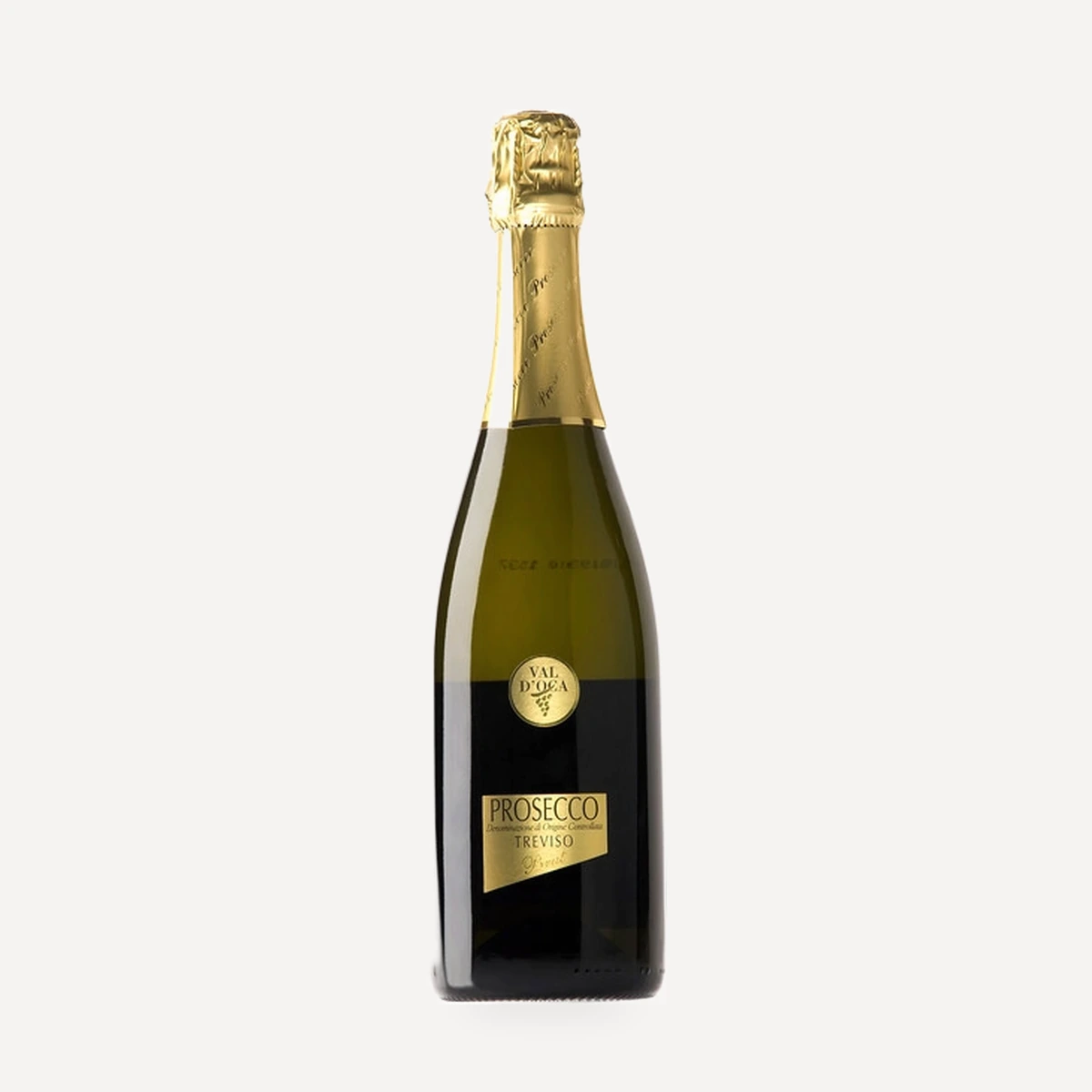
Prosecco Brut
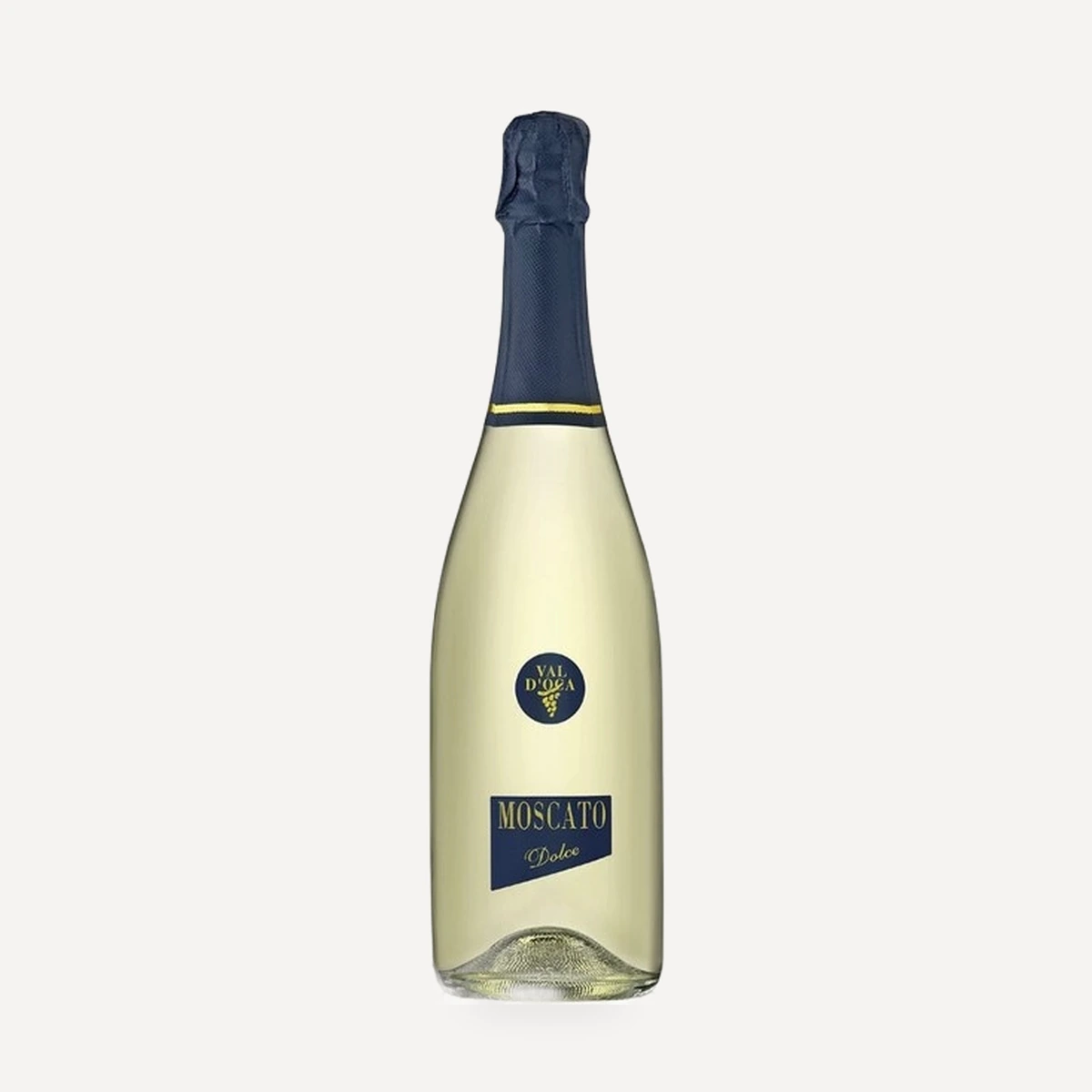
Moscato
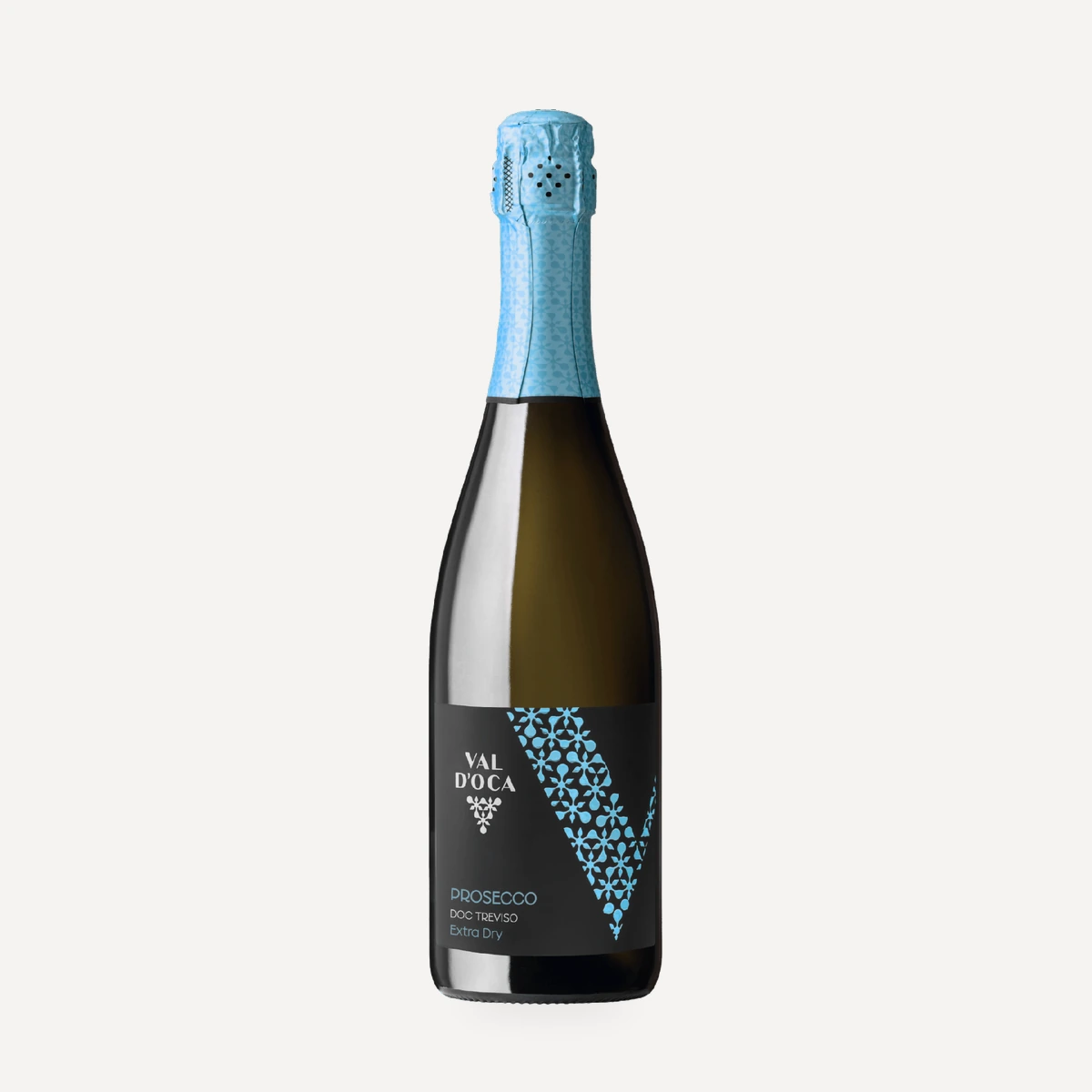
VO Extra Dry Prosecco DOC
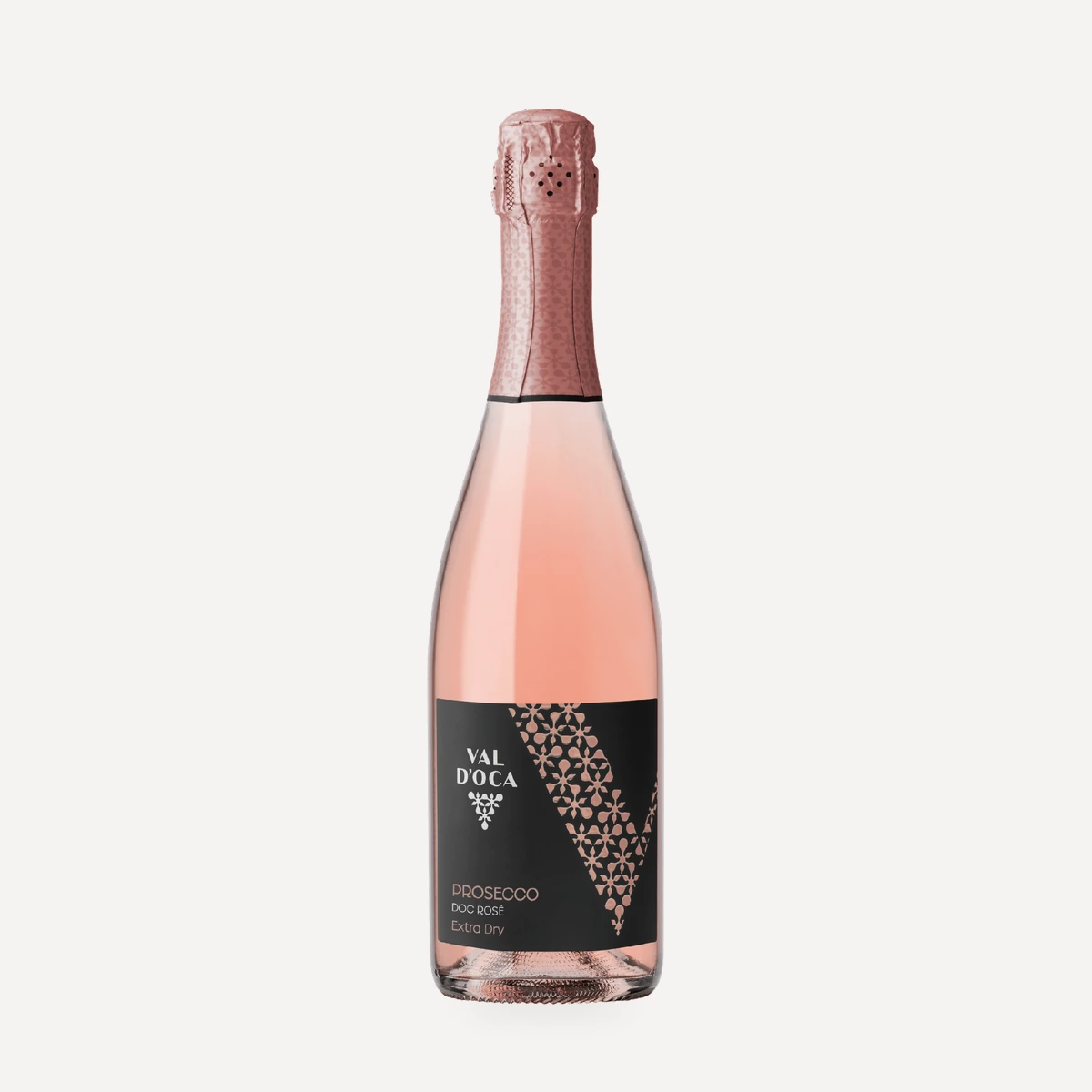
VO Rosé Extra Dry Prosecco DOC