Storia
Medieval origins and the Maffei estate
The site’s history predates the Renaissance residence. Remains of a medieval castrum survive on Monte della Fumana, while the ground occupied by Villa Della Torre may originally have housed the municipal administration. The Maffei residence was a two-storey rectangular building with a dovecote tower, preserved on the left when entering the peristyle from the Fumane hill. The enclosure and ancient appearance of the complex underlie its local dialect name, el palasso—“the palace.”
Colle della Fumana, an estate component for centuries, gave Fumane its name. Fumana referred in local dialect to banks of mist that once filled the valley. After the medieval hillfort period, the hill served during the Renaissance as an agricultural supply area for the Della Torre household.
1504 and the Renaissance transformation
In 1504, Anna Maffei, the only daughter of Guido Antonio Maffei, married Giulio Della Torre, transferring the Fumane property to the Della Torre family. The present complex chiefly reflects the ambitions of Giulio, a learned humanist, and his son Francesco Della Torre, secretary to Bishop Gian Matteo Giberti.
The residence was conceived as a domus antiqua: a regular succession of spaces arranged along a central axis and joined by an uninterrupted perspective. Its sloping site permitted a graduated sequence from the first courtyard to the peristyle, fishpond, garden and lower nymphaeum. The arrangement also expressed a symbolic ascent from the dark grotto—the realm of illusion and human wandering—to the chapel at the highest point.
Architectural authorship is shared and partly interpretive. Giulio Romano and his school supplied important architectural and decorative ideas; Michele Sanmicheli is associated with the octagonal chapel; and Giovan Battista Scultori contributed the grotesque decorative language, including the four monumental mascaron fireplaces. The villa was intended not simply as a productive country residence but as a setting for bodily and intellectual repose, classical study and contemplation of nature. The poet and courtesan Veronica Franco visited the villa and organized festivities and banquets for Venetian doges and their courts.
Eighteenth-century alterations
The chapel altar, originally positioned centrally in accordance with the ideas of the Spirituali circle associated with Gian Matteo Giberti and Francesco Della Torre, was transferred to the apse during the eighteenth century. The Hall of Mirrors was also remodeled with stucco and painted decoration while retaining bronze medallions, sculpture and other references to Giulio Della Torre’s classical interests.
2008–2019: acquisition, restoration and the winery project
Marilisa Allegrini acquired Villa Della Torre in 2008, fulfilling an ambition formed during childhood visits with her father Giovanni. The Mastella Allegrini family restored the monumental complex and introduced luxury hospitality in 2015.
The vineyard around the villa was completely renovated in 2014, with Guyot training and a density of 4,545 vines per hectare. Vine planting was restored on Colle della Fumana from 2018, also using Guyot, within a landscape combining vineyard rows, oaks, cypresses and spontaneous vegetation.
Villa Della Torre became a winery in 2019. The project reconnected the Renaissance residence, its agricultural landscape and winegrowing traditions rooted in the enclosed brolo. Its first wines were initially made principally for guests of the property.
2022–2024: Palazzo Te and the family group
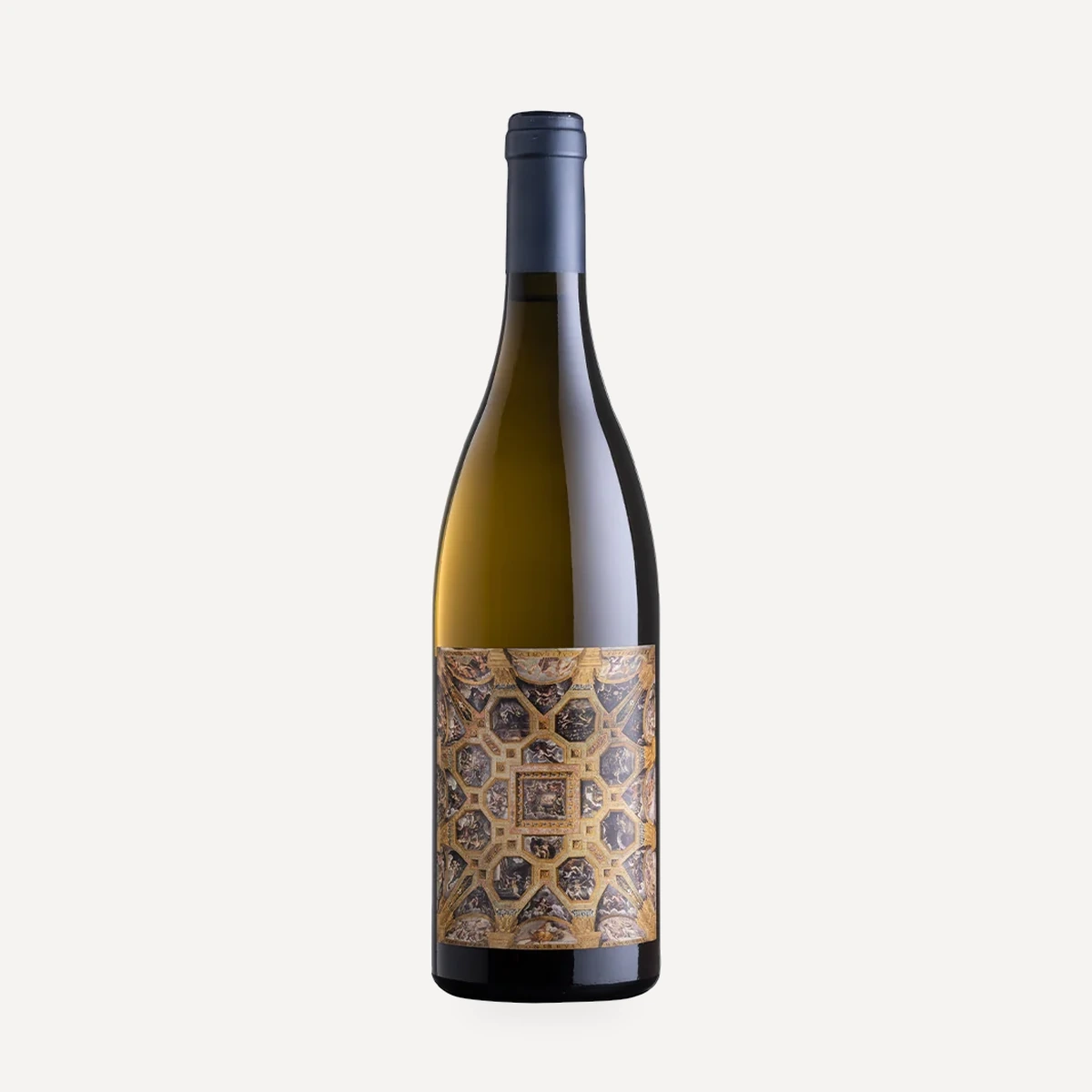
In 2022 Villa Della Torre and Fondazione Palazzo Te created a cultural partnership connecting two Renaissance complexes shaped by the language of Giulio Romano. The first limited-edition wine was Camera dei Giganti Valpolicella Classico Superiore. The collaboration expanded in 2023 with Camera di Amore e Psiche Lugana.
The Marilisa Allegrini Group was founded in March 2024, bringing Villa Della Torre together with the family’s Tuscan wineries while preserving their separate identities. Villa Della Torre became the group headquarters. An April 2024 profile attributed 25 ha to the company—15 ha in Valpolicella and 10 ha in Lugana—and reported production of 40,000 bottles, with a proposed rise to 200,000 bottles after the complete acquisition of the vineyard surrounding the villa and the entry of further vineyards into production.
Marilisa Allegrini became president and CEO. Her daughters Carlotta and Caterina Mastella Allegrini and their father Giancarlo Mastella became vice-presidents. Tobia Cenzato was named the dedicated Villa Della Torre winemaker. Andrea Lonardi joined as COO in May 2024 to coordinate development from vineyard to market, guide the winemaking team and mentor the next generation. In September, Villa Della Torre hosted the concluding lunch of the 22nd meeting of the presidents of the lower houses of the G7 countries and the European Parliament.
2025: the Brolo identity and Colle della Fumana
A 2025 repositioning defined Villa Della Torre as the expression of the 10 ha Brolo enclosed by the villa’s historic walls. Valpolicella Classico Superiore 2021 and Amarone della Valpolicella Classico 2020 inaugurated the renewed direction, based on Corvinone-led blends, freshness, precision and a conscious evolution of classic Valpolicella styles. The revised labels incorporated architectural details from the villa and Marilisa Allegrini’s signature. The separate Peaks & Valleys project assumed the broader role of representing Valpolicella, Soave and Lugana.
Production at Sant’Ambrogio di Valpolicella was redesigned while a winery at the villa remained planned. Optical sorting was introduced for the 2024 Amarone, alongside controlled low-temperature drying, long macerations, concrete, large oak vessels and extended bottle maturation. Production began increasing from the 2024 vintage.
The Camera del Sole e della Luna Amarone completed the three-wine Palazzo Te collection in June 2025. Flaminia Veronesi’s forty-stage Gioco del Ramarro added an illustrated journey between Fumane and Mantua through landscape, history and mythology.
The “Trails of Colle della Fumana” project was launched in 2025. It restored vegetation through hydroseeding, established buffer zones around natural areas and created two educational trails dedicated to biodiversity, vineyard landscape and the hill’s history.
2026: hospitality at Palazzo Te
In March 2026 Villa Della Torre and the Marilisa Allegrini Group reopened Spazio Te, the bistro at Palazzo Te, after renovating its interior and garden. The project extended the partnership into food, wine, cultural programming and hospitality. The group’s 2025 results, announced that month, also identified Villa Della Torre and the separate Peaks & Valleys brand as important contributors to domestic growth.
Terroir
The Brolo at Fumane
The principal vineyard occupies the historic brolo surrounding the Renaissance villa, just outside Fumane beside the provincial road climbing toward the hills. Entirely enclosed by sixteenth-century walls, it resembles a French clos or château vineyard and retains traditional dry-stone marogne.
The Brolo stands at approximately 200–240 m above sea level with east and south-east exposure. Its geological matrix combines weathered limestone-dolomite formations, basalt, moraine material and fluvial deposits of volcanic origin. These components supply water differently during canopy development and ripening. A shallow cultivated surface horizon contains Eocene calcareous clay; deeper strata reveal white and pale-blue sedimentary chalk and marl. The production parcels are also characterized as silty-clay soils with pronounced limestone content.
Colle della Fumana
Colle della Fumana rises above the estate within a landscape of vines, spontaneous vegetation, oaks and cypresses. Its soils are stony, poor in organic matter and rich in limestone. The name derives from the banks of mist once seen in the valley. Its restored agricultural landscape preserves the relationship between cultivated rows and existing vegetation.
The villa is 20 km from central Verona and 15 km from Lake Garda.
Vinificazione
The Brolo was completely renovated in 2014. Guyot training was introduced at 4,545 vines per hectare, with Corvinone given the leading role and Corvina and Rondinella completing the plantings. Colle della Fumana has also been planted to Guyot since 2018, retaining spontaneous plants, oaks and cypresses between and around the vineyard rows.
Manual harvesting is used for the Brolo wines. Valpolicella fruit is collected in 200 kg crates between late September and early October. Amarone grapes are picked into crates at the beginning of September before optical selection and drying.
Agricultural investment has included perimeter protection against wildlife damage; a sickle-bar trimmer for green-canopy management, vigor control, improved bunch exposure and more effective crop-protection treatments; and a low-drift sprayer for targeted applications with reduced drift and waste. A dedicated trailer moves harvest bins and permits the separation of grape lots for individual vinifications.
The 2025 Colle della Fumana landscape project uses hydroseeding to restore vegetation, establishes buffer areas protecting natural habitats and maintains two educational trails through vineyards and wild plants. These measures are designed to protect environmental continuity while interpreting the hill’s biodiversity, vineyard landscape and history.
Cellar and grape reception
Production takes place at Sant’Ambrogio di Valpolicella in a technically equipped industrial building that was redesigned while a future winery at the villa remained planned. An optical sorter removes plant material and berries unsuitable for vinification. Optical selection was introduced for Amarone 2024. A dedicated harvest-bin trailer also allows grape lots to be kept separate for individual vinifications.
Valpolicella Classico Superiore process
Fruit is harvested manually in 200 kg crates between late September and early October, destemmed and softly crushed. Fermentation takes place in temperature-controlled stainless steel, beginning at 15 °C and gradually rising to 30 °C over three weeks. Malolactic fermentation is not carried out. Maturation comprises six months in concrete, 12 months in 500 L French-oak tonneaux and a further 12 months in bottle.
Amarone process
Grapes are harvested into crates at the beginning of September, selected optically, destemmed and gently crushed, then dried for approximately three months in a well-ventilated fruttaio. The approach uses a shorter, strategically controlled drying period at low temperature to retain fruit freshness. Fermentation occurs in stainless-steel and concrete vats, starting at 15 °C and rising progressively to 30 °C over three weeks. Malolactic fermentation is not carried out. Long macerations are employed to develop balance and complexity between tannin and acidity.
Maturation lasts 18 months in 10–25 hl oak casks, followed by 12 months in bottle. Concrete and large oak vessels are intended to minimize overt wood influence and foreground the vineyard. Stainless steel, wood, tonneaux and barriques form part of the wider cellar equipment.
Filosofia
Villa Della Torre treats wine as a continuation of the relationship among agriculture, architecture and art established by the Renaissance villa and its enclosed Brolo. The core range is conceived as the expression of a single place rather than a selection drawn broadly across the region.
The stylistic objective is a conscious evolution of classic Valpolicella forms. Technical precision is combined with respect for regional roots: Corvinone-led blends, optical selection, controlled drying, long maceration, concrete and restrained large-oak maturation are used to pursue freshness, precision, balanced tannin and acidity, and minimal masking by wood.
The family philosophy joins wine with hospitality, cultural heritage, environmental responsibility and continuity between generations. Tradition is to be protected and improved while innovation creates value for the future. The involvement of Carlotta and Caterina Mastella Allegrini represents both family succession and a strategic legacy.
Art forms part of the estate’s identity rather than serving only as decoration. The Palazzo Te collaboration connects two Renaissance sites through their association with Giulio Romano and uses wine, commissioned art, hospitality and cultural programming to link Verona and Mantua.
Vini
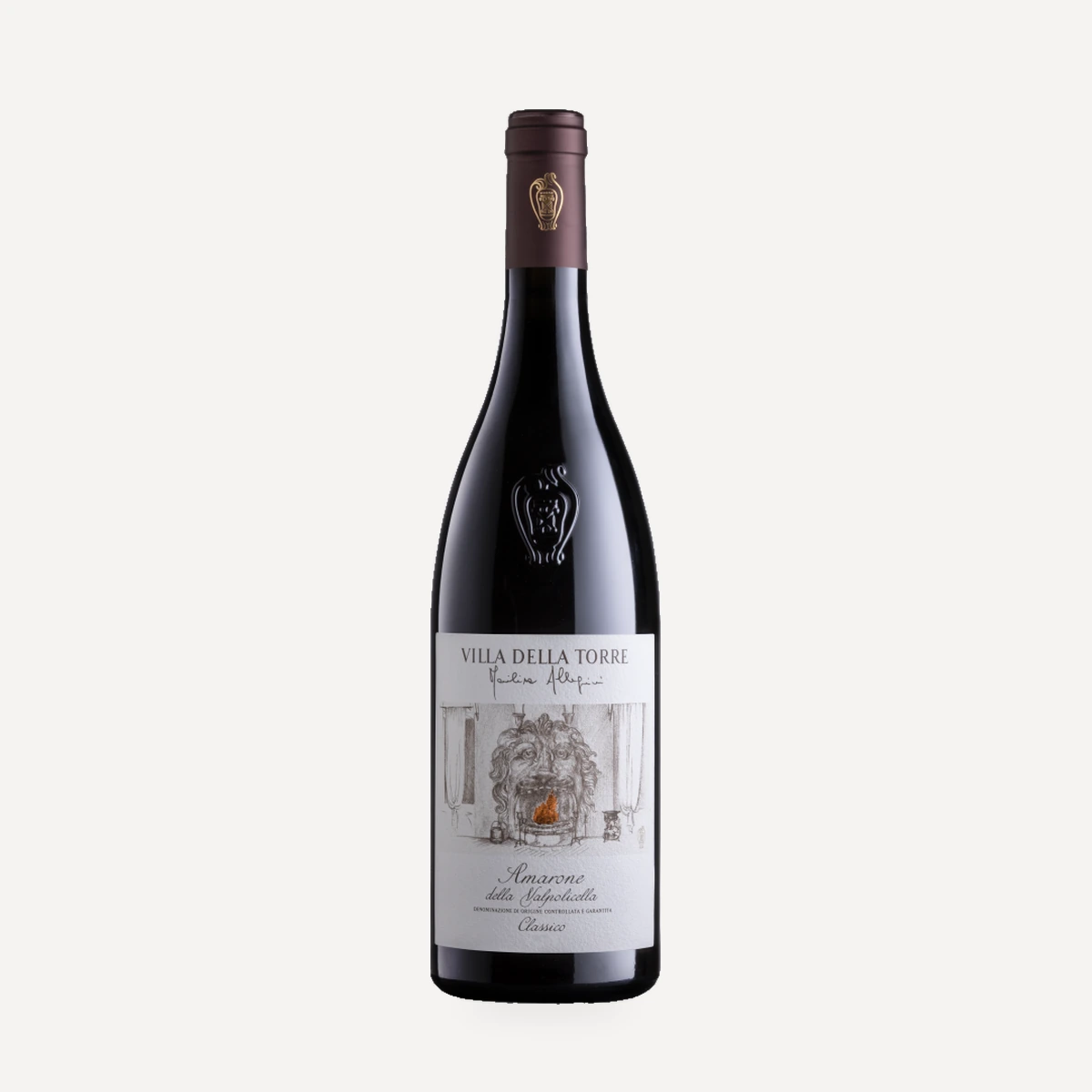
Amarone della Valpolicella Classico D.O.C.G.
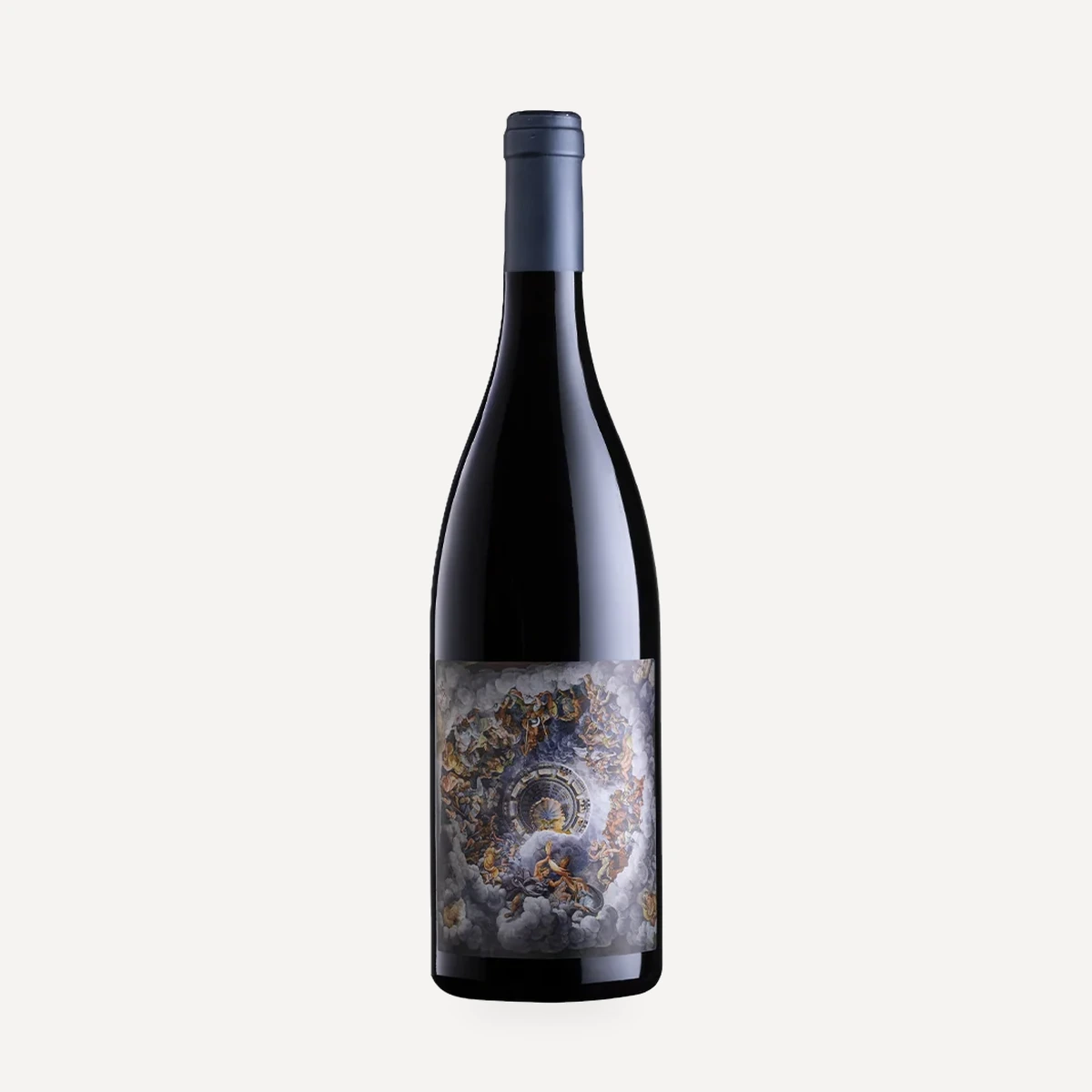
Camera dei Giganti
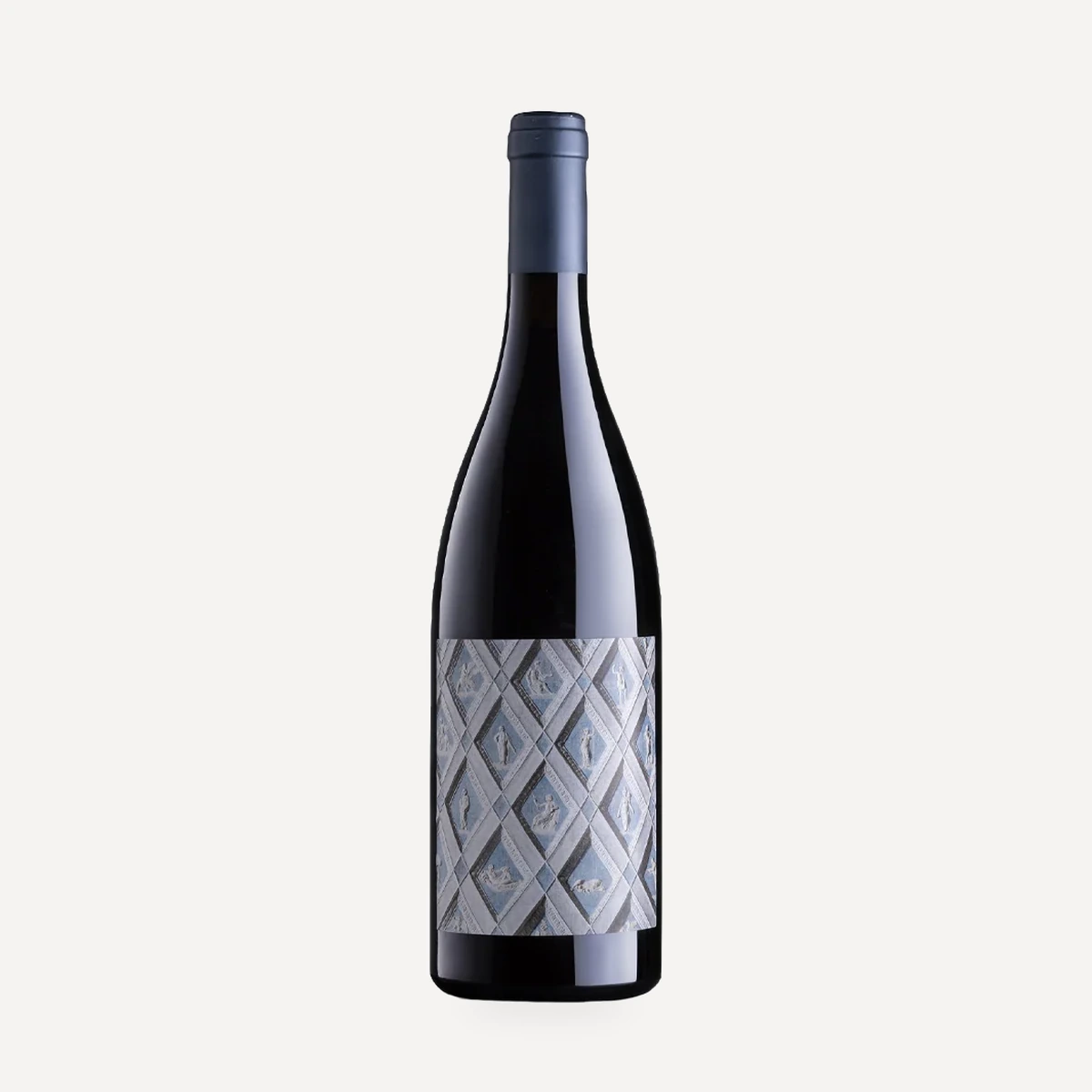
Camera del Sole e della Luna
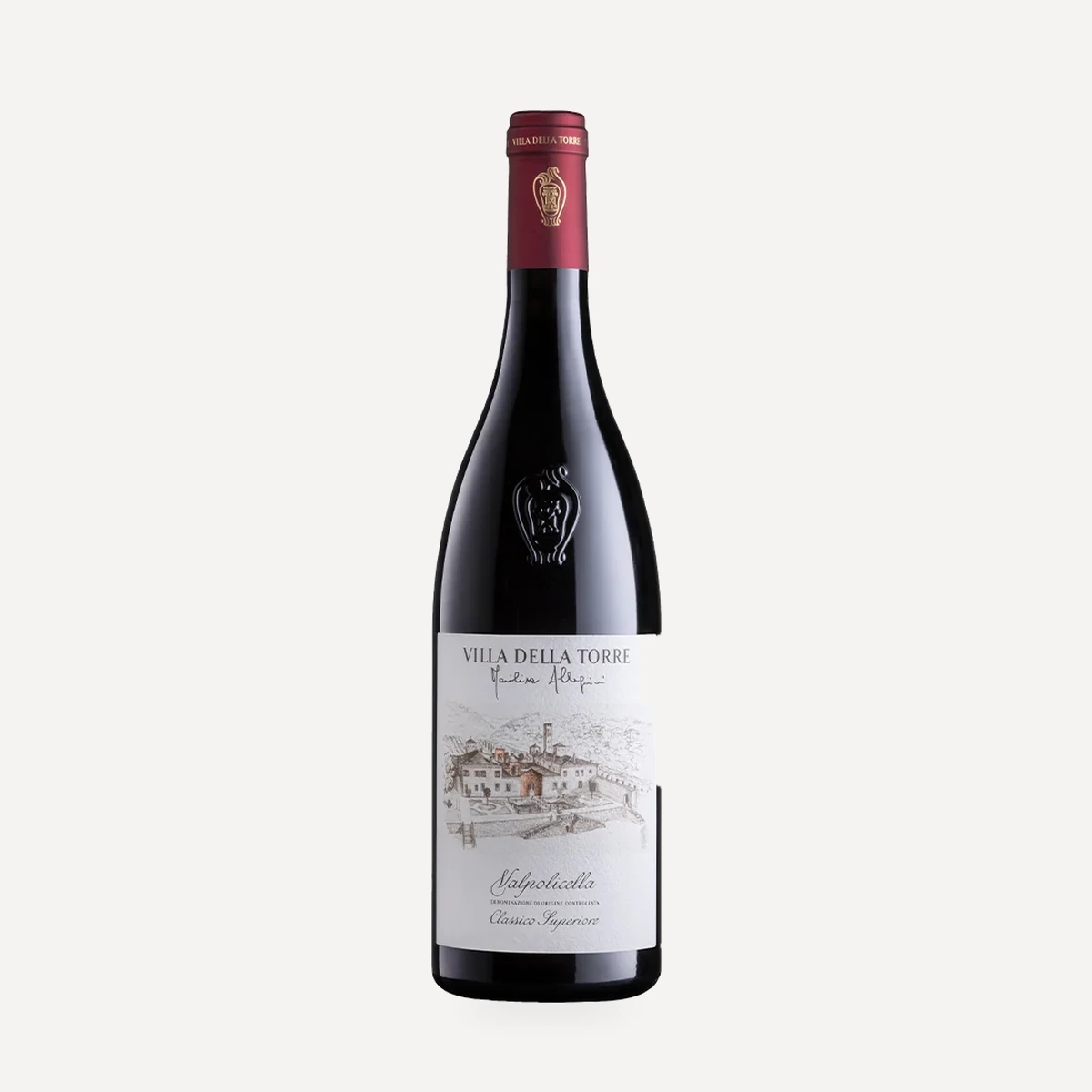
Valpolicella Classico Superiore D.O.C.