Storia
Ancient origins
Viticulture at Trasqua is presented as a heritage extending back to the threshold of the year 1000. Vines have formed part of a wider agricultural landscape of woods, olive groves, cultivated fields and white roads since Etruscan times.
Trasqua first appears formally on 4 February 1001, in a concession of land made by Countess Ava. Ava was the daughter of the Lombard Zenobi and the widow of Ildebrando, lord of Staggia. She entrusted the land identified as locum dicto Trasqua to the recently founded Benedictine convent beside the church of Abbadia Isola.
From around the year 1000 onward, the Trasqua name recurs in land registers, bequests and inheritances. The property was described as a prestigious holding that expanded and acquired more clearly defined boundaries over time. Deeds and notarial records consistently associated it with viticulture, using the Latin expression terra lavorativa et vignata—worked land planted with vines—and referring to its sortes et rebus, its lands and possessions.
A contested landscape
Between the mid-13th century and the beginning of the 15th century, the area occupied a strategic landscape of fortifications, castles and outposts contested by Florence and Siena. Florence ultimately prevailed. Across the longer course of its history, Trasqua passed through wars, revolutions, expropriations and transfers without losing its viticultural vocation.
At the highest point of the property, the church dedicated to San Michele di Rencine was built. Its ancient cult is connected with pastoral devotion to the local springs, whose waters rise in the Trasqua hills and form the Gena stream.
Recognition of Nerento
Nerento, the estate’s historic Sangiovese vineyard, was known and identified from an early period. In 1854 it was explicitly mapped as a prestigious parcel in the cadastral record. Its name is associated with the former designation Sassi Neri, or “Black Rocks,” a reference to the vineyard’s geological character. Its productive quality was already recognised by the middle of the 19th century, and it now comprises the oldest vines of the estate.
The Hulsbergen family
The Hulsbergen family purchased the estate in 2001. The present property extends across more than 120 hectares, including 54 hectares of vineyards in one contiguous holding.
Organic conversion and parcel research
In 2014 Villa Trasqua began an integral sustainability programme for its wine production and subsequently became 100% organic. The work was undertaken with oenologist Franco Bernabei and placed the vineyard ecosystem at the centre of the estate’s approach. It included massal selection of vineyard material, exclusive use of indigenous yeasts and pedoclimatic and geological studies matching grape varieties to individual soils and microclimates. The current English presentation identifies 13 distinct vineyard sections, with Nerento singled out as the estate’s principal single vineyard.
Mille Miglia partnership
Villa Trasqua became an official partner and red-and-white wine sponsor of the Mille Miglia in 2017. The partnership is connected to the estate’s idea of winegrowing as a “regularity race”: success depends on commitment, consistency and timing rather than speed. It also expresses priorities that include preserving tradition, protecting the land and practising rational viticulture in step with natural rhythms.
Terroir
Location and landscape
Villa Trasqua occupies an amphitheatre of vineyards along the southern boundary of Castellina in Chianti, within the Chianti Classico area. The estate covers more than 120 hectares, of which 54 hectares are vineyards in one contiguous holding. Vineyards alternate with undisturbed woods, olive groves, other cultivated land and white roads, forming a landscape of marked biodiversity.
Geological formation and soils
The vineyards lie on Pliocene hills that emerged between approximately 6 and 2 million years ago during a transition from a marine environment to a continental one. The soils contain bluish-green ophiolites raised from the oceanic mantle, together with sediments of gabbro, basalt and fine sandstone. They are stony, hard and rich in Galestro marl. Millennia of erosion and rainfall have impoverished the hillsides further by carrying silt and clay toward the valley.
These lean soils compel vines to search deeply for water and microelements. Their slow, measured uptake is associated with balanced fruit. Individual sites also show meaningful variation: Nerento combines Alberese limestone and Galestro marl with sand pebbles and silt, while Vermentino is grown on sandy soils containing clay, silt and Galestro. Other estate fruit is associated with clay-rich and silty-sandy soils described as cool and mineral-rich.
Microclimate
The estate lies in a hilly corridor between the Monte Ala massif to the south and the plain of the Staggia stream to the north. This configuration creates a protected but constantly ventilated microenvironment. Air movement moderates summer temperatures and contributes to a pronounced day–night temperature range, supporting aromatic development and complete grape ripening. Southern winds also sweep the hills and vineyards.
The historical toponym Spazzavento reflects this windy character. The name now identifies a vineyard parcel northeast of the winery.
Water and biodiversity
Springs rise in the Trasqua hills and give origin to the Gena stream. The springs have long been connected with pastoral devotion and were traditionally regarded as restorative. Woods, olive trees, vineyards and cultivated fields provide the setting for the estate’s organically managed vineyard ecosystem.
Vinificazione
Villa Trasqua has pursued integral sustainability in wine production since 2014 and is now 100% organic. The approach treats the vineyard as a complex ecosystem whose individual components contribute to the equilibrium of the whole.
Pedoclimatic and geological analyses were used to divide the contiguous vineyard holding into 13 sections. Soil type and microclimate determine the variety assigned to each section. This site-specific approach is described as Burgundian or French in inspiration, with Nerento distinguished as an independently vinified Sangiovese parcel.
The estate has also initiated massal selection of the plant material used in its vineyards. The objective is to preserve and reproduce material associated with the Trasqua property rather than relying solely on externally standardised clones. Vineyard work is governed by seasonal timing: operations, ripening and harvest are intended to take place at the moment when the fruit has reached its fullest expressive potential.
Organic management is linked to the preservation of a wider agricultural mosaic of woods, olive groves, cultivated fields and vineyards. Constant ventilation, moderated summer temperatures and strong day–night temperature variation form part of the growing environment.
Winemaking is organised around the identity of individual soils and microclimates. Fruit from the 13 vineyard sections is matched to the most suitable variety, while Nerento is kept separate and vinified as a single vineyard.
Only indigenous yeasts are used. Together with massal selection in the vineyards, this is intended to preserve a recognisable expression of the Trasqua property from its original biological materials onward.
Time is treated as a central production element: the estate emphasises full grape ripening, precise timing of vineyard and harvest operations, and slow, deliberate maturation in the cellar. Across the range, the cellar works with temperature-controlled stainless-steel tanks, 5,000-litre truncated-conical wooden vats, large Slavonian-oak casks, French-oak barriques and tonneaux, according to the individual wine. The estate also produces a traditional passito from Sangiovese dried on mats for at least 90 days and vinified and matured in small French-oak and Italian-chestnut caratelli.
Filosofia
Villa Trasqua frames “classic” as something that reaches beyond a specific moment: the contemporary expression of lessons accumulated over centuries. Its declared purpose is to safeguard the work of previous generations while cultivating a resource for those still to come.
Time is central to this outlook. It encompasses the rhythm of nature, the growth and complete ripening of the grapes, the precise moment for vineyard operations and harvest, and the patient maturation of wine. Winegrowing is consequently compared to a regularity race in which harmony, consistency, commitment and timing matter more than speed.
The estate places the vineyard before the cellar and views the organically cultivated property as an interconnected ecosystem. Massal selection and indigenous yeasts are intended to retain the identity of the “lands of Trasqua,” while parcel studies allow differences in soil and microclimate to guide planting and separate vinification.
Tradition is paired with technical investigation rather than treated as its opposite. Geological and pedoclimatic analysis, parcel-based management and organic farming serve a stated aim of protecting the territory, maintaining its landscape and biodiversity, and producing wines capable of expressing vintage, place and longevity.
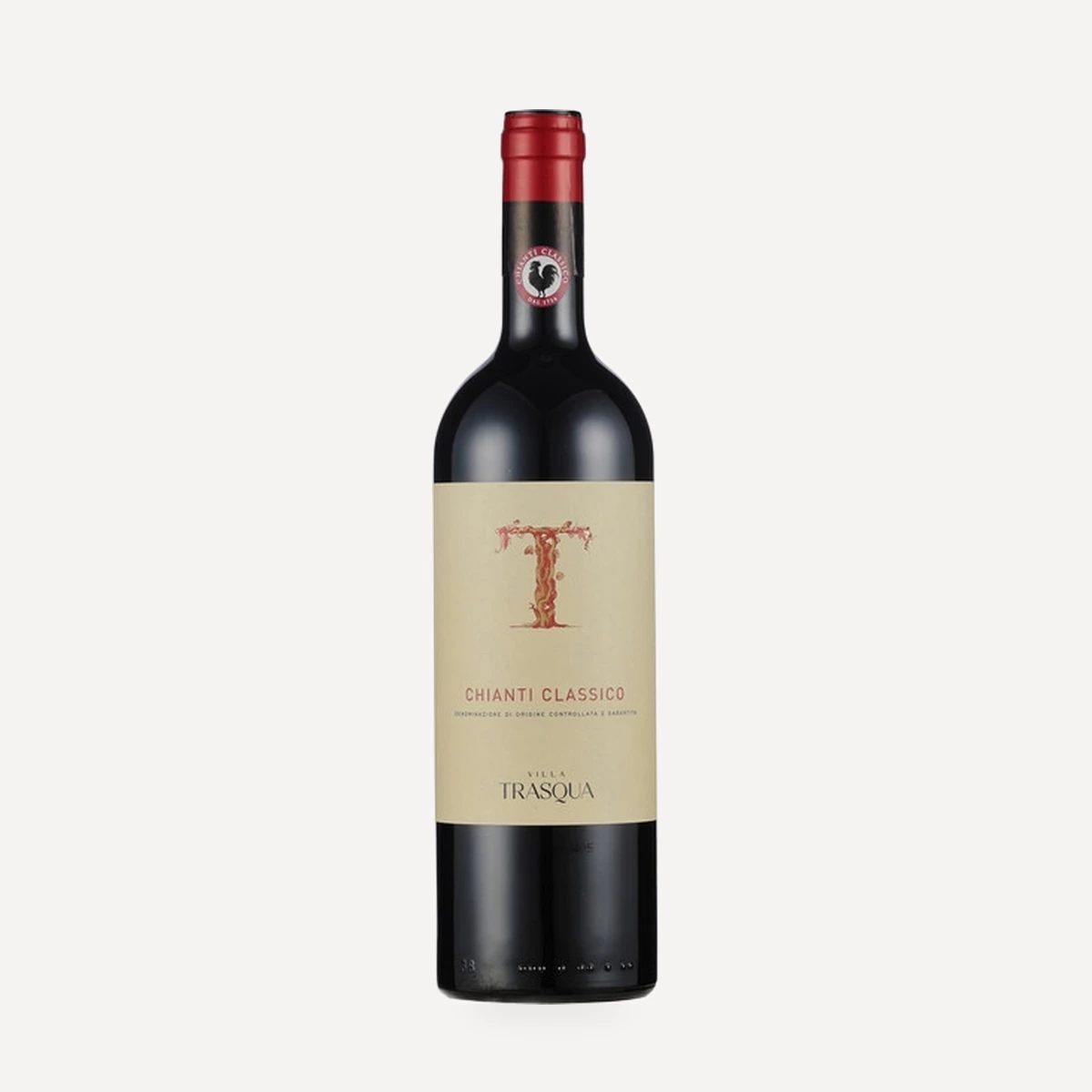
Vini
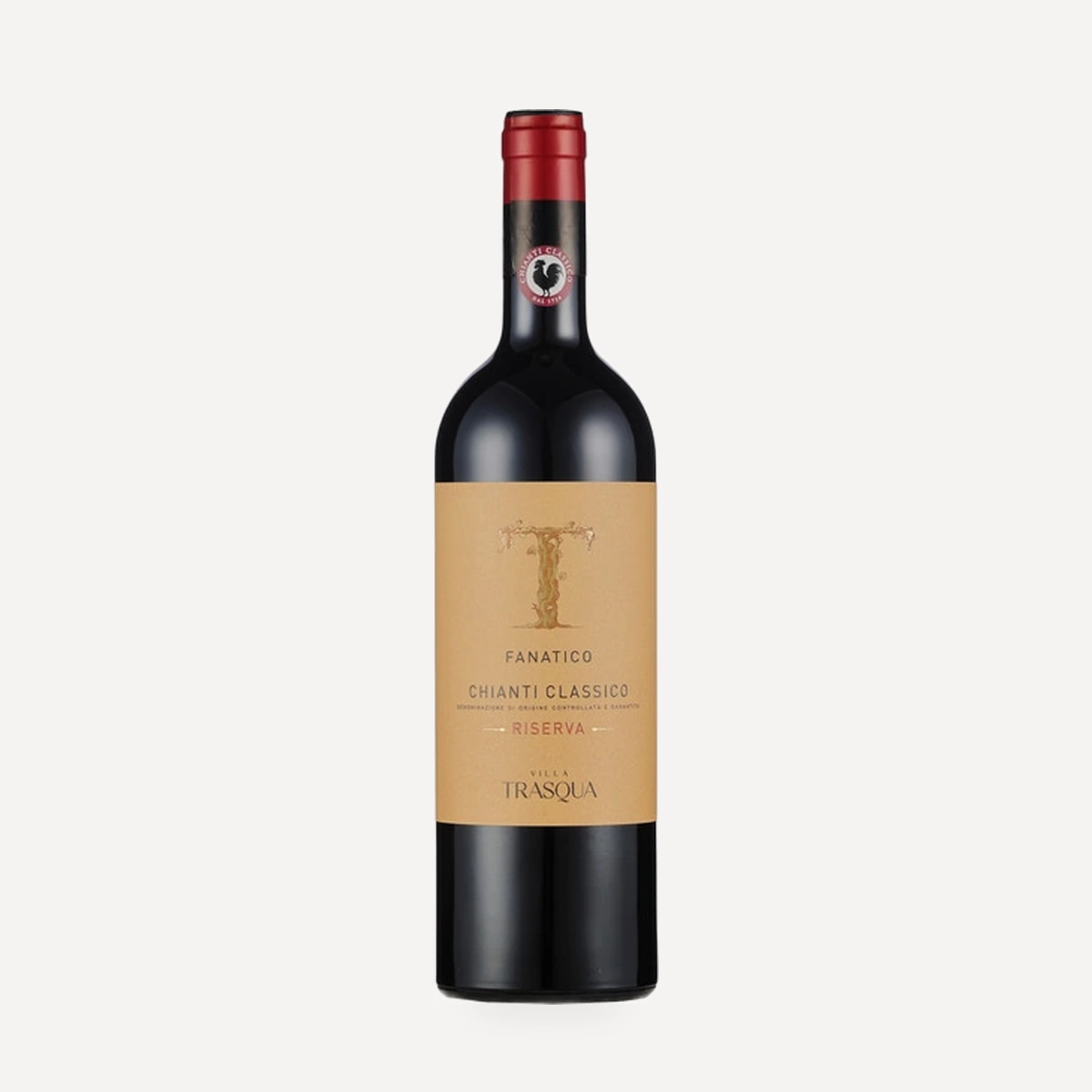
Fanatico Chianti Classico Riserva DOCG
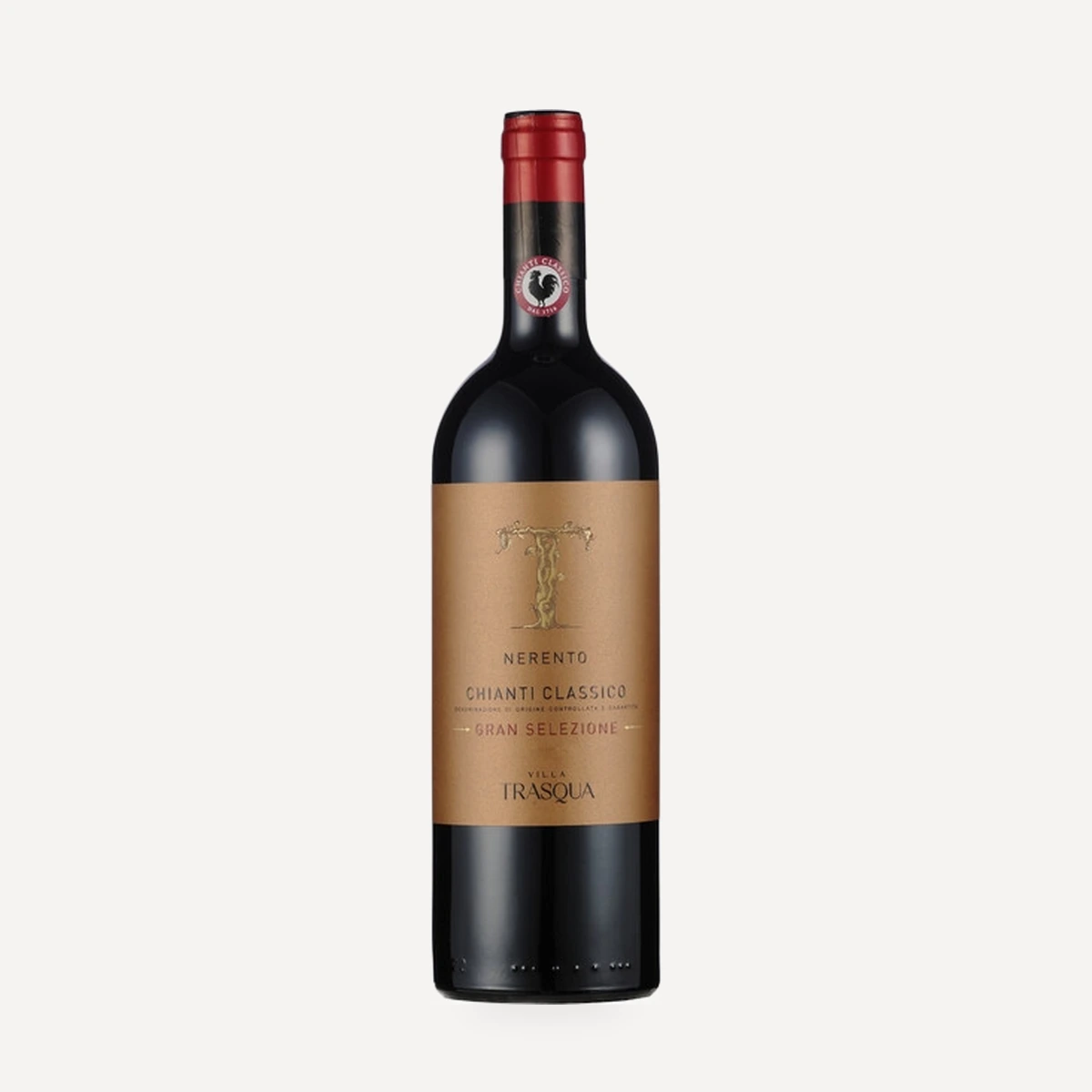
Nerento Chianti Classico Gran Selezione DOCG
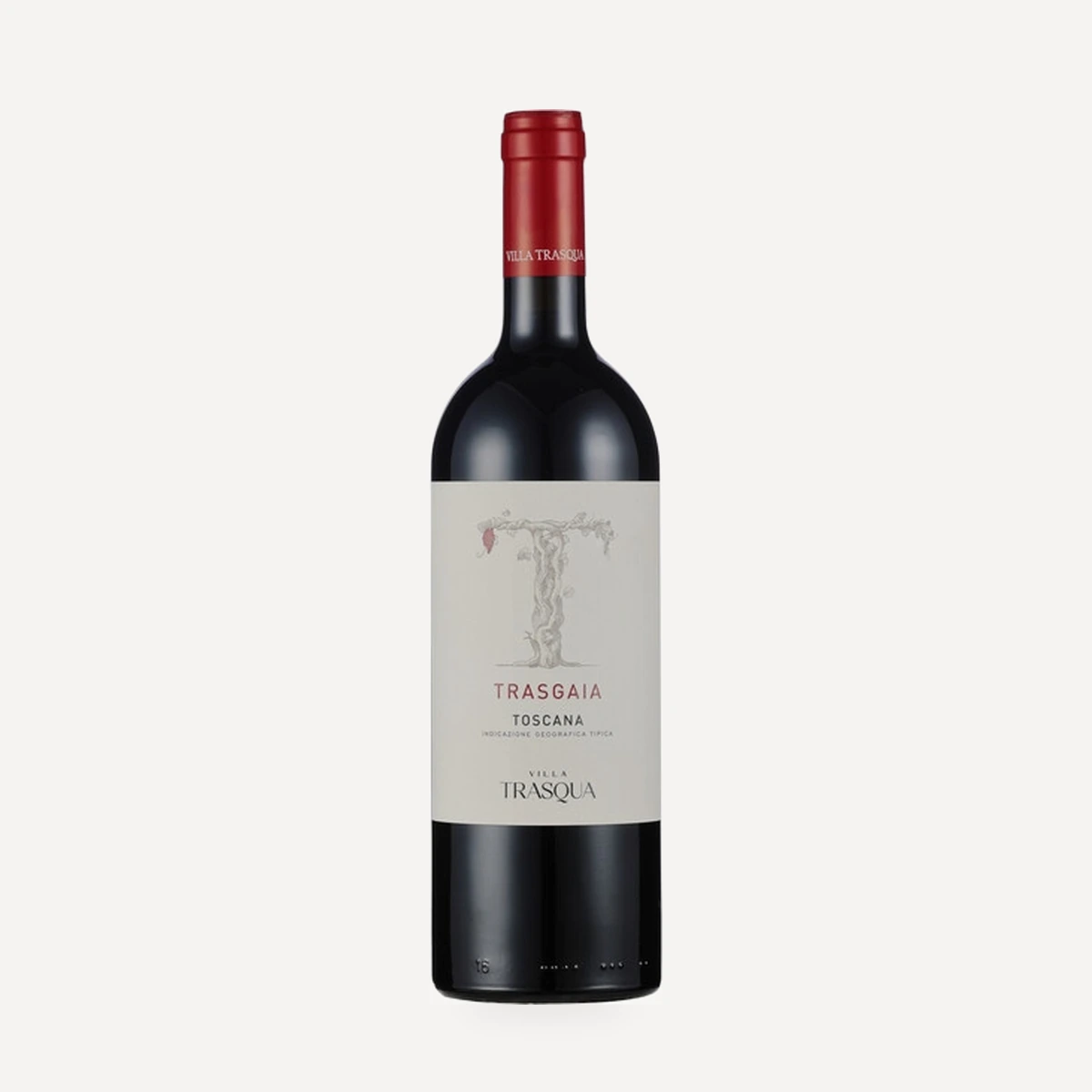
Trasgaia Toscana IGT