History
Bartolomeo and the beginning of the family tradition
The Accornero family traces its winegrowing history to 1897. The founder, Bartolomeo Accornero, was born in the first half of the 19th century and established the family tradition of cultivating vines and producing wine at Vignale Monferrato.
The estate has remained in the hands of owner-winegrowers for five generations. The continuity of ownership and direct work in the vineyards forms the central thread of its history.
Giulio Accornero and estate vinification
A decisive change came in 1957, when Giulio Accornero began vinifying the family’s own grapes. Rather than limiting the estate’s role to growing fruit, he developed an independent production path intended to reveal the viticultural potential of Vignale Monferrato.
This step established the modern direction of the winery: estate-grown grapes, direct control of winemaking and a focus on wines connected to the hills and soils of Monferrato Casalese.
The fifth generation
Today, Ermanno Accornero continues the family business with his daughters Francesca and Giulia. Their work follows the quality-oriented direction established by earlier generations while retaining traditional regional methods and introducing modern cellar technology.
The family presents improvement as a continuous process rather than a break with the past. Vineyard care, time, manual work and the transmission of values to the next generation remain central to the estate’s identity.
The modern winery and hospitality
The cellar has been equipped with modern technology while preserving traditional winemaking practices. Production is based on estate-grown grapes from 25 hectares of vineyards at Ca’ Cima in Vignale Monferrato.
The estate has also developed direct hospitality. Visitors can tour the vineyards, vinification cellar and ageing cellar and taste selections centred on the native grapes of Monferrato. A recently renovated country house at the winery provides rooms with private bathrooms and a total capacity of eight guests, although reservations are currently suspended.
Terroir
Ca’ Cima lies in the municipality of Vignale Monferrato, within Monferrato Casalese in north-eastern Piedmont. The surrounding hills descend toward the Po River and form the historic territory associated particularly with Barbera and Grignolino.
The landscape is predominantly hilly and originated during the Tertiary period, when the land emerged from the sea that occupied the Po Valley. Its soils contain Miocene sandstone and calcareous marl, locally described as terre bianche, or white soils. Fossilised shells can still be found within them.
These pale marly-calcareous soils are poor in organic and mineral matter but rich in calcium carbonate. Clay and rock occur at greater depth. The estate connects these conditions with wines of body, colour and ageing capacity.
Tuffaceous areas of Monferrato also allowed generations of winegrowers to excavate underground cellars known as infernot. Their naturally stable temperatures made them suitable for storing bottles. The infernot tradition forms part of the UNESCO-recognised cultural landscape of the area.
Winemaking
All grapes are grown in the estate’s own vineyards at Ca’ Cima. Vineyard management is described as respectful of the land and environment, with daily care and direct family involvement.
Pruning follows the traditional Guyot system. In August, bunch thinning is carried out and the best clusters are selected. Harvest takes place by hand during September and October.
The estate places particular emphasis on time and patient vineyard work. Its philosophy presents dedication, individual and collective labour, care for the soil and the responsibility to transmit family values as inseparable from wine quality.
No organic, biodynamic or sustainability certification is published. The website does not specify cover crops, tillage, fertilisation, irrigation, disease-control materials, planting density, vine age across the estate or numerical yields.
The cellar combines modern equipment with traditional Monferrato winemaking methods.
Grapes are destemmed before vinification. Red-wine fermentation is carried out with a submerged cap, accompanied by programmed pump-overs. Fermentation and maceration temperatures are controlled in stainless-steel tanks.
After maceration, the grapes are pressed gently. Ageing continues in 500-litre oak tonneaux. Bottled wines are stored in a climate-controlled room.
The estate also produces a Metodo Classico Blanc de Blancs from Cortese. For this wine, hand-harvested and selected whole bunches are pressed intact. Alcoholic fermentation takes place in stainless steel, followed by ageing on fine lees with periodic bâtonnage until tirage in the spring after harvest. The wine then remains on its lees for at least 36 months and is disgorged with an Extra Brut dosage.
Production practices vary across the range, but the estate-level cellar description consistently emphasises submerged-cap vinification, temperature control, gentle pressing, 500-litre oak and climate-controlled bottle storage.
Philosophy
Accornero’s philosophy is organised around tradition, dedication, effort, passion, the land, time and family continuity.
Tradition means looking forward without rejecting the past. Modern technology is accepted in the cellar, but it is used alongside practices associated with the region and the family’s previous generations.
Dedication is expressed through continuous vineyard care. Effort includes both individual work and cooperation within the family and team. Passion is treated as the force that sustains this work.
The land is regarded as exceptional and capable of giving wines a distinct territorial identity. Time is equally important: quality cannot be rushed, whether in the vineyard, during maturation or across generations.
The present generation sees itself as responsible for passing these values onward. The purpose is not only to preserve a family inheritance but to improve it with judgement and foresight.
Wines
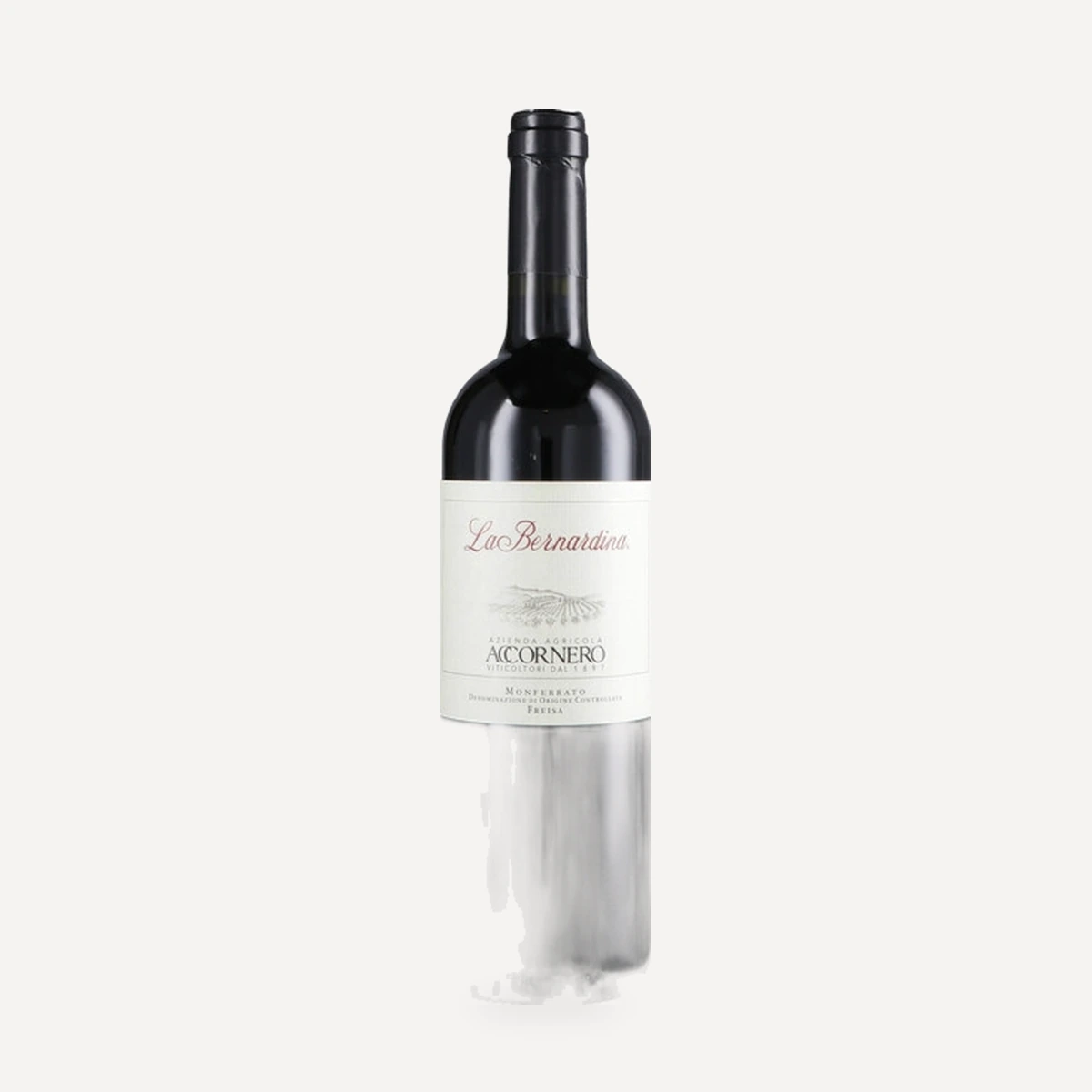
La Bernardina Freisa Monferrato DOC
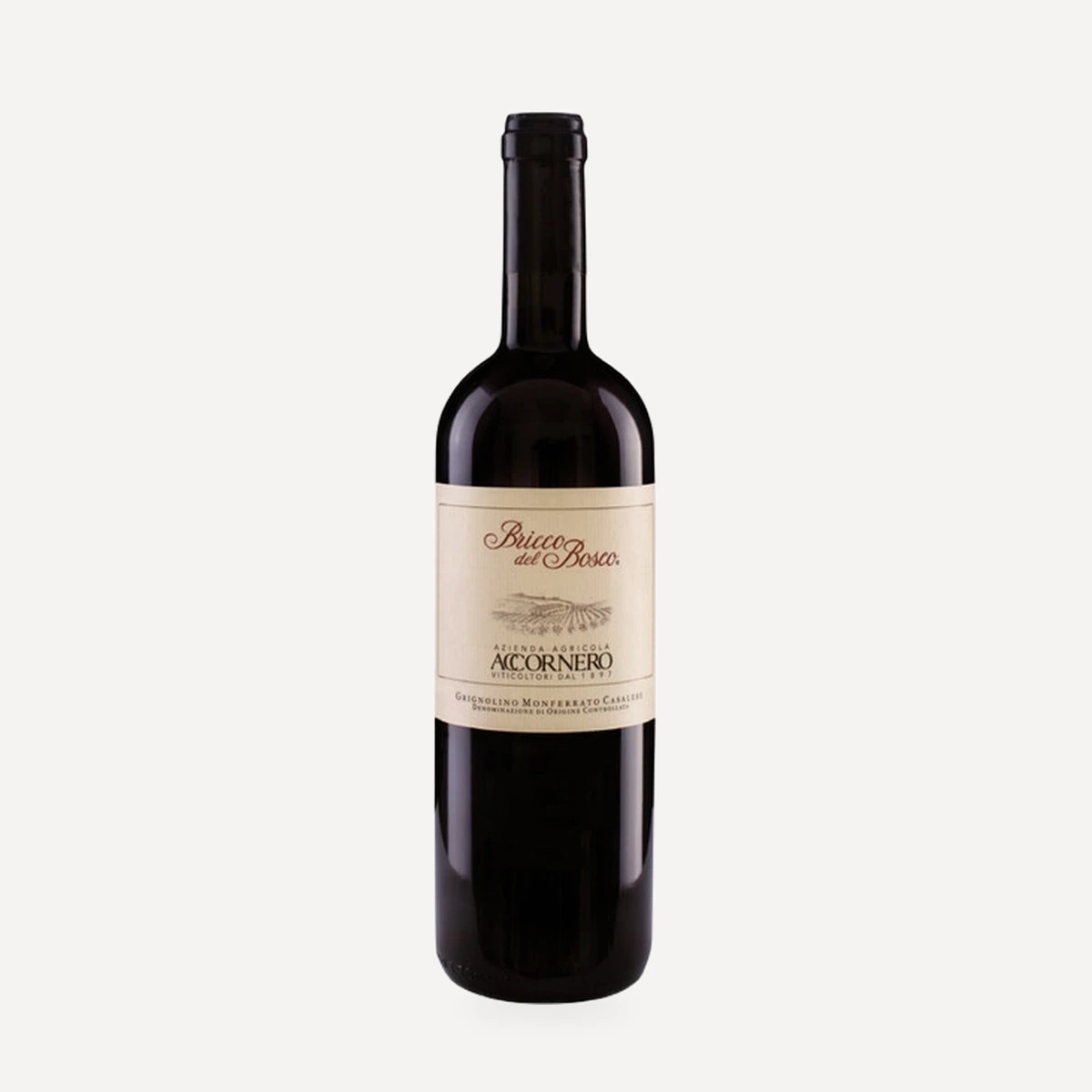
Bricco del Bosco Grignolino del Monferrato Casalese DOC
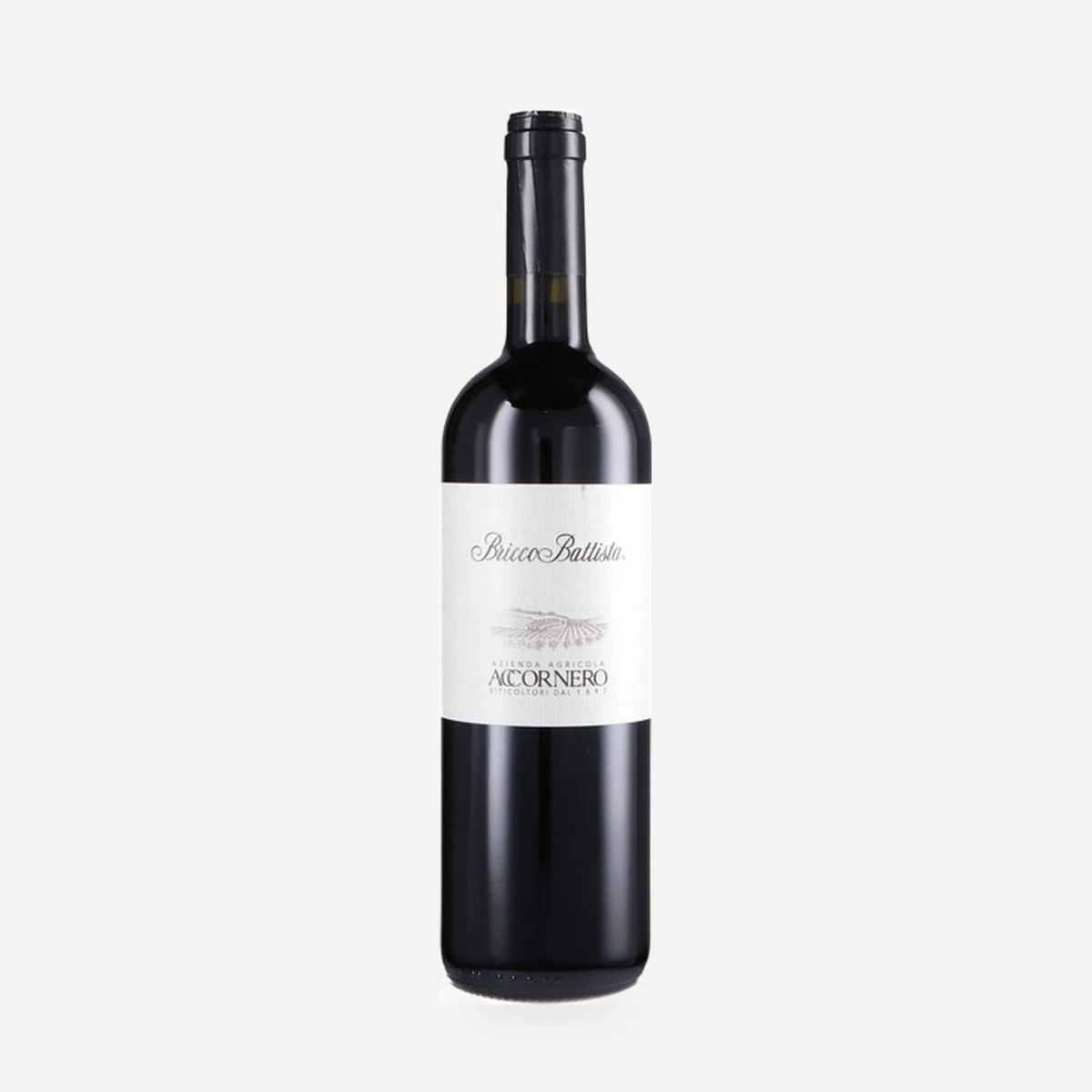
Bricco Battista Barbera del Monferrato Superiore DOCG
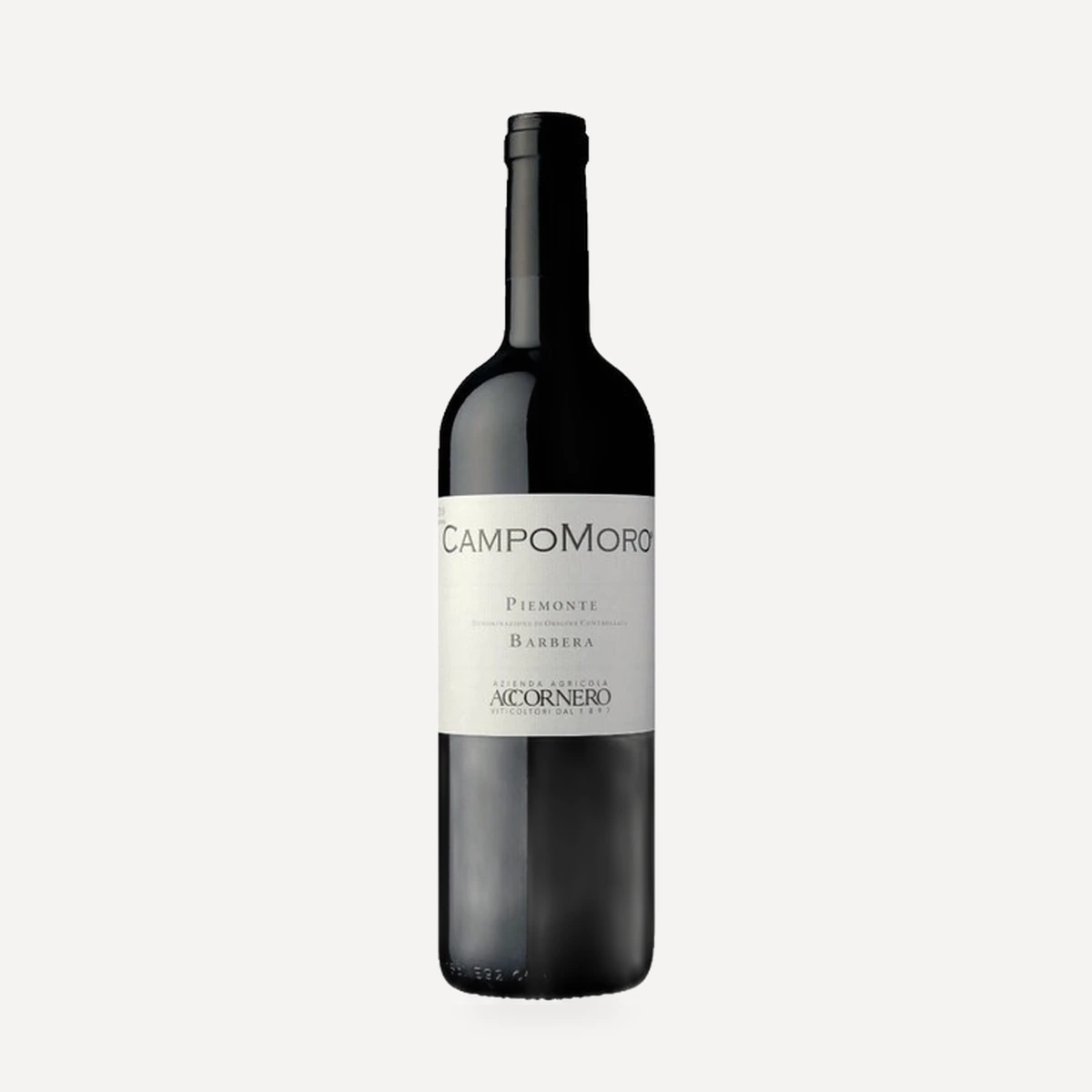
CampoMoro Barbera Piemonte DOC
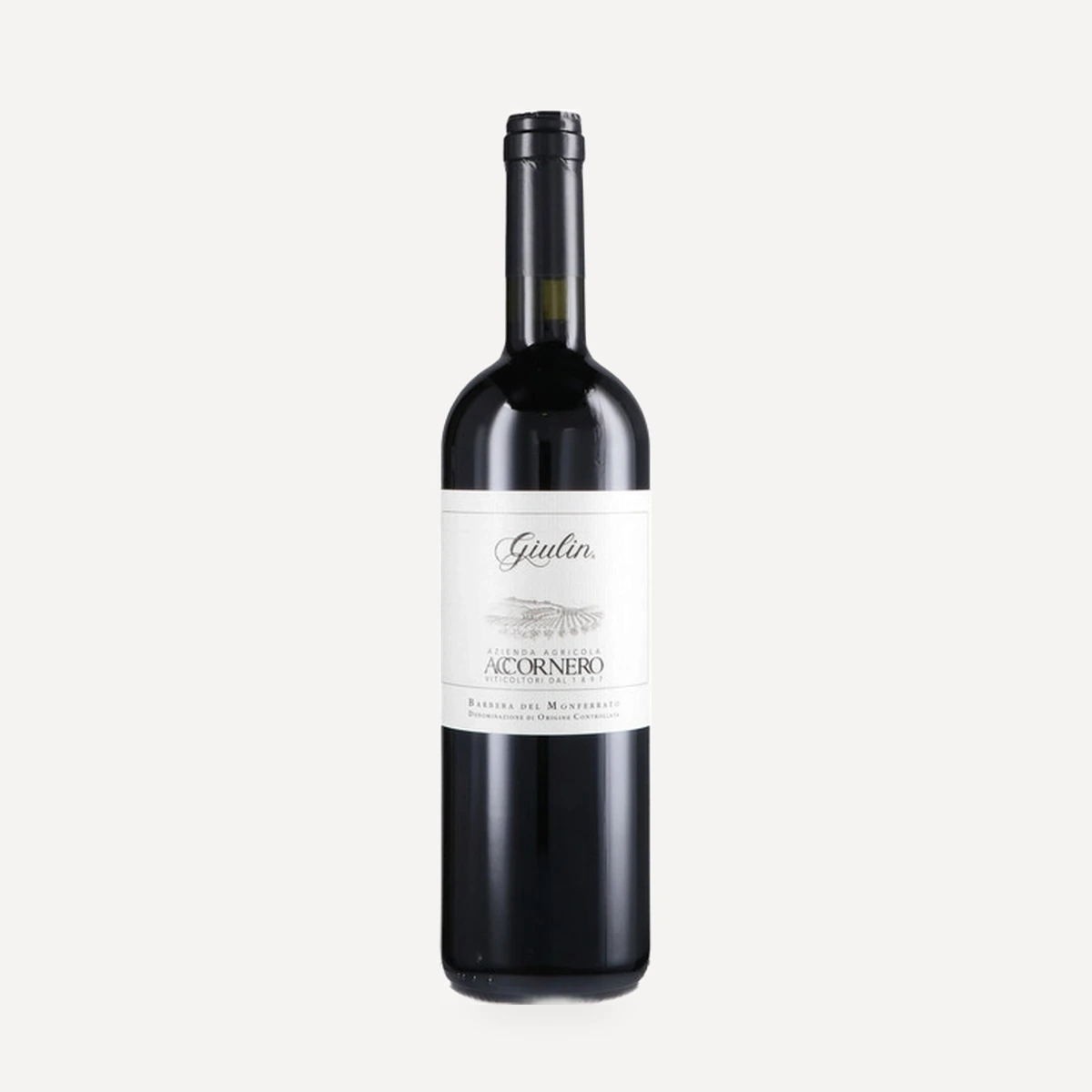
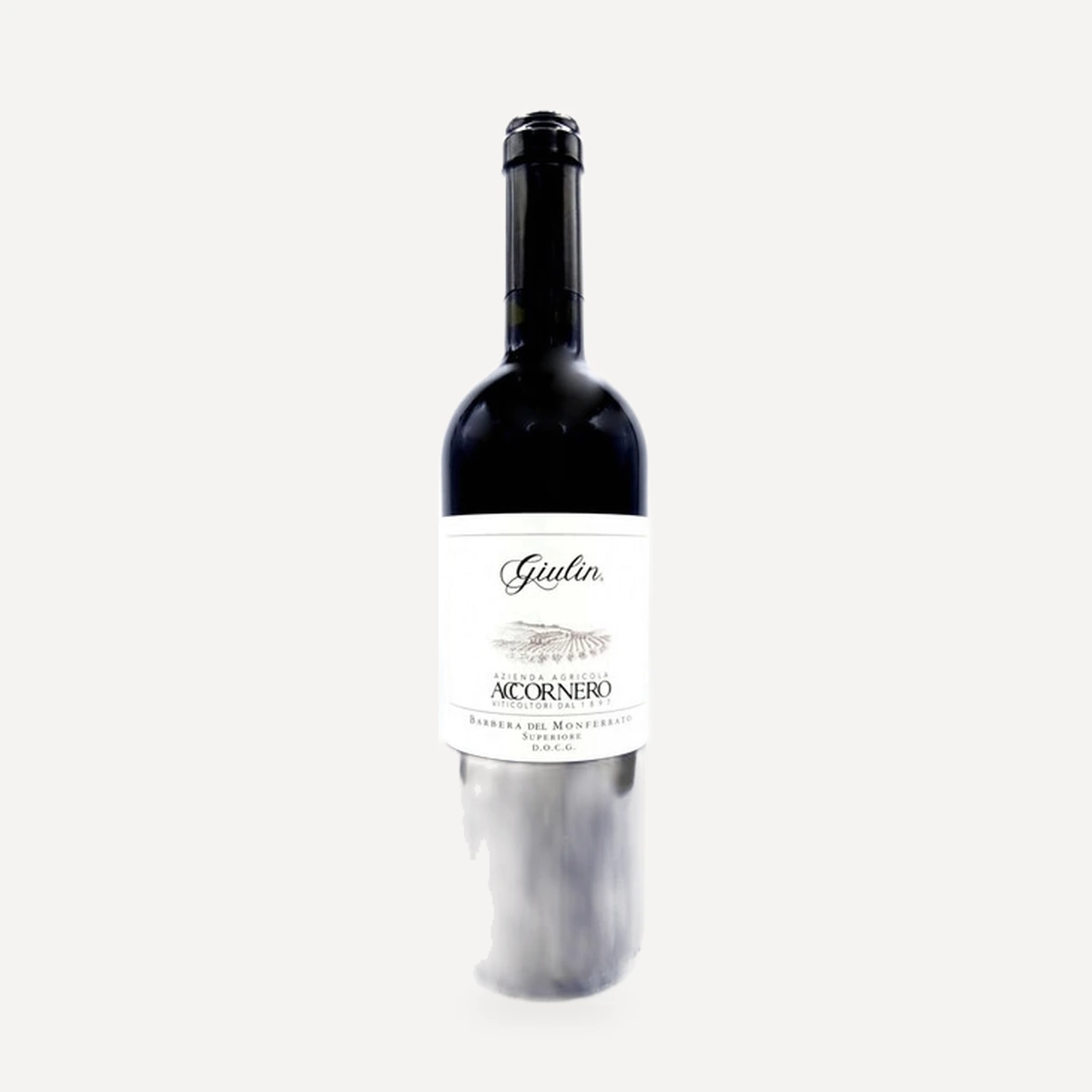
Giulin Barbera del Monferrato DOC