History
The Arbëreshë origins of the cellars
The setting in which Basilisco works has a history extending well beyond that of the estate. During the 15th century, Albanian refugees escaping Turkish pressure settled in several parts of southern Italy and established communities that have survived into the present. Barile became one of these Arbëreshë, or Italo-Albanian, settlements. Its inhabitants excavated dozens of caves in the local tuff, initially using them as dwellings. These caves now form the distinctive Shesh, the historic Park of the Cellars of Barile.
Basilisco occupies a noble 16th-century palace on Via delle Cantine. Its spaces for winemaking and wine storage extend into the Shesh caves beneath and around the property. The same cave landscape was selected by Pier Paolo Pasolini as a setting for The Gospel According to Matthew.
Foundation in the early 1990s
Basilisco was established at the beginning of the 1990s. From its inception, the project pursued high quality in both vineyard and cellar, building its identity around the historic territory of Aglianico del Vulture, the tuff cellars of Barile and vineyards in the commune’s most highly regarded contrade.
Integration with Feudi di San Gregorio
At the beginning of 2011, Feudi di San Gregorio—already active in the Vulture area for more than a decade—began a project to recover the ancient lava caves of the Shesh. The initiative renewed its commitment to the viticultural potential of Vulture and culminated in the acquisition of neighbouring Basilisco.
Basilisco subsequently became part of the group controlled by Feudi di San Gregorio. The estate combines its historic premises and underground cellars with 25 hectares of organically farmed vineyards. Viviana Malafarina manages the estate and directly oversees its cellar work, while Pierpaolo Sirch provides technical guidance and is also responsible for vineyard management.
Terroir
Basilisco lies in Barile, on the slopes of the Vulture volcano, within the historic heartland of Aglianico del Vulture. The volcano’s last eruption occurred approximately 130,000 years ago; the estate presents the subsequent natural equilibrium as the foundation of the area’s viticultural character.
The estate’s 25 hectares occupy highly regarded contrade within the commune of Barile. The vineyards range from 450 to 600 metres above sea level and face southeast. Volcanic soils form the broad geological context, while individual sites reveal distinct features.
Contrada Fontanelle is marked by numerous springs flowing beneath its vineyards, conditions associated with vigorous vine growth. Contrada Le Querce contains marl-rich soil. In contrada Piano di Croce, the soil is rich in limestone. Fiano is cultivated on volcanic ground above 500 metres. The older Aglianico vineyard associated with Storico is a garden-like site in which fruit trees grow among the vines.
Winemaking
All 25 hectares are farmed organically. The vineyards occupy Barile’s most highly regarded contrade at elevations of 450–600 metres, with southeast-facing exposures, and are planted predominantly to Aglianico.
Pierpaolo Sirch’s approach is based on allowing soil and plants to attain an appropriate natural balance. The objective is to obtain the best possible fruit while intervening as little as possible. The viticultural landscape retains small vines trained in the traditional capanno form, including an old garden-vineyard where Aglianico vines more than 80 years old coexist with fruit trees. A separate Aglianico site in Piano di Croce contains vines more than 40 years old.
Basilisco’s winemaking and wine-storage facilities occupy historic caves in the Shesh, the old cellar district of Barile. These spaces were excavated in local tuff and form part of the underground fabric associated with the estate’s noble 16th-century palace on Via delle Cantine.
Viviana Malafarina directly supervises cellar operations under Pierpaolo Sirch’s technical guidance. The estate’s broader production philosophy connects organic vineyard management, balanced vines and soils, limited intervention and the use of Barile’s historic underground winemaking and maturation spaces.
Philosophy
Basilisco’s stated objective is high quality in both vineyard and cellar. Its approach centres on the relationship between vines, soil and the individual contrade of Barile rather than on imposing a uniform style across the estate.
Pierpaolo Sirch’s guiding principle is to let plants and soil achieve their proper balance. This balance is intended to produce the best possible fruit while keeping intervention to a minimum. Organic management across the entire vineyard area, preservation of old capanno-trained vines and continued use of the historic Shesh cellars connect this approach with the viticultural and architectural heritage of Barile.
Wines
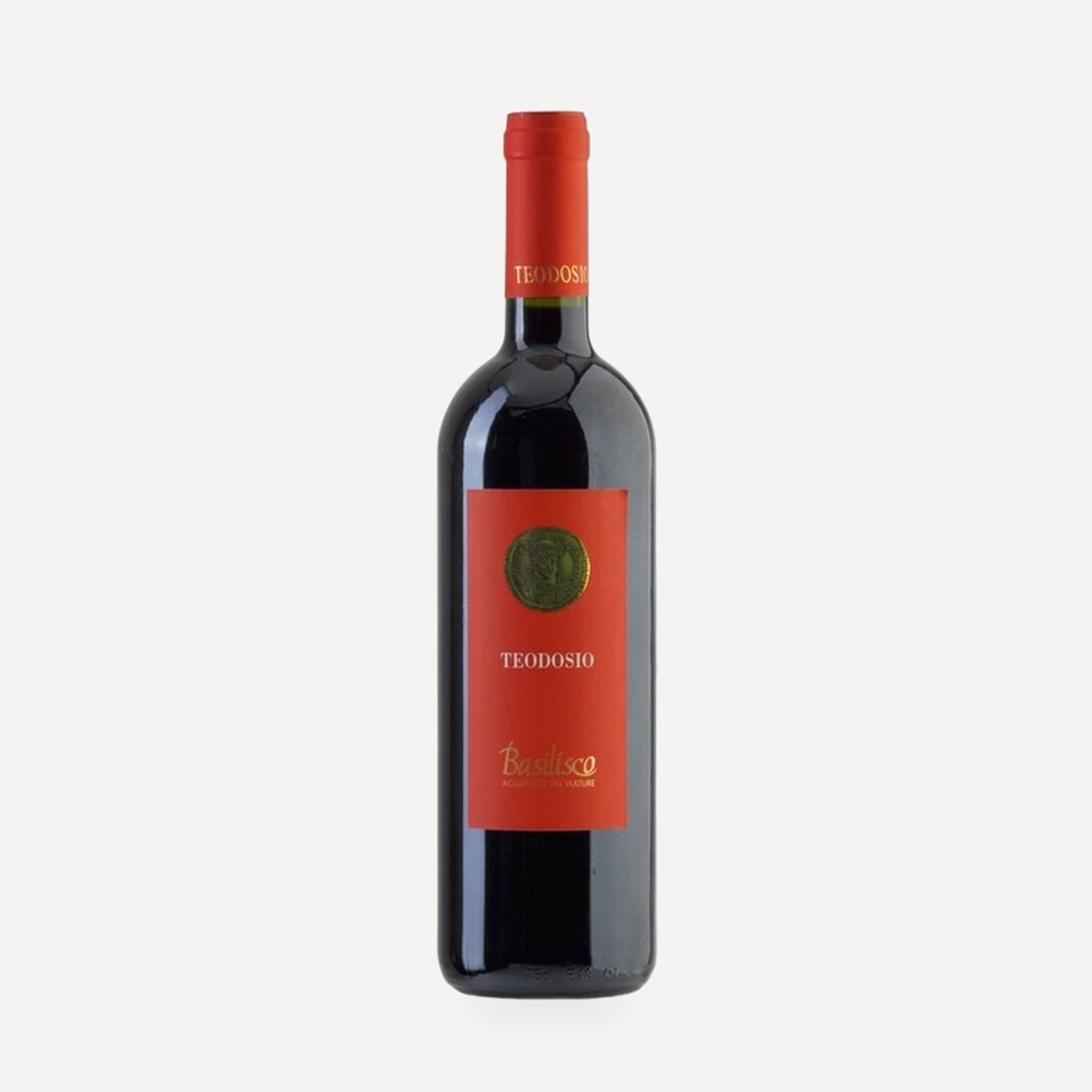
Teodosio Aglianico del Vulture DOC