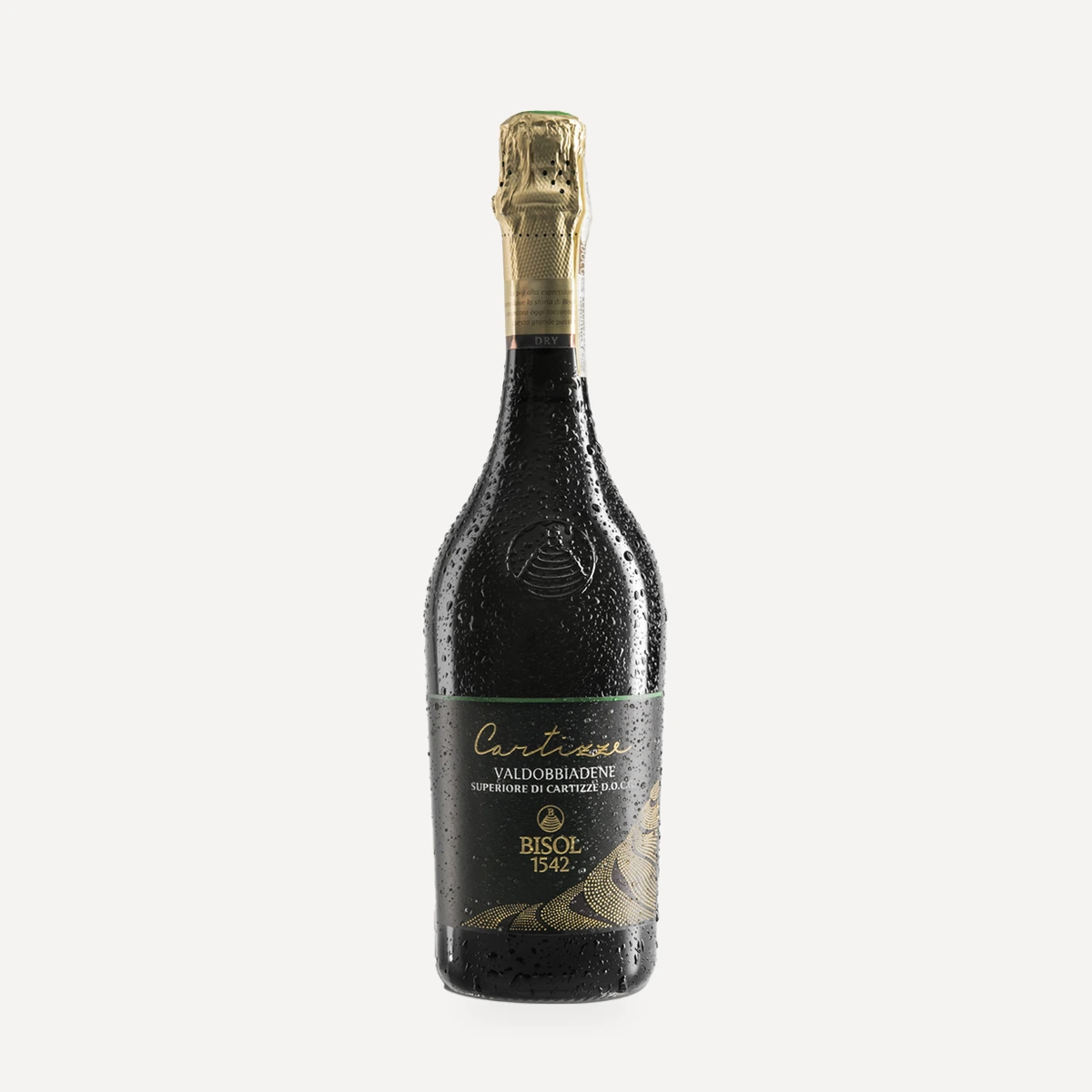
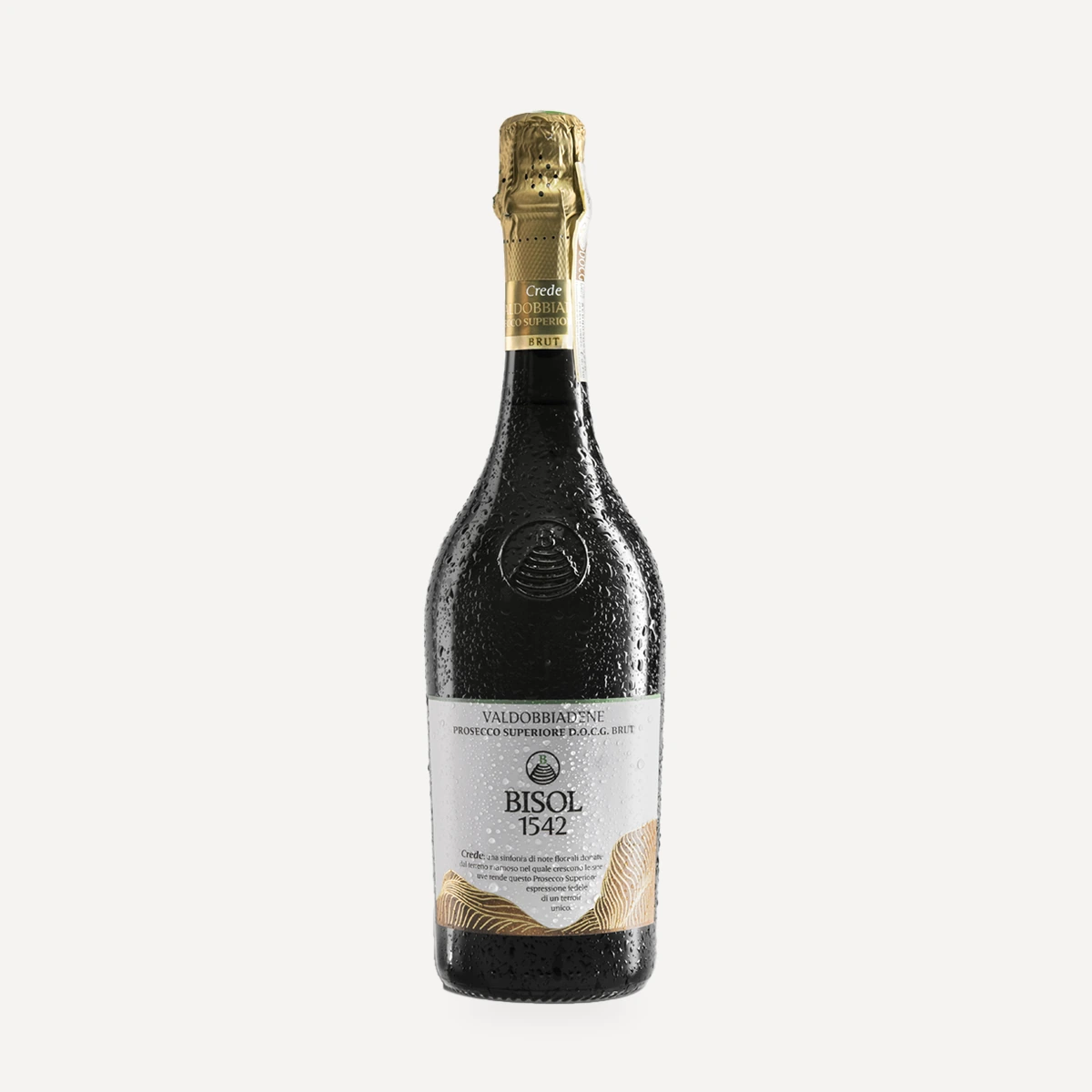
Dionysus.
ExploreWines
Est. 1542Conegliano Valdobbiadene DOCG21 generationsHeroic viticulture

Bisol1542

History

Sixteenth-century roots

The Bisol family's documented relationship with vines and wine reaches back to 1542 in Chartice, the historic name of the hill now known as Cartizze. The family has consequently been associated with the historic heart of Prosecco production for five centuries and 21 generations. Its presence on Cartizze predates the modern appellation system by centuries.

Eliseo Bisol and the First World War

At the beginning of the 20th century, Eliseo Bisol established a small but prosperous wine business. Its development was interrupted by the First World War: Valdobbiadene lay directly on the front separating Austro-Hungarian and Italian forces, temporarily bringing the family's activity to a halt.

Desiderio “Jeio” Bisol and the revival of the 1920s

Eliseo's son Desiderio Bisol restored the family's centuries-old winegrowing activity by the middle of the 1920s. His wife affectionately called him “Jeio,” a name later retained by the family's second label.

In the years after the Second World War, Desiderio crossed the hills between Valdobbiadene and Conegliano on a red Moto Guzzi motorcycle, searching for vineyards to acquire. He sought complementary terroirs whose different qualities could be preserved and expressed through the wines. His preference was for steep, demanding sites whose gradients and soil composition were particularly suited to Glera.

Desiderio later divided responsibilities among his four sons according to their training. Antonio Bisol handled administration, Eliseo Bisol oversaw winemaking, Aurelio Bisol managed the vineyards, and Claudio Bisol directed the general running of the company. Antonio continued the family's search for difficult but high-quality hillside parcels.

The historic cellar

The historic family cellar in Santo Stefano di Valdobbiadene dates from the end of the 19th century. Carved into the rocky ground like a natural cave, it has been preserved with its original details intact. Its year-round temperature of 10–15°C made it suitable for conserving the family's most prestigious historic bottles.

Gruppo Lunelli and a new phase of investment

Bisol became part of Gruppo Lunelli in 2014. The acquisition linked the estate to the Lunelli family's group of Italian beverage businesses while retaining Gianluca Bisol in a leading role. From 2014 onward, substantial investment was directed to both vineyards and cellar, with agricultural and methodological requalification, closer control of harvesting, biodiversity protection and more precise parcel-by-parcel production.

In 2018 the identity was formally restyled as Bisol1542. The redesigned mark emphasized the documented year 1542, incorporated a rounded reference to the Cartizze hill and used bright green to evoke both environmental responsibility and the hills of Valdobbiadene.

Cru-focused production

The estate had been producing single-vineyard expressions before Conegliano Valdobbiadene received DOCG recognition in 2009. Its holdings subsequently comprised 20 vineyards with differing slopes and exposures, concentrated around Valdobbiadene and including land at the summit of Cartizze.

A new Cantina dei Cru was established as part of the post-2014 quality programme. It allows musts to be handled separately and each parcel to receive a tailored vinification. Harvesting was refined through the use of bins, helping protect fruit transported from the steep hillside vineyards.

Recent projects

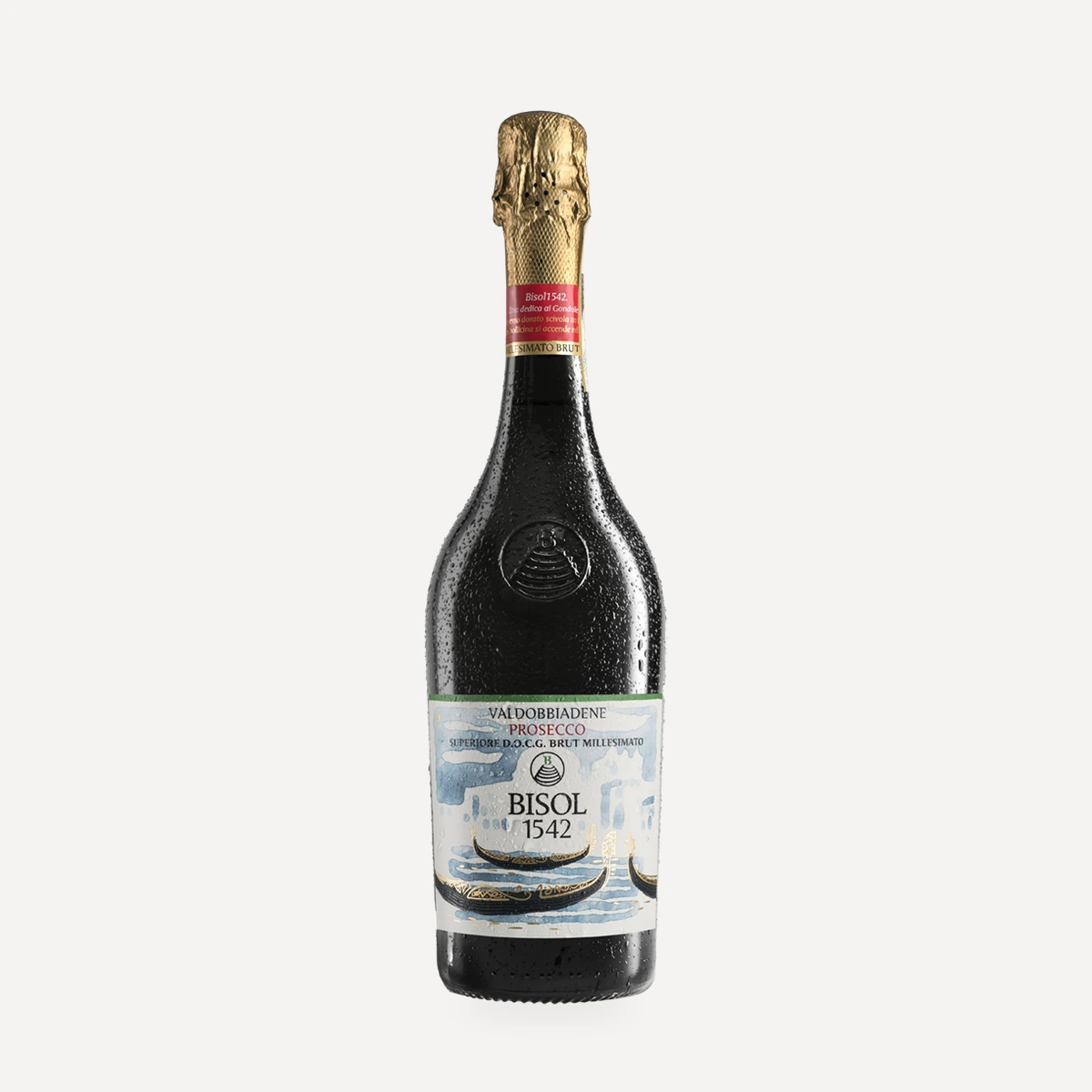
In 2022 Bisol1542 introduced Edizione I Gondolieri through an official partnership with the Venice Gondoliers’ Association. The project connected the manually cultivated hills of Valdobbiadene with Venice and made the wine the association's official Prosecco.

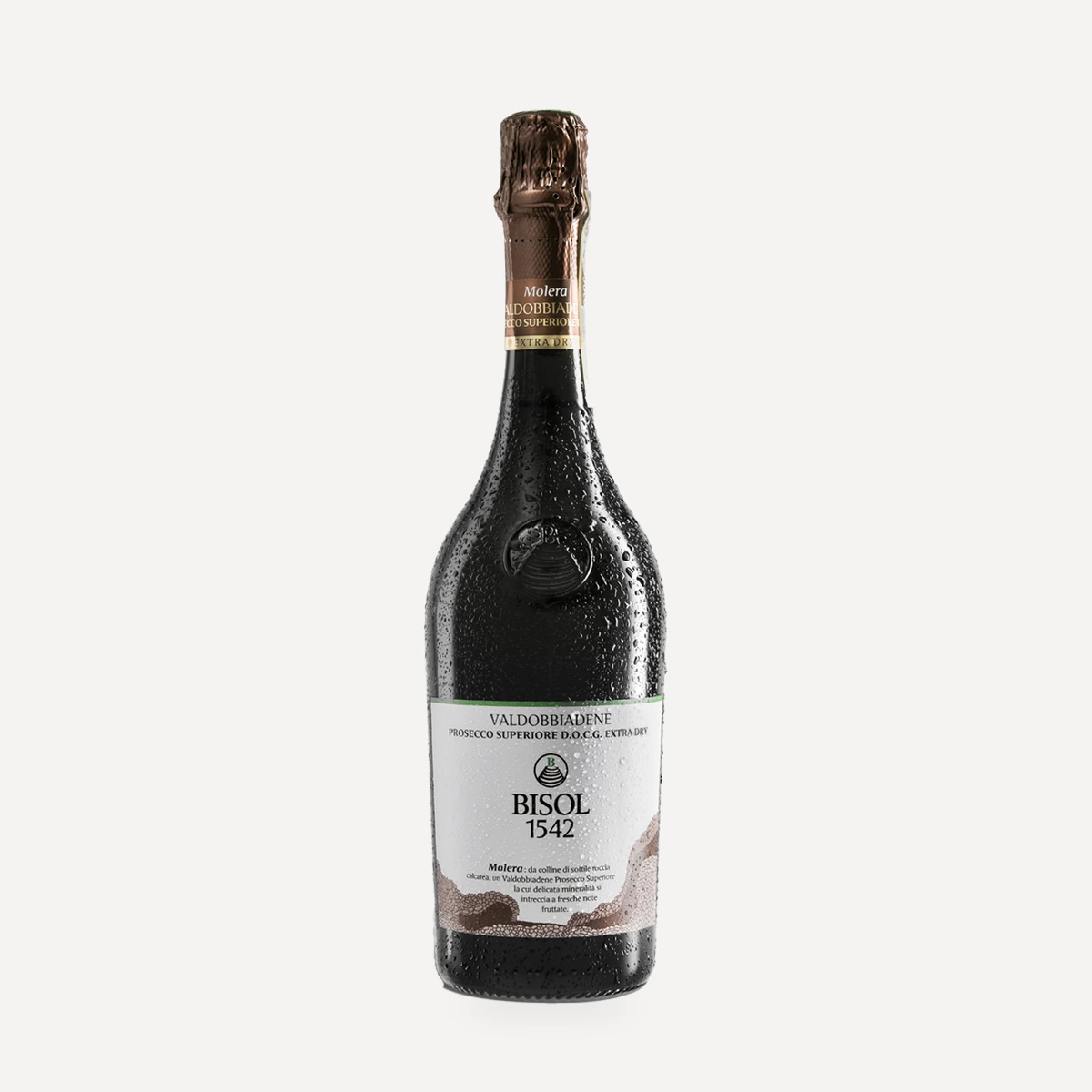
The continuing vineyard and cellar programme received prominent recognition in 2024, when Molera Extra Dry 2023 earned Tre Bicchieri in the 2025 edition of Vini d’Italia. Further international results followed in 2025, including the International Wine Challenge's Italian Sparkling Trophy for Crede 2024.

1542Records attest to the Bisol family's cultivation of vines and production of wine in Chartice, the present-day Cartizze hill.
Late 19th centuryThe historic cellar in Santo Stefano di Valdobbiadene dates from this period.
Early 20th centuryEliseo Bisol establishes a small but prosperous wine business.
1914–1918The First World War interrupts the business while Valdobbiadene lies on the Austro-Hungarian–Italian battlefront.
Mid-1920sDesiderio Bisol, son of Eliseo, restores the family's winegrowing activity.
After 1945Desiderio travels between Valdobbiadene and Conegliano on his red Moto Guzzi, acquiring steep vineyards across complementary terroirs.
20th centuryDesiderio assigns administration to Antonio, winemaking to Eliseo, vineyard management to Aurelio and general management to Claudio.
2009Conegliano Valdobbiadene receives DOCG recognition; Bisol had already been producing single-vineyard cru expressions before the classification.
2014Bisol joins Gruppo Lunelli, beginning a phase of significant investment in vineyards and cellar.
2018The identity is restyled as Bisol1542, foregrounding the documented founding year and the connection with Cartizze.
2019The Conegliano Valdobbiadene hills are recognized as a UNESCO World Heritage Site; Bisol marks 21 generations of care for the landscape.
2022Bisol1542 becomes the official Prosecco partner of the Venice Gondoliers’ Association and introduces Edizione I Gondolieri.
By 2024Agricultural requalification, harvesting in bins and the new Cantina dei Cru support separate must handling and parcel-specific vinification.
2024Molera Extra Dry 2023 receives Tre Bicchieri in Gambero Rosso's Vini d’Italia 2025.
2025Crede 2024 receives 95/100 and the Italian Sparkling Trophy at the International Wine Challenge.

Terroir

Bisol1542's vineyards are concentrated in the hills of Conegliano Valdobbiadene, between the Adriatic Sea and the Dolomites. This position provides constant ventilation, ample sunlight and marked but balanced temperature variation. The vineyards occupy steep, rocky slopes on which mechanization is generally impossible.

The area's ancient soils can change structurally over distances of only a few kilometres. Glera is particularly responsive to these differences in soil and microclimate, which underpins the practice of separating harvests by parcel and soil type.

The appellation encompasses 15 hillside municipalities in the historic Alta Marca Trevigiana. Within it, the Cartizze hill forms a 107-hectare vineyard area shared among approximately 140 families. Its vines climb a steep crest to about 300 metres above sea level, with strong solar exposure and protection from cold winds. The soil is rocky at depth and friable near the surface, contributing acidity that is balanced by the grapes' natural sugars.

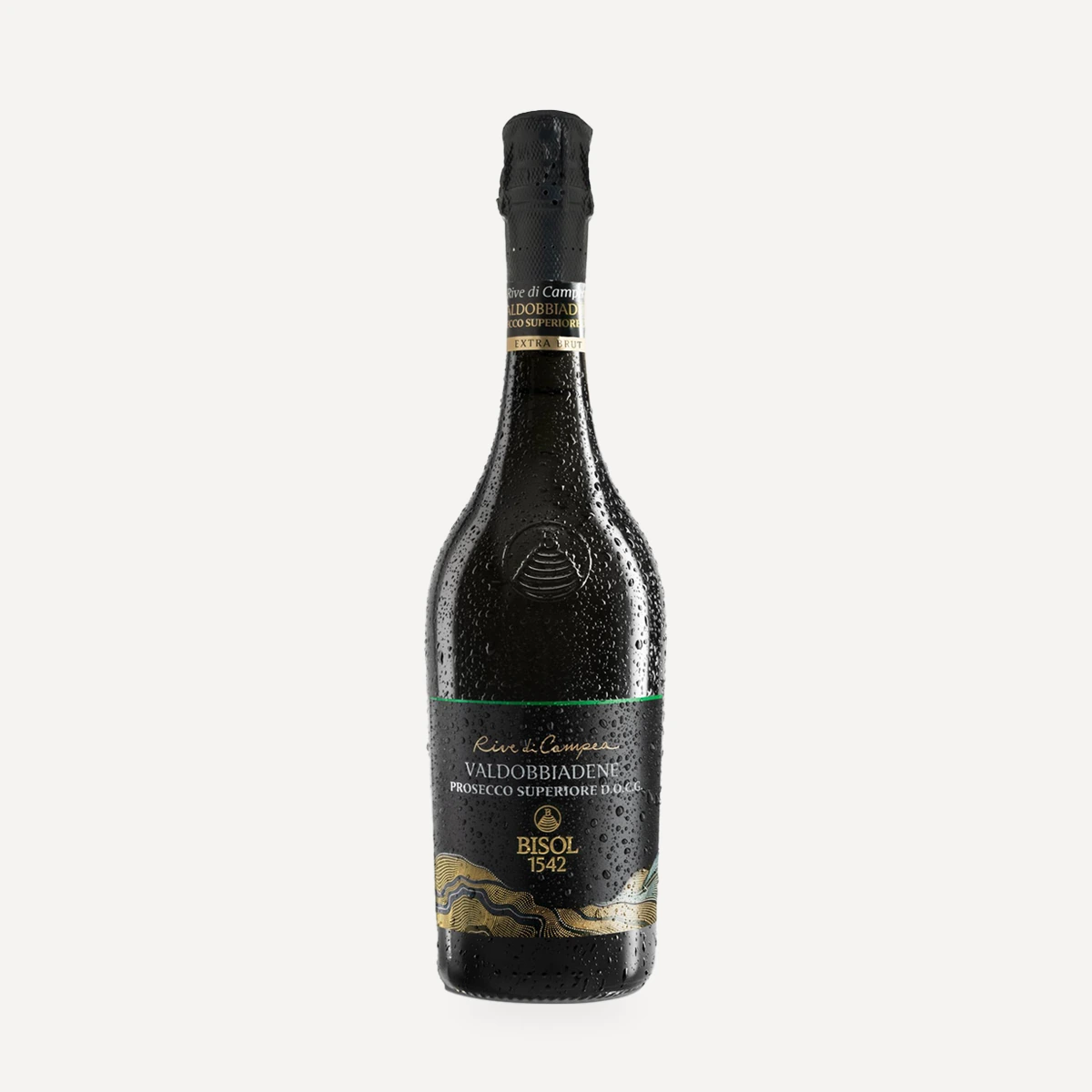
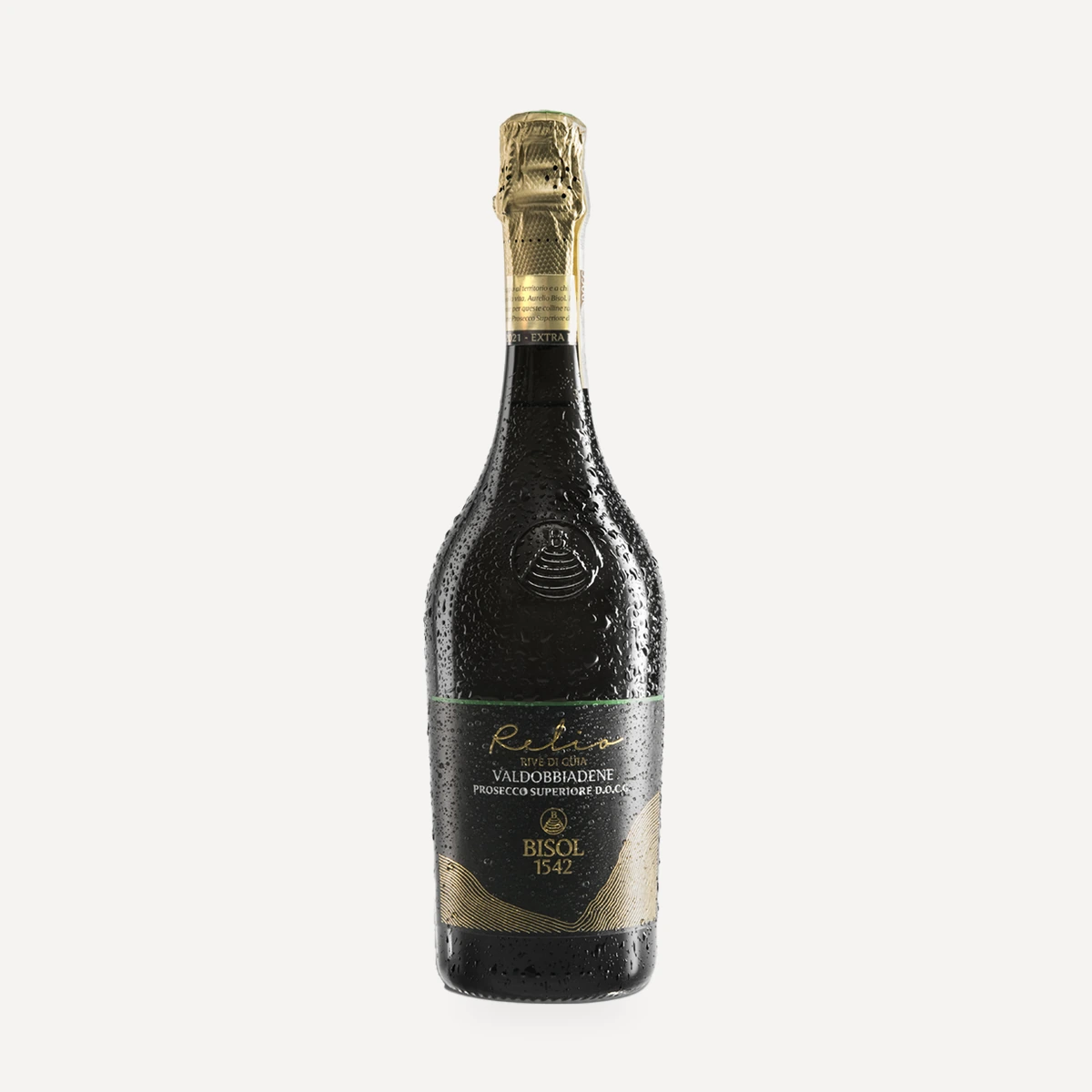
The estate's sites represent several distinct soil families. Selected Valdobbiadene vineyards used for Crede have clay-rich marine-origin soils whose strata were tilted almost vertically by slow geological movement. The clay retains water near the roots. Molera is associated with shallow-profile morainic soils over thin ancient limestone layers. I Gondolieri draws on predominantly marly estate sites. Ronce in Rive di Guia has marl and sandstone with a high limestone component, while Campea combines sandstone-rich upper slopes with more clay-limestone marl toward the valley.

Campea extends from the valley floor to the hilltop. Its changing aspects promote slow, gradual ripening, while a cool, ventilated microclimate creates a pronounced day–night temperature range. The distribution of soils is equally varied: sandstone at the summit is associated with tension and mineral definition, while the greater presence of clay-limestone marl lower down contributes structure and persistence.

Winemaking

Hand harvestGrapes are picked manually on steep heroic slopes and transported in bins.
Parcel separationHarvests and musts are kept separate according to vineyard and soil type.
Cantina dei CruA dedicated cellar supports separate must processing and tailored vinification.
Heroic viticulturePrecipitous sites can require up to 1,000 hours of work per hectare.
Natural cellar climateThe rock-cut historic cellar remains between 10°C and 15°C year-round.
Biodiversity programmeVineyard requalification is designed to protect biodiversity and the historic hillside structure.

The steep terrain of Valdobbiadene dictates heroic viticulture: cultivation and harvest are performed manually, including work on the precipitous Rive and Cartizze slopes. Vineyard labour can reach 1,000 hours per hectare, about ten times the requirement of mechanized vineyards on the plains.

Wooden posts support the shoots of Glera on the hillsides. Training includes doppio capovolto and the traditional Valdobbiadene pruning system derived from it. The current technical programme uses small bins for hand harvesting, limiting compression and improving control of fruit arriving from difficult slopes.

Since joining Gruppo Lunelli in 2014, the vineyards have undergone agricultural and methodological requalification. The programme is intended to safeguard biodiversity and preserve the structure of the historic heroic vineyard landscape. Management is described in environmental terms, but no named organic, biodynamic or sustainability certification is identified.

The approach is site-specific. Harvests from individual vineyards are kept separate, and the Campea project combines contemporary vineyard management with respect for established local practice. Depending on site and ripening conditions, manual harvest runs from late September into early October.

Production is organized around the separation of grapes and musts by vineyard and soil type. This practice is intended to preserve the markedly different expressions created by the estate's 20 holdings, slopes, aspects and soil structures.

The purpose-built Cantina dei Cru permits separate processing of musts and tailored vinification for individual parcels. This parcel-level approach forms part of the vineyard and cellar investment programme begun after 2014. Harvesting in bins complements it by improving the condition and traceability of hand-picked fruit delivered from the hills.

The historic cellar at Santo Stefano di Valdobbiadene is carved into the rocky ground and remains naturally stable at 10–15°C throughout the year. It preserves historic and prestigious family bottles and retains its original architectural details.

Bisol1542 specializes in sparkling production from the Conegliano Valdobbiadene hills. Beyond separate must processing and tailored cru vinification, estate-wide details concerning pressing, primary fermentation, yeasts, clarification, stabilization, filtration, sulphur use and bottling are not defined.

Philosophy

Bisol1542 defines its objective as producing the clearest possible interpretation of Prosecco Superiore. Its central principle is variation without compromise: choose demanding hillside sites, preserve each harvest separately and allow the Glera grown in individual parcels to retain the distinctions created by soil and microclimate.

The family's historic preference for steep vineyards reflects a quality hierarchy in which difficulty of cultivation is accepted when gradient, exposure and soil offer stronger conditions for Glera. Manual work is therefore treated not merely as tradition but as a response to the physical structure of the land.

Tradition is paired with technical precision. The post-2014 programme combines agricultural requalification, harvesting in bins, the Cantina dei Cru and tailored vinification. The declared aim is to protect biodiversity and the authentic structure of Valdobbiadene's heroic vineyards while applying contemporary methods to individual terroirs.

Family continuity remains part of the identity even after the estate joined Gruppo Lunelli. The Bisol narrative emphasizes dedication, tenacity and fidelity to Santo Stefano di Valdobbiadene over 21 generations, while the group relationship is based on quality, refinement and a strong connection between each brand and its territory.

News

2025-05-29

Important international accolades for Bisol1542

2024-09-26

BISOL1542 wins Tre Bicchieri with Molera Prosecco Superiore Extra Dry 2023

2023-03-31

Bisol1542 at Vinitaly 2023

2022-10-19

Bisol1542 is the official Prosecco of the Venice Gondoliers’ Association

2022-05-13

BISOL1542 announces the first Prosecco Superiore coast-to-coast road tour

2021-10-07

Once upon a time… from 1542 to Gianluca Bisol