History
The 1950s and 1960s
Alessandro Bovio worked as a small-scale wine producer in La Morra, establishing the first generation of the family’s documented winemaking history.
The 1970s: Gianfranco Bovio and the old cellar
During the 1970s, Alessandro’s son Gianfranco—already a prominent restaurateur in La Morra—began looking after his father’s estate. He undertook the renovation of the old cellar and focused on producing wine from the family’s own vineyards.
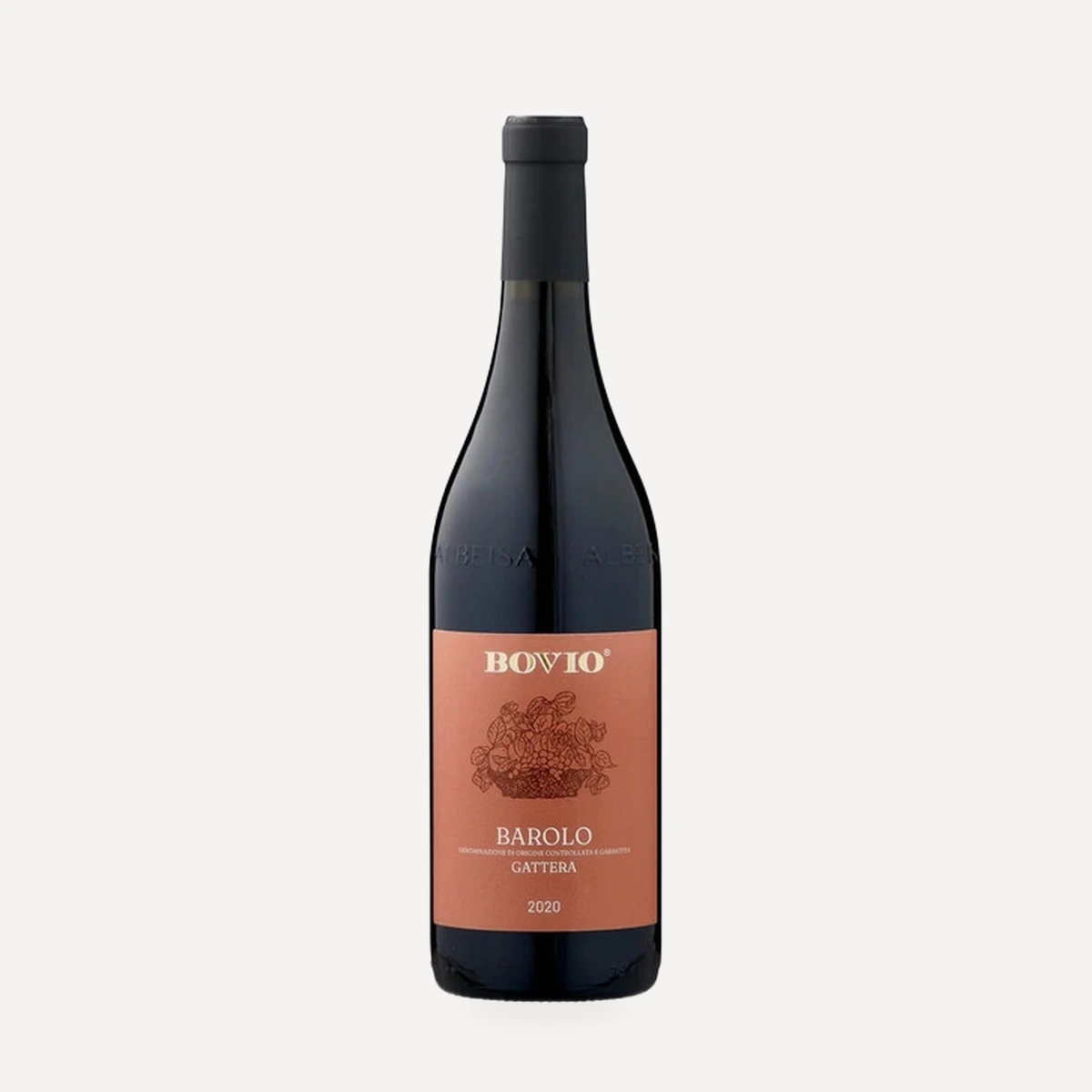
The first Nebbiolo was released in 1976. In 1977, the family planted new vineyards, expanded the winery and released its first Barolo Gattera dell’Annunziata.
Development of vineyard-designated wines
The first vintage of Barolo Arborina followed in 1985. The vineyard had been planted by Gianfranco Bovio in 1982. In 1989, the estate produced the first vintage of Barbera Regiaveja.
Cellar expansion and a new family dedication
Major enlargement and renovation work transformed the cellar in 2000.
Gianfranco’s granddaughter Elisa was born in 2004. The family dedicated its 2004 Barolo Riserva to her; Elisa later designed the wine’s label herself when she was five years old.
The third generation
In 2014, Gianfranco’s daughter Alessandra Bovio and her husband, Marco Boschiazzo, assumed management of the estate as its third generation. Alessandra had long worked alongside her father in both the winery and his La Morra restaurants, while Marco combined winery management with his career as chef of the Bovio restaurant.
Matteo Franchi and Robert Tofan joined the business in 2015. Franchi divided his work between vineyard and cellar, while Tofan progressed from administration into hospitality, sales and commercial relations. Francesco Bianco joined the team in 2019 and took responsibility for cellar work and oversight of production stages.
Hospitality and the fourth generation
A new tasting room and wine shop opened to visitors in 2021.
Elisa Boschiazzo entered the business in 2023, bringing the fourth generation into the winery. Having grown up within the family’s Barolo culture, she pursued studies at the Scuola Enologica and came to represent the estate’s next stage of continuity.
Terroir
The estate farms 10 hectares divided among five MGA sites in La Morra and neighbouring Castiglione Falletto. The parcels range from 250 to 400 m above sea level and differ markedly in exposure, position and soil.
Annunziata occupies the lower part of La Morra on the ridge between Arborina and Gattera. Its estate parcels face west and north at 250 m and have calcareous-clay soils. The area is particularly suited to Barbera while also producing fresh, approachable and structured Nebbiolo.
Rocchettevino lies higher in La Morra at 400 m with an easterly exposure. Its fertile calcareous-clay soil retains moisture, especially in the upper portion of the MGA. The site is associated with fruit-driven, savoury and consistent expressions.
Parussi forms a broad amphitheatre in the lower part of Castiglione Falletto, beside La Morra. The estate parcel faces south-west at 250 m. Its soil is deep, evolved and composed of silty limestone; the site gives structured, tannic and persistent wines with balsamic notes.
Gattera occupies the lower part of La Morra. Its south-facing parcel stands at 270 m on calcareous marl threaded with sand. This is the estate’s oldest vineyard and preserves vines of the historic Lampia, Michet and Rosé Nebbiolo biotypes. The site combines considerable structure and long ageing potential with elegance.
Arborina is a small MGA on La Morra’s south-eastern slope. The estate’s east-facing parcel lies at 250 m on sandy soil and is associated with fruity, elegant and well-structured wines.
Winemaking
Viticulture is organised around the individuality of each vineyard and each vine. All five documented parcels are trained to Guyot, and the estate follows the natural pace of the growing season rather than forcing uniform development across its sites.
Particular attention is paid to slow, complete grape ripening. Pesticides and herbicides are not used; instead, the team prioritises agronomic practices intended to have a low environmental impact.
The parcels are kept distinct through vinification so that their differing soils, elevations, exposures and vine material remain perceptible. Gattera receives particular historical importance as the oldest vineyard and as a repository of Lampia, Michet and Rosé biotypes.
Production follows a traditional, low-intervention approach intended to preserve the relationship between the grapes and their individual vineyard origins. Each parcel is vinified separately.
The wines undergo medium-long to long macerations. Fermentation is carried out in a traditional manner, using temperature-controlled stainless-steel tanks and large oak vats. Extended skin contact is used to extract tannins while retaining the grapes’ distinctive character.
Ageing centres on large oak vessels rather than small-format wood. After their period in oak, the Barolo wines are transferred to concrete tanks dating from the winery’s earliest years. This further resting stage is intended to slow their evolution and allow the individual characteristics of each wine to develop before release.
Philosophy
Cantina Bovio defines its approach through patience, care, respect and passion. Its production philosophy is rooted in traditional methods and in preserving the characteristics of the land.
The central principle is respect for the grape as an expression of the soil that nourished it. Cellar work is therefore deliberately restrained, accompanying rather than reshaping the wine’s development. Separate treatment of the parcels, medium-long maceration, large oak and time in old concrete tanks are used to retain vineyard identity rather than impose a uniform style.
The same outlook guides work in the vineyards: natural rhythms, the particular character of each site and the individuality of every vine take precedence. Slow, complete ripening and lower-impact agronomy are considered essential to translating the family’s long familiarity with La Morra and its vineyards into the finished wines.
Family continuity is equally important. Alessandra Bovio and Marco Boschiazzo manage the estate as its third-generation owners, while Elisa Boschiazzo’s arrival in 2023 introduced the fourth generation. The team’s shared goal is to preserve and communicate the identity of the Langa territory.
Wines