History
The Guazzo origins and Villa del Bel Riposo
Bricco dei Guazzi traces its history to the sixteenth century and to the Guazzo family, long associated with Olivola, Casale Monferrato and the wider Monferrato area. Stefano Guazzo—a jurist and man of letters—was the estate’s first owner. In 1585 he commissioned Villa del Bel Riposo in honour of his wife, Francesca. The residence later became home to members of both the Guazzo and Candiani noble families.
The estate’s name preserves this origin. The Guazzi were the first noble owners of the hill on which the property stands, while local people called a hill of this kind a bric. The combination produced the name Bricco dei Guazzi.
The earliest cellar was excavated in the tuff beneath the villa during the sixteenth century. Its great vaults support the building above, while the niches of its infernot extend as deep as 12 metres.
The Candiani period
Over the ensuing centuries, Olivola passed to the Counts Candiani. Camillo Candiani, a diplomat and admiral of the Royal Fleet, lived at the estate. The property’s original coat of arms and noble motto were subsequently incorporated into the Bricco dei Guazzi identity.
Wine remained important throughout these centuries, both as a means of supporting the local population and as a commercial activity. This continuity joined the history of the Guazzo and Candiani families to the winegrowing vocation of the hill.
The eighteenth-century vaulted cellar
In 1700 a large vaulted cellar was constructed along the northern side of the old courtyard. It was arranged for gravity-driven production: grapes descended into masonry fermentation vats, after which the wine flowed down to large barrels on the floor below.
Development of the modern range
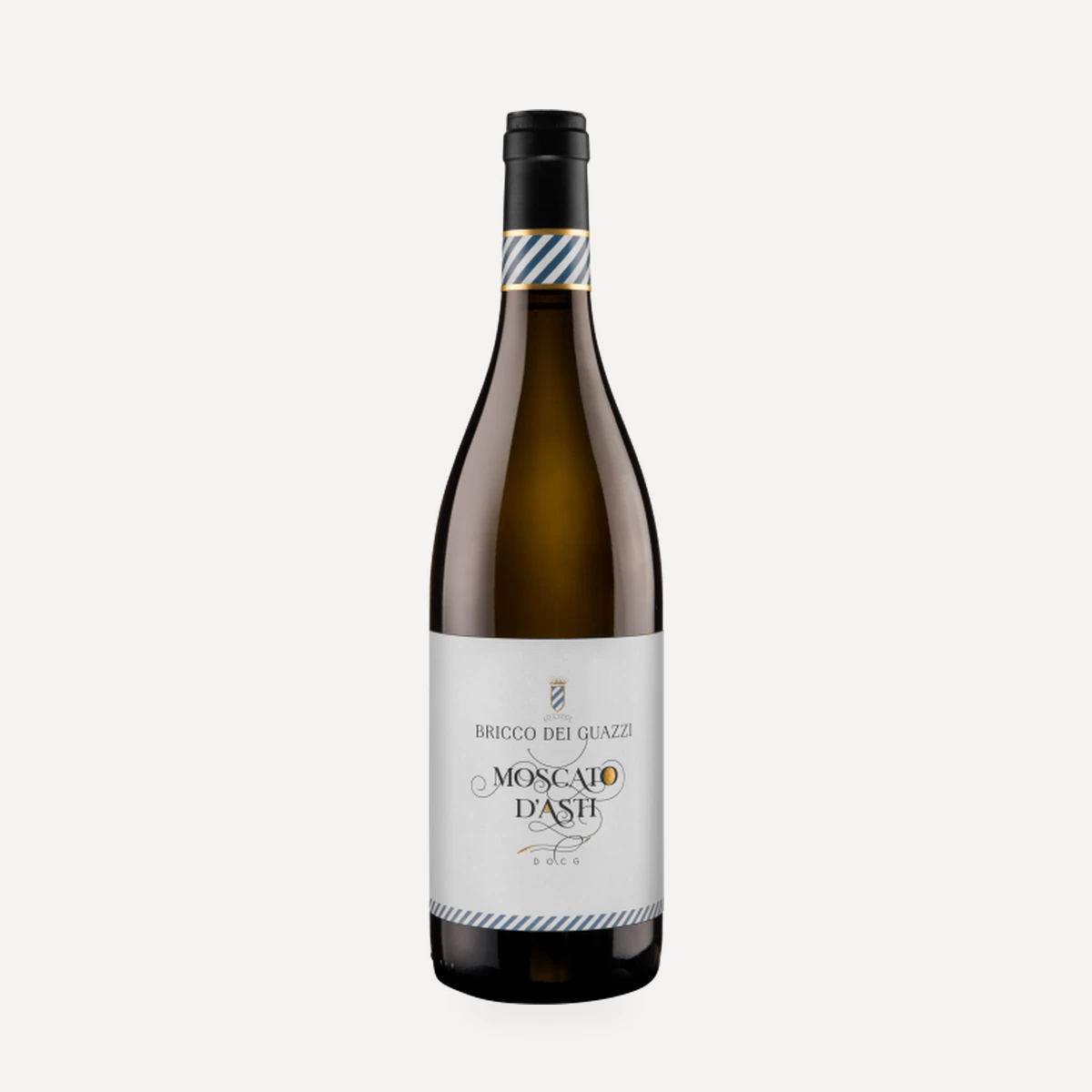
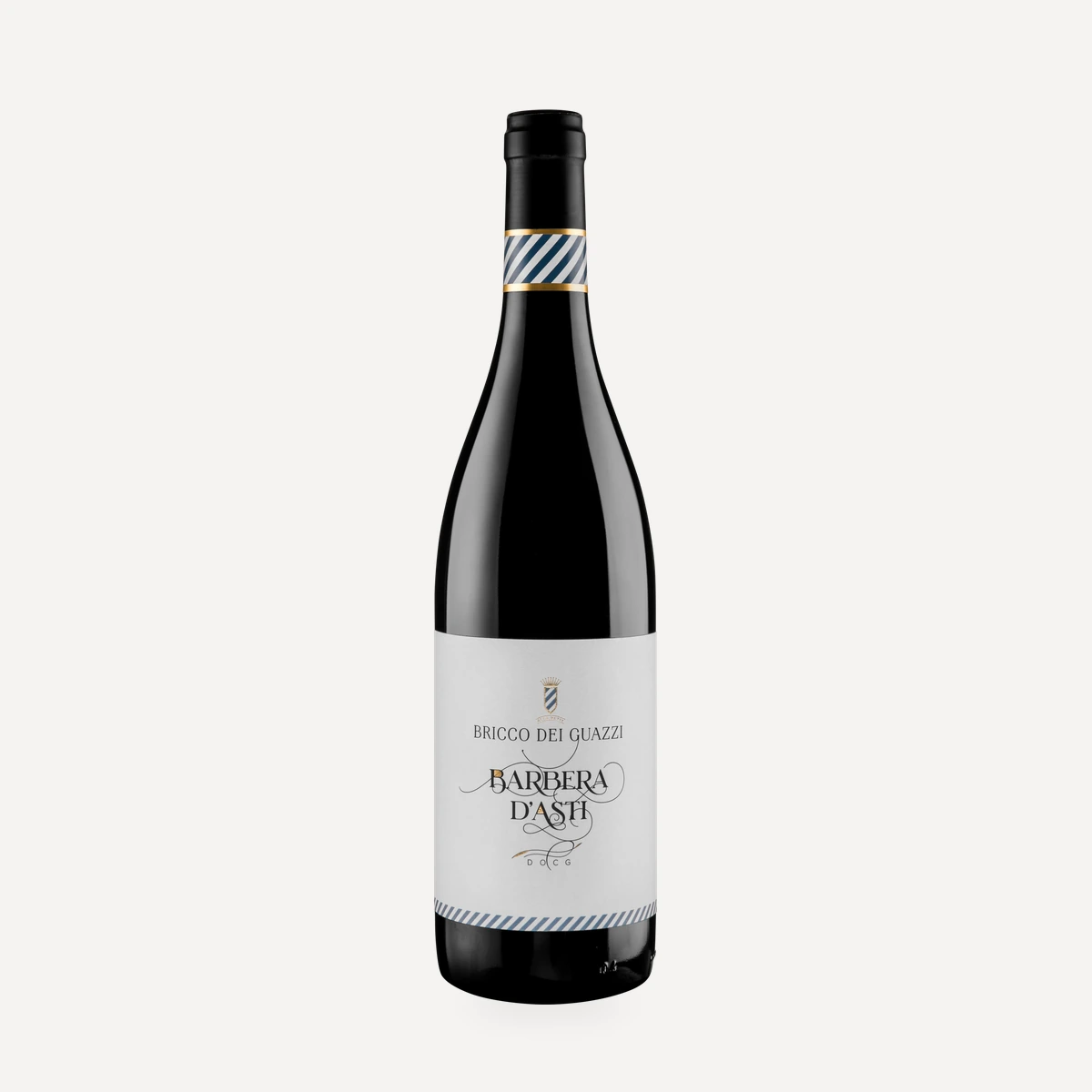
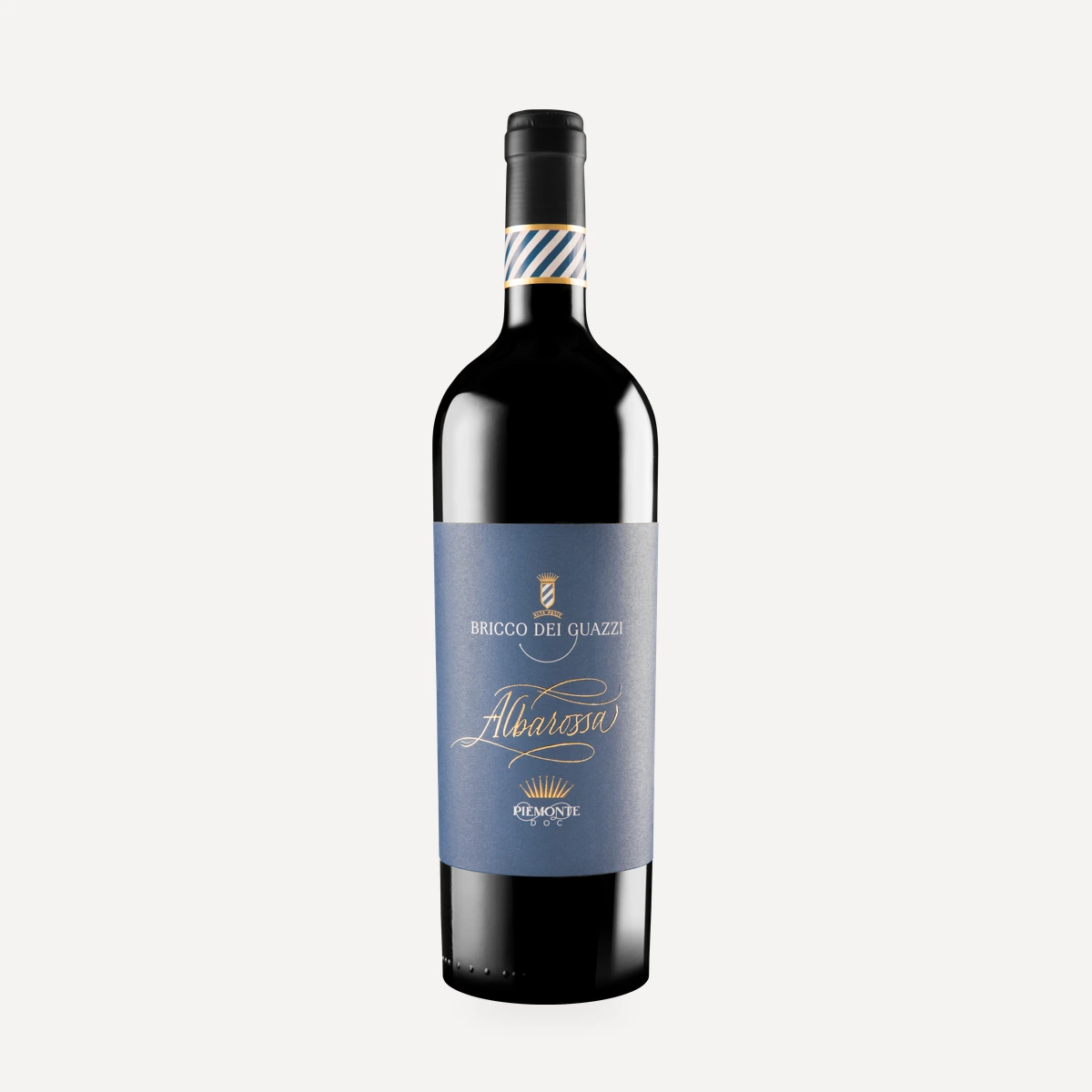
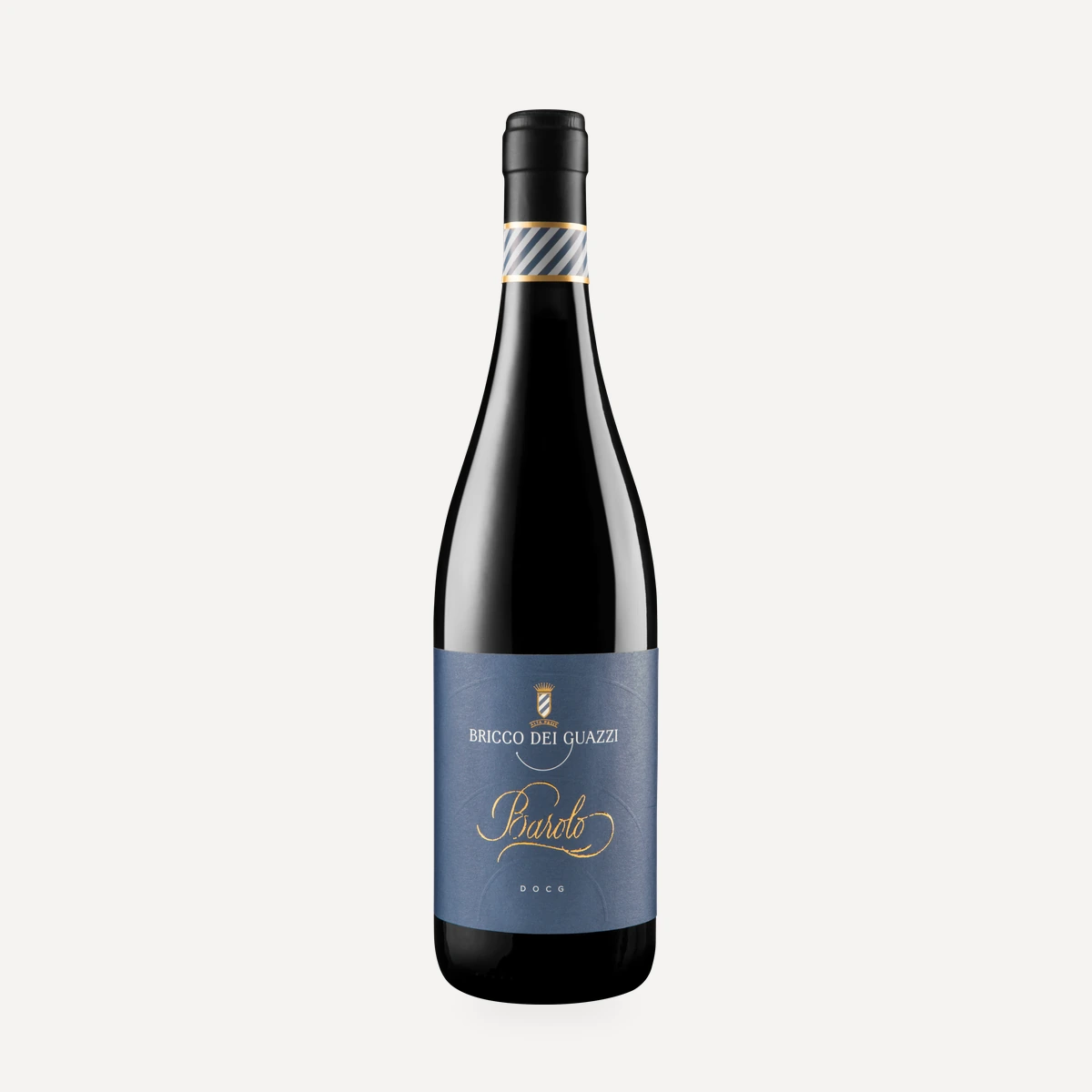
Presidenta and Barbera d’Asti both debuted with the 2005 vintage. Gavi di Gavi followed in 2010, Barolo in 2017 and Albarossa in 2018. Barbera d’Asti Superiore and Nebbiolo d’Alba were first produced in 2019, followed by Moscato d’Asti in 2021.
The estate today
The historic cellars now operate alongside modern facilities with capacity exceeding 2,000 hl. Temperature-controlled stainless-steel tanks and an on-site bottling plant have been installed within an estate that continues to preserve its villa, vaulted cellars and infernot. The property encompasses 35 ha of vineyards on the hills near Casale Monferrato.
Terroir
Bricco dei Guazzi lies in the medieval village of Olivola, among the Monferrato hills near Casale Monferrato. Its 35 ha of vineyards occupy different sides of the estate’s hill, providing exposures from north and northwest through south and southwest.
The prevailing soil is marly and calcareous. In individual vineyards, white marl or calcareous marl alternates with ground rich in clay and iron. The pale earth reflects sunlight towards the grapes, supporting ripening, while vines must send their roots deep into the soil to obtain water. Breezes arriving from the Alps help maintain healthy grapes and preserve fruit aromas.
Topography creates distinct conditions within the estate. The steep longitudinal slope of Costa o Grande Cedro prevents waterlogging. La Presidenta and La Mandola face due south and receive prevailing winds that move from the valley floor towards the hilltop. The northern side is considered better suited to white varieties and Pinot Noir, while northwest-facing positions favour early-ripening Merlot.
Winemaking
The estate presents its approach as precision viticulture supported by research, careful vineyard attention and a combination of artisanal work with contemporary techniques and technology. Its eight vineyards are trained using Guyot and spurred-cordon systems.
Plantings comprise Barbera, Merlot, Cabernet Sauvignon, Albarossa, Chardonnay and Pinot Noir. Variety placement responds to exposure and site conditions: Merlot occupies northwest-facing Angolo; Barbera grows on the south-facing slope of Costa o Grande Cedro and the southwest-facing Torre cru; Albarossa is planted in Campone, La Presidenta and La Mandola; and the northern plots of Sotto al Peso and Fontanino are suited to white grapes or Pinot Noir.
The original sixteenth-century cellar was excavated in tuff beneath Villa del Bel Riposo. In 1700, a larger vaulted cellar was constructed along the north side of the historic courtyard. Its multi-level arrangement enabled gravity-driven work: grapes moved down into masonry fermentation vats, and wine then descended to large barrels on the lower floor.
Modern production combines this historic cellar infrastructure with facilities whose total capacity exceeds 2,000 hl. The winery uses stainless-steel tanks equipped with temperature-control systems and has its own bottling plant. The infernot beneath the villa remains in use for preserving the estate’s most precious bottles.
Philosophy
Bricco dei Guazzi defines its identity through four central values: excellence, Monferrato identity, a wider Piedmontese outlook and innovation. Its motto, alta petit, expresses the ambition to pursue excellence, linking that goal to the cru vineyards, the character of the hill, approximately five centuries of history and the estate’s noble ancestry.
The estate’s heart remains in Monferrato, expressed through indigenous grapes and an attachment to the area’s winegrowing traditions. At the same time, its outlook extends to the broader heritage of Piedmont, including work in the Langhe and Gavi areas. Albarossa is treated as a symbolic bridge between Monferrato and the rest of the region.
The desired style is intense, elegant and authentic. Precision, research and meticulous attention are combined with an artisanal touch, modern techniques and technology. Innovation is regarded as a means of continuing to grow and improve while preserving the estate’s historical identity and the character of its land.
Wines
Barbera D'Asti
Albarossa
Barolo
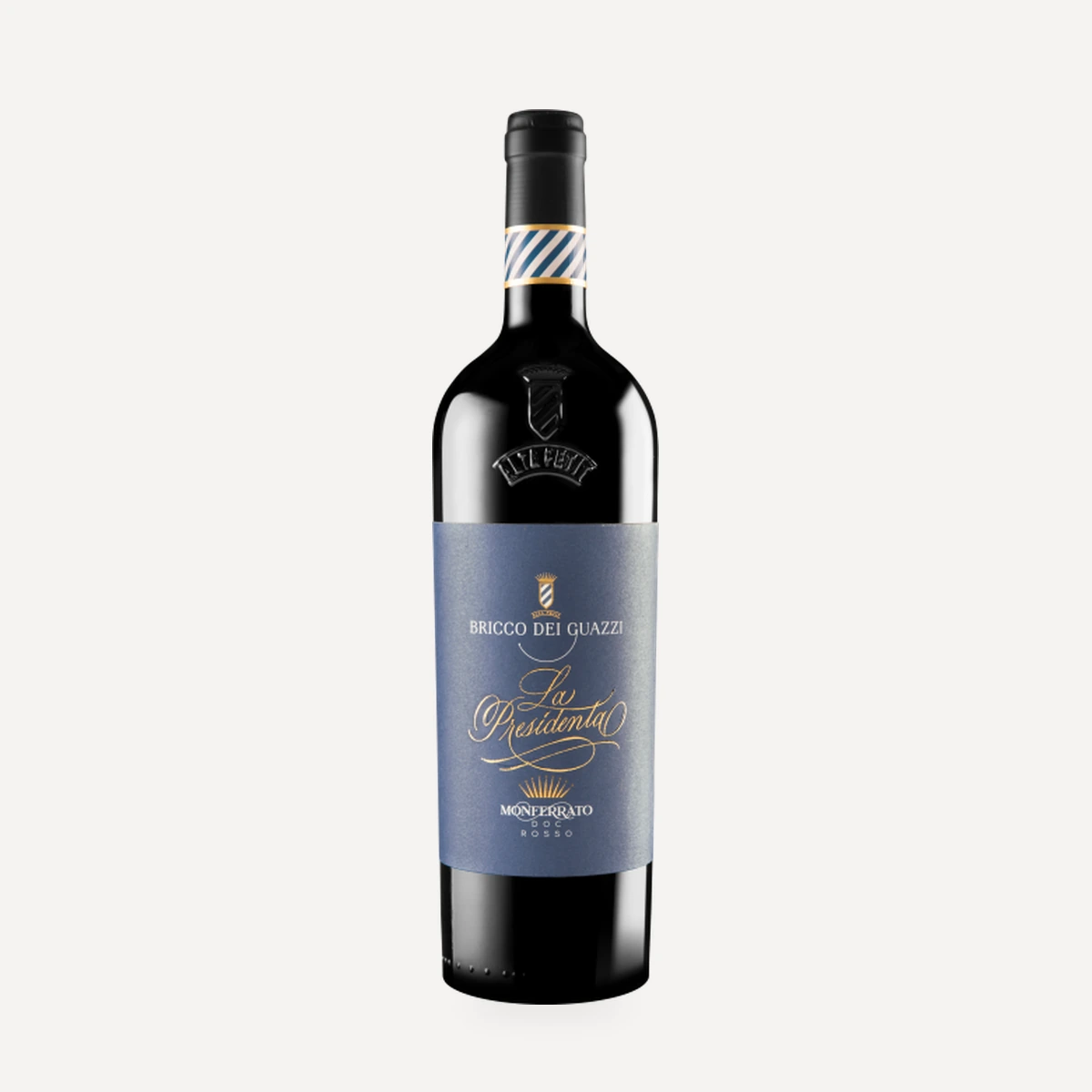
Presidenta
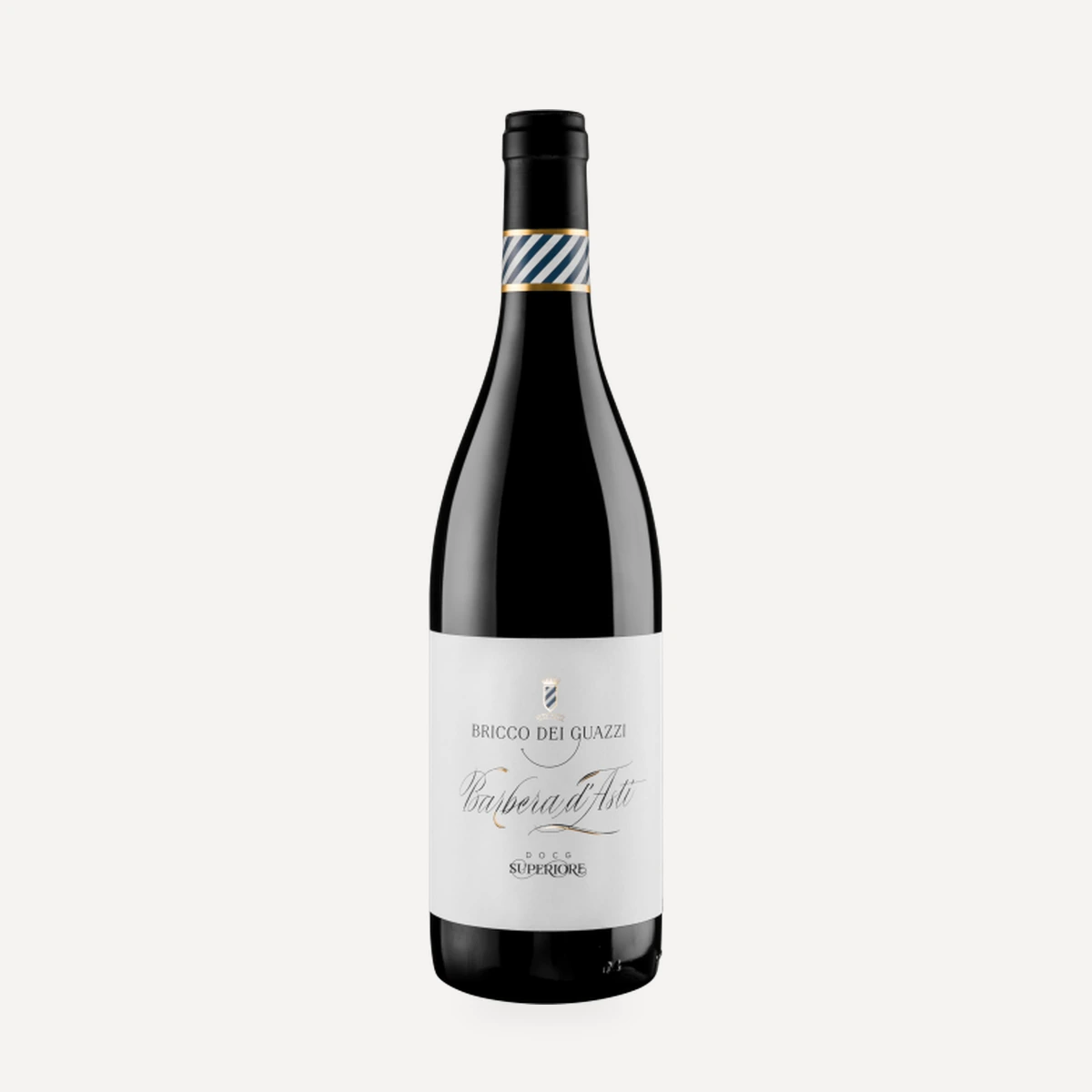
Barbera D'Asti Superiore
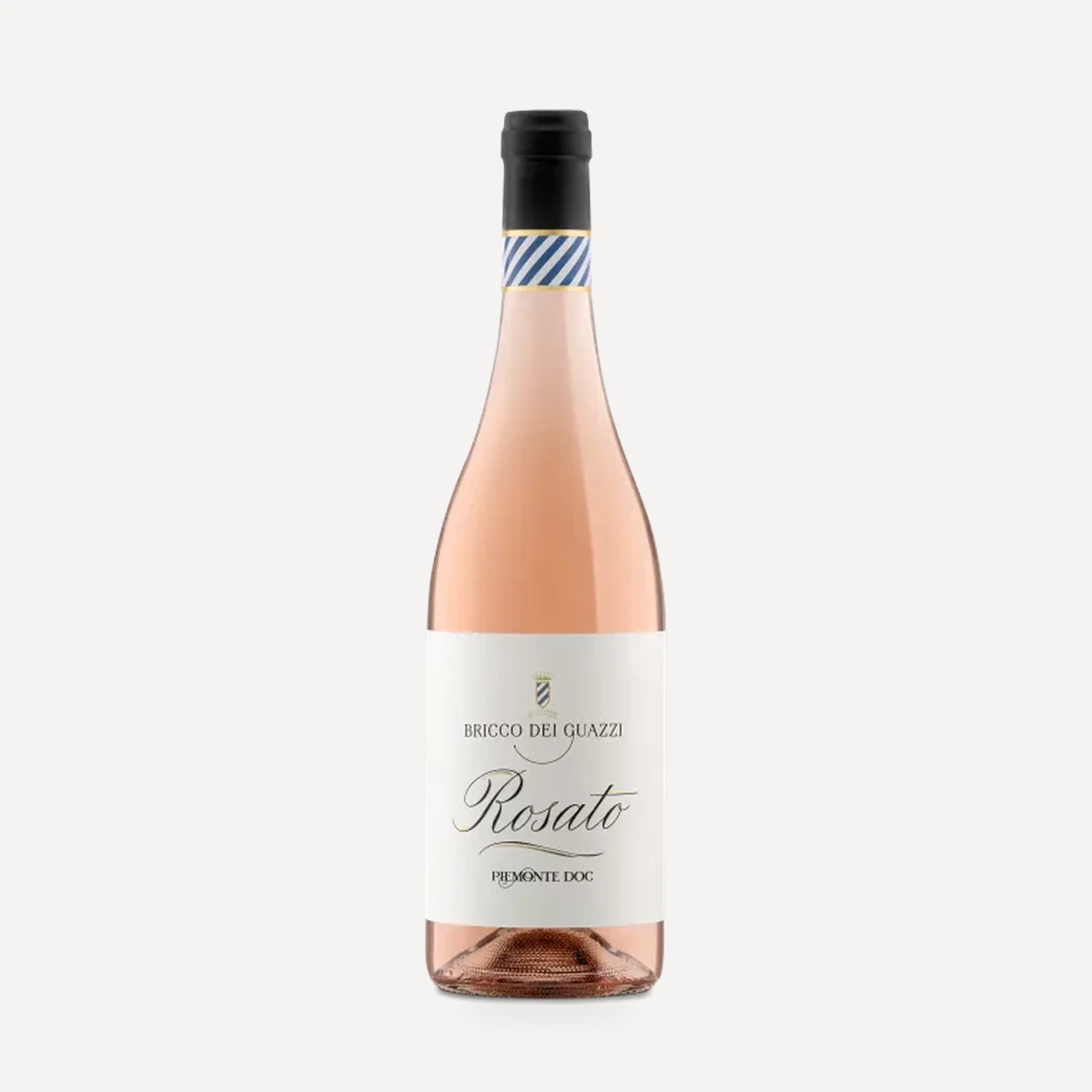
Rosato
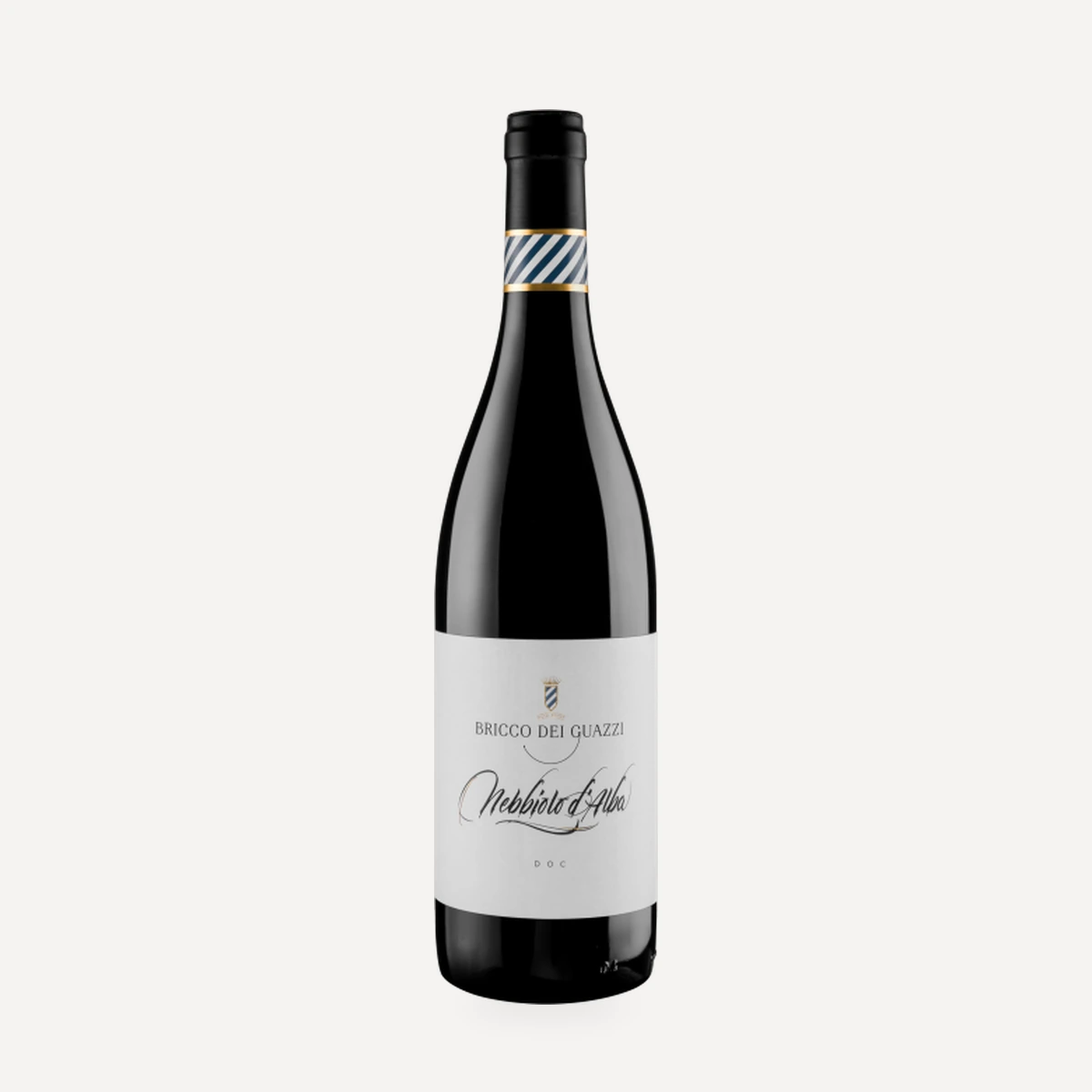
Nebbiolo D'Alba
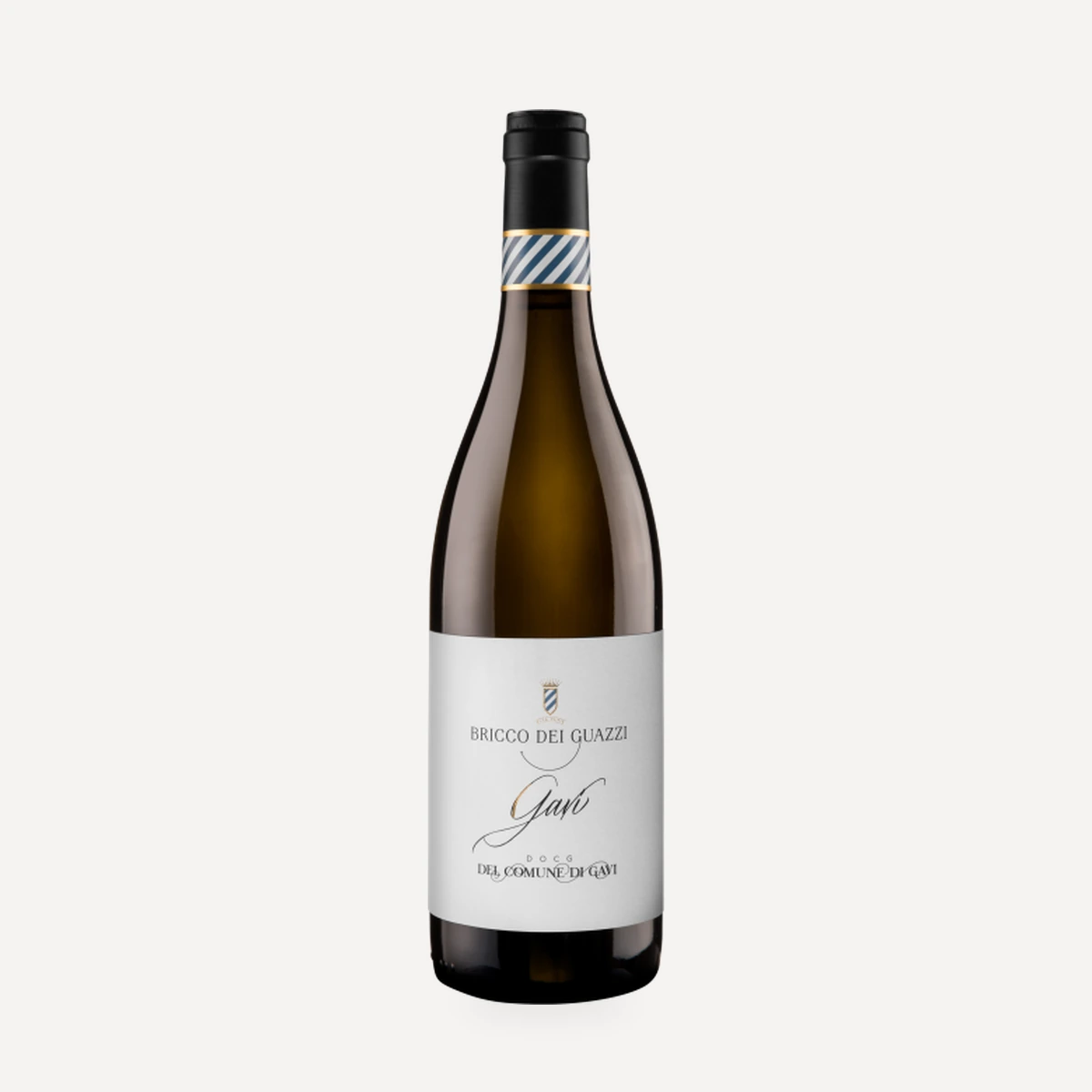
Gavi di Gavi