History
1962–1967: foundation and the first Brunello
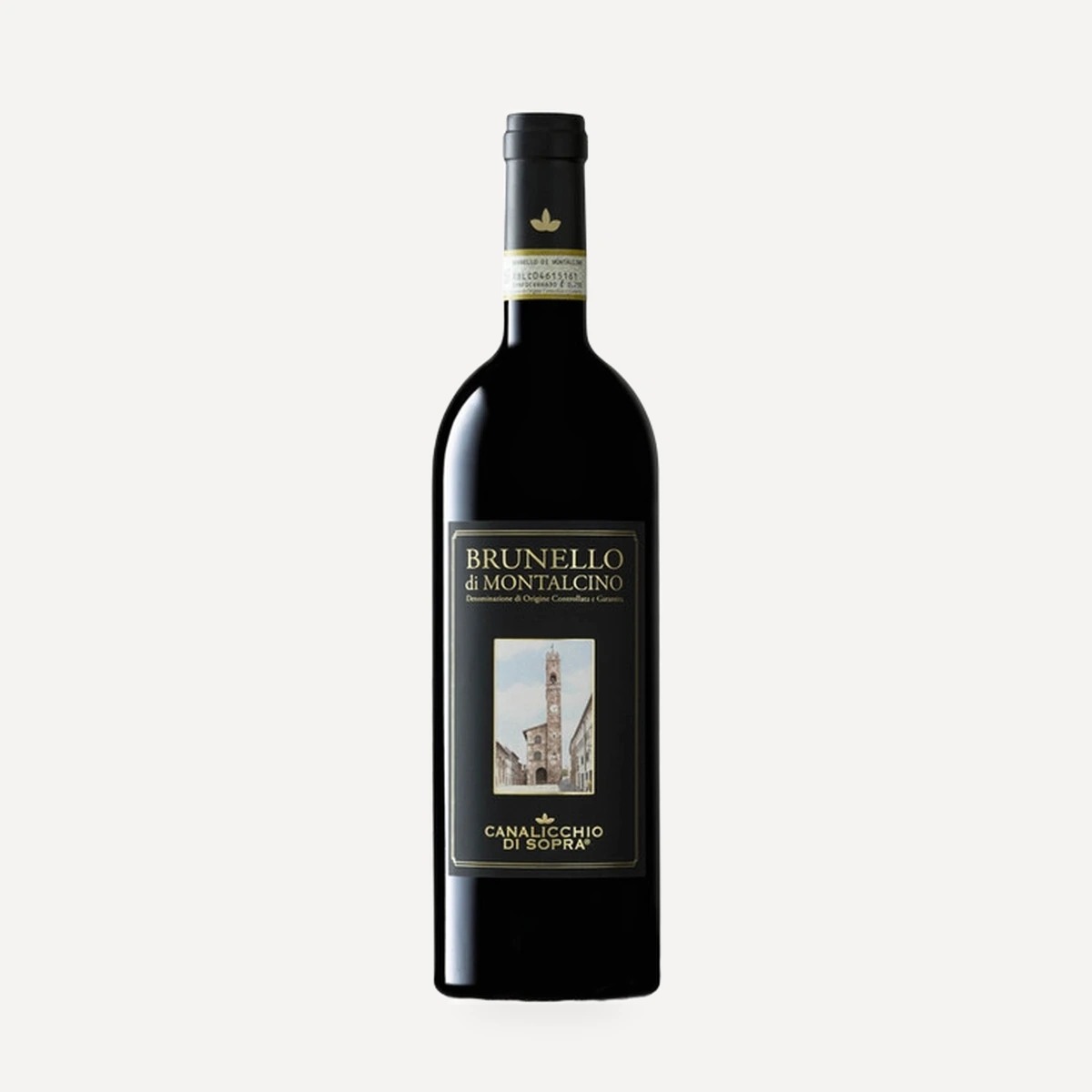
Primo Pacenti founded Canalicchio di Sopra in Montalcino in 1962. The first Canalicchio di Sopra Brunello di Montalcino was produced from the 1966 vintage. In 1967, the estate became one of the twelve founding members of the Consorzio del Vino Brunello di Montalcino.
1975–1988: expansion of production and the second generation
The first Rosso was produced in 1975, when it was still called Vino Rosso dai vigneti di Brunello. The first Brunello di Montalcino Riserva followed with the 1987 vintage.
Primo Pacenti’s son-in-law, Pier Luigi Ripaccioli, began working alongside him in 1987. Pier Luigi brought a determined pursuit of quality and meticulous vineyard work to the estate’s second generation.
Vigna Vecchia Mercatale was planted in 1988 in the Canalicchio cru. It remains the oldest vineyard identified in the current parcel register and is the principal source historically associated with the Riserva.
1990–2000: development of Canalicchio and Montosoli
Vigna Casaccia was planted in 1990 in the Canalicchio cru. The estate subsequently developed a second nucleus of vineyards in the Montosoli cru: Vigna Filari Lunghi was planted in 1997, followed in 2000 by Vigna di Mezzo and Vigna del Piano. Vigna Bersaglio was also planted in Canalicchio in 2000.
Since 2001: the third generation
Primo Pacenti’s grandchildren Francesco, Marco and Simonetta Ripaccioli began continuing the family’s work in 2001. Their approach combines inherited practices with innovation while maintaining an emphasis on Sangiovese, the two crus and classic expressions of Montalcino.
The vineyard holdings continued to evolve: Vigna Suga was planted in 2001, Vigna Cerrino in 2006, Vigna del Poggio in 2009 and Vigna Cantina in 2014. Together with the earlier parcels, these plantings formed a ten-vineyard register divided between Canalicchio and Montosoli.
2015–2018: individual-vineyard wines and a renewed cellar
The 2015 vintage was the first production of Brunello di Montalcino Vigna La Casaccia, isolating the character of the Casaccia vineyard planted in 1990.
The cellar underwent a complete renovation in 2018. Its modern underground structure was designed to integrate with the surrounding hills while improving functionality, efficiency and environmental sustainability. The 2018 harvest was the first processed in the renovated winery.
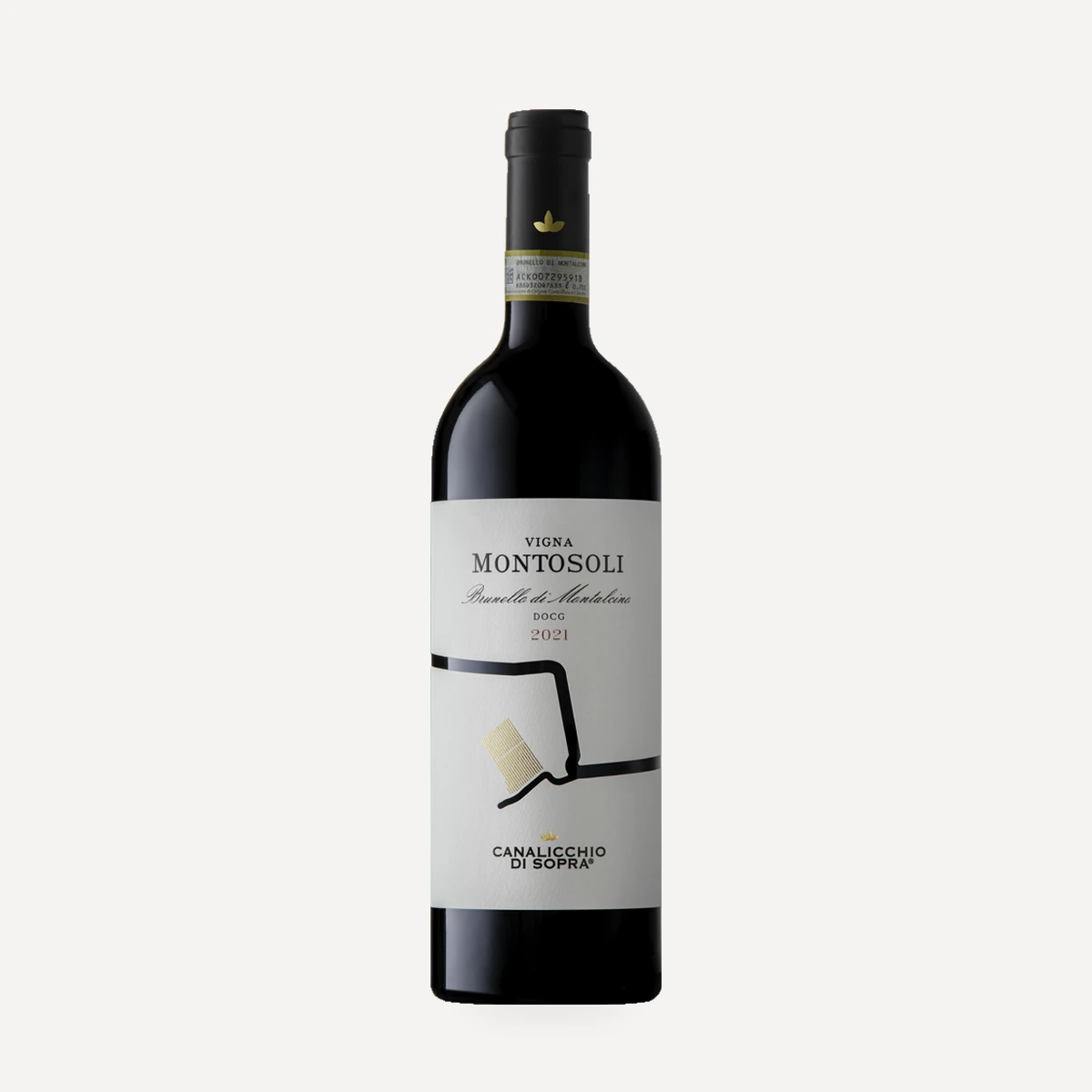
The same vintage became the first production of Brunello di Montalcino Vigna Montosoli, sourced from Vigna Filari Lunghi. This completed the contemporary range of two vineyard-designated Brunellos, one representing Canalicchio and the other Montosoli.
Terroir
Northern Montalcino
The property covers 60 ha on the northeastern side of the Montalcino hill, including 19 ha of vineyards. It occupies a landscape rich in biodiversity and natural features and recognised as UNESCO heritage since 2004.
All vineyards are planted to Sangiovese and divided between two crus, Canalicchio and Montosoli. Differences in terrain, exposure and microclimate are considered essential to the identity of each vineyard. Across the estate, the resulting spectrum is described through structure and elegance, minerality and sapidity, acidity and fruit purity.
Cru Canalicchio
Six named vineyards—Cantina, Cerrino, Bersaglio, Suga, Vecchia Mercatale and Casaccia—cover approximately 13.29 ha. Altitudes extend from 273 to 323 m above sea level.
Clay is the defining component of much of Canalicchio. Several parcels contain allochthonous pebbles and substantial reserves of magnesium, iron and manganese; calcium and calcium carbonate are important in individual sites. Within this common framework, the parcels vary considerably. Suga changes from sandier soils at higher elevation to more mineral and clayey material below. Casaccia alternates calcium-rich clay with pebbly ground, while Vecchia Mercatale combines predominantly clay soil with a strong mineral reserve and exposure to eastern winds.
Cru Montosoli
Four named vineyards—del Poggio, Filari Lunghi, di Mezzo and del Piano—cover approximately 5.82 ha at elevations between 210 and 255 m.
The upper Montosoli sites are characterised by marl with a very high mineral component, clay-loam texture, abundant lime and substantial rocky material. This skeleton raises soil pH and is associated with structure, minerality, sapidity and sustaining acidity. Vigna del Piano differs through a stronger clay component, good lime content and pebbly sections, producing a more aromatically oriented expression.
Winemaking
Canalicchio di Sopra has chosen to cultivate only Sangiovese, focusing on the different expressions that the variety develops across Canalicchio and Montosoli.
All ten vineyards in the current parcel register are cordon trained and spur pruned. Row and vine spacing varies by site from 2.50–3.00 m between rows and 0.80–1.00 m between vines, allowing management to follow the physical character of each parcel.
Harvesting is carried out by hand. Fruit is selected berry by berry before fermentation, preserving a strong emphasis on clean, precisely chosen Sangiovese. Individual vineyard conditions, ripeness and vintage development determine harvest timing; the marked internal differences at Vigna Suga can require two distinct picking moments between its higher and lower sectors.
Environmental conservation forms part of the estate’s stated pursuit of elegance, while the 60 ha property provides a biodiversity-rich setting around its 19 ha of vineyards.
The cellar was completely renovated in 2018. Its underground construction integrates into the rolling landscape and was planned around functionality, efficiency and environmental sustainability.
Grapes are harvested by hand and selected berry by berry. Fermentation takes place in temperature-controlled stainless-steel vats. Extraction is managed through daily gentle pumping over and délestage, with the aim of drawing colour, tannin and personality from Sangiovese without sacrificing elegance.
The current Brunello production uses 25-day skin macerations for the classic and vineyard-designated wines; Riserva can extend to 35 days. Classic Brunello matures for 36 months in 25 and 50 hl Slavonian oak casks. The two vineyard-designated Brunellos mature for 36 months in 25 hl Slavonian oak. Riserva likewise spends 36 months in Slavonian oak.
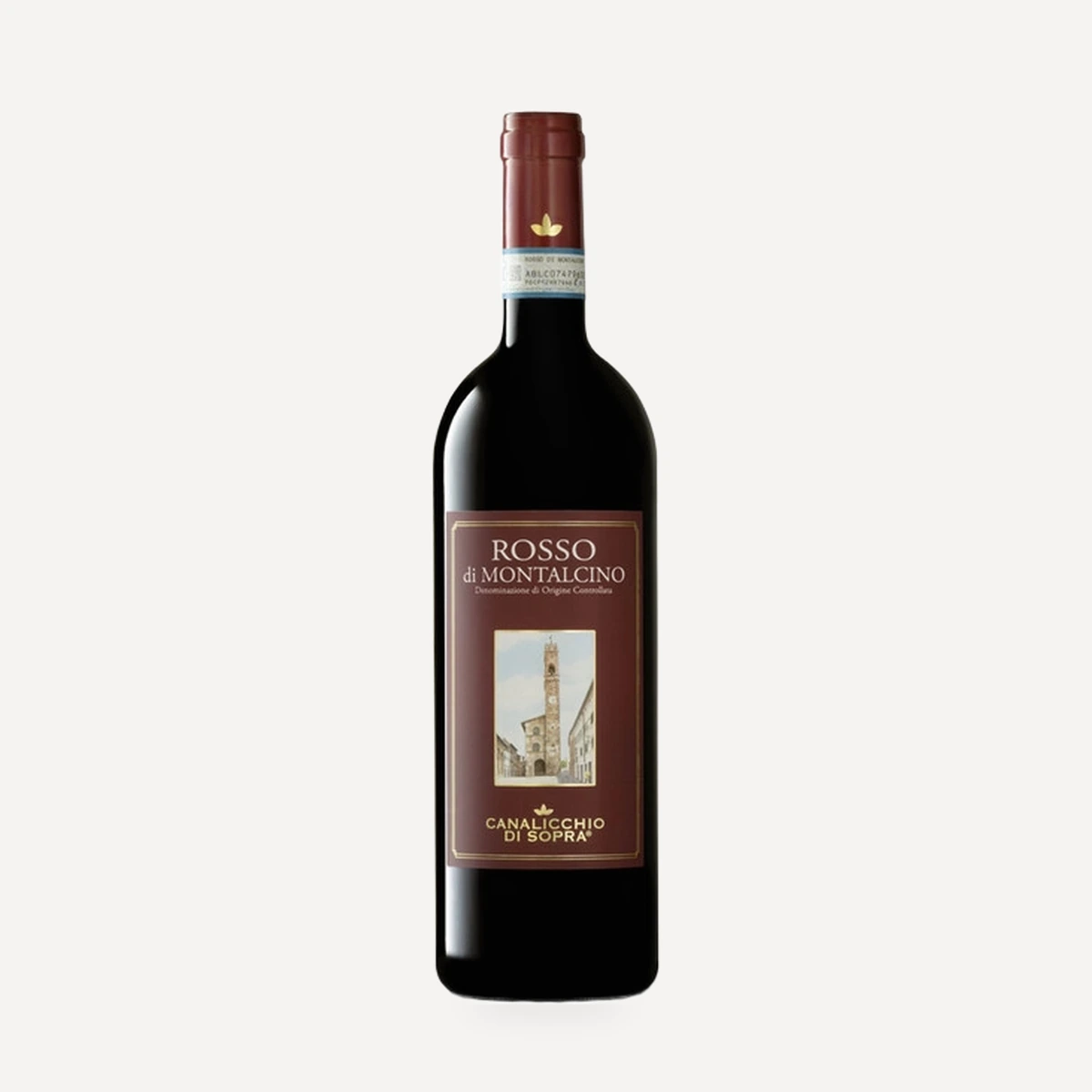
Rosso di Montalcino undergoes temperature-controlled fermentation in steel, daily gentle pumping over and approximately 20 days on the skins. It matures for 12 months in 50 hl Slavonian oak casks and 750-litre French oak barrels.
The ageing cellar is the centre of the maturation process. Medium-sized oak vessels are used during the years in which the wines develop balance, with wood serving the expression of Sangiovese and the individual crus rather than becoming the dominant feature.
Philosophy
Elegance as the central objective
Canalicchio di Sopra defines elegance as the essence of its production philosophy. That elegance is understood as the combined result of the Canalicchio and Montosoli crus, their distinct microclimates and the choices made in the cellar.
One variety, multiple expressions
The family has chosen to work exclusively with Sangiovese, the variety it has learned to understand over successive generations. Rather than seeking uniformity, the approach accepts that Sangiovese expresses itself differently in each cru and vineyard. These similarities and contrasts form the estate’s identity.
Terroir, people and vintage
Terroir encompasses the cru, its microclimate and the people who cultivate and interpret it. The objective is to preserve characteristics that distinguish one vineyard from another and to let those distinctions remain recognisable in the wines.
Tradition, innovation and conservation
The third generation combines inherited knowledge with technical innovation. The renovated cellar’s temperature control and functional underground design coexist with maturation in oak casks. Innovation is directed toward purity, balance and clearer expression of Sangiovese. The pursuit of elegance is increasingly connected with respect for and conservation of the environment surrounding the vineyards.
Wines

Brunello di Montalcino Vigna La Casaccia Denominazione di Origine Controllata e Garantita
Brunello di Montalcino Vigna Montosoli Denominazione di Origine Controllata e Garantita

Brunello di Montalcino Riserva Denominazione di Origine Controllata e Garantita
Rosso di Montalcino Denominazione di Origine Controllata