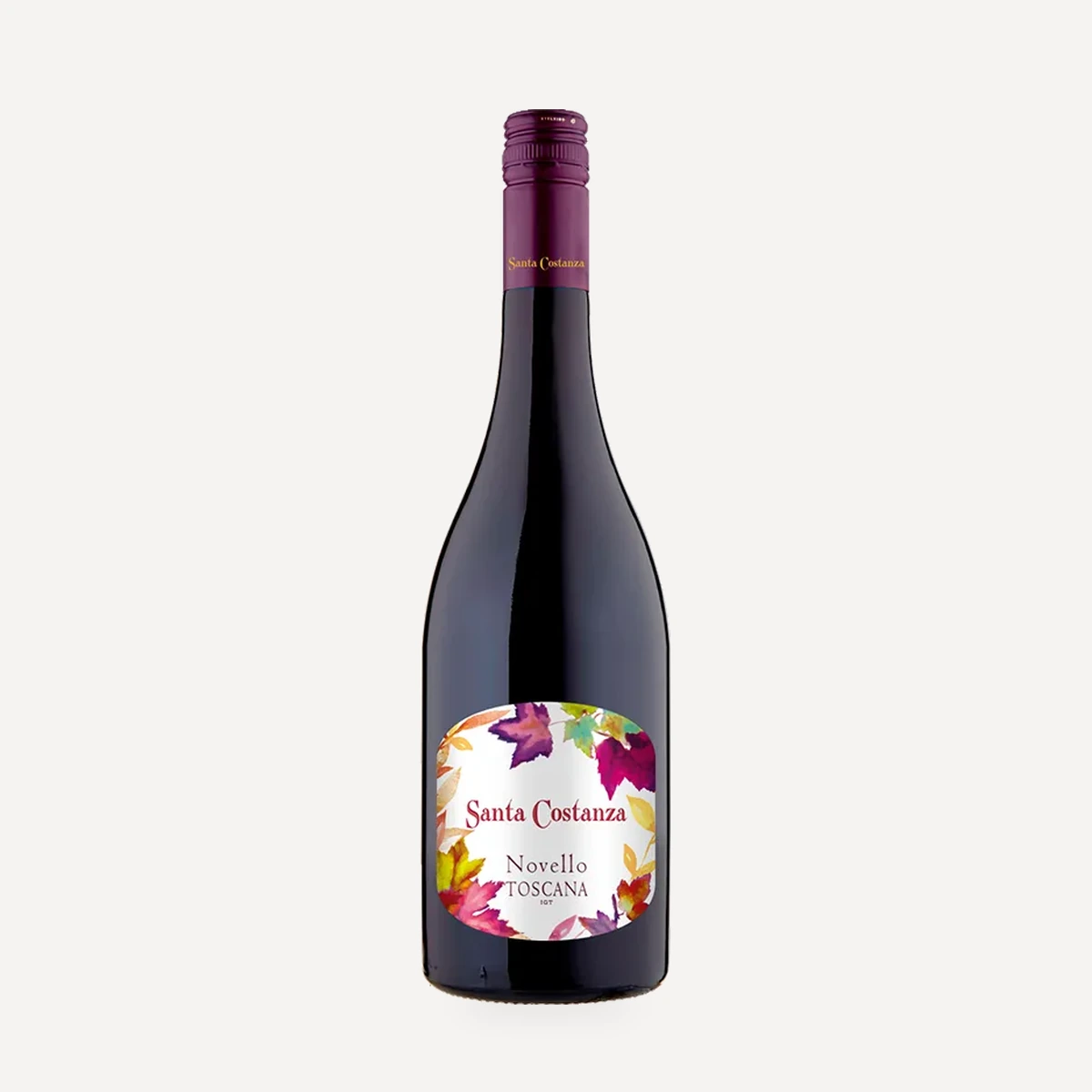
About this wine
Santa Costanza is a youthful Novello and the first wine released from the latest harvest. The 2025 wine is classified as Toscana IGT.
Grapes
The wine is predominantly Sangiovese. The 2025 blend comprises Sangiovese, Teroldego, Merlot and Syrah; individual proportions are not specified.
Vinification
Carbonic maceration precedes fermentation in temperature-controlled stainless-steel tanks at 25–30°C.
Ageing
The wine matures in stainless-steel tanks.
Technical data
The 2025 vintage has 12.5% alcohol and is available in a 750 ml bottle.
Tasting profile
The 2025 is bright ruby red with violet highlights. Its intense aroma combines cherry, blueberry and raspberry. The palate is soft and graceful, with an easy, pleasant drinking style.
The general profile presents a ruby-red wine with violet nuances and intense scents of violet, blackberry and raspberry, followed by a creamy note. It is full-bodied and velvety, with persistent fruit on the palate.
Serving and pairing
Serve at 16–18°C. Pair with typical Tuscan dishes such as ribollita or pici with meat sauce. Pumpkin and mushroom preparations and legume soups are also suggested.
Vintage notes
After a winter with typical weather, the 2025 growing season began with budbreak at the customary time. Rain in early spring supported vigorous shoot growth and replenished water reserves. June was dry, ending with unusually high temperatures. A dry but moderately warm July sustained photosynthesis, brought veraison forward and promoted anthocyanin accumulation in the skins. August was extremely hot, but ventilation prevented heat damage. From late August through September, substantial rain alternated with dry, sunny days, protecting the grapes from shrivelling and excessive concentration.