About this wine
Vineyard and terroir
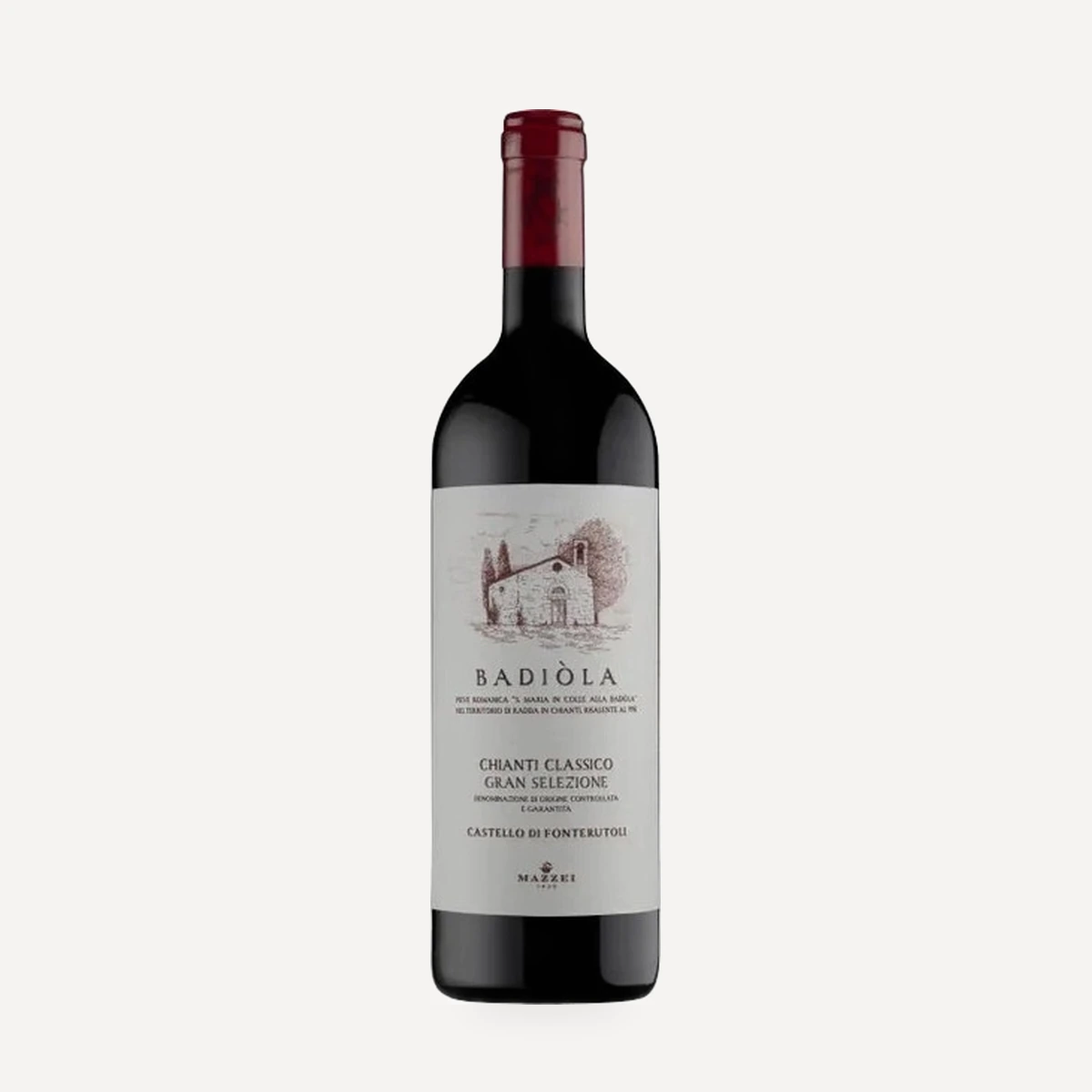
Badiòla originates in the estate’s highest vineyards, beneath the 12th-century church of La Badiola at Radda in Chianti. The vineyard lies at 570 m a.s.l. and faces southeast and southwest. Its soil consists mainly of Galestro limestone and Arenaria sandstone with mixed rocky material. The vines are 20 years old, spur-cordon trained and planted at 6,660 vines per hectare.
Grapes
100% Sangiovese from three clones and three estate massal selections.
Vinification
The grapes are hand-picked on 13 October. Vinification takes place in truncated-conical stainless-steel vats at 26–28°C, followed by 17 days of maceration.
Ageing
The wine matures for 16 months in 500 L French-oak barrels, 30% new, and is finished for five months in concrete tanks. The 2022 vintage was bottled in December 2023 and released in July 2024.
Technical data
Alcohol: 13.50%. Total acidity: 6.30%. Production: 10,100 bottles. Formats include 750 ml, 1.5 L and 3 L. First vintage: 2017. Ageing potential: more than 20 years.
Tasting profile
Marked by elegance and freshness, with aromas of wild berries and red fruit.
Serving and pairing
Pair with pot roasts, game, mushrooms and hard, aged cheeses.
Vintage notes
The 2022 season began with a mild winter and limited rainfall. Spring temperatures were initially close to average and then rose progressively, promoting even vegetative development. Sangiovese budbreak started around 10 April, with variations reflecting the estate’s different vineyard conditions. High temperatures and scarce rain continued through flowering and fruit set. The grapes remained in more than satisfactory health, but drought reduced bunch weight and overall volume. The broader estate harvest ran from 1 September to 6 October, with 440–621 mm of rainfall from April through September and a temperature index of 5,455.39°C.
Label / history
The wine expresses the Radda in Chianti sector of the estate, whose vineyards historically span three neighbouring Chianti Classico municipalities: Castellina in Chianti, Castelnuovo Berardenga and Radda in Chianti.