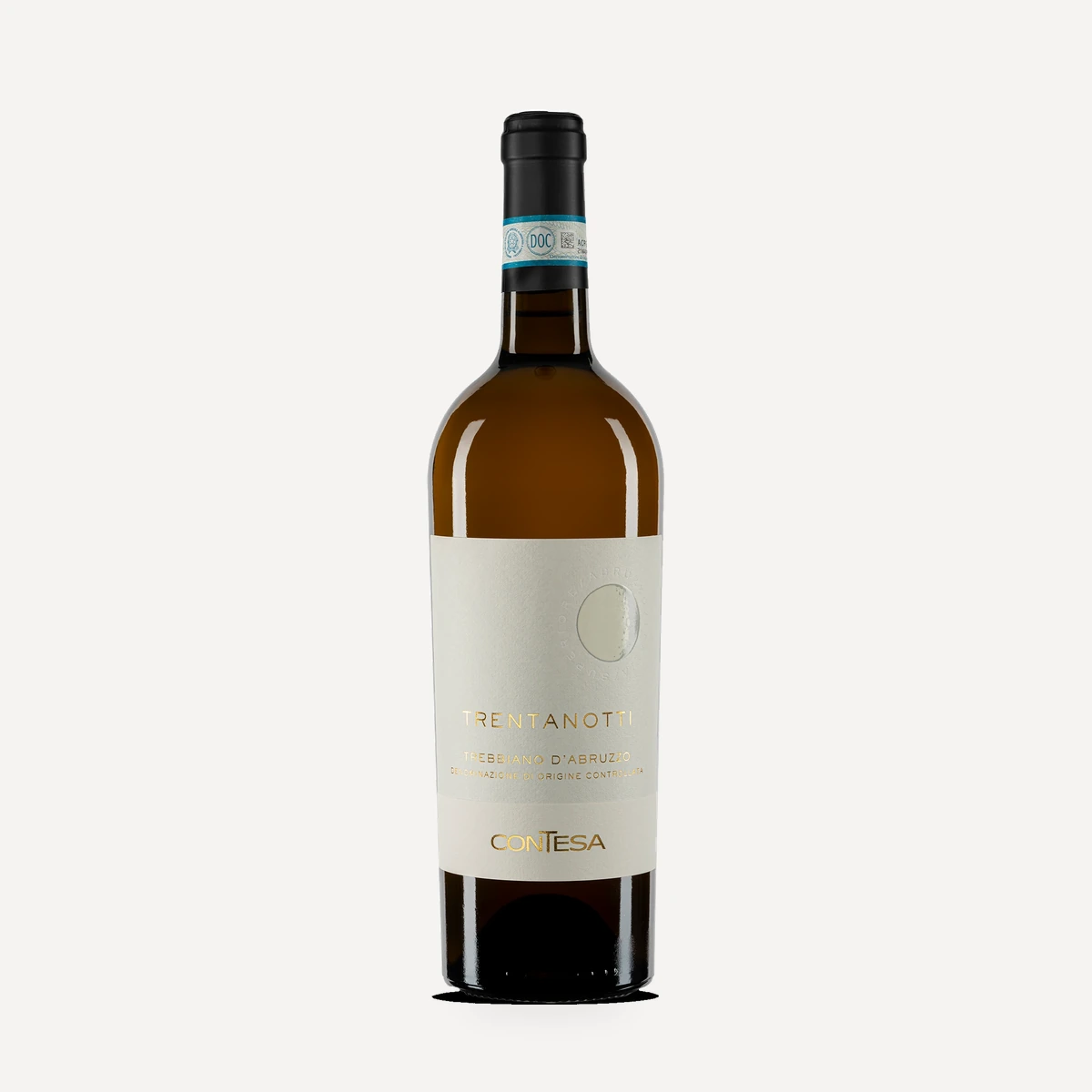
About this wine
Vineyard and terroir
The 2025 Trentanotti is an organic Trebbiano d’Abruzzo DOC Superiore from Contesa’s Selezione range. It is made entirely from Trebbiano Abruzzese grown in Collecorvino, in the province of Pescara. The vineyards are more than 25 years old and lie at 250 metres above sea level on clay soils. The vines are trained to the traditional pergola abruzzese at a density of 1,700 plants per hectare, with yields of 100 quintals per hectare. Harvest takes place in late September.
Vinification
An initial 12-quintal parcel is picked early and destemmed to create a fermentation starter powered by indigenous yeasts naturally present on the grapes. The remaining fruit is harvested by hand over the following 48 hours, combined with the starter and fermented on its skins for seven days in tank at 20°C. After pressing and draining, the must continues fermenting for three weeks in steel and cocciopesto amphora. The wine then completes malolactic fermentation. Natural settling of the must takes place at a controlled 10°C.
Ageing
The wine matures for six months in cocciopesto amphora, followed by at least three months in bottle.
Technical data
The 2025 wine is 100% Trebbiano Abruzzese and has 12.5% alcohol, total acidity of 5.50 g/L and residual sugar of 1.15 g/L. It is released in 750 ml bottles.
Tasting profile
Deep yellow with amber highlights, it combines ripe-fruit aromas with Mediterranean botanical notes. The palate is fresh and structured, with good persistence and a pleasantly almond-toned finish.
Serving and pairing
It pairs with fish, medium-aged cheeses, cured meats, tomato-based pasta dishes and prepared white meats. It is considered at its best two years after production and has an indicated ageing potential of five to ten years.