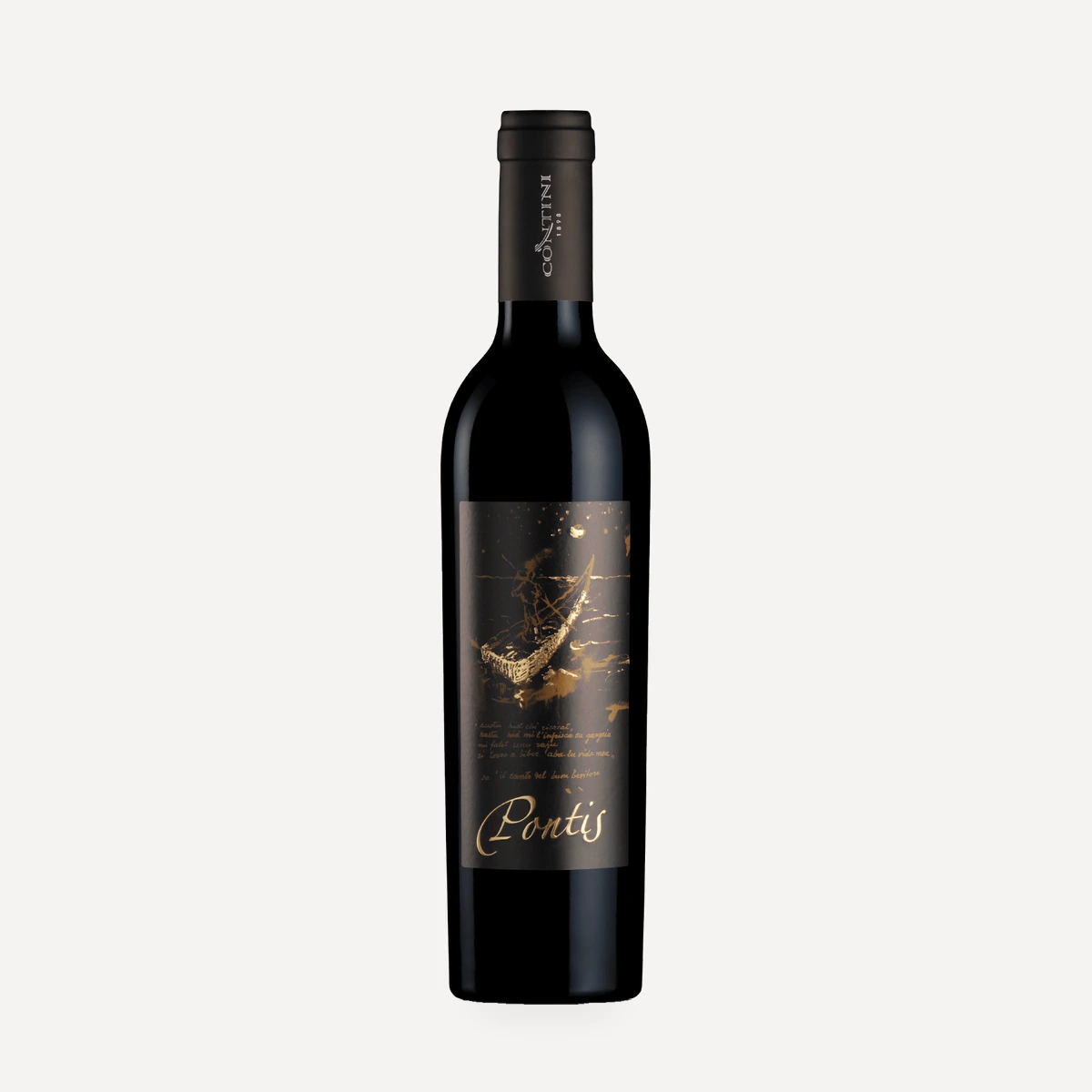
About this wine
Vineyard and terroir
The fruit comes from the Tirso river valley and the Sinis Peninsula, at elevations only a few metres above sea level. The soils are alluvial and sandy with a small clay component. The Mediterranean climate has mild winters, limited rainfall, and very hot, windy summers. Mature vines are trained as alberello and on trellises using Guyot and spur-pruned cordon systems. Yields are 30–40 quintals per hectare (3–4 t/ha). Harvest occurs during the first ten days of October.
Grapes
Vernaccia and Moscato.
Vinification
Part of the Vernaccia is obtained from dried grapes. The remaining grapes are harvested and vinified traditionally as a white wine, using gentle pressing and temperature-controlled fermentation.
Ageing
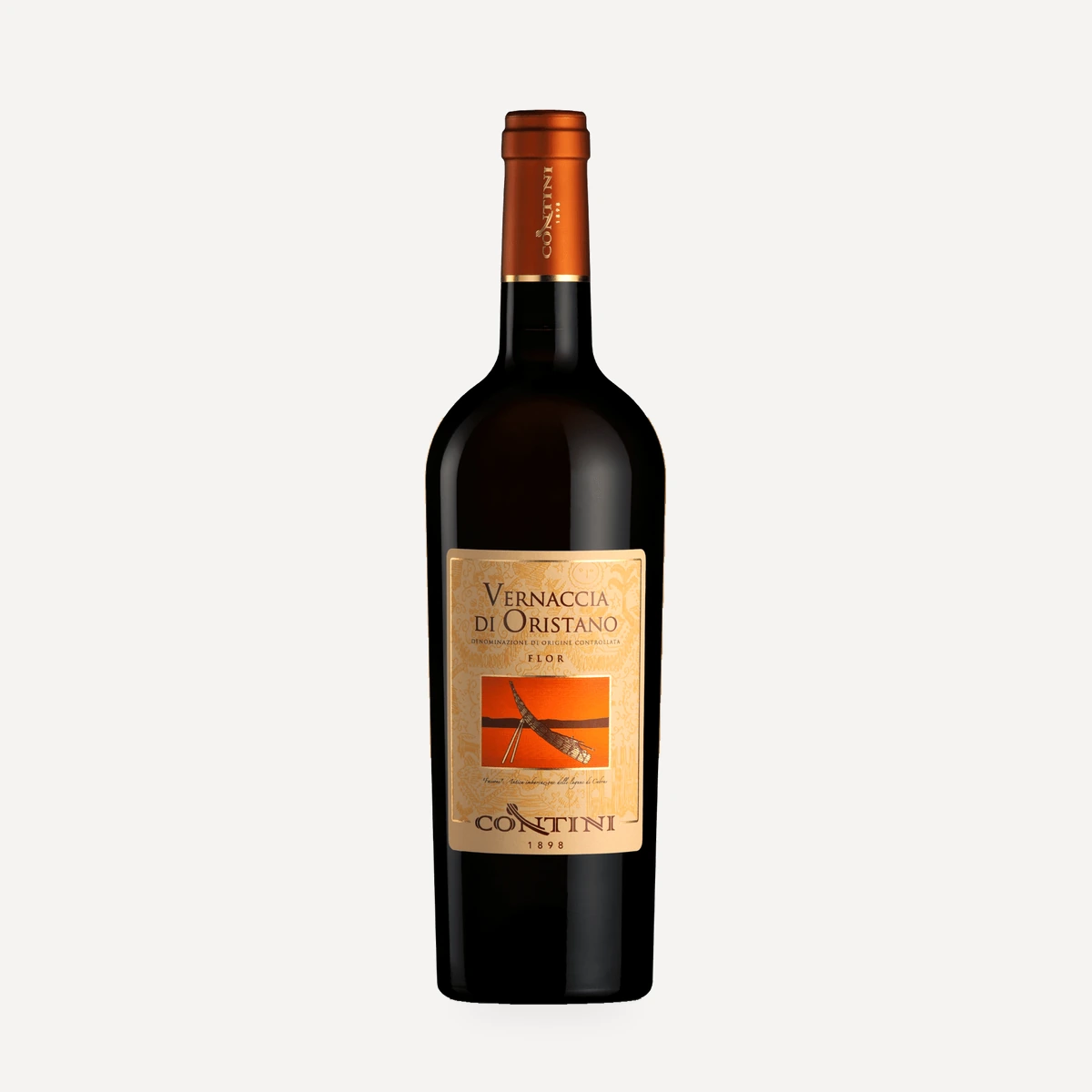
The dried-grape component matures in stainless steel. The other component matures in partially filled small oak and chestnut casks, where exposure to air allows the characteristic flor yeast veil to form. After the components are brought together, the wine receives several months of bottle ageing.
Technical data
Format: 0.375 L.
Tasting profile
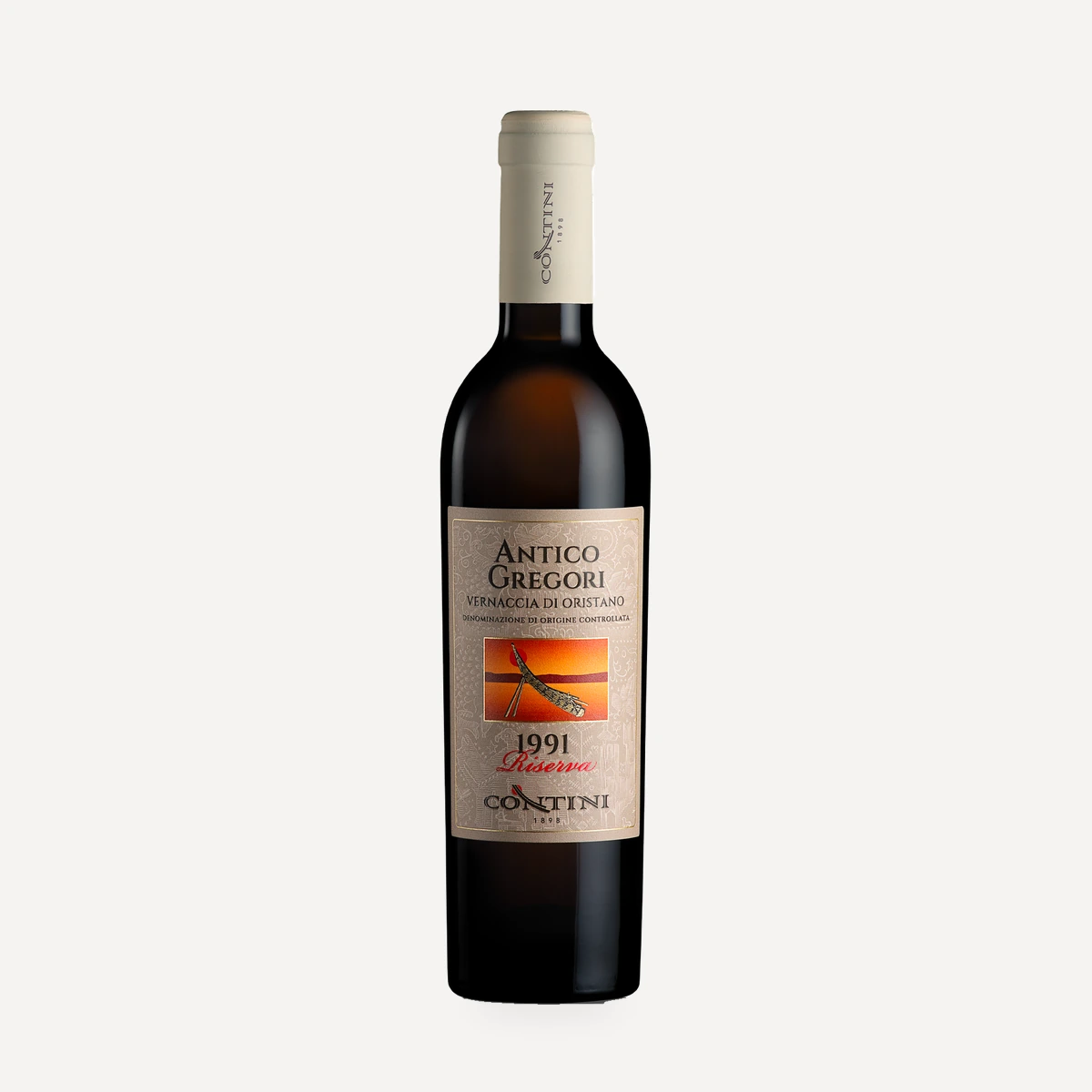
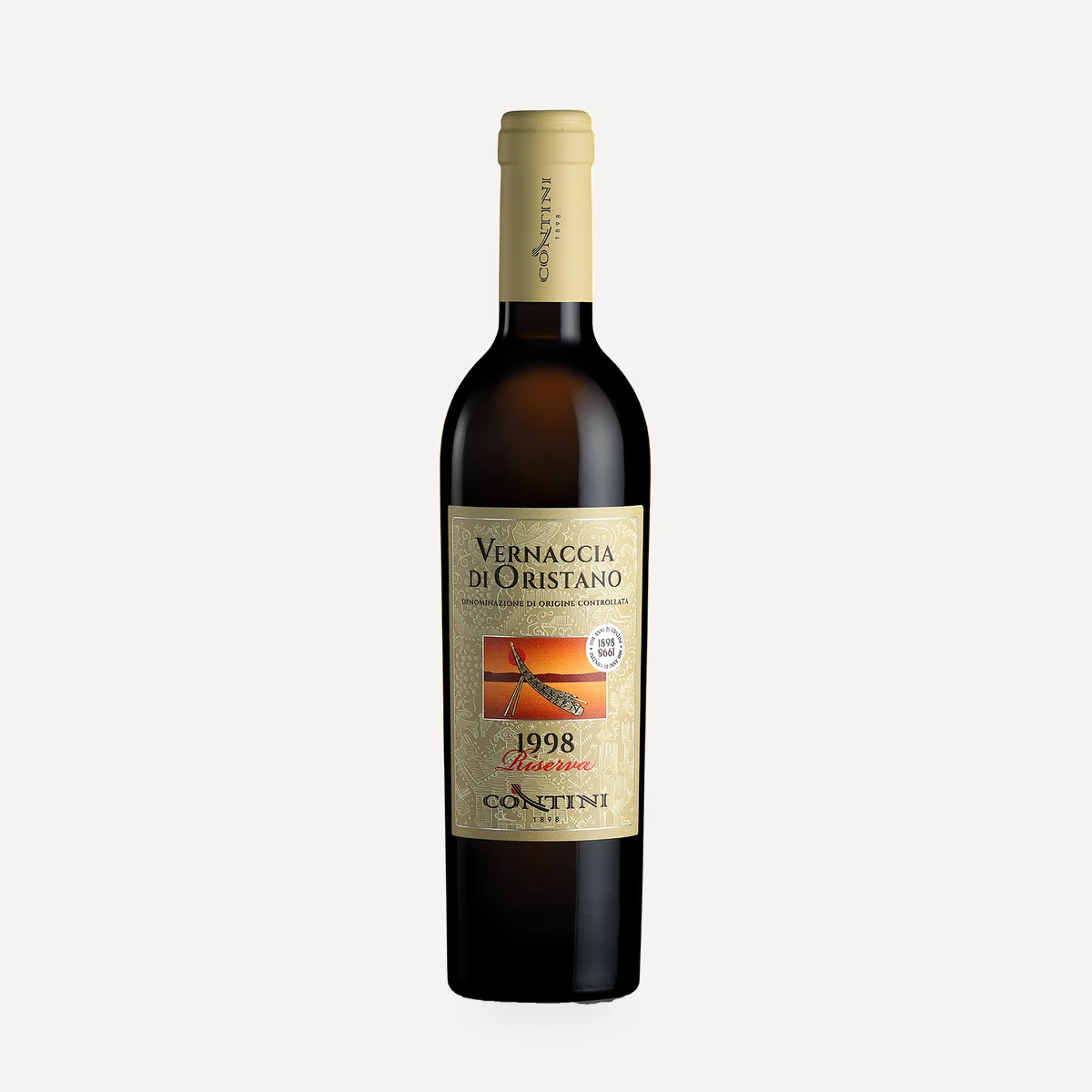
Bright amber with golden reflections. Aromas of honey, apricot, sultana, almond and hazelnut lead to a white-chocolate finish. Sweetness and a soft, caressing texture are balanced by freshness and savouriness, followed by long, intense aromatic persistence.
Serving and pairing
Serve at 12–14 °C. Pair with traditional Sardinian sweets or blue cheeses. Another suggested combination is mango cheesecake with a light grating of grey mullet bottarga.