History
The hill before the winery
The name Cornarea belongs to the hill on which the estate vineyards grow and is documented as far back as the year 1000. At the summit stands Villa Cornarea, built at the beginning of the 20th century by Avvocato Eugenio Grillone, then mayor of Canale.
Arneis has a much longer regional history: the variety had been grown and vinified in Roero since the 15th century. By the beginning of the 1970s, however, it had almost disappeared, surviving only as scattered vines among rows of Nebbiolo and Barbera. Its decline was linked to the difficulty of vinifying a naturally full-bodied, low-acid white grape before equipment for controlling fermentation temperature became available. Its Piedmontese name, interpreted as “naughty child,” reflects the difficulty growers associated with handling it.
1974 and the recovery of Arneis
In 1974, Giampiero Bovone and Francesca Rapetti bought Cornarea hill with the aim of restoring Arneis. The family planted the vineyards between 1975 and 1978, establishing approximately 12 hectares of Arneis and 3 hectares of Nebbiolo in one contiguous, wholly owned vineyard body. The Arneis planting represented the first substantial recovery of the nearly vanished variety. As the wine gained recognition first in Italy and then abroad, other Roero producers followed Cornarea’s example.
The accidental origin of Tarasco
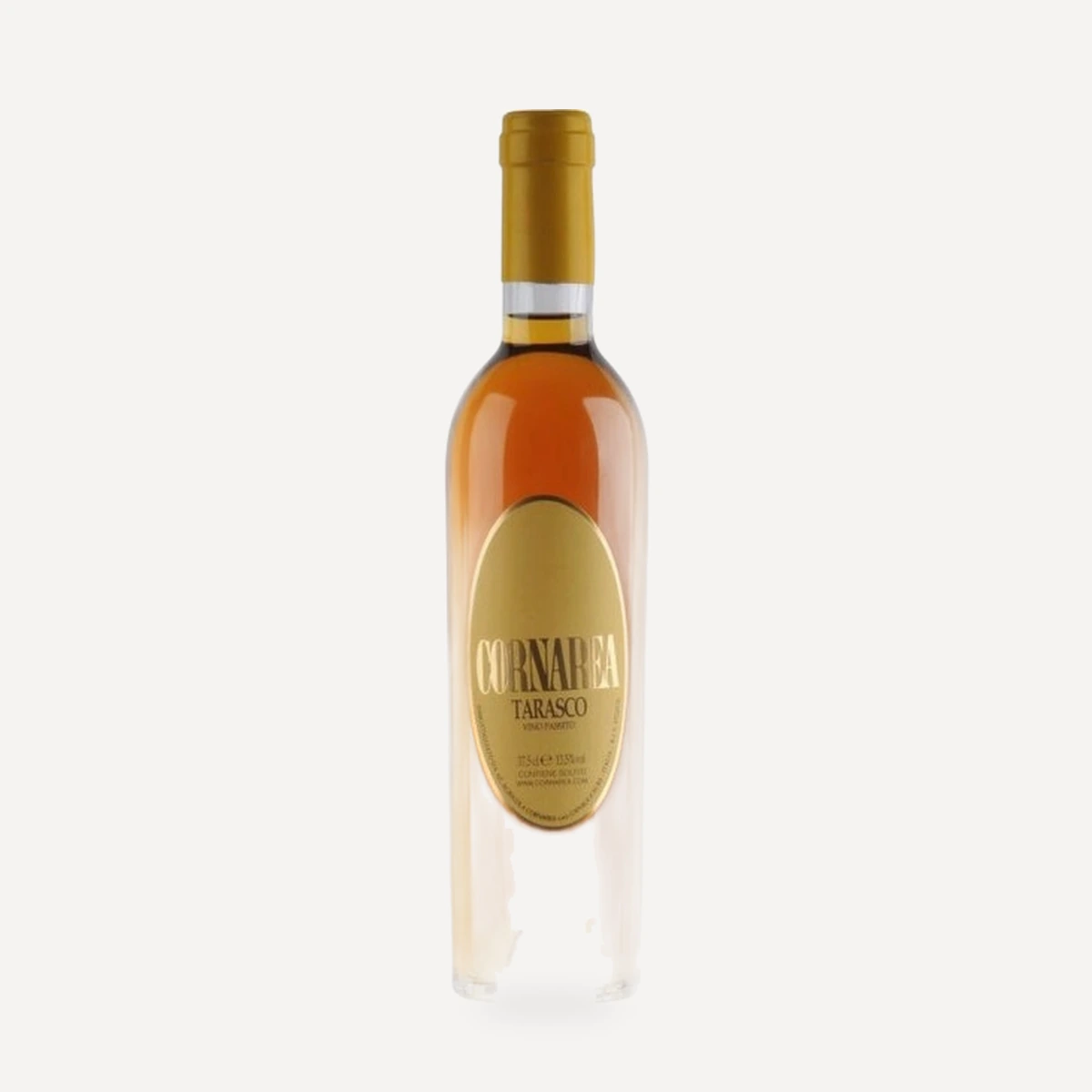
In 1982, three rows at the top of the hill were deliberately left unharvested so that journalist Luigi Veronelli could see the then-rare Arneis grapes. His visit was cancelled, and the fruit was forgotten amid the work of harvest. When oenologist Piero Bovone remembered the rows toward the end of October, the berries had developed Botrytis cinerea, or noble rot. The fungus had dehydrated the fruit and made its skins permeable, creating suitable conditions for an experimental sweet wine. The grapes were vinified as a passito and fermented in a used barrique.
The following year, journalist Cesare Pillon and Luigi Cotti, proprietor of the historic Enoteca Cotti in Milan, tasted the experimental wine. Cotti bought the entire barrique, had it bottled under a private label and named it Passarneis. Encouraged by the response, the family continued the method. A subsequent vintage from the same rows and used barrique became Tarasco, named after the yellow-flowered tarassaco plant. Production later expanded from the original three experimental rows to five exposed summit rows.
Recognition and diversification
In 1985, the family made an initial sparkling-wine trial. Although pleased with it, they repeatedly postponed another production because it coincided with the demanding preparation of their other wines. Thirty years later, the project returned as Mapoi, a name formed from the Italian expression “ma poi”—“but then”—that had accompanied those postponements.
In 1989, Arneis grapes became more expensive than Nebbiolo intended for Barolo. That year, the wine received DOC recognition and adopted the geographical name Roero, creating Roero Arneis DOC. In 2005, Roero Arneis was elevated to DOCG. Roero red, based on Nebbiolo, received DOCG status in the same year.
From 2016, Cornarea also began vinifying Barbera d’Alba, adding another traditional Roero variety to its production.
Family continuity
The founders’ sons now hold the estate. Gian Nicola Bovone, trained in viticulture and oenology at Alba, runs the cellar and production. His brother Pierfranco, also presented as Pier Bovone, manages sales, public relations and vineyard activities.
Terroir
Cornarea hill is located at Canale in the centre of Roero, the hilly area bordering the Langhe. Roero extends on the left bank of the Tanaro. The estate’s Arneis and Nebbiolo vines form a single contiguous body around the hill, with Villa Cornarea at its summit.
The main source vineyards average approximately 280 m above sea level. Arneis occupies exposures facing east, south-east, north-east and west. The Nebbiolo areas face principally south-west and west. The five summit rows used for Tarasco rise to approximately 310 m, face south-west and occupy the windier, drier side of the hill. This exposed microclimate is suited to concentrating Arneis fruit and can permit Botrytis cinerea to develop on ripe grapes. October weather is described as variable.
The broader Roero formation consists of sandstone—sedimentary rock of marine origin—mixed with limestone, clay and sand. These Pliocene deposits date to approximately five million years ago, and marine fossils can still be found in the soil. Within the Cornarea vineyards, the soil is further characterised by sand and ferrous clay with abundant magnesium. The high magnesium component is associated with the mineral character and ageing capacity observed in the estate’s wines.
Winemaking
The vineyard is worked mechanically, without herbicides and with attention to the biological and vegetative cycles of the vines. The rows are maintained with permanent grass cover. Crop thinning and harvest are performed by hand, with fruit selection taking place in the vineyard.
Both the Arneis and Nebbiolo blocks are trained to vertical espalier and pruned to Guyot. The principal Arneis block has approximately 4,000 vines/ha on Kober 5BB and yields 8–8.5 t/ha. The Nebbiolo blocks are listed at 7–8 t/ha, while the summit rows reserved for concentrated Arneis fruit are listed at 2 t/ha.
Harvested Arneis intended for the principal dry wine is collected in crates and delivered intact to the press. For the passito, fruit from the windy summit rows is placed in open wooden crates and continues drying in the cellar until December.
Cornarea combines modern cellar technology with traditional maturation methods, adapting the process to Arneis and Nebbiolo while seeking to preserve their aromas and flavours.
Arneis grapes are harvested into crates and tipped whole into the press without destemming. A low-pressure pneumatic system provides gentle pressing. The must ferments in temperature-controlled pressure tanks, and the controlled environment is maintained throughout vinification and bottling. This approach permits gentle fining or no fining. Particular attention is paid to avoiding excessive sulphur dioxide use.
Nebbiolo d’Alba and Roero are vinified traditionally and matured in large casks.
For Tarasco, ripe Arneis from the exposed summit rows can develop Botrytis cinerea. The affected berries dehydrate, increasing sugar concentration. Harvested clusters continue drying in wooden crates until December and are pressed after losing more than 80% of their water. The wine then rests for at least 48 months in used oak barrels. Natural evaporation progressively lowers the level in the barriques, which are deliberately not topped up; the resulting prolonged oxygen exposure is used to develop aromatic and flavour complexity.
Philosophy
Cornarea defines its cellar approach as a balance between modern technology and respect for tradition. Temperature control and a carefully managed cellar environment are used to protect the flavours and aromas of Arneis and Nebbiolo, while large casks and long, oxidative maturation remain part of the traditional repertoire.
The central objective is to preserve the sensory character of the grapes and their territory rather than obscure it through processing. Gentle handling of Arneis, restrained sulphur dioxide use and light or omitted fining form part of this approach. Family oenologists oversee every stage of vinification, with the stated aim of producing wines with distinct personality and a close bond to Roero.
Wines
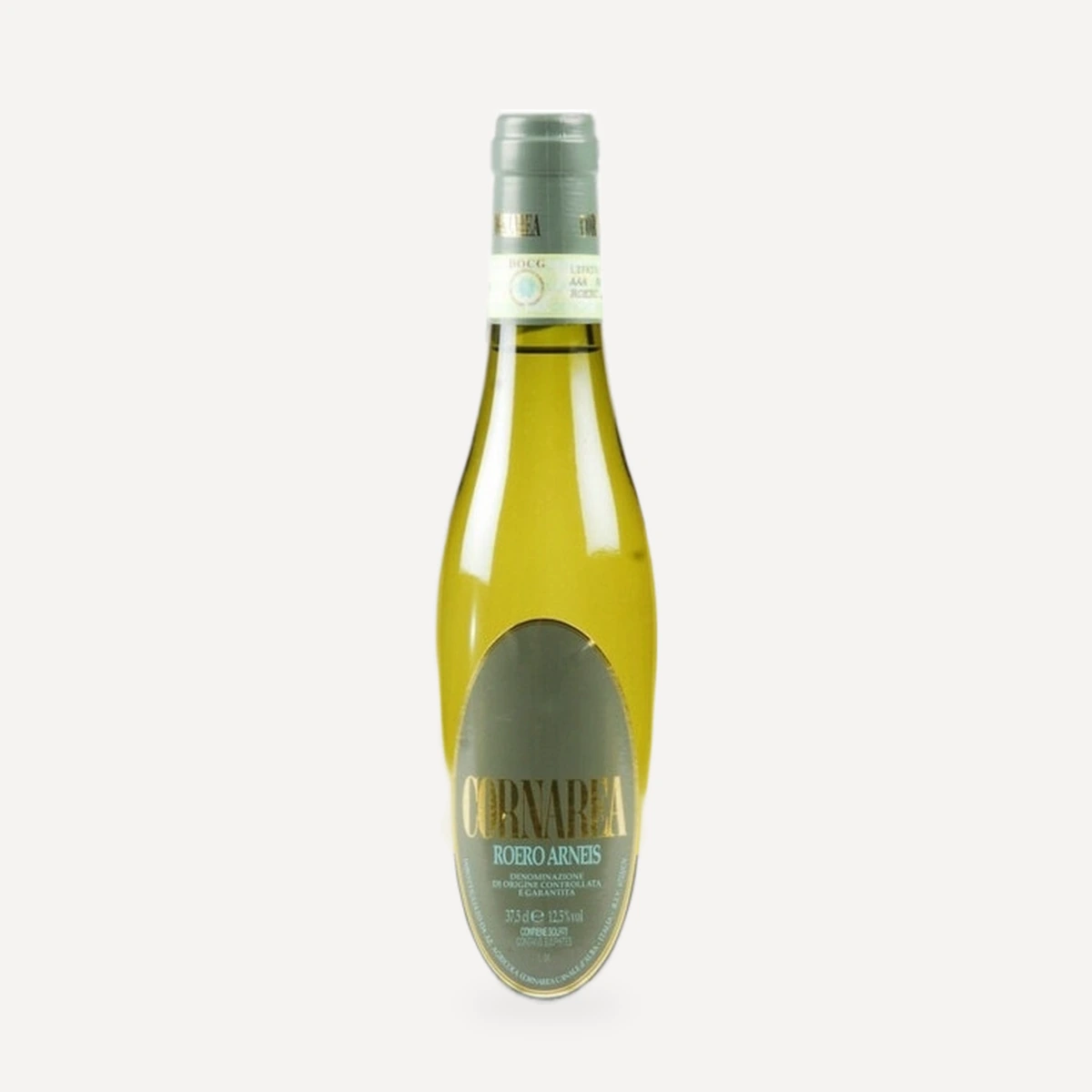
Roero Arneis DOCG
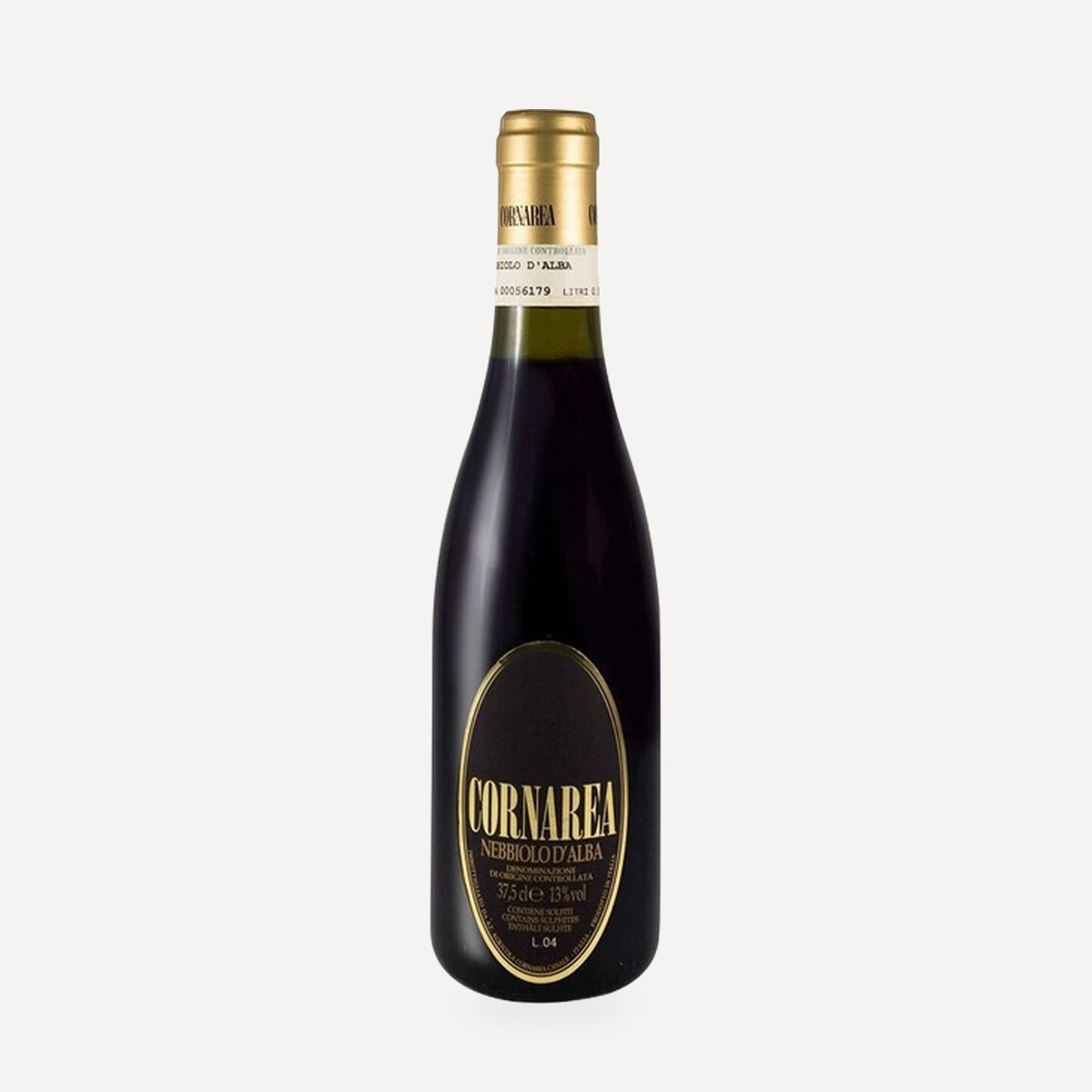
Nebbiolo d’Alba DOC
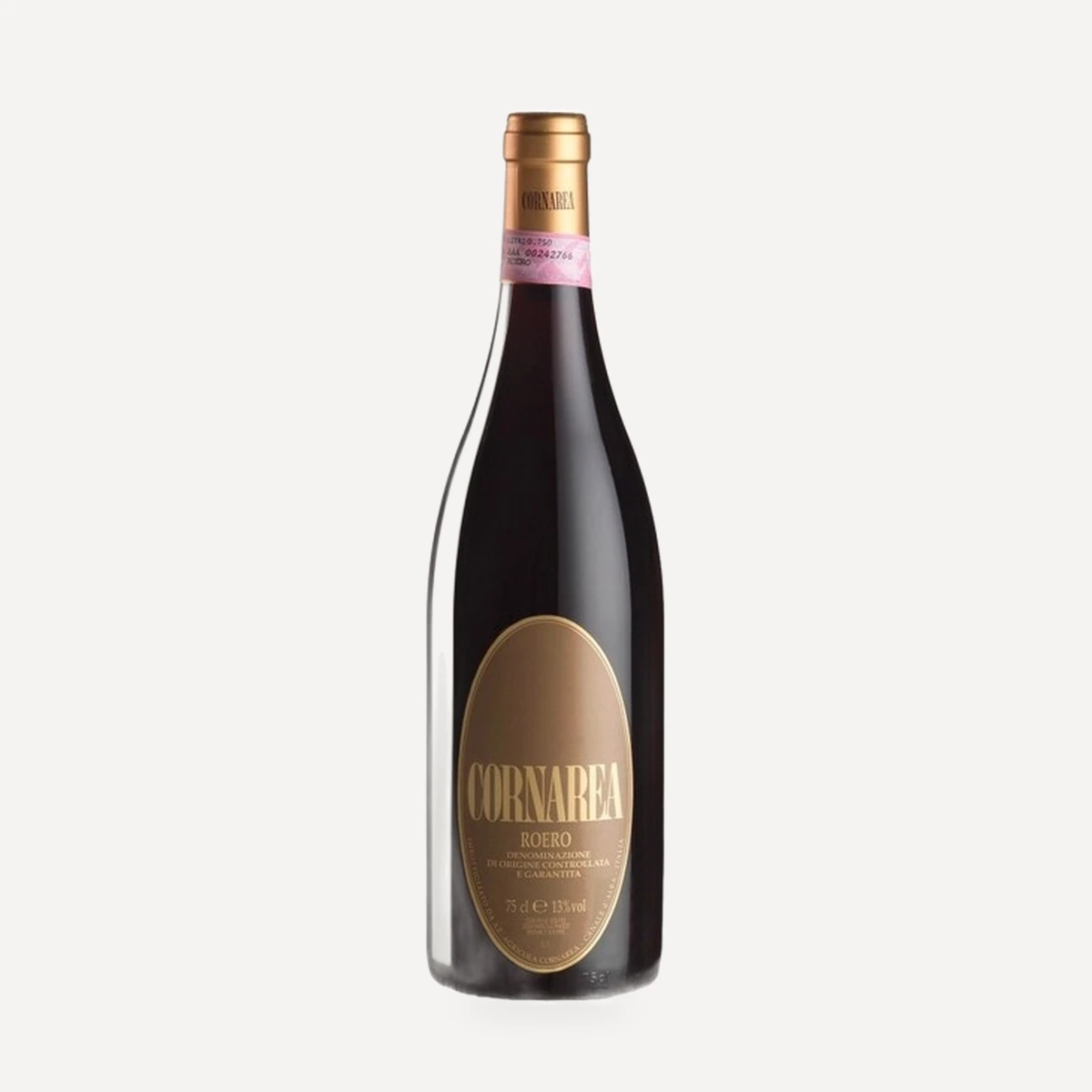
Roero DOCG