History
A seven-generation inheritance
Viticulture has passed through seven generations of the Giuratrabocchetti family. When Gerardo Giuratrabocchetti was seven, he encountered his grandfather Gerardo tending a vine. His otherwise stern grandfather told the boy that, because they shared a name, the vineyards would one day belong to him. More than thirty years later, Gerardo returned to those roots. He came to regard the deeper inheritance as a set of values: care in work, perseverance and the preference for doing over possessing. He also credits his parents, parents-in-law and wife Marcella with making the project possible.
1998: foundation
Gerardo Giuratrabocchetti and Marcella Libutti founded Cantine del Notaio on 5 October 1998, Gerardo’s fortieth birthday. Gerardo, an agricultural-sciences graduate, intended the new estate to give greater expression to Aglianico del Vulture from the family vineyards by joining local tradition and culture with research and innovation.
The early technical programme included work with Professor Luigi Moio, professor of oenology at the Università degli Studi di Napoli Federico II, to investigate the oenological potential of Aglianico del Vulture.
Vineyards, research and cellars
The estate assembled vineyards in Rionero in Vulture, Barile, Ripacandida, Maschito and Ginestra. The holdings include vines planted in the early twentieth century and younger blocks established or restructured principally between 2003 and 2007. A recovery programme identified and planted approximately 40 varieties historically cultivated in Basilicata. The work involved A.L.S.I.A., university and research institutions, DNA analysis at San Michele all’Adige and research partners including the CNR and the Istituto Sperimentale di Bari’s Turi section.
Historic caves dating to the seventeenth century and once used by Franciscan friars were recovered for maturation. Their natural equilibrium of temperature, humidity and ventilation accommodates French-oak barriques. A new production winery was also established at Serra del Granato in Ripacandida, combining modern oenological technology with architecture inspired by traditional masserie.
Commercial development and international reach
In 2002 Gerardo left his directorship of the Associazione Provinciale Allevatori di Potenza to concentrate on the winery. Angelo Borreca became head of the Italian market in 2008 after several years selling the wines in Basilicata. In September 2020, Cantine del Notaio began working with export specialist Edoardo Freddi on an international market-development programme.
Management systems and social policy
The production chain has been placed under certified quality and environmental management systems. Certification encompasses vineyard cultivation, transformation, maturation, packaging and logistics, with environmental management extending across all vineyard sites. The estate also operates under the SQNPI integrated-production framework. In 2025 it adopted a formal gender-equality policy aligned with UNI/PdR 125:2022, covering recruitment, career development, remuneration, parenthood, work-life balance and prevention of abuse and harassment.
Terroir
Vulture setting
The vineyards occupy sites in Rionero in Vulture, Barile, Ripacandida, Maschito and Ginestra on and around the slopes of the extinct Monte Vulture volcano. The individual holdings range from approximately 430 to 600 metres above sea level. Their surfaces vary from flat ground to slopes of about 30%, with row orientations and exposures adapted to each site.
Volcanic geology and water
The soils are not uniform: they include sand, pozzolana, medium-textured material and clay. Their recurring feature is volcanic tuff. Deep tuff layers retain water during the dry season, a function locally described as il tufo che allatta—“the tuff that nurses.” At Piano dell’Altare the tuff begins approximately 50–150 cm below the surface; at Le Querce compact volcanic tuff appears at about 1 metre. Casano and Cerentino have clay-leaning topsoils over conglomerate and sandstone tuff formed in a Quaternary lacustrine deposit. Cugno di Atella combines volcanic tuff and compact pozzolana with limestone banks and clay.
Climate and mesoclimates
At Piano dell’Altare, annual rainfall is approximately 700 mm, concentrated between November and June, followed by prolonged summer drought. Cugno di Atella occupies a wedge between two ravines. Air currents moderate maximum temperatures, dry bunches rapidly and prevent significant frost and stagnant humidity. Across the holdings, the combination of volcanic subsoil, water storage and local exposure supports the long ripening cycle of Aglianico del Vulture, whose harvest extends from mid-October to mid-November.
The estate’s landscape also includes olive groves and perimeter trees, historic farm buildings, a stream along the lower side of Cugno di Atella and views from Serra del Granato toward the Vulture villages and, in clear conditions, the Gargano promontory.
Winemaking
Cultivation follows SQNPI integrated-production requirements for Basilicata, covering plant production, transformation and packaging, with an agro-climatic-environmental certification scope. The estate’s approach is also inspired by organic and biodynamic criteria, but these are presented as guiding criteria rather than an organic or biodynamic certification.
Vineyard techniques are intended to increase both soil organic matter and stored water. Gerardo Giuratrabocchetti frames the work scientifically around the life of the plant, the surrounding environment and the soil’s inherent biological vitality. Deep tuff is treated as a natural reservoir during the long summer dry period, while Casano’s artificial pond stores more than 200 m³ for spring and summer crop-protection treatments.
Old genetic material receives particular attention. Historic vines at Piano dell’Altare underwent sanitary and genetic evaluation before transplantation within the parcel. Own-rooted vines propagated by layering are preserved there and at Le Querce. Approximately 40 historically cultivated local varieties have been collected, DNA-analysed and planted through a germplasm-recovery programme involving A.L.S.I.A., the CNR, universities and specialist research institutes.
Training and spacing vary by parcel. Both trellised conversions of old bush vines and newer trellised blocks are present; vineyard densities reach approximately 5,000 vines/ha at Piano dell’Altare. Rows may follow the steepest gradient, cross it or run north–south/east–west according to each site. Aglianico del Vulture is late ripening, with harvest extending from mid-October to mid-November, and bunches are selected before processing.
Olive trees form part of several vineyard ecosystems. Mature trees surround Piano dell’Altare and Le Querce, while Casano’s previously scattered trees were transplanted into orderly roadside and olive-grove positions to facilitate treatments, harvesting and transport.
Production is centred on the modern winery at Serra del Granato in Ripacandida and a network of historic underground caves in Rionero in Vulture.
The Serra del Granato building incorporates contemporary oenological technology while taking its architectural form from traditional masserie. Its quality system monitors the full chain: vine cultivation, conversion of grapes into wine, maturation, bottling and packaged-product dispatch.
The estate recovered interconnected natural caves excavated in volcanic tuff and dating to the seventeenth century, when they were used by Franciscan friars. Their stable temperature, constant humidity and natural ventilation create the conditions used for maturation in French-oak barriques. The caves extend beneath the town from the horseshoe-shaped Facìle courtyard. Separate historic caves in Via Umberto I contain pupitres and are used for in-bottle fermentation of the estate’s traditional-method sparkling production.
The surviving palmento at Casale Vorrasi records an earlier production system: a stone or masonry vat designed to process more than one batch of grapes at a time. The animated rural-history installation also documents the local practice of crushing grapes in vats or palmenti, pressing marc and producing progressively lighter household wines, but these elements are preserved as historical interpretation rather than presented as the estate’s current protocol.
Philosophy
Cantine del Notaio’s declared purpose is to develop the potential of Aglianico del Vulture by combining local tradition, history and culture with research and technological innovation. Wine is treated as a means of communicating the Vulture and creating an exchange between the estate and the people who encounter it.
Gerardo Giuratrabocchetti’s approach begins with respect for plant life, the surrounding environment and the intrinsic vitality of the soil. Scientific research is therefore used not to detach production from tradition but to understand the variety, preserve old genetic material and improve work throughout the production chain.
The family narrative places values ahead of the material inheritance of vineyards: careful workmanship, perseverance, generosity and the desire to accomplish rather than merely possess. Cultural heritage is part of the same programme, expressed through the restoration of Franciscan caves, preservation of the Facìle courtyard and Casale Vorrasi palmento, and interpretation of rural life through the animated Nativity scene.
Environmental and social management are framed as continuous-improvement commitments. Environmental controls extend across production and vineyard sites, while the gender-equality policy links organisational development with balanced opportunity, merit-based careers, equitable remuneration, support for parenthood and zero tolerance of harassment.
Wines
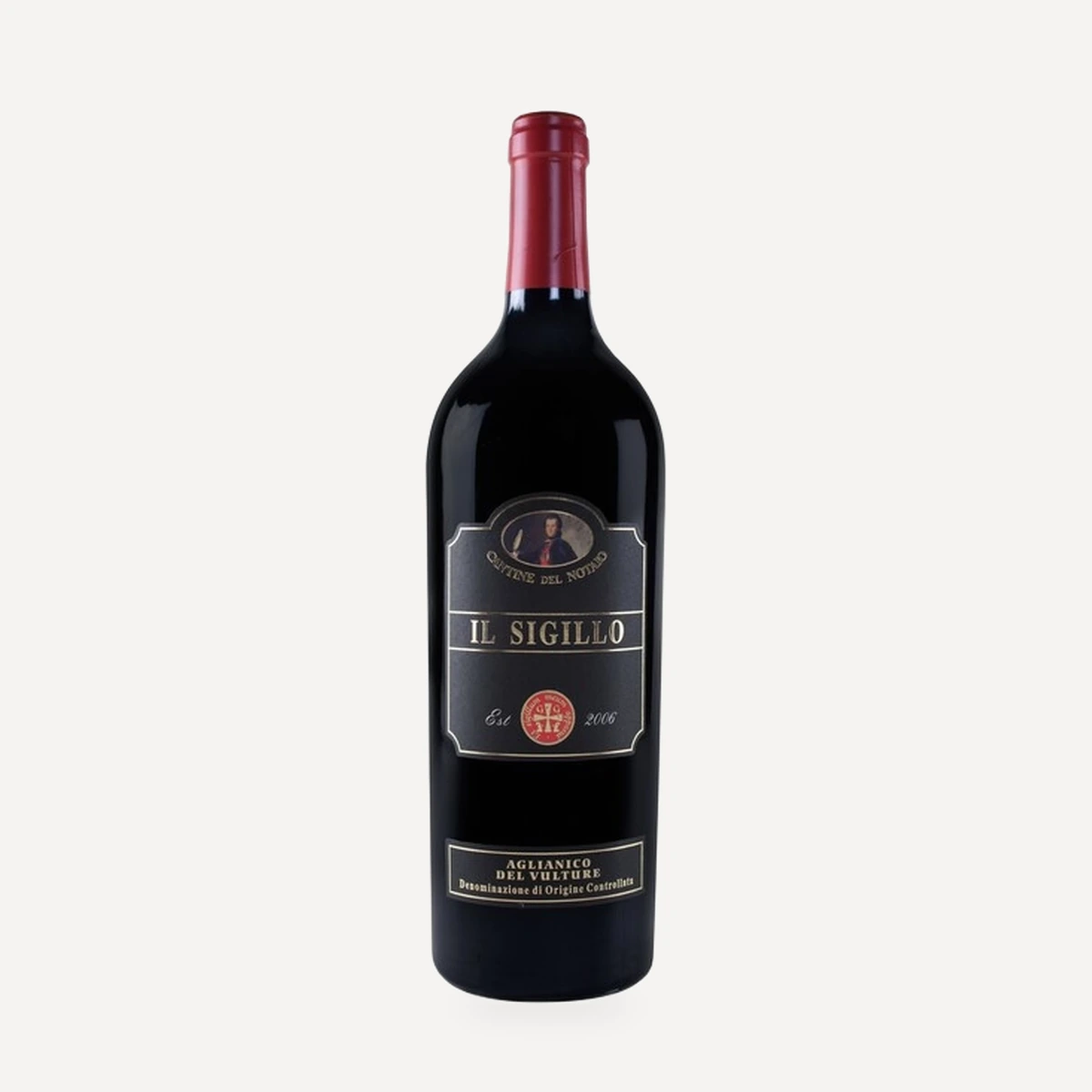
Il Sigillo
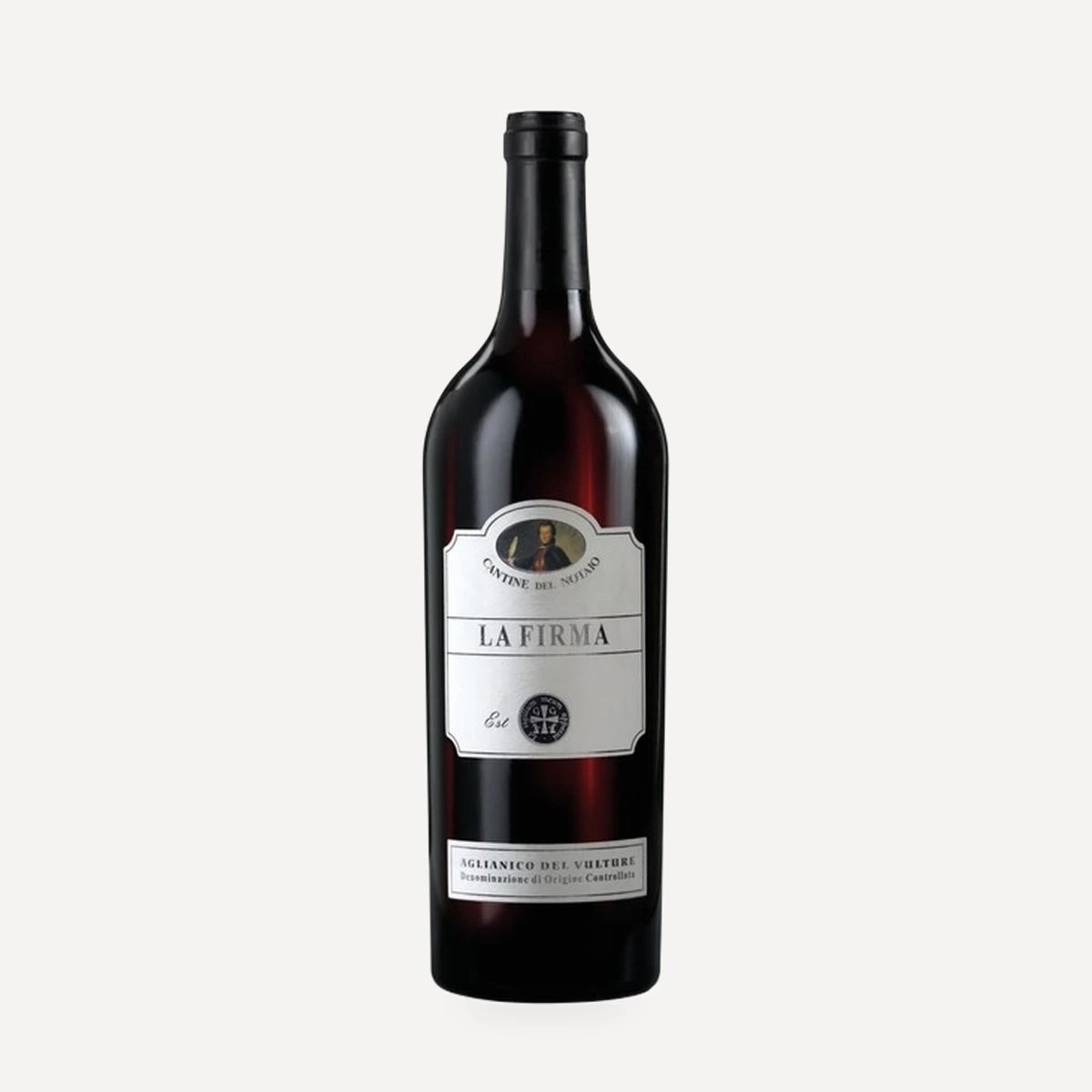
La Firma