History
1926: Achille begins the family tradition
The Paltrinieri family's winegrowing history began in 1926 with Achille, Alberto Paltrinieri's grandfather. The agricultural estate subsequently passed to Alberto's parents, Gianfranco Paltrinieri and his wife, who managed it for approximately 40 years. The family has now lived and produced Lambrusco di Sorbara in Sorbara for four generations.
The Gianfranco Paltrinieri generation
Gianfranco owned the agricultural estate bearing his name at Cristo di Sorbara. He was closely involved with both vineyard and wine, seeking informed opinions when each new Lambrusco was ready. He and Adriano “Nano” Morandi developed a personal and commercial relationship that linked Paltrinieri with Modena's Salumeria Giusti for decades.
The relationship began around the 1970s and strengthened after Morandi took over Salumeria Giusti in 1980. Paltrinieri supplied the business with a pure Sorbara carrying a simple bespoke “etichetta bianca.” That wine was later renamed Radice. Labels preserved from the 1980s and 1990s remained in the Paltrinieri family archive.
1996: Piria
The first vintage of Piria was harvested in 1996. It retained the classic Sorbara–Salamino blend, later standing in contrast to the family's growing focus on varietal Sorbara.
1998: a decisive commitment to pure Sorbara
After finishing his studies, Alberto was asked by his father what he wanted to do with his life. He chose to continue the work begun by Achille and maintained by his parents. In 1998 Alberto and his wife, Barbara Galassi, assumed direct responsibility for the winery.
That year's harvest marked a fundamental stylistic decision. Gianfranco had long maintained that Sorbara was better on its own, and Alberto and Barbara followed this intuition by vinifying it without Salamino. This was a contrarian choice at a time when the market favored darker, fuller-bodied and often off-dry or sweet Lambrusco. Their pure Sorbara was instead pale ruby, dry and sharply acidic. Its label was presented as the first in the Lambrusco world to use the wording “Sorbara in purezza.”
Development of the range
The following two decades were devoted to experimentation with vineyard selections and different methods of secondary fermentation. By the twentieth anniversary of the 1998 harvest, the winery was producing eight wines, five of them pure Sorbara interpreted through different selections and refermentation methods.
Grosso was first produced from the 2008 harvest as a bottle-fermented, zero-dosage traditional-method Sorbara. The range eventually encompassed short and extended Martinotti-method wines, natural refermentation in bottle and traditional-method sparkling wine.
2018: twenty years of pure Sorbara
In 2018 Alberto and Barbara marked twenty harvests since the move to varietal Sorbara. The anniversary account presented the 1998 decision not as a completed achievement but as the beginning of a continuing process of work and experimentation involving the entire team.
The winery was also nominated for Wine Enthusiast's 2018 Wine Star Award in the European Winery of the Year category.
2020: heritage, friendship and solidarity
In June 2020, during the COVID-19 crisis, the Paltrinieri family and oenologist Attilio Pagli created Anastasi. The project translated the family's maxim that giving brings a greater return than receiving into a charitable release for Banco Alimentare. Artist Fabrizio Loschi supplied the work used for its identity; the name Anàstasi evokes resurrection and rebirth.
Later in 2020, fifty years of relations between the Paltrinieri and Morandi families were commemorated with a special bottle-refermented cuvée. Barbara found old Bottiglieria Giusti labels in a drawer, prompting Alberto Paltrinieri and Matteo Morandi to revive their design. Attilio Pagli developed the cuvée with Alberto and Matteo after extensive tastings. The release comprised 1,000 bottles and 100 magnums and was presented at Hosteria Giusti on 3 November 2020. It honored Gianfranco Paltrinieri and Nano Morandi, whose work had established the relationship carried on by their children and grandchildren.
2021: the first certified organic result
Sant'Agata, dedicated to the patron saint of Sorbara, was first produced from the 2021 harvest. Made from organically farmed grapes grown on 3.5 ha at Cristo, it was described by Alberto as the first certified result of the estate's longstanding attention to sustainable farming, vineyard health, biodiversity and careful cellar processes.
2026: a century at Sorbara
The estate reached its centenary in 2026, continuing under fourth-generation leadership. A centenary celebration was scheduled for 6 September 2026, combining local food, live music, masterclasses and two previews of Andrea Mignolo's documentary Lambrusco Republic. The full proceeds were allocated to Associazione Il Veliero, which provides free educational support to secondary-school students in Modena and works against school dropout and educational poverty.
Terroir
Cantina Paltrinieri cultivates 17 ha in the historic Cristo di Sorbara area of the Modena countryside. Cristo occupies the narrowest strip of land between the Secchia and Panaro, the two rivers that flank this part of the province.
The vineyard soils are loose, fresh and predominantly silty and sandy, with a good presence of organic matter. More recent descriptions identify the sand as alluvial in origin. These soils are associated with the finesse, freshness, acidity and saline character sought in Lambrusco di Sorbara.
The estate characterizes Sorbara—and particularly this narrow river-bounded sector—as especially suited to Lambrusco di Sorbara. No elevations, slope exposures, rainfall figures or detailed climatic measurements are specified.
Winemaking
Vineyard work combines integrated crop protection across the broader holding with certified organic farming on a 3.5 ha parcel at Cristo. G.D.C. (Geneva Double Curtain) and Sylvoz are the identified training systems.
Alberto Paltrinieri describes sustainability as a longstanding commitment to vineyard care, vine health and biodiversity, accompanied by close attention to every production stage in the cellar. The 2021 harvest yielded the first wine presented as a certified result of that approach.
Harvest occurs in September. The earliest picking begins in the first week for fruit intended for traditional-method production; other parcels are harvested during the second week or around mid-September. Reported yields for the documented vineyard selections range from 120 to 140 quintals per hectare. No detailed account is given of pruning, cover crops, soil cultivation, irrigation, disease treatments, hand harvesting or grape sorting.
Cellar approach
Production is framed as a careful combination of tradition and technology, supported by detailed daily work. The range is built around several interpretations of Lambrusco, particularly pure Lambrusco di Sorbara, distinguished by vineyard selection and secondary-fermentation method.
Pressing and primary fermentation
Pale Sorbara styles are generally produced from free-run must or through soft pressing and white-wine vinification. Several are made without skin maceration before alcoholic fermentation. A darker Salamino expression instead undergoes maceration. Temperature-controlled processing is explicitly used for the white sparkling blend.
Martinotti method
The Martinotti method is employed for several wines. Depending on the intended style, secondary fermentation may be followed by at least three months or as long as twelve months on the lees. Other Martinotti-method wines are made after soft pressing or after maceration, allowing the estate to produce both pale, dry Sorbara and deeper-colored Salamino expressions.
Natural refermentation in bottle
The estate also practices natural secondary fermentation in bottle using indigenous yeasts. This style is bottled once, at the beginning of March, and continues ageing in bottle with its fermentation deposit.
Traditional method
For traditional-method Sorbara, free-run must is vinified as a white wine and fermented in bottle. The documented process includes at least 24 months on the lees, followed by six months of bottle ageing. The wine is produced without dosage.
Longer ageing and reserve material
The cellar also uses tonneaux selectively for reserve components. A 2017 pure-Sorbara family reserve spent two years in tonneau before being blended in 2020 for Anastasi. Another traditional-method component was maintained in tonneau and periodically refreshed for the Paltrinieri–Morandi commemorative cuvée.
No general specifications are given for primary-fermentation temperatures, malolactic fermentation, clarification, filtration, stabilization, sulfur additions or routine bottle-ageing periods beyond the examples above.
Philosophy
The family's central aim is to preserve the work begun by Achille Paltrinieri while continually testing how Sorbara can be expressed. The pivotal 1998 decision to vinify Lambrusco di Sorbara without Salamino placed varietal identity, pale color, dryness and pronounced acidity ahead of the darker, fuller and sweeter Lambrusco styles then favored by the market.
Alberto and Barbara describe satisfaction in their work as arising from the care required to do everything well. Their idea of stewardship extends beyond the present generation: the estate is treated as family memory and living roots, with a responsibility intended to outlast its current custodians.
Experimentation remains integral to this continuity. Pure Sorbara is interpreted through vineyard selection, Martinotti refermentation, natural bottle refermentation and the traditional method. The twentieth anniversary of the 1998 decision was presented as the beginning of a longer path rather than its conclusion.
Environmental responsibility is expressed through care for vine health, biodiversity, sustainable farming and disciplined cellar work. The charitable Anastasi project also translated inherited family values into action: during the pandemic, the family chose to respond to crisis through giving and directed the proceeds to food assistance.
Wines
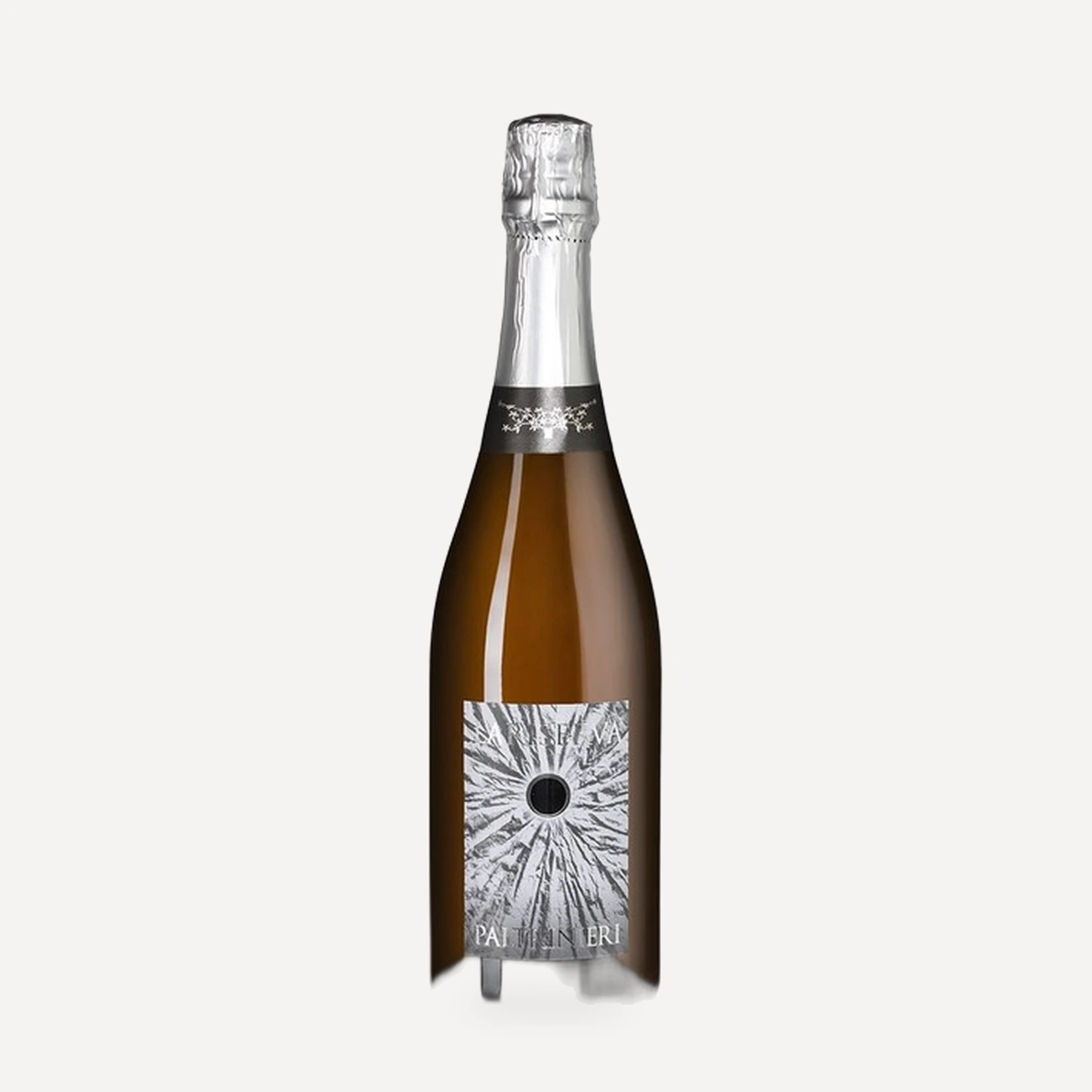
LaRiserva
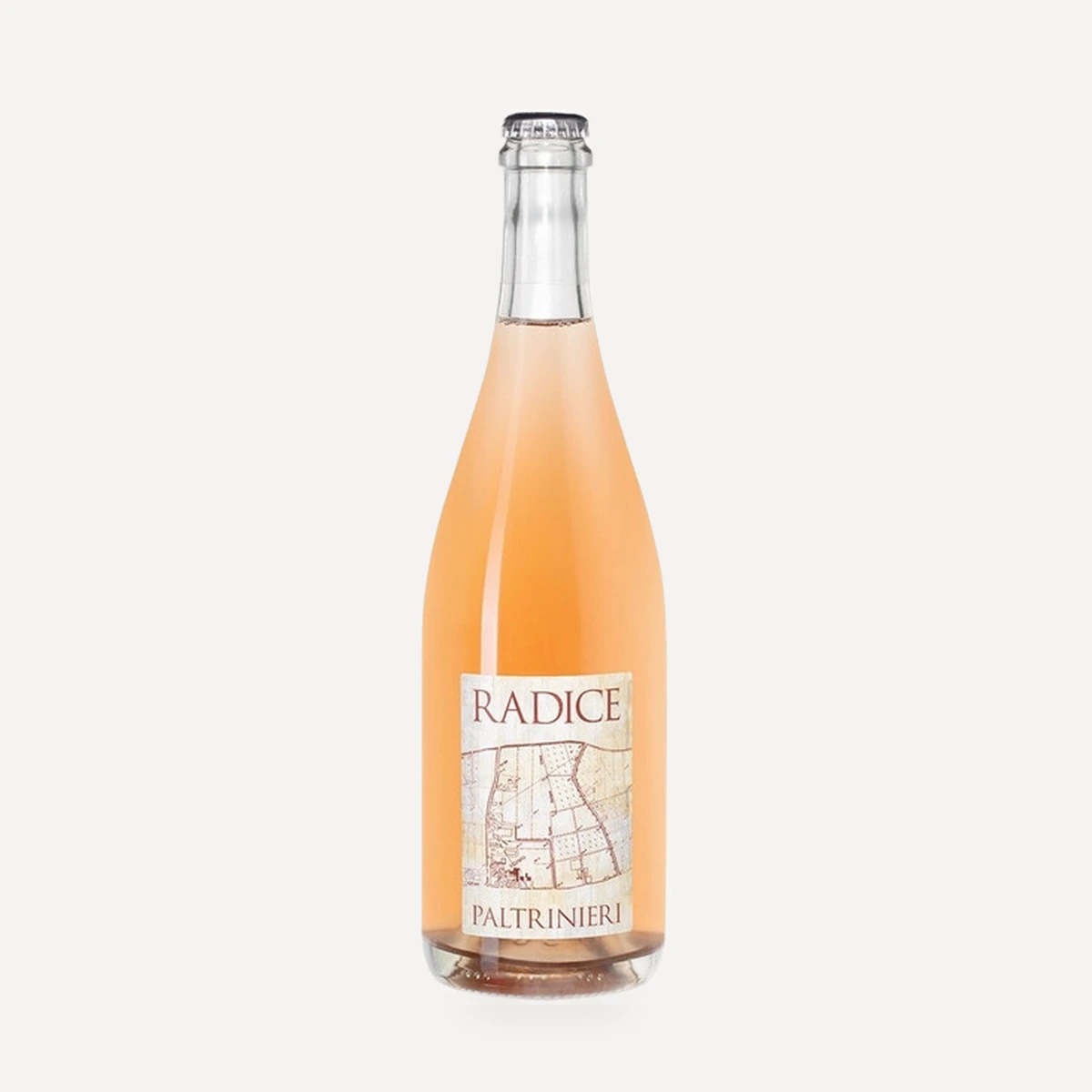
Radice