History
Piancornello and the family property
The estate’s roots at Piancornello predate its bottled-wine business. The property, which included a substantial olive grove, was acquired during the 1950s. Extra-virgin olive oil was produced from that period onward, initially for family consumption and especially for sale in bulk to the local market.
In 1978, the first 4 hectares of Sangiovese were planted. The early winegrowing activity was limited to growing grapes and selling the bunches to other producers in the area.
The creation of Agostina Pieri
A decisive change came in 1991, when grandfather Alessandro divided the Piancornello property among his daughters Agostina, Silvana and Graziella. Agostina and her sons, Jacopo and Francesco Monaci, began a new family project on land closely associated with the brothers’ childhood. This year marks the beginning of the modern Azienda Agricola Agostina Pieri.
A gradual renewal of the vineyard holdings began in 1992. The work included replacing vines, changing planting layouts and increasing vine density to improve the relationship between berry skin and pulp.
The first estate vintage was harvested in 1994. It yielded an experimental production of only 3,000 bottles divided between Brunello di Montalcino and Rosso di Montalcino. Vigna 1 was also planted that year, joining the Sangiovese vineyard planted in 1992.
Development of the estate
Three hectares of olive grove were replanted in 1996. Vineyard development continued with the planting of Vigna 4 in 1998 and Vigna 3 and Vigna 5 in 2001. Detailed study of the estate’s soils, morphology and microclimates eventually led to the division of the vineyard holdings into five separately managed production parcels. Each parcel was assigned to a particular wine, and its grapes and resulting lots were kept separate throughout fermentation and maturation.
The cellar developed alongside the vineyards. Investments in technology were combined with customized equipment designed around the family’s production philosophy. Traditional 40-hectolitre oak casks were replaced by 20-hectolitre casks; barriques were introduced, followed in 2008 by 600-litre demi-muids. All of the maturation vessels described are made from French oak.
Olive oil and the present family structure
Although the family considered developing a commercial olive oil from the early 1990s, wine remained the initial priority. Olive growing continued for household production while trials and technical experience accumulated. The first bottled extra-virgin olive oil was released at the end of 2015.
The estate remains directly managed by the family. Jacopo Monaci is responsible for agronomy and vineyard work, Francesco Monaci oversees the cellar and production, and Agostina Pieri supports both sides of the business. Its activity is deliberately concentrated on production: the estate does not provide accommodation, guided visits, tastings or direct sales.
Terroir
The estate lies at Piancornello di S. Angelo Scalo, in the southern part of the commune of Montalcino facing the Maremma. Its vineyards descend southward from the winery toward the Orcia river. The five production parcels are all south-facing and occupy elevations generally described as 160–230 metres above sea level.
Detailed zoning identified marked differences among the parcels. Their soils range from clay with abundant stone to well-drained fluvial deposits, stony mineral-rich ground and lower-lying soils containing humus and sand. The stones in Vigna 4 promote drainage and help keep the subsoil cool in summer. Vigna 5, closer to the Orcia, has a more humid, less ventilated microclimate than the other parcels. These conditions influenced the selection of grape varieties, clones, rootstocks and planting layouts.
The vineyard specifications characterize the soils as alkaline, although the descriptive analyses of Vigna 1 and Vigna 2 call their pH tendentially neutral. Vigna 2 occupies a plateau at about 150 metres and has reddish-brown soil associated with good structure and mineral content. Vigna 3 and Vigna 5 lie on gentle slopes descending toward the river.
Winemaking
Production planning begins with analysis of the estate’s soils and the selection of agronomic measures suited to each terroir. A gradual and continuing renewal of the vineyards began in 1992. Planting layouts were changed and density increased to approximately 3,300–4,500 vines/ha. The intended stress was not simply designed to reduce bunch numbers, but to produce smaller berries with a higher skin-to-pulp ratio.
The five parcels are managed as distinct production units. Their different soils and microclimates informed the selection of grape varieties, Sangiovese clones, rootstocks, vine spacing and intended appellation. All are trained to spur-pruned cordon. Average yield is approximately 70 quintals/ha.
The first harvest selection takes place in the vineyard, where only bunches at optimal maturity are picked. Harvesting is entirely manual into small 15 kg crates. Sangiovese for Brunello and Rosso is generally harvested between 22 September and 5 October according to ripeness; the Sant’Antimo grapes are generally picked between 25 September and 10 October. The fruit is transported rapidly to the cellar for another manual selection.
Reception and selection
Harvested bunches travel to the cellar in 15 kg crates. They are placed on sorting tables and checked bunch by bunch to remove split, underripe or partially rotten berries. A manually operated destemmer removes the woody material, followed by a further berry-by-berry sorting pass.
The selected berries are carried vertically to the top of a custom fermentation vat. A specially designed crusher positioned above the vat crushes them gently, allowing the liquid to fall directly into the vessel. This arrangement was developed to minimize mechanical handling and the use of hydraulic pumps.
Fermentation and maceration
The grapes undergo a cold pre-maceration at approximately 16°C for about two days. This stage is intended to release water-soluble tannins while slowly activating the yeasts. Alcoholic fermentation follows for approximately five to six days in temperature-controlled stainless-steel vats. The working temperature is generally around 24°C but is adjusted to the vintage; particularly warm years may be fermented at lower temperatures to preserve freshness.
Maceration length varies by wine and vintage. The more recent production descriptions give 17–35 days for Brunello di Montalcino, 12–18 days for Rosso di Montalcino and approximately 12 days for Sant’Antimo Rosso. Noble lees remain in contact during this phase and the subsequent period in wood, a practice applied across the range to build body and character.
Lot separation and maturation
Each vineyard lot is fermented, stored and matured separately to preserve the distinctions identified through zoning. The intended appellation is selected before vinification rather than through a cascading classification system. A lot that fails to reach the required standard is downgraded directly to table wine, regardless of its initial designation.
After maceration, the free-run wine rests for approximately 15 days in stainless steel before being transferred immediately to French oak for malolactic fermentation. Early transfer to wood is intended to protect colour where the grapes’ final acidity is relatively low.
The cellar originally relied on 40 hl oak casks, later replaced by 20 hl vessels. Barriques were subsequently added, followed in 2008 by 600-litre demi-muids. This combination permits differentiated maturation of individual lots. Current specifications call for at least 24 months in French oak for Brunello and at least 12 months for Rosso. The structured specifications give 10 months in wood for Sant’Antimo, followed by two months in stainless steel before bottling. Brunello receives six months in stainless steel before bottling and 16 months in bottle; Rosso receives three months in stainless steel and three months in bottle.
Philosophy
The family places vineyard work and cellar work on equal footing: agronomy supplies the raw material, while intervention timing, technique and suitable machinery are considered equally important in translating it into wine. Technology is embraced when it helps express the estate’s idea of Montalcino, including through vats and handling equipment designed or customized for its own workflow.
The intended synthesis is one of territory, tradition and a personal imprint. Respect for Montalcino’s heritage is paired with a willingness to work in step with contemporary knowledge and to experiment without losing sight of place. The wines are intended to combine freshness, territorial expression and ease of drinking rather than pursue density or austerity for their own sake.
All grapes are to receive the same care in the vineyard and cellar regardless of the eventual label. Parcel identity is protected by keeping lots separate, and quality takes precedence over appellation: an unsuitable lot is downgraded rather than redirected into another estate designation.
Vintage variation is treated as meaningful rather than something to conceal. Fermentation parameters are adjusted to the year, and the family has also described setting prices in relation to the actual result of each harvest. The wider business remains intentionally focused on making wine and olive oil rather than hospitality, tastings or direct retail.
Wines
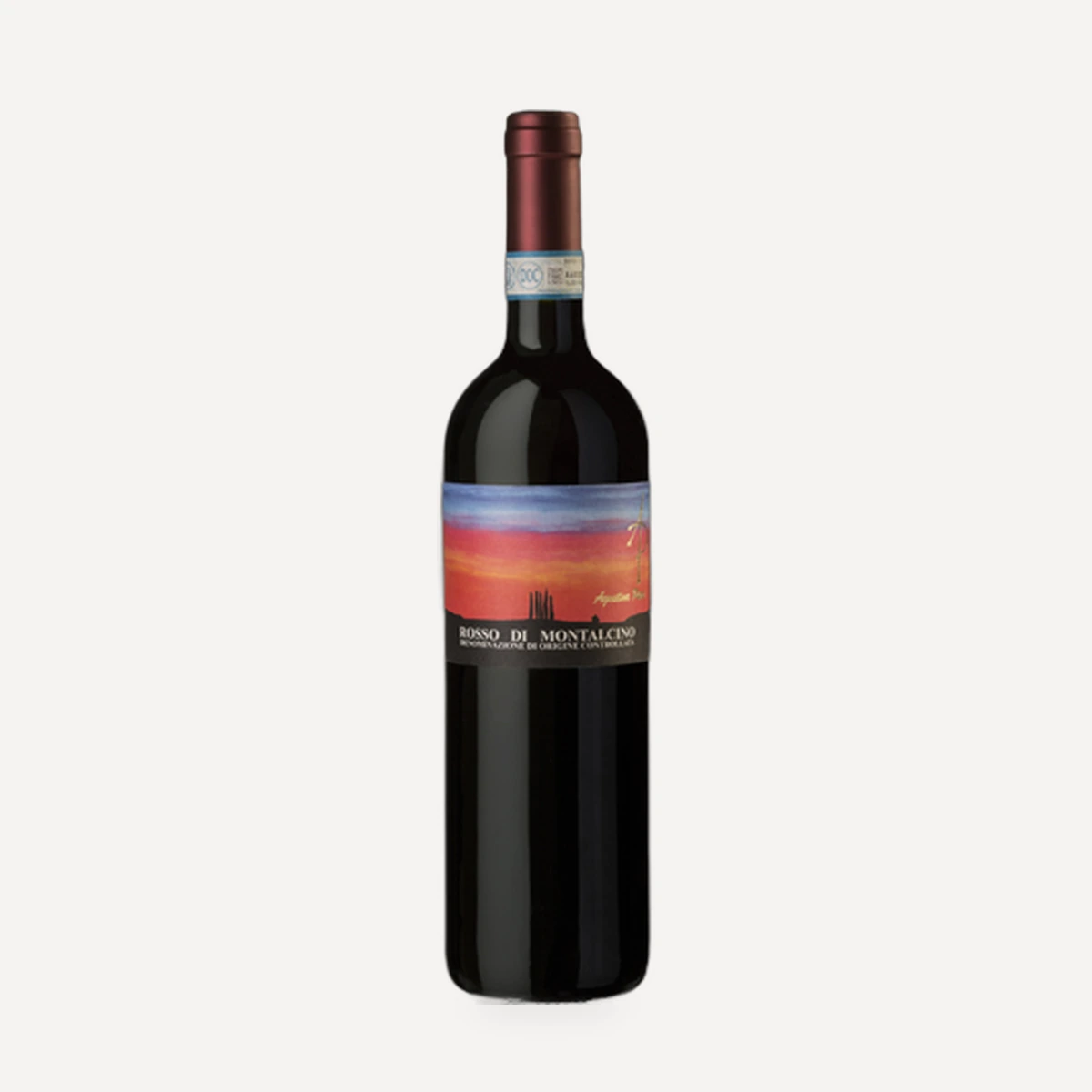
Rosso di Montalcino DOC
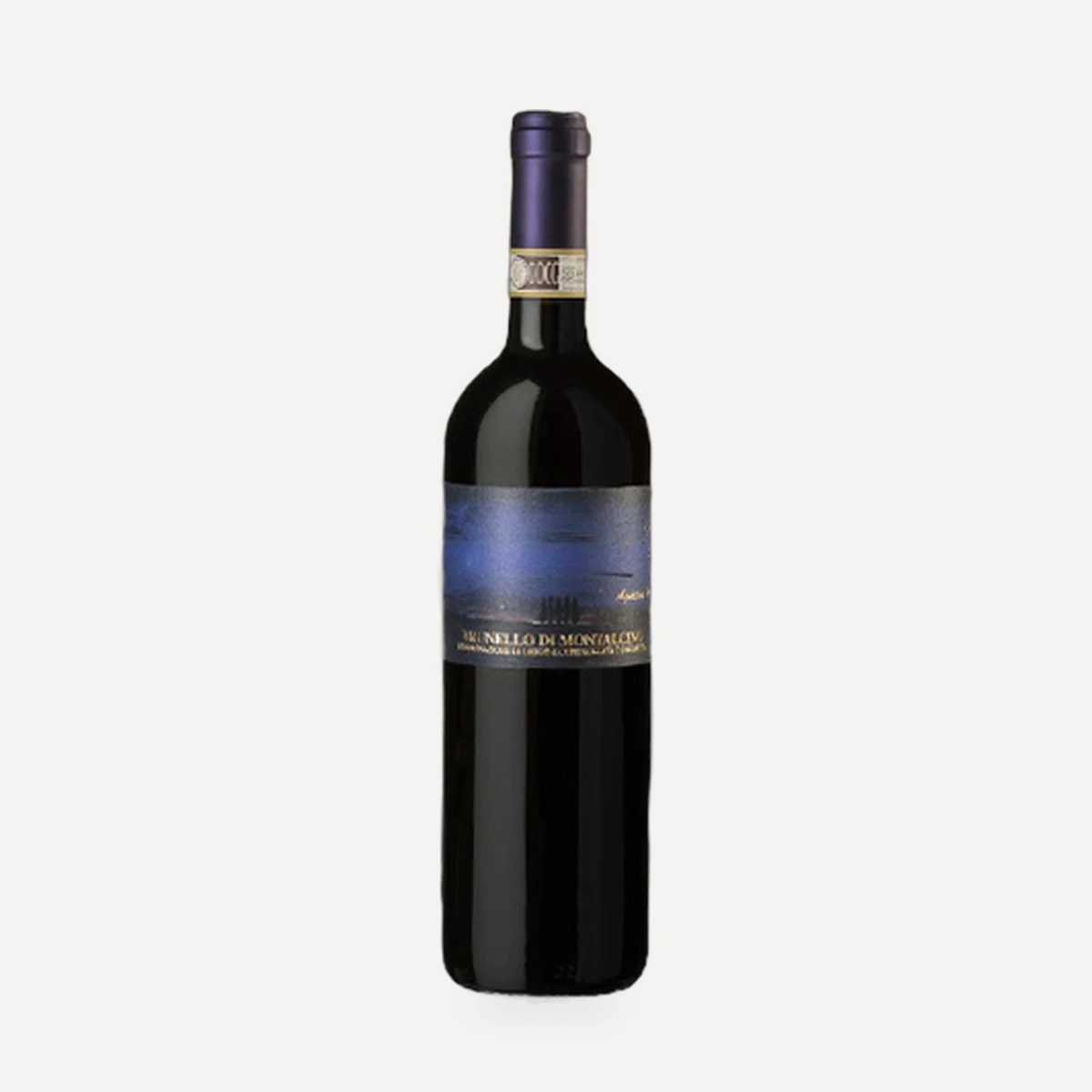
Brunello di Montalcino DOCG
