About this wine
Vineyard and terroir
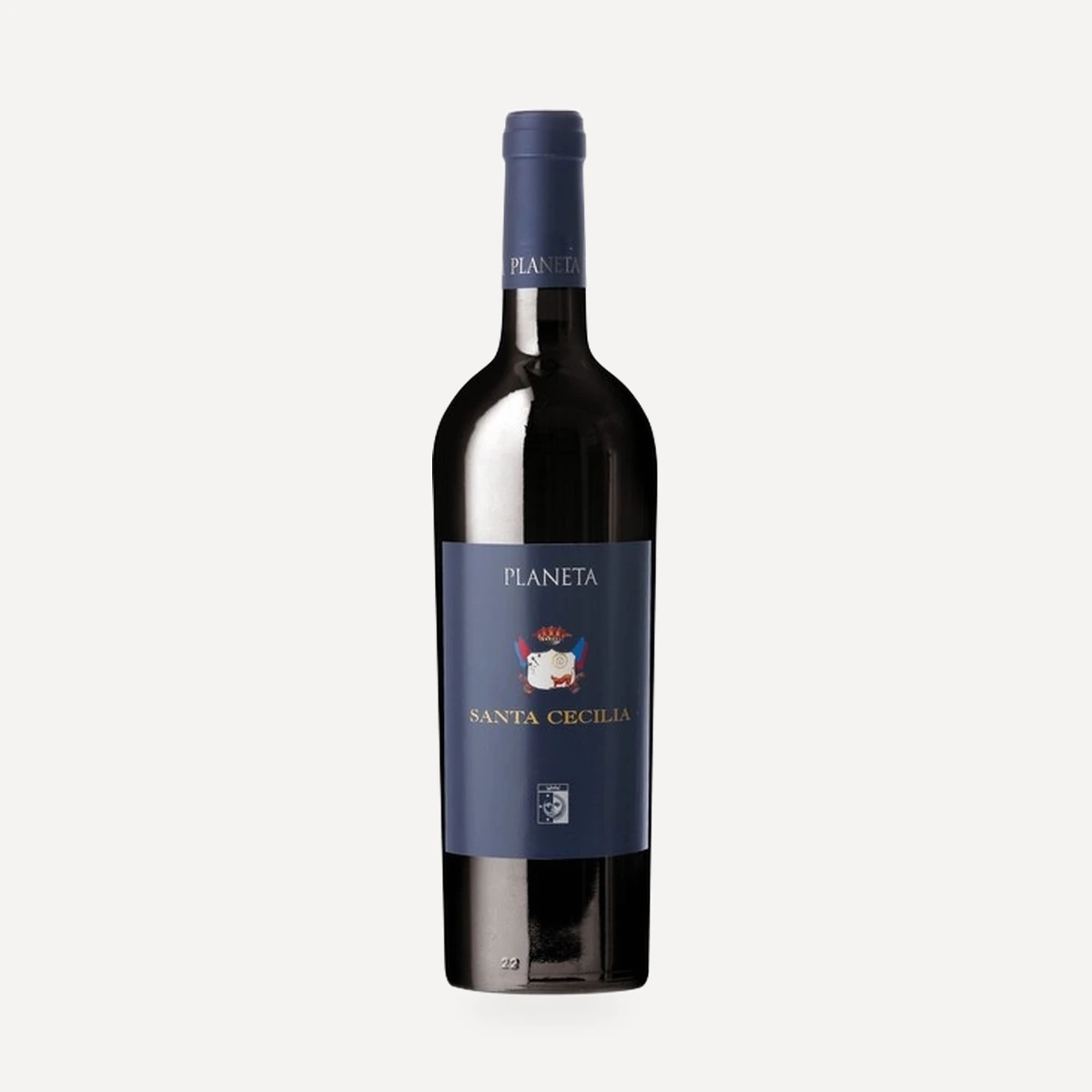
Santa Cecilia comes from selected parcels in the Zuppardo and Agliastro vineyards in the district of Noto (SR), in south-eastern Sicily. The vineyards lie at 35–40 m above sea level on lime-marl soils rich in small stones, with a fine texture and light-coloured clay and chalk fragments. Planting density is 5,050 vines per hectare and yield is 80 quintals per hectare.
The vines are trained on an espalier with spur-pruned cordons. Cultivation follows organic farming criteria and SOStain® protocols. Broad beans, vetch and spontaneous flora provide ground cover, increasing organic matter and nitrogen while supporting the soil’s microfauna. Vine health is managed with very small quantities of sulphur and copper, beneficial insects, mating disruption and natural products including zeolite, kaolin and plant extracts. The wine has been certified organic since the 2021 harvest.
Grapes
100% Nero d’Avola. The fruit is harvested by hand at the end of September and taken immediately to the Buonivini winery.
Vinification
The grapes are pressed and destemmed before alcoholic fermentation in stainless-steel tanks. Fermentation lasts 7–8 days, beginning at approximately 14–15 °C. Cooling is discontinued toward the end, allowing the final stage to proceed at 24–25 °C. Three brief pump-overs are carried out each day, lasting 10–25 minutes according to the fermentation stage, to limit disturbance of the skins while developing complexity.
Once alcoholic fermentation is complete, each tank is topped with wine from the same vineyard. Maceration then continues for 28–35 days under a submerged cap, with the skins retained in the wine, before racking. Malolactic fermentation takes place in stainless steel at approximately 20–21 °C, followed by another racking.
Ageing
Between December and January, the 2022 wine was transferred to French oak barriques for approximately 14 months. The barrel composition was 15% new oak, 28% second-use, 28% third-use and 29% fourth-use. Bottling took place in July 2024 under a single-piece natural cork.
Technical data
The 2022 vintage has 13% alcohol, total acidity of 5.63 g/L and pH 3.33. Available bottle sizes are 0.75 L, 1.5 L, 3 L, 5 L, 9 L and 12 L; the 0.75 L bottle weighs 500 g.
Tasting profile
Intense red with violet nuances. The aromatic profile moves between balsamic and herbaceous notes and a broad range of fruit. Mediterranean scrub and seaweed-like coastal aromas lead into sour cherry in spirit and very ripe wild blackberry, followed by bergamot, bitter orange, carob flour and incense. On the palate, ripe fruit integrates with oak-derived tannin. The tannic weave is very dense yet open and proportioned to the wine’s structure, giving it a complex, distinctive personality.
Serving and pairing
A vin de garde suited to classic pairings: well-aged and marbled red meat, or more intensely flavoured dishes based on game, lamb, black pig and coarse-cut sausage. It may be enjoyed now or cellared for 12–15 years.
Vintage notes
The 2022 growing season in Noto began with a dry winter, followed by welcome rainfall in May and September. Early irrigation and careful canopy management supported unexpectedly high quality, while production in this part of Sicily was 5–10% above average. Nero d’Avola was harvested considerably later than usual to achieve the desired alcohol level. The resulting vintage was marked by typicity, personality and originality and was considered almost ideal for Noto.
Label / history
First produced in 1997, Santa Cecilia was created after an extended search for the place best suited to Nero d’Avola. This led to Noto, the variety’s historic territory, distinguished by pale soils and old vineyards. The wine’s name comes from the Planeta di Santa Cecilia family name.