History
Origins and the creation of Podere Salicutti
The beginnings of human settlement on the property are lost to history. Its name has a clearer origin: Podere Salicutti takes its name from the Salicutti stream, which forms the estate’s southern boundary.
Francesco Leanza transformed the land surrounding the old residence into an agricultural property. From the outset, he chose organic farming because he wanted to live and work in harmony with the surrounding environment. This was a pioneering decision in Montalcino, where no other producer was then making organic wine. He formalized the commitment by joining the applicable inspection and certification system.
1994 — the first vineyards
The first vines were planted in 1994. Teatro was planted to Sangiovese on SO4 rootstock, while the original part of Piaggione also dates from that year. The estate’s vines are rooted in soils that have never received conventional pesticides.
1996 — Montalcino’s first organically identified wines
In 1996, Leanza placed the corresponding organic wording on the label of his first Rosso di Montalcino. He thereby became the first grower in Montalcino permitted to identify both Rosso and Brunello with the wording “da agricoltura biologica.” Salicutti consequently became the first organically certified wine estate in Montalcino.
2007 — Piaggione Alto
A second section of Piaggione was planted in 2007 above the original vineyard. Unlike the older vines trained as cordone speronato, Piaggione Alto was established with Guyot training. A terrace separates the two homogeneous but distinct sections.
Transfer to the Eichbauer family
Felix and Sabine Eichbauer, the Munich restaurateurs associated with Tantris, assumed responsibility for Salicutti from Francesco Leanza. Before taking full control, they worked closely with him for three years to understand the property’s particular conditions and potential. They subsequently assembled a permanent local team supported by experienced consultants and friends.
The Eichbauers retained Leanza’s organic principles and extended them into an exclusively biodynamic, holistic approach. Their conception of the property as the “Cosmo di Salicutti” encompasses the vineyards, cellar, house, gardens, fields, olive grove and forest as an interconnected organism. They also pursued greater self-sufficiency through groundwater-derived energy, beehives, a fruit grove and a vegetable garden.
Architectural renewal
Under Sabine Eichbauer’s direction, the rustic estate buildings were carefully converted and expanded with modern winery infrastructure. Her architectural experience included work with the Roman architect and designer Massimiliano Fuksas. A partly underground vinification annex was integrated into the historic complex, while the old farmhouse stable became the barrel-aging cellar. Local stone, reclaimed bricks and retained historic structural elements preserved the rural character of the property.
From organic to biodynamic cultivation
The transition from organic to biodynamic winegrowing became a defining part of the estate’s evolution. Compost, biodynamic preparations and the participation of bees, chickens and wild birds support a closed resource cycle. The proximity of Teatro, Sorgente and Piaggione allows each cru to be tended individually.
2017 — the Cosmo di Salicutti identity
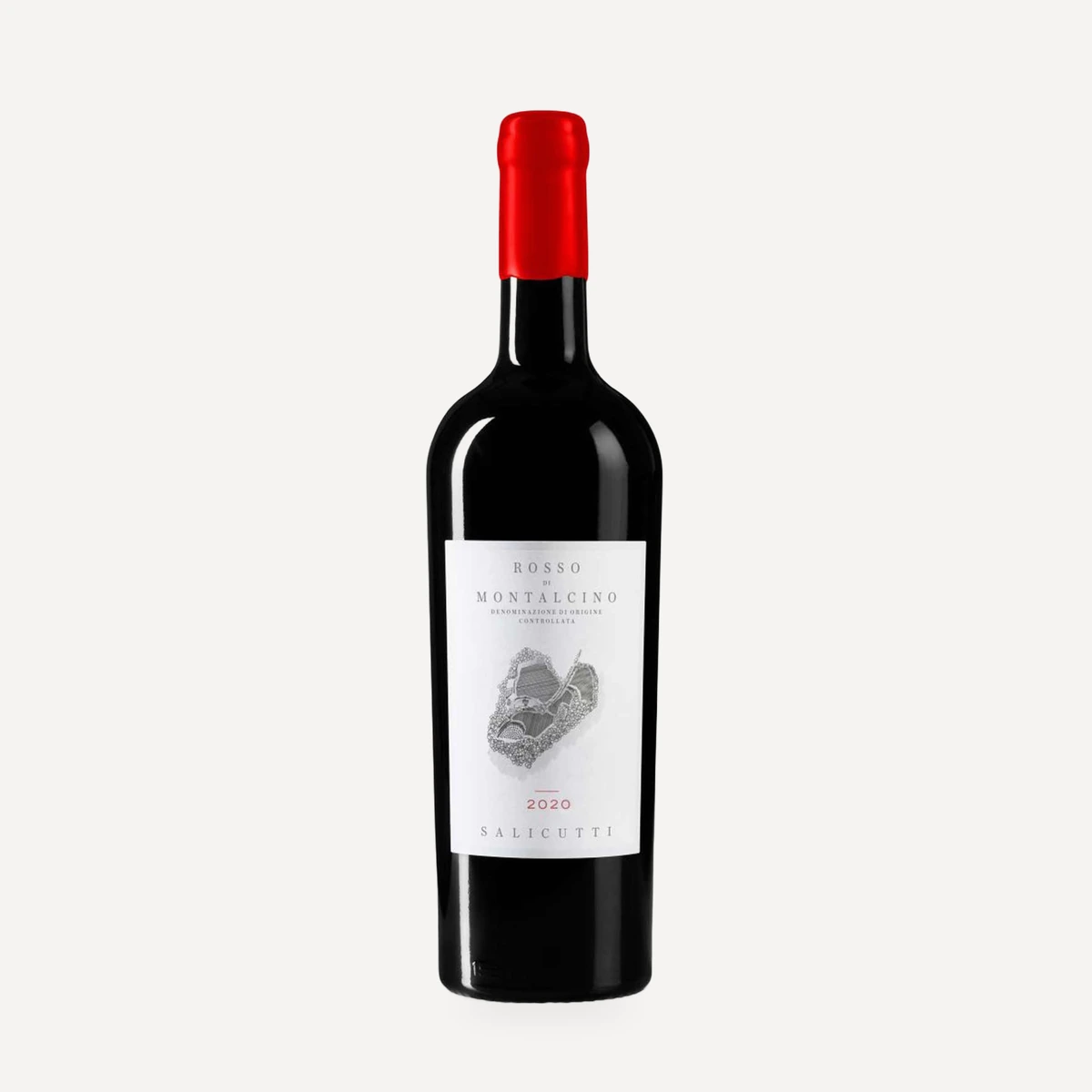
From the 2017 vintage, the Rosso label adopted an overhead depiction of the “Cosmo di Salicutti”: the house and cellar at the center, surrounded by gardens, fields, forest and walled vineyards. The image gave visual form to the Eichbauers’ holistic understanding of the estate.
Terroir
Setting and topography
Salicutti occupies the southeastern side of the commune of Montalcino, on the slopes associated with Monte Amiata. The enclosed 11-hectare property lies within its own woodland and includes 4.5 hectares of vines, an olive grove and forest. The three walled crus surround the house and cellar.
The vineyards face between south-southeast and south-southwest. Estate elevations are given as 420–470 metres in the geographical summary, while the individual vineyard descriptions and three-cru overview extend the range to approximately 500 metres at Teatro. Slopes of 14–20° provide strong solar exposure and ventilation. Their southern orientation shelters the vines from the cool northern Tramontana and Maestrale while allowing air circulation that supports slow, extended ripening and limits rot pressure.
Climate, rainfall and winds
The Mediterranean Sea lies 35 kilometres away and moderates the climate. Average annual rainfall is 510 millimetres. Libeccio from the southwest and Scirocco from the southeast are the principal winds.
Conditions are generally very hot and dry from 15 July to 15 August. June and September are milder, with some rainfall. The soils store rainwater and release it gradually to the roots, helping compensate for midsummer heat and the extended dry period that can continue until harvest.
Geological foundation
The soils developed primarily from underlying rocks assigned to the Austroalpine tectonic domain. The predominant formation is finely layered, friable marl composed of sedimentary clay, sandstone and calcareous sand. Known locally as the Formation of Santa Fiora or Alberese, it formed during the Paleocene, approximately 60–80 million years ago, as rock sediments accumulated on marine and lake beds.
The eastern band of the property, running from north-northeast toward south-southwest, contains other sedimentary materials, notably argillite with clay-rich layers and calcarenite formed from calcareous sand. Younger rocks deposited through comparatively recent erosion and landslides occur throughout the soils. All are calcareous, with normal to medium-high proportions of active limestone and an alkaline reaction.
Cru-level variation
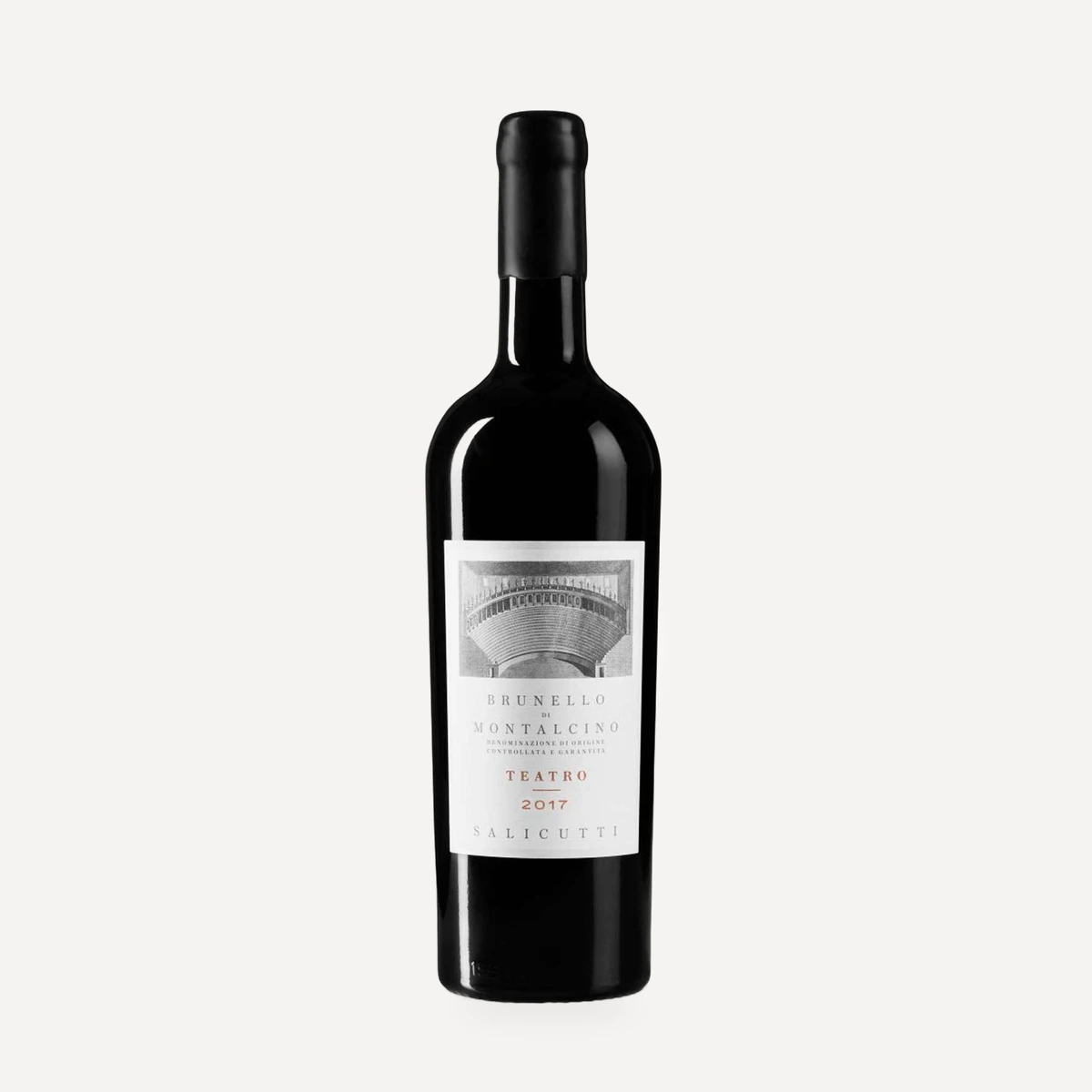
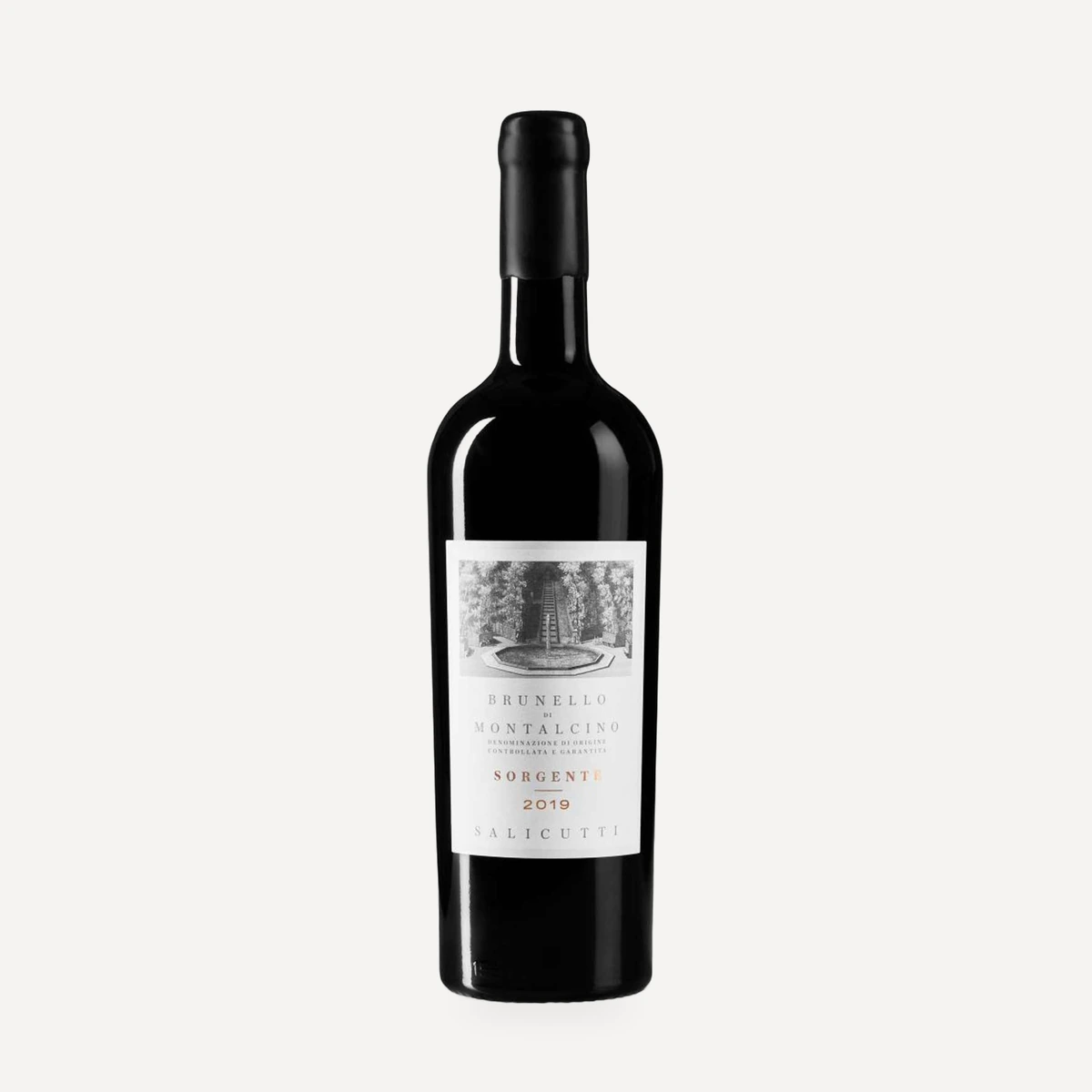
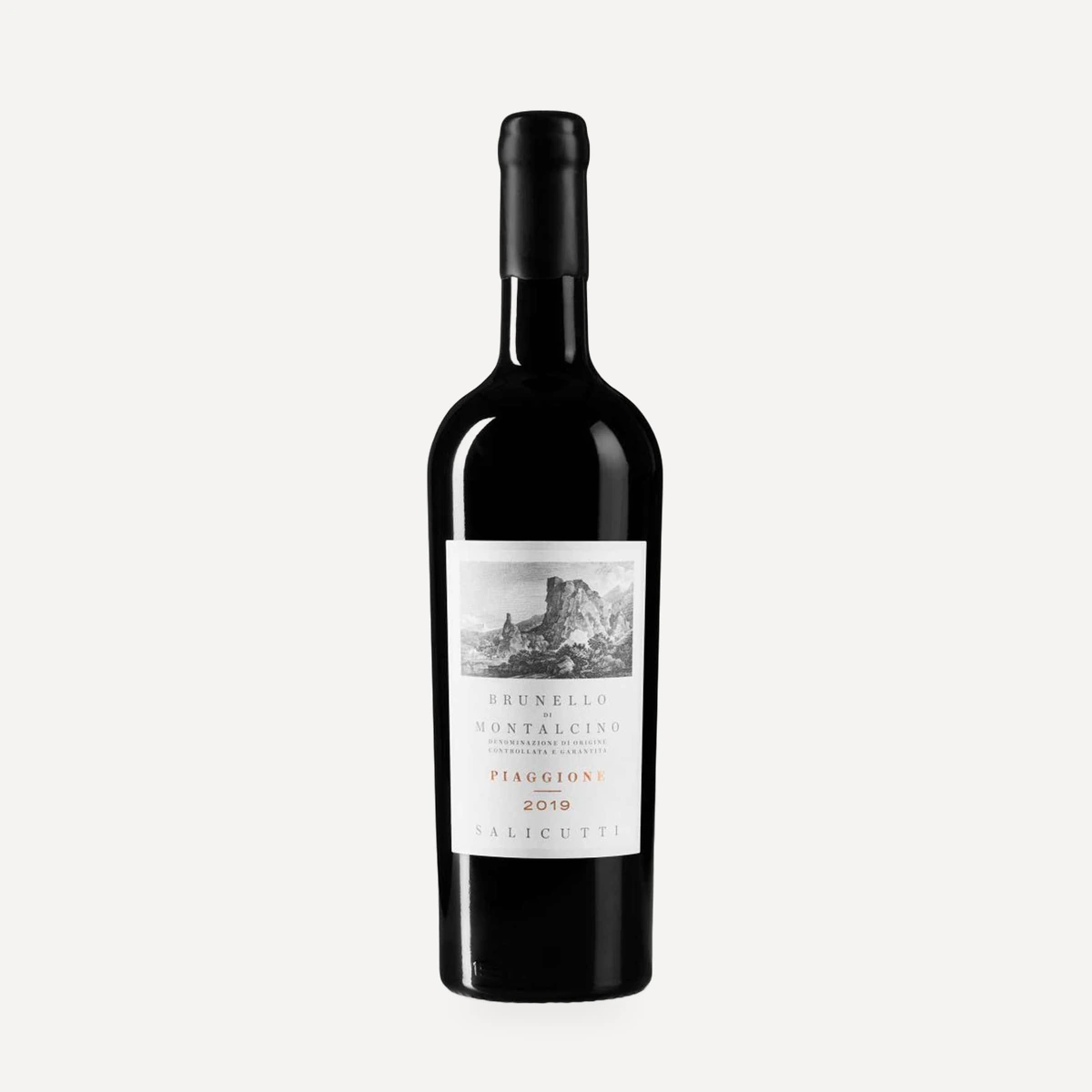
Teatro has the coolest microclimate and occupies an amphitheatre-like opening toward the south at about 500 metres. Piaggione lies at 420–450 metres, faces east-southeast and has skeletal, fossil-rich calcareous soils. Sorgente sits at about 450 metres on heavy clay-rich and galestro-derived ground that retains water and delays ripening. The resulting later maturity and slightly lower potential alcohol are regarded as increasingly valuable under expected climate change.
Winemaking
Organic and biodynamic framework
Organic principles have governed Salicutti since the first vines were planted. The soils have never been treated with conventional pesticides. In 1996, the estate became the first in Montalcino permitted to identify both Rosso and Brunello as products from organic agriculture. The Eichbauer family preserved this foundation and moved from organic to exclusively biodynamic winegrowing.
The three nearby crus can be managed individually, like enclosed gardens. Compost and biodynamic preparations reinforce soil vitality, while bees, chickens, birds and other flora and fauna contribute to the closed resource cycle of the “Cosmo di Salicutti.”
Soil management and fertility
Grass is sown under controlled conditions and renewed every one to three years. The soil beneath the vines is worked mechanically. Apart from shallow cultivation in preparation for sowing, no additional soil treatment is practiced. Small quantities of well-composted cow manure from organic livestock farms are applied every two to three years.
Plant protection
Copper is used as bouillie bordelaise or comparable preparations at very low seasonal rates of 1–2 kg/ha. It is combined with plant- or mineral-derived materials—including field horsetail (Equisetum arvense), propolis, lithothamnium and bentonite—to strengthen the vines’ resistance. Pure natural sulphur is applied either as powder or in a water-dispersible form.
Pruning, training and crop control
Winter pruning takes place from January through March. Older vines are trained as cordone speronato with six buds per vine; Piaggione Alto, planted in 2007, is Guyot-trained. Summer green pruning is entirely manual, removing some basal lateral shoots and partially topping shoots longer than approximately 1 metre. Bunch thinning is also manual, leaving a final load of five to seven bunches per vine.
Seasonal rhythm and harvest
Work follows the annual vine cycle. The vineyard rests in winter, vigorous budding begins in March, and flowering is followed by fruit set with the first summer warmth. When August heat stops shoot growth and the vines reach balance, intensive work gives way to close monitoring of individual berries and repeated checks of ripeness row by row. Harvest generally arrives in October.
Picking is entirely manual into small 15 kg crates. The fruit is selected manually, bunch by bunch, during harvest and receives another selection on the sorting table before immediate processing.
Cellar layout
The air-conditioned vinification cellar occupies an 80 m², partly underground annex built to integrate with the old complex. Its walls and ceiling are insulated, while local stone and reclaimed old bricks give the exterior a traditional finish.
The separate 80 m² aging cellar occupies the former stable on the ground floor of the old farmhouse. Thick stone walls protect the room, and the original architectural and structural elements were retained and enhanced during restoration. This cellar is also air-conditioned.
Vessels and pressing equipment
The vinification cellar contains stainless-steel vats ranging from 15 to 80 hl, with a combined capacity of 320 hl. Every vat has an independent electronic control unit and automatic temperature regulation through water circulation. Marc is pressed in a traditional hydraulic press with a wooden cage.
Harvest reception and fermentation
Sangiovese is harvested by hand into 15 kg crates and selected manually bunch by bunch. A further pass on the sorting table precedes immediate, gentle processing. Destemming is mechanical. Fermentation takes place spontaneously in stainless-steel vats with indigenous yeasts and no selected ferments. Maceration lasts 12–21 days depending on the wine and vintage. Malolactic fermentation is also spontaneous in stainless steel, driven by the grapes’ indigenous lactic-acid bacteria. No post-fermentation treatment is applied.
Maturation
Wooden vessels from the Mittelberger and Taransaud cooperages are used. French-oak tonneaux hold 5 hl; additional French- and Slavonian-oak casks increase progressively in capacity through 10, 20, 30 and 40 hl.
Rosso di Montalcino and Dopoteatro Rosso IGT Toscana mature for 18 months in 5 hl French-oak tonneaux, 20% of them new, followed by six months in bottle before release.
Brunello di Montalcino matures for 33 months in wood. The young wine begins in 5 hl tonneaux and is progressively transferred through 10, 20, 30 and finally 40 hl casks. The tonneaux and smaller casks are French oak, while the 40 hl casks are Slavonian oak. A further 15 months of bottle maturation precedes release. Wines are held in bottle until the desired maturity is reached.
Philosophy
Salicutti is conceived as a small, interconnected agricultural cosmos rather than vineyards and cellar in isolation. Felix and Sabine Eichbauer summarize their sense of stewardship through the belief that the land existed before them, nourishes their vines now and will remain after them. This entails respect for nature and animals, alongside a critical view of human and technological influence.
Francesco Leanza’s image of the vineyard as a cherished garden remains central: attentive care should be repaid with ripe, healthy fruit. The Eichbauers extended that principle from organic farming into a holistic biodynamic system in which vineyards, forest, gardens, water, animals, compost and agricultural preparations function together.
Typicity and terroir guide the work. The three crus are treated individually because their soils and microclimates differ substantially. The genetic character and selected clones of Sangiovese are understood as partners to these demanding soils, and quality is sought through the interaction of clone and place rather than through uniformity.
Felix and Sabine Eichbauer believe Montalcino’s future lies in revealing the diversity of its individual sites rather than promoting a standardized Brunello identity. Cellar work follows the same aim: careful handling, spontaneous fermentations, restrained intervention and patient maturation are intended to preserve the specific character of Sangiovese and each cru.
The estate’s working rhythm follows the seasons. Activity intensifies with spring growth and early-summer fruit formation, slows to patient observation as the vines find balance in August, culminates in the October harvest and then shifts to the cellar while the vineyards rest.
Wines
Brunello di Montalcino Teatro
Brunello di Montalcino Sorgente
Brunello di Montalcino Piaggione