About this wine
Vineyard and terroir
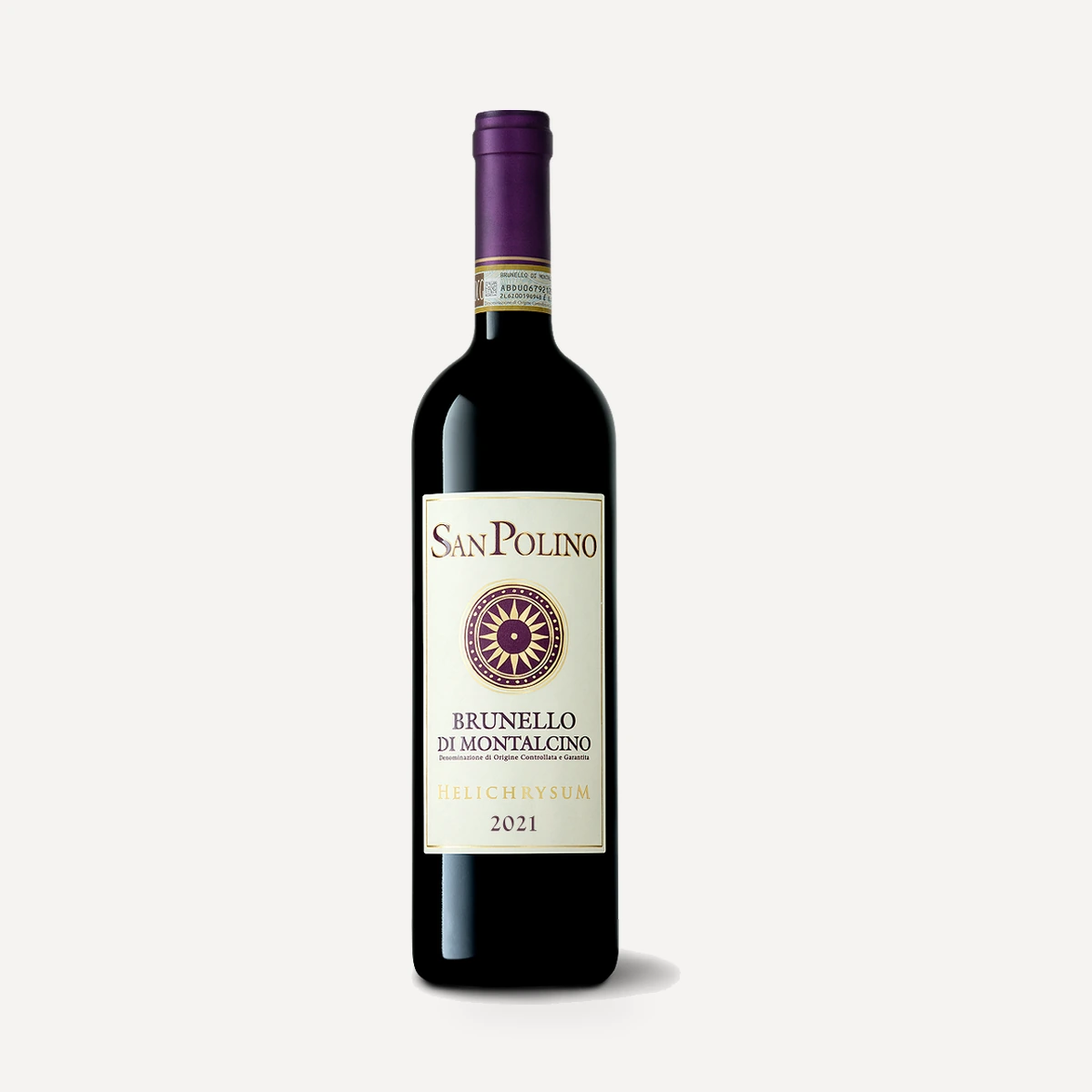
Helichrysum comes from San Polino’s highest vineyards, including vines around the house. The south-facing site lies at 450 m on heterogeneous soils dominated by sandy loam and volcanic material with veins of marl, contributing depth, structure and pronounced minerality.
Grapes
100% estate-grown, organically certified Sangiovese.
Vinification
Spontaneous fermentation takes place with native yeasts in 35 hl tronconic oak vats. The 2021 received three days of cold maceration before fermentation and 30 days of post-fermentation skin contact.
Ageing
Six months of bâtonnage in French barriques is followed by four years of maturation in large Slavonian and French oak barrels.
Technical data
The 2021 has 14.5% alcohol.
Tasting profile
Elegant, opulent and structured, the 2021 shows intense raspberry and black-cherry fruit alongside blackcurrant, boysenberry and dark-skinned fruit. Lavender, rose hip, new leather, balsamic notes, dark spice, cedar, incense, salty liquorice, orange peel, tobacco and dried mint add complexity. It combines intensity with finesse: fine-grained, integrated tannins and bright, precise acidity carry a focused, energetic and very long palate.
Vintage notes
A cool winter and fresh spring in 2021 delayed the growing cycle and conserved soil moisture. Summer remained dry and warm without extreme heat; strong day-to-night temperature changes promoted slow, even ripening. Dry, stable September weather allowed extended hang time and a calm, selective harvest of clear, balanced fruit.
Label / history
The name comes from helichrysum, an aromatic wild herb that grows spontaneously among the vines.