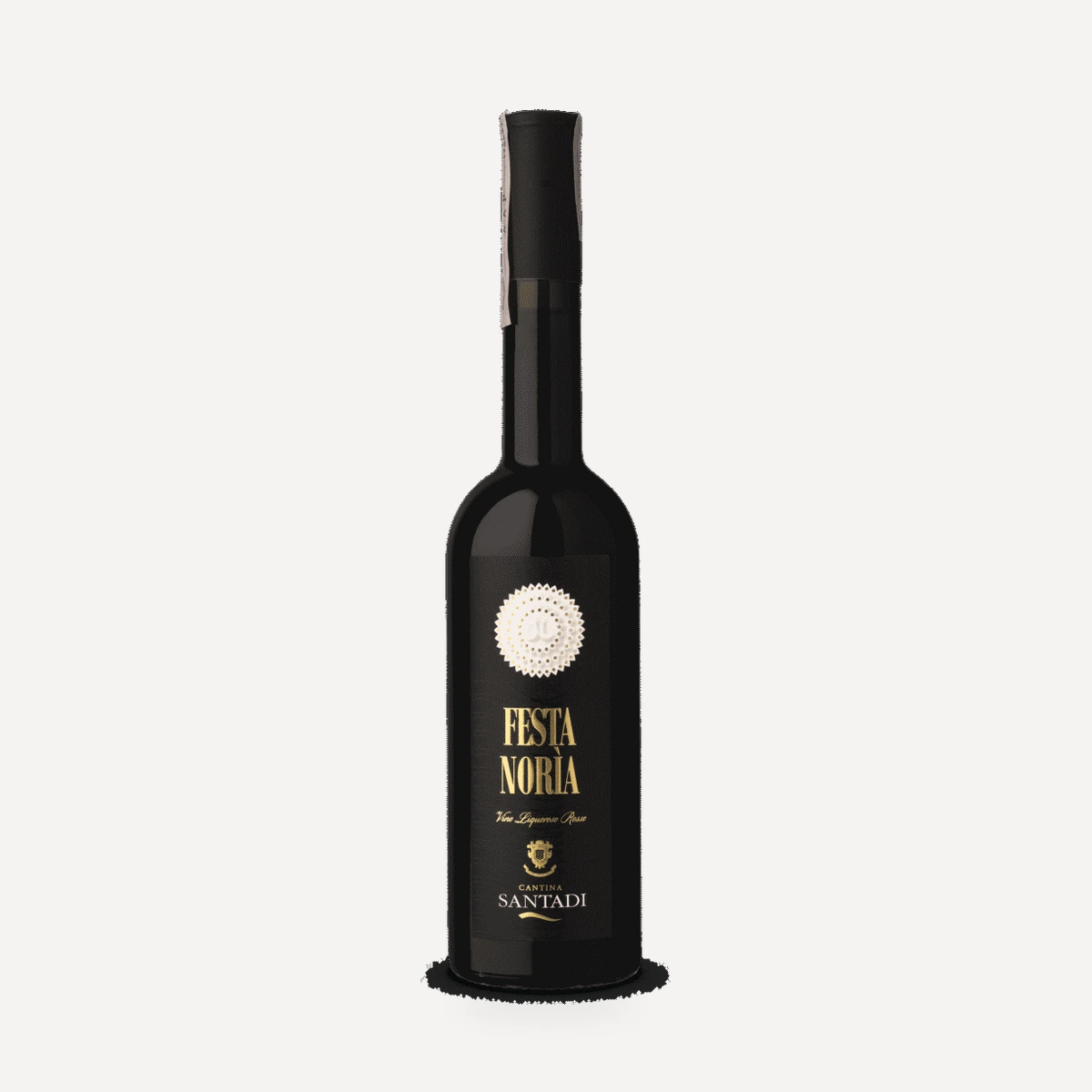
About this wine
Vineyard and terroir
The indigenous red varieties grow in vineyards trained as alberello and espalier, on calcareous and clay soils mixed with sand. The bunches dry naturally on the vine. Harvest is manual and takes place in several passes from late September through the end of October, with only clusters at the desired level of ripeness selected each time.
Grapes
Indigenous red grape varieties.
Vinification
Selected grapes undergo traditional red-wine vinification. Once approximately two-thirds of the residual sugars have fermented, the wine is cooled to halt fermentation. Wine alcohol is then added, producing a fortified wine with substantial residual sugar and a final alcoholic strength of approximately 17% vol.
Ageing
The wine spends several years in oak barriques before bottling.
Technical data
Alcohol: approximately 17% vol. The wine retains substantial residual sugar, though no analytical value is given.
Tasting profile
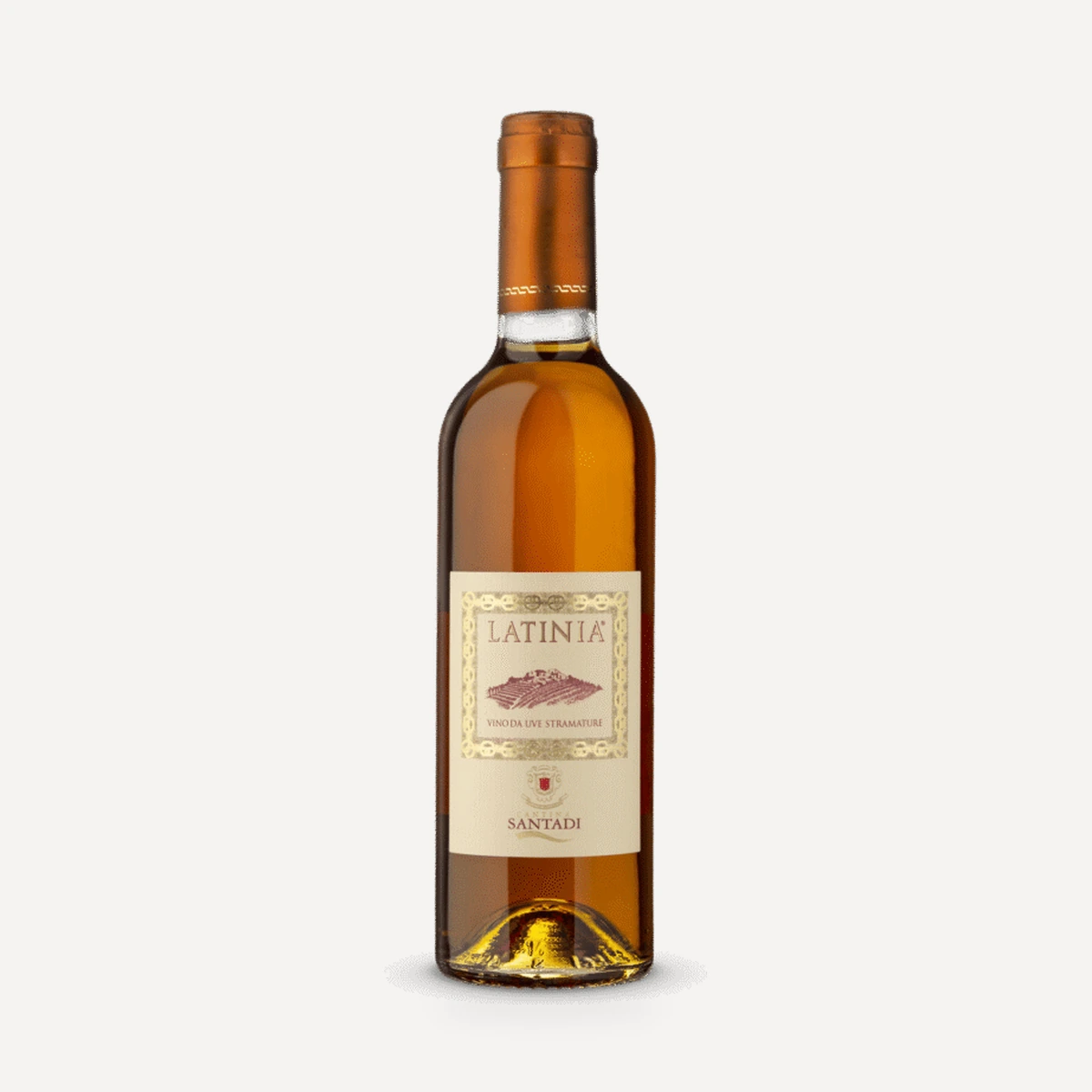
Amber with garnet-red reflections. The intense, balsamic bouquet shows cinnamon, nutmeg and Mediterranean scrub essences, including myrtle and juniper. The palate is enveloping, warm, full and persistent.
Serving and pairing
Serve at 12–14 °C. Pair with almond-paste desserts, dark chocolate or aged cheeses such as Fiore Sardo. It may also be enjoyed on its own after a meal as a meditation wine.