History
Family origins and Mario’s early life
Mario Schiopetto was born in 1930 to Angela and Giorgio. He grew up in the family’s Osteria ai Pompieri, experienced life as a firefighter and later worked as a lorry driver. He spent years accompanying his father while Giorgio selected wines for the hostelry and eventually took over its management after the death of his parents.
Travel was central to Mario’s development. He crossed Europe and later travelled in Europe and the United States with Luigi Veronelli to encounter other wines and winegrowers. Luigi Soini was another companion in formative journeys and discussions. Mario maintained a long collaboration in Germany with Professor Muller Spath, then the director of a major manufacturer of winemaking equipment and the manager of an experimental cellar in Bad Kreuznach. Germany introduced him to technological applications in vinification and supplied pine vineyard posts; in France he bought young vines and sought ideas capable of bringing greater elegance to his wines. The combination of French elegance, German technology and Friulian grapes became the basis of the Schiopetto style.
1954–1965: the vines and the first Tocai
In 1954 the Curia of Gorizia planted Friulano and a small proportion of Riesling on the best, south-facing side of a vineyard at Capriva del Friuli. These plantings later became the source of a Friulano–Riesling selection produced only in suitable vintages.
Mario began devoting himself to wine production in 1963, guided by his own palate and love of wine. In 1965 he bottled his first varietal Tocai. This is treated as the foundation of Schiopetto and as the beginning of Mario’s project to redefine modern Friulian white wine.
Late 1960s–1980s: expansion and innovation
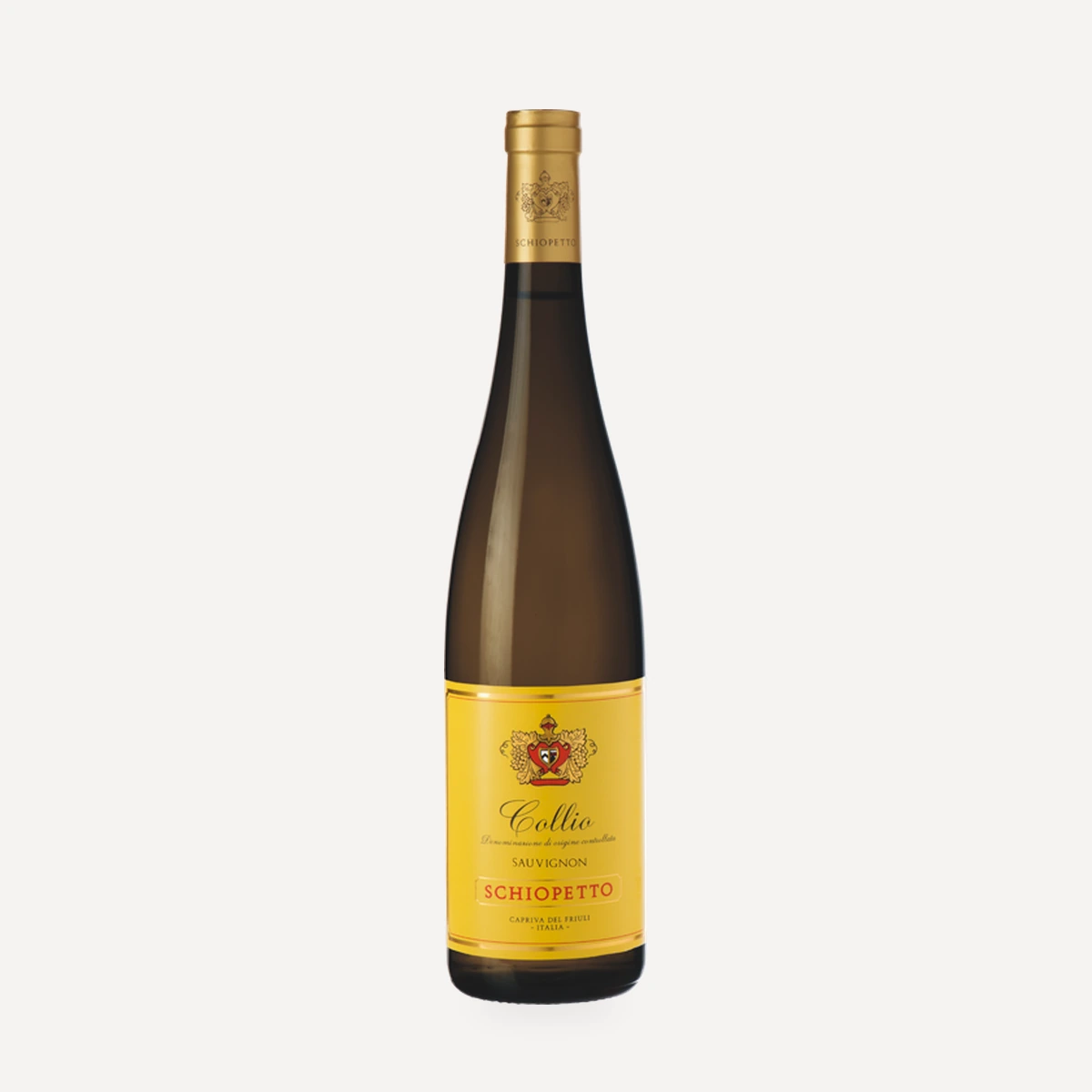
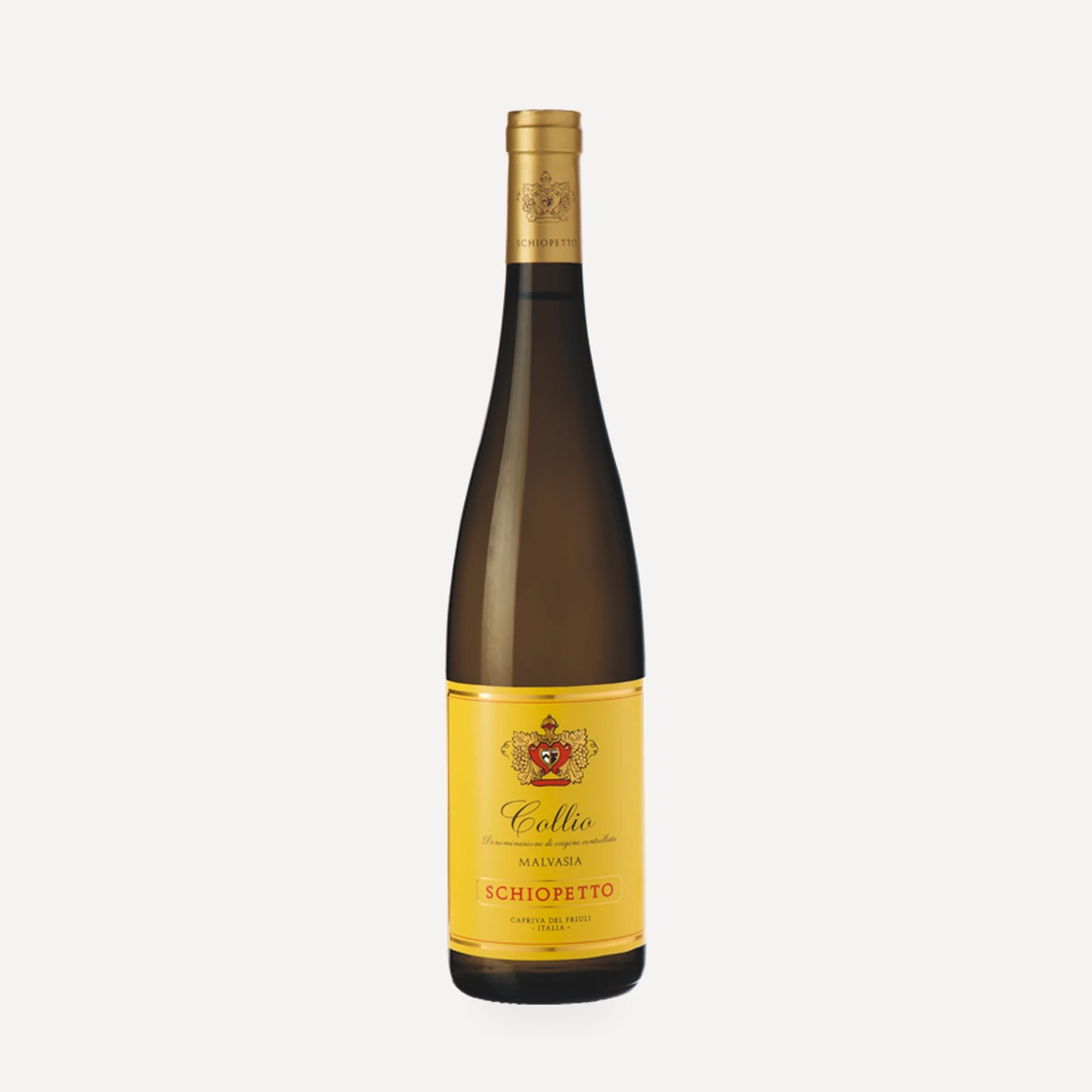
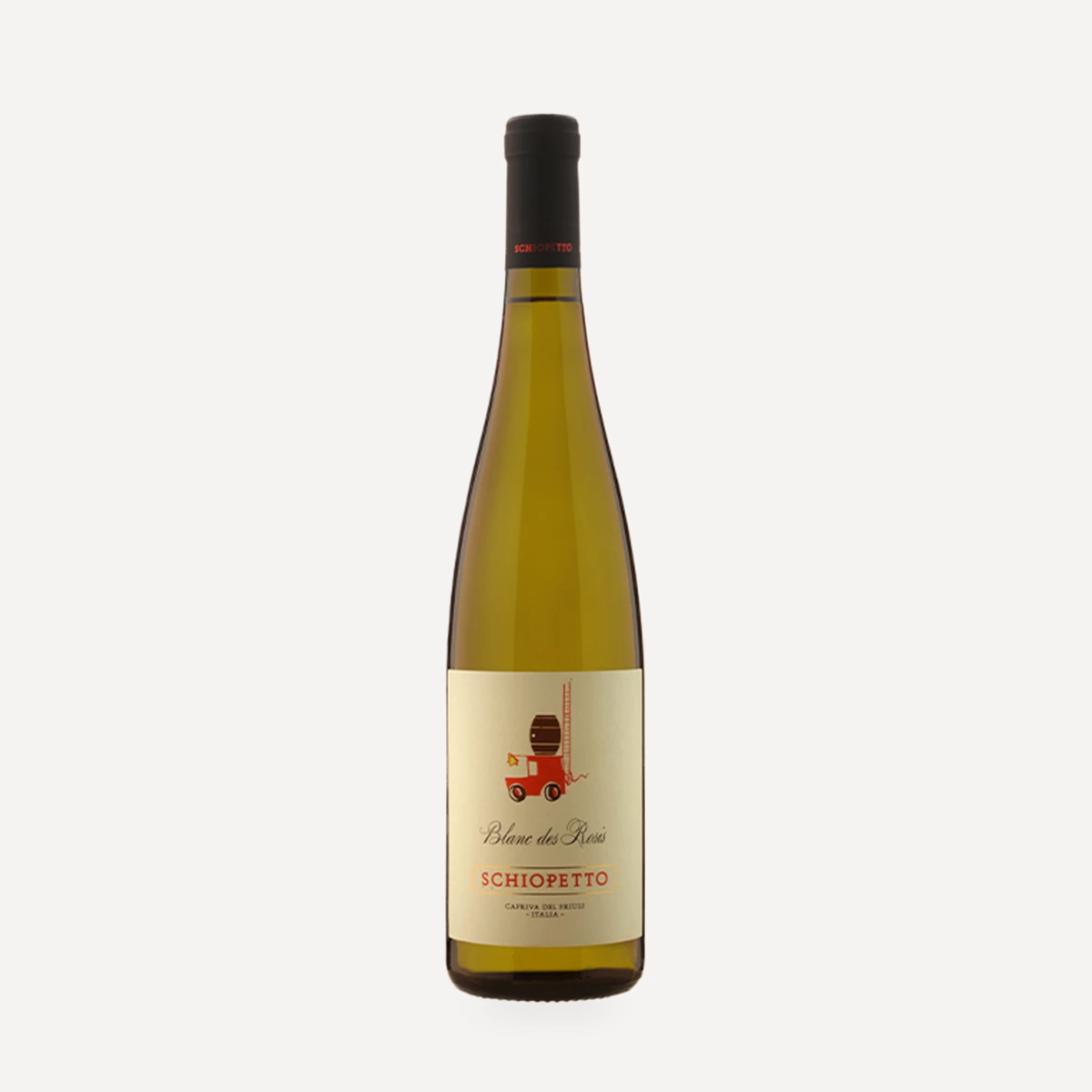
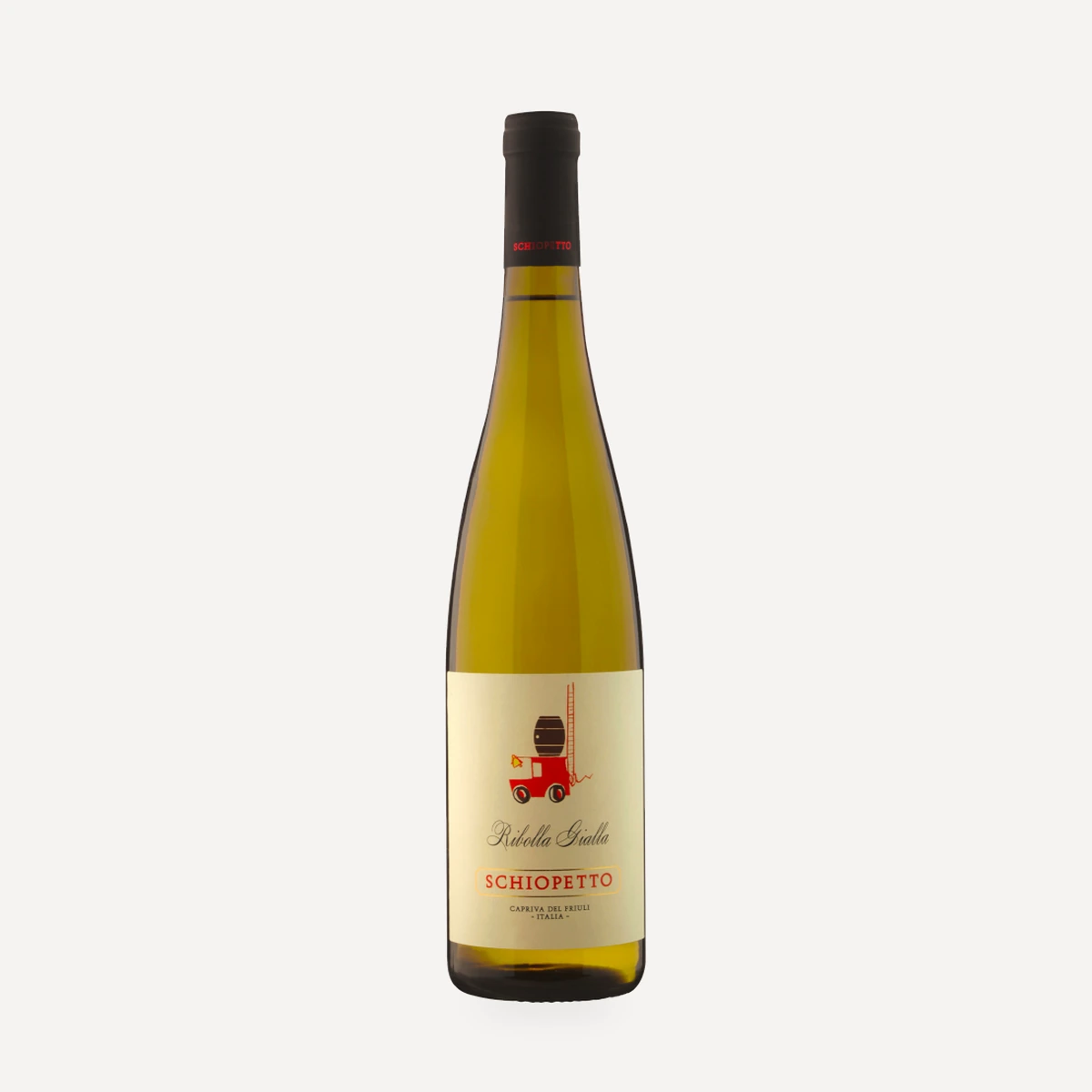
From the late 1960s through the 1970s, Mario joined a group of Italian producers working to improve and modernize the country’s wine-production methods. Early milestones in the range included Pinot Bianco in 1967, Pinot Grigio and the red Rivarossa blend in 1968, Sauvignon in 1972, Malvasia in 1974, Merlot in 1978 and Ribolla Gialla in 1981. Blanc des Rosis followed in 1986 as a blend conceived to express the breadth of the area’s viticulture in one wine.
Mario experimented in both vineyard and cellar. His work included the estate’s first high-density vineyard and mixed plantings in which different varieties grew together so that a blend could begin in the vineyard. When he concluded that physiological maturity required an earlier harvest than local convention allowed, he advanced picking rather than follow tradition. He also introduced new cellar technology and developed direct, demand-led distribution from the 1960s, personally contacting potential customers.
By the 1980s Mario had become a prominent Italian producer and a teacher and mentor to younger winegrowers, whom he welcomed into his cellar.
1970–1990: Capriva and the new cellar
The estate’s physical base took shape in 1970, when the church leased Mario the vineyards surrounding the Archbishop’s Palace in Capriva. He renovated old, neglected land, paying close attention to the vines and to the potential of the local ponca soils. After years of delays, the vineyards became his property in 1989.
In 1990, after securing possession of the land and the Archbishop’s Palace cellars, Mario began work on a new winery of his own design. He planned it on a human scale while pursuing efficiency and advanced technology. The building stands in the centre of the estate vineyards and is entirely surrounded by them.
The next generation and later projects
Mario’s children Maria Angela, Carlo and Giorgio progressively joined the management of the business. They continued the project with an emphasis on sensitivity, respect, tradition and personal commitment.
A new viticultural project began at Podere dei Blumeri in 2000 after an evaluation of the estate’s microclimatic and soil conditions. Its Merlot–Refosco dal Peduncolo Rosso blend was first produced in 2001. A separate selection dedicated to Mario, based on the south-facing Friulano and Riesling vines planted by the Curia in 1954, debuted with the 2015 vintage and is reserved for suitable years.
Ownership since 2014
In April 2014 ownership passed to the Rotolo family. Emilio Rotolo and his son Alessandro undertook to continue Mario’s mission and production philosophy while retaining innovation as a central objective. The operating company is identified as Terre Friulane S.r.l.
In the same period, Schiopetto reached its twentieth Tre Bicchieri distinction from Gambero Rosso. Because Gambero Rosso attributes one estate star for every ten such distinctions, the twentieth award brought Schiopetto its second star.
Terroir
Schiopetto’s vineyards are distributed among four named areas: Capriva, Zegla, Pradis and Oleis. Capriva is the historical centre of the estate; Zegla and Pradis are in the Cormons area, while Podere dei Blumeri is associated with the Colli Orientali del Friuli.
The defining material at Capriva is ponca, described as Friulian marl composed principally of clay and limestone. Other vineyard and production descriptions identify hilly marl soils of Eocene origin. Individual situations vary: Pinot Bianco occupies a well-ventilated, predominantly marly site; Malvasia is associated with poor marl and warm, sunny exposures; Sauvignon favours cool clay soils; Pinot Grigio grows on moderately marly hills; and the Merlot–Cabernet Sauvignon site used for Rivarossa has loamy-clayey soil.
A particularly important south-facing slope contains Friulano and a small proportion of Riesling planted by the Curia of Gorizia in 1954. The position was selected as the best side of the vineyard and later became the source of the Mario Schiopetto selection.
Capriva is associated with history, tradition and elegant wines. Zegla is characterized by power and strength, while Pradis is presented as a small Cormons site whose white grapes are distinguished by balance and refinement.
Winemaking
Mario treated soil and vines as the estate’s primary assets. At Capriva he converted old, neglected ground into carefully maintained vineyards and sought to exploit the potential of ponca.
His innovations included the first high-density planting and the creation of mixed vineyards, with different varieties planted together so that a blend could originate in the vineyard. Harvest timing was governed by grape maturity rather than convention: when Mario concluded that full maturity required picking earlier, he advanced the harvest.
Manual harvesting forms part of the protocols for Sauvignon, Pinot Bianco, Pinot Grigio and Podere dei Blumeri. Guyot is employed in the vineyards, with bilateral Guyot and spur-cordon training also used. Grapes intended for the younger Pompiere Pinot Grigio come from estate vineyards less than 20 years old and are handled rapidly and gently to avoid colour transfer from the skins.
Environmental work includes planting and maintaining woodland to capture carbon and positively offset unavoidable production emissions. Vineyard products are selected for low environmental impact. Wood and vineyard clippings are reused as fuel in high-technology boilers that provide autonomous heating.
The cellar Mario designed after 1989 was conceived on a human scale but equipped for efficiency and technological control. It stands in the centre of the vineyards and is completely encircled by estate vines.
Stainless steel is the principal vessel for the estate’s white-wine style. Temperature and oxygen are controlled through each phase. The recurring white-wine protocol comprises gentle pressing, a short settling period without added sulphur dioxide, controlled-temperature fermentation in stainless steel and maturation on the lees. Friulano, Pinot Bianco, Pinot Grigio, Sauvignon, Malvasia and Blanc des Rosis commonly remain in steel for about eight months. Selected fermentations are initiated with a pied de cuve.
At the heart of the cellar, Mario’s Room is devoted to reproducing and multiplying indigenous yeasts with advanced technology. Separate yeast cultures are propagated for different types of wine and used to start fermentation. The room is treated as a fundamental component of both production and estate philosophy.
Red-wine protocols vary with grape condition. Merlot and Cabernet Sauvignon for Rivarossa are destemmed and fermented separately; maceration length and vinification technique are selected according to the phenolic condition of each variety. Malolactic fermentation follows, then approximately 14 months in oak. The Podere dei Blumeri protocol uses large wooden vats for a 10–15-day fermentation at about 25 °C, followed by ageing in 225- and 500-litre oak vessels.
The south-facing Friulano–Riesling selection dedicated to Mario is vinified exclusively in stainless steel and released only from suitable vintages.
Philosophy
Mario’s guiding ambition was to give the territory a voice through wine and allow each glass to tell a story. His approach began with observation: understanding the soil, climate and character of the Friulian hills, then working in harmony with nature rather than claiming to invent what the wine already possessed.
The Schiopetto style rests on three elements: French elegance, German technology and Friulian grapes. A white wine should be elegant and refined while expressing its variety and place with clarity and precision. Technology is used as a means of control rather than as an end in itself, particularly through stainless steel and management of oxygen and temperature.
Personality, elegance and a close bond with the territory are intended to give the wines the capacity to develop over time. The present ownership frames continuity with Mario’s teaching together with ongoing innovation, constant work, product quality and respect for the earth and environment.
The broader sustainability philosophy extends from low-impact vineyard inputs to woodland planting, carbon balancing and the reuse of vineyard residues for heating.
Wines
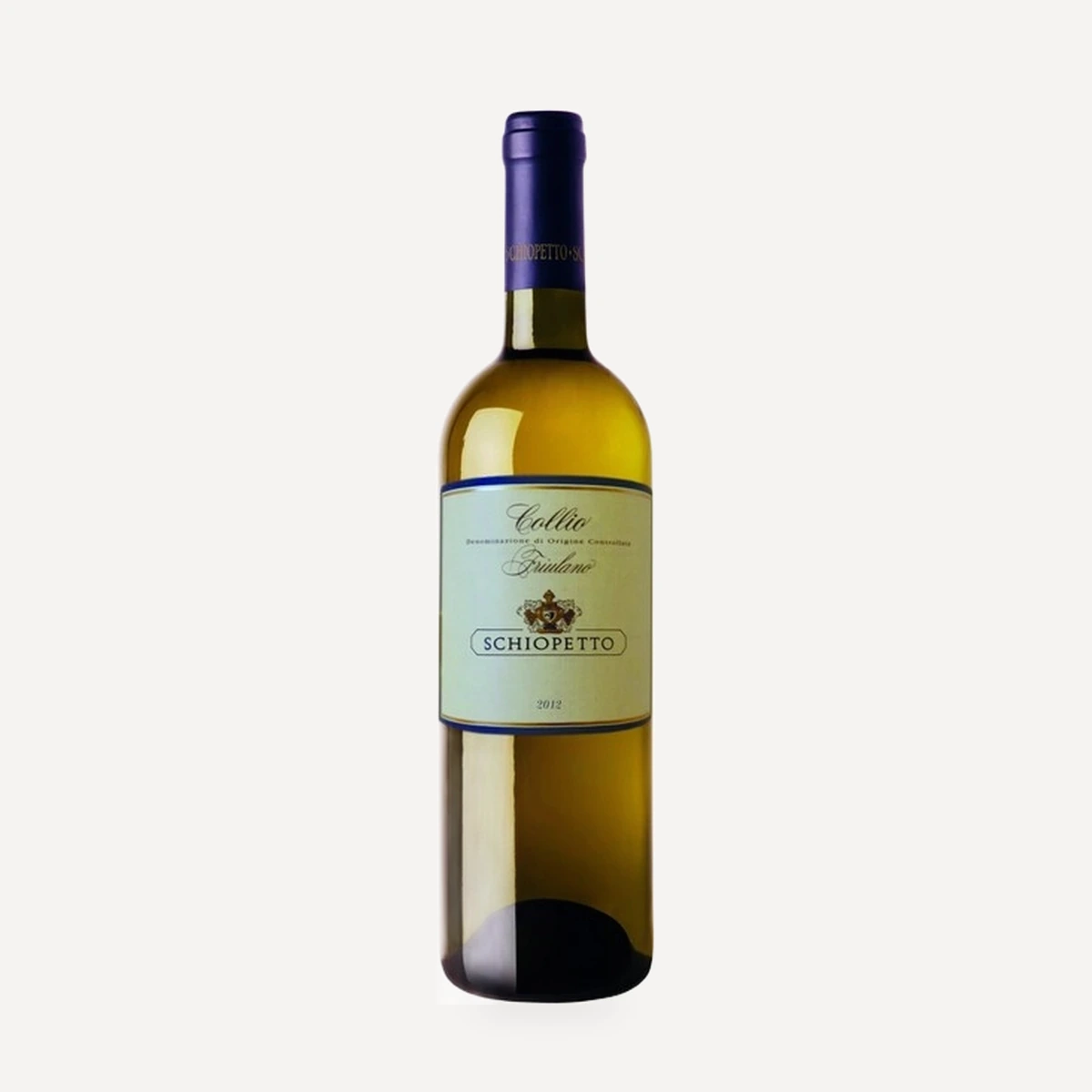
Friulano
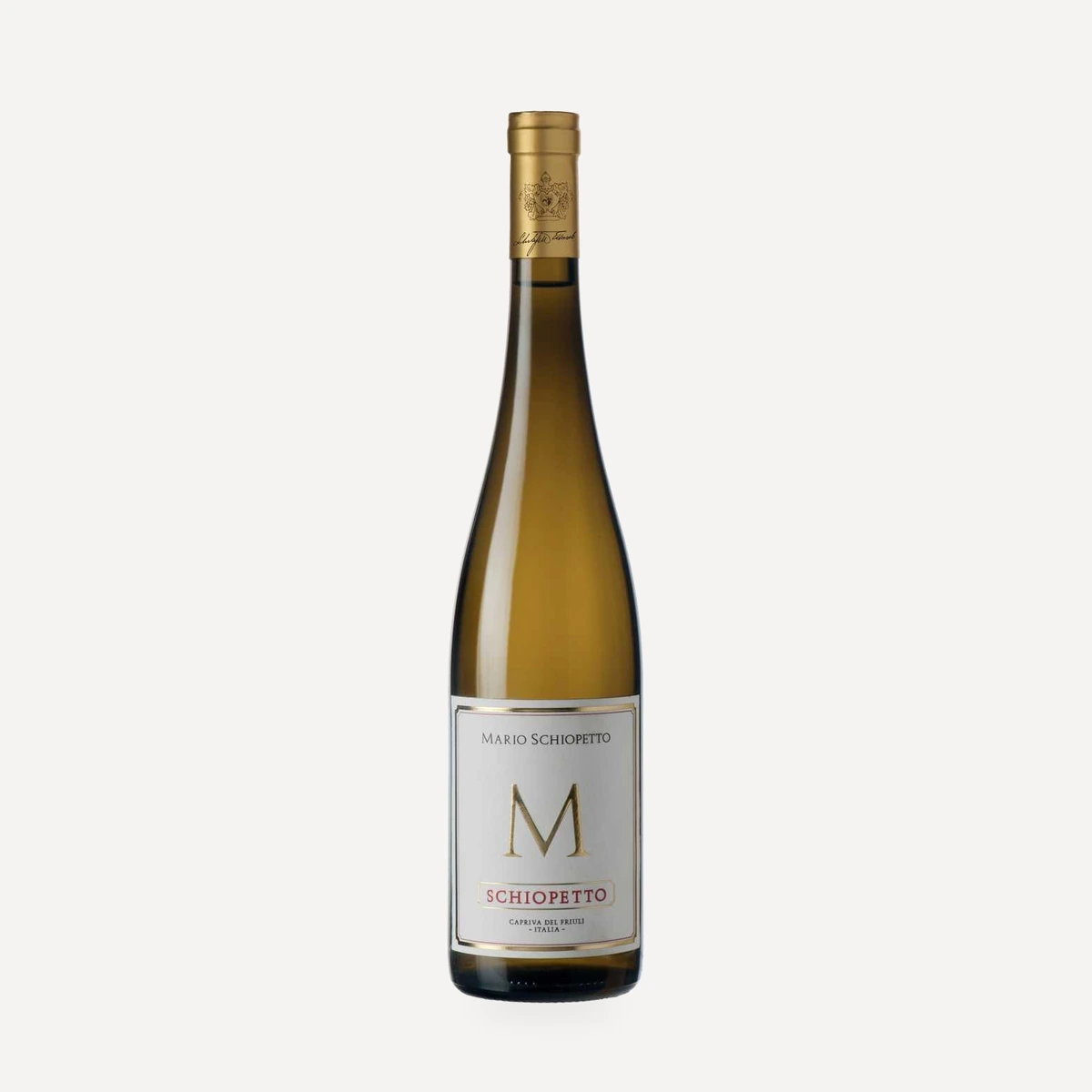
Mario Schiopetto
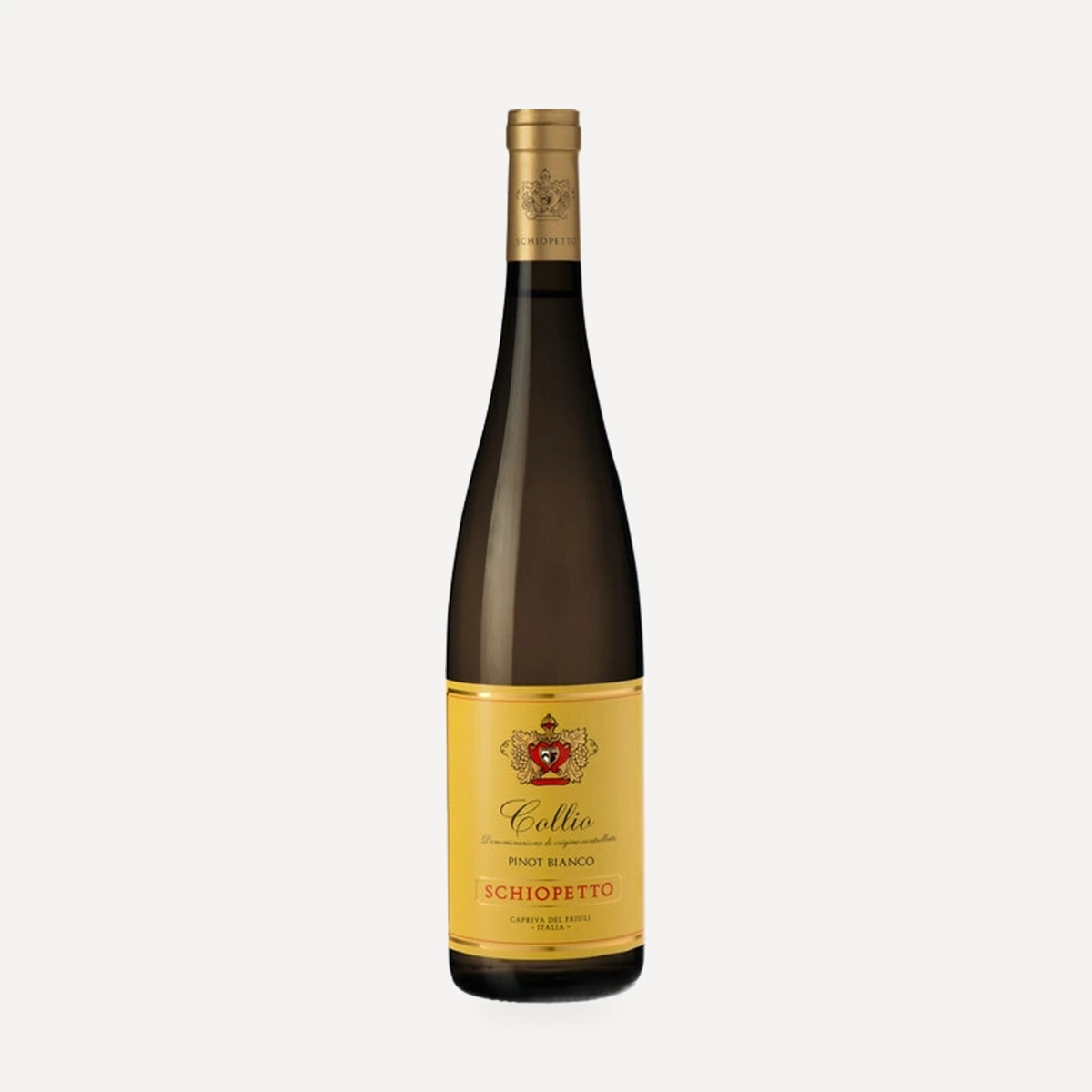
Pinot Bianco
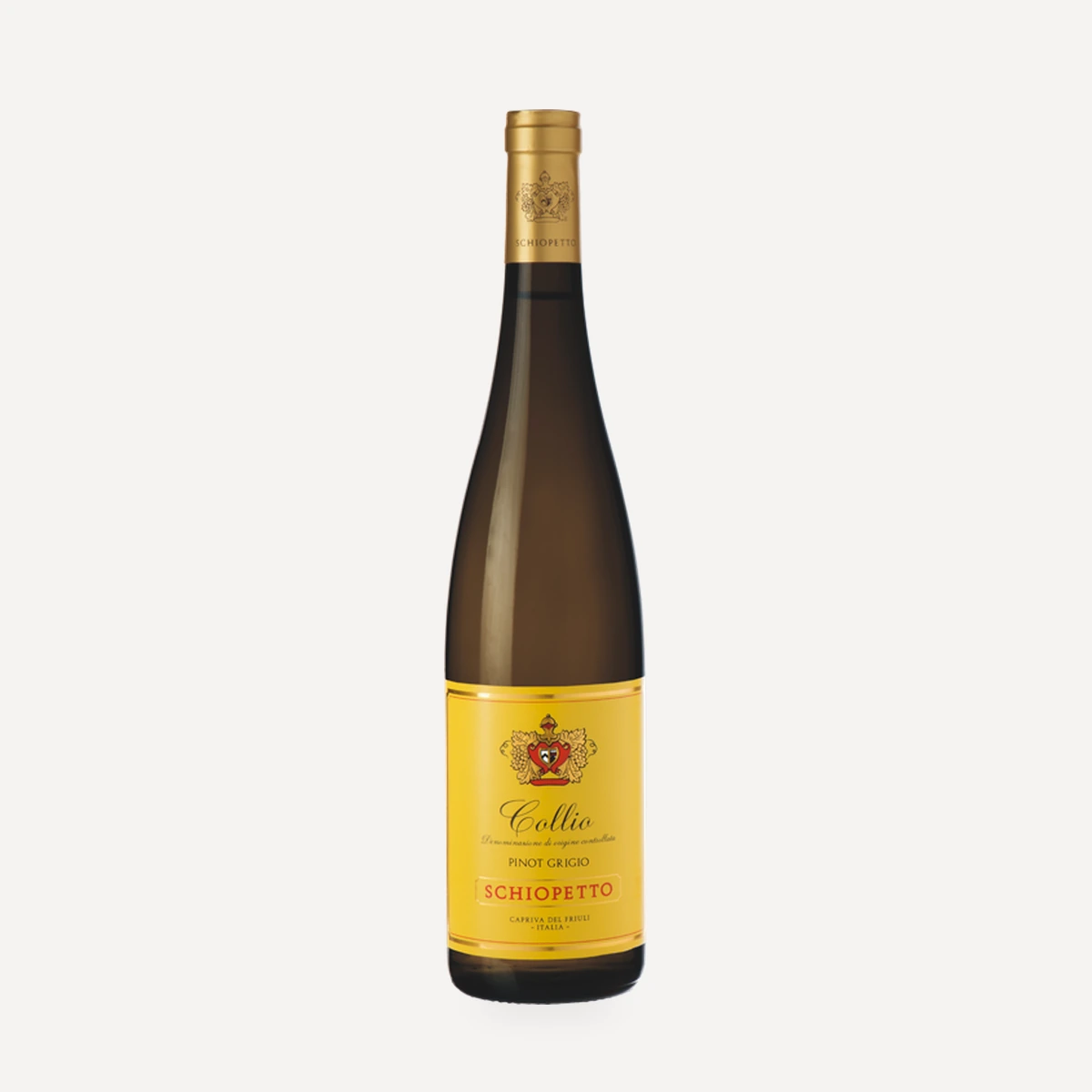
Pinot Grigio
Sauvignon
Malvasia

Rivarossa

Podere dei Blumeri
Blanc des Rosis
Ribolla Gialla

Pinot Grigio — Linea del Pompiere

Merlot
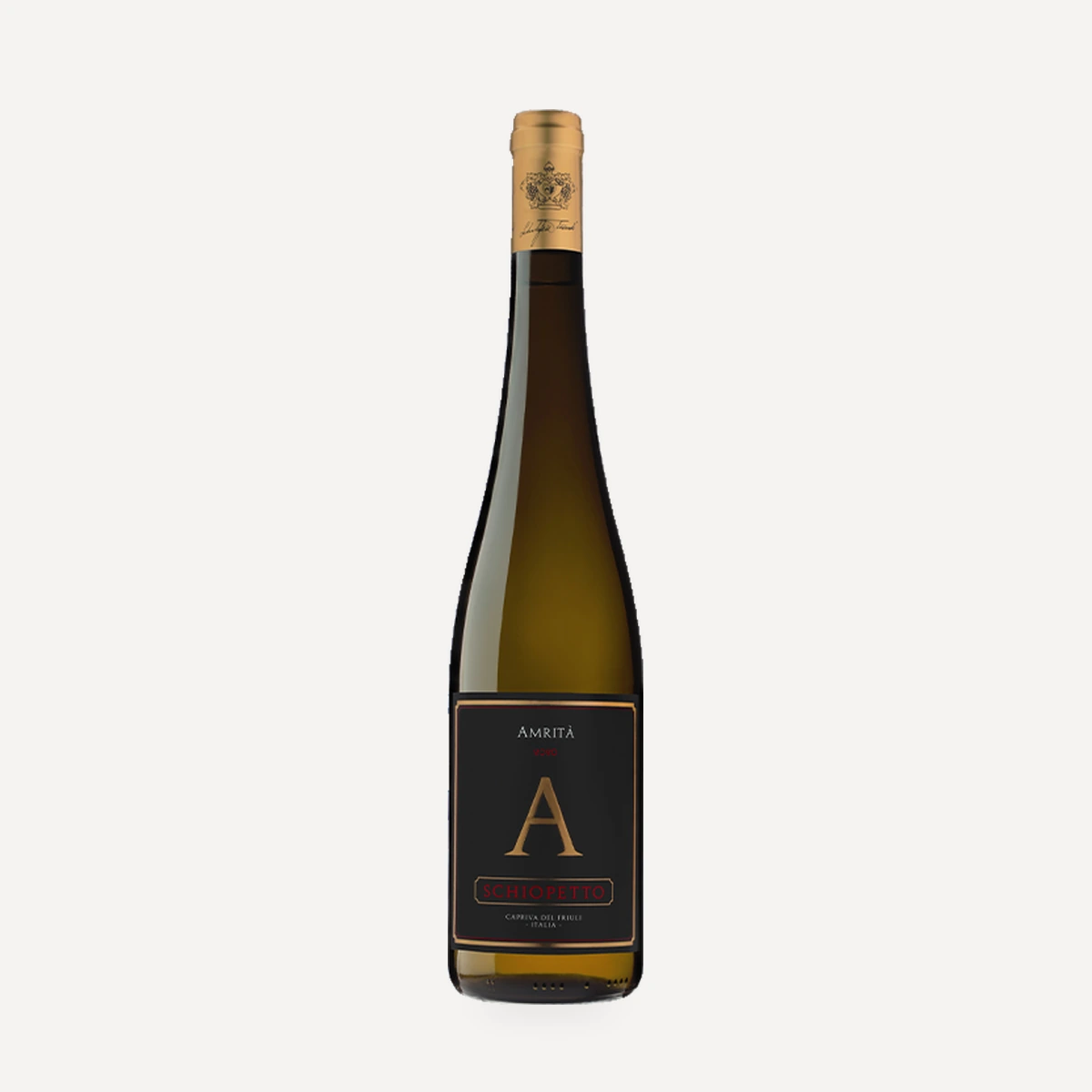
Amrità

Friulano — Linea del Pompiere
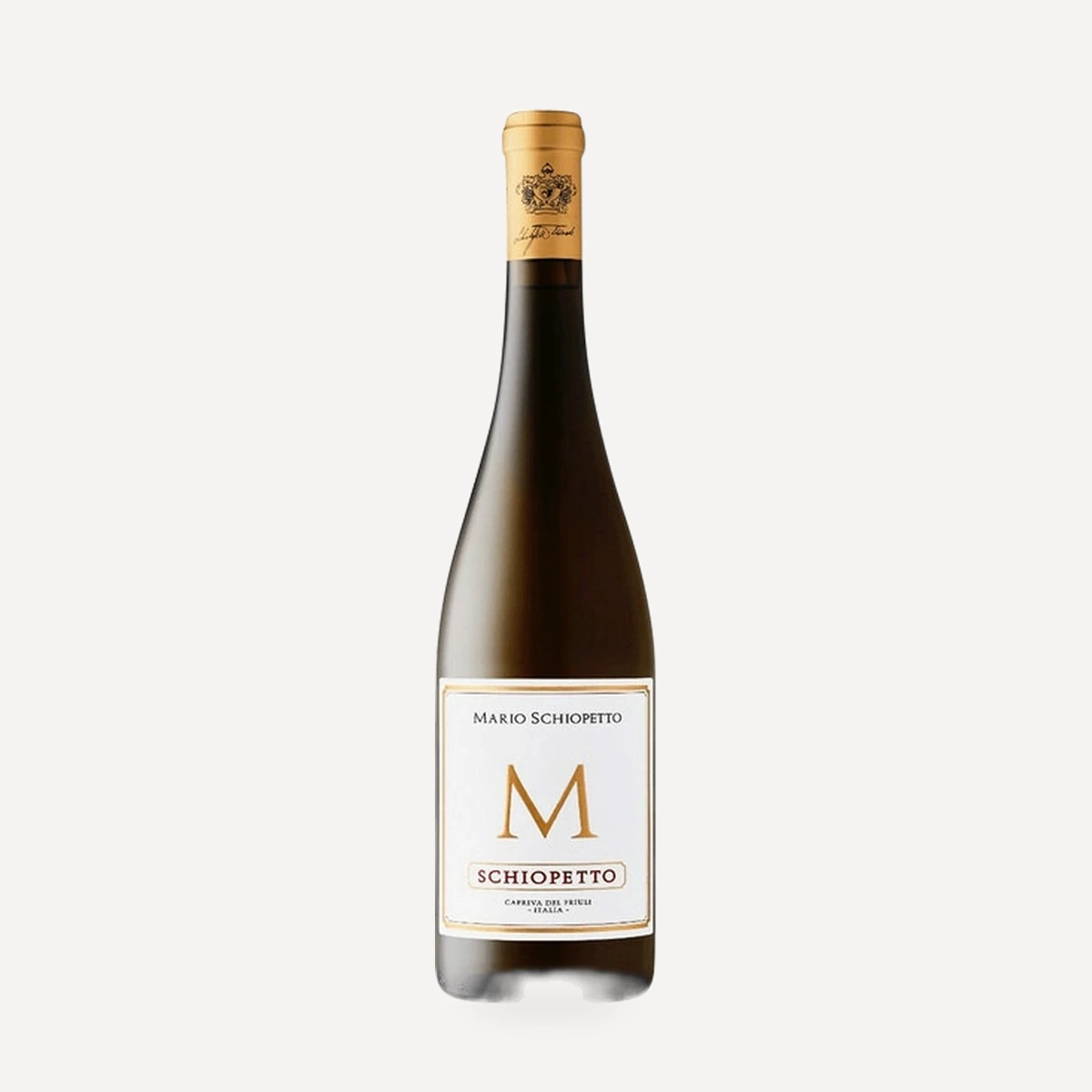
M Collio DOC
