History
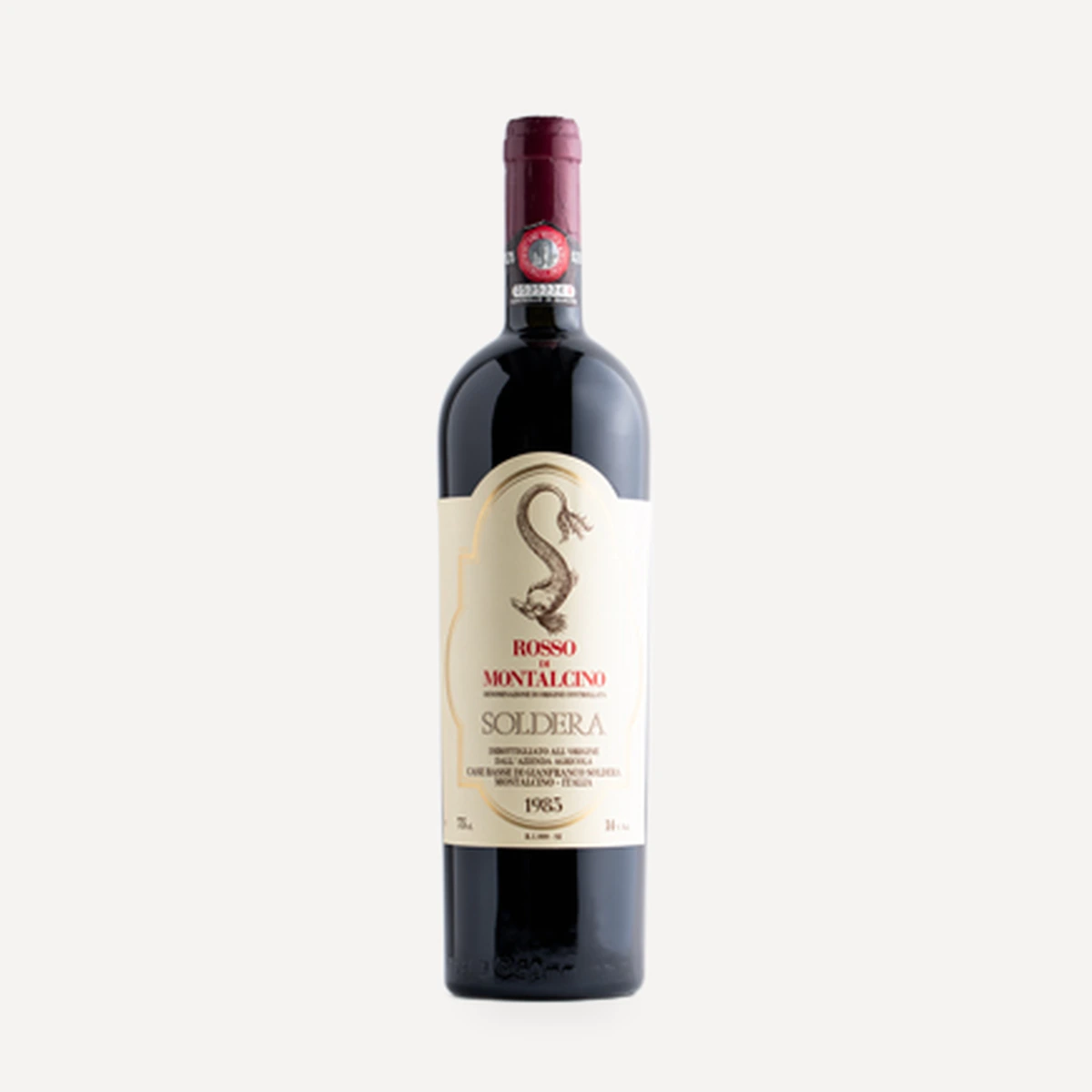
Origins and the search for Case Basse
Gianfranco Soldera was born in Treviso on 29 January 1937 and moved to Milan with his family as a child. In the early 1960s he founded one of Italy’s first insurance-brokerage companies, which he managed until 2003. His attachment to land and wine came from family tradition. By the end of the 1960s, Gianfranco and his wife Graziella—herself deeply interested in flowers, plants and landscape design—had decided to buy land where they could pursue an ambitious natural-wine project.
The search was long and exacting because the couple considered a suitable terroir indispensable. In June 1972 they discovered Montalcino and Case Basse: a 23-hectare estate that had lain uncultivated for years, with abandoned buildings and no vines. Its light, position, beauty, hilly Eocene terrain and 320-metre elevation met their requirements. They bought the property two months later.
The first vineyards and harvests
In autumn 1972, Gianfranco and Graziella planted the first approximately 2-hectare Sangiovese vineyard. A second vineyard of about 4.5 hectares followed in 1973, with the plots selected specifically for their suitability to Sangiovese. They also restored the estate’s abandoned buildings in the original Tuscan farmhouse style, retaining dry-stone structures that could shelter birds, small mammals and insects.
The first harvest took place in 1975 and confirmed the family’s expectations for the site. Natural wine production at Case Basse consequently dates from the mid-1970s.
In January 1976 Gianfranco began both a professional collaboration and a friendship with master taster Giulio Gambelli. Their method centred on repeated comparative tastings from barrel and detailed discussion of aroma and flavour. Gambelli’s exacting judgement and knowledge of Sangiovese became an important stimulus for continuous improvement.
First commercial releases and international distribution
The first Brunello di Montalcino Soldera, made from the 1977 harvest, was released in 1982. Its release initiated the estate’s commercial development in Italy and abroad. Despite its restricted production, Soldera wine subsequently came to be distributed in more than 40 countries.
During the early 1980s the family also developed a bespoke 750-ml Bordeaux bottle with researchers, Nord Vetri president Franco Marchini and Professor Antonio Pes. Graziella specified broad shoulders relative to the base, evoking a dancer’s silhouette, while the technical design addressed protection from light, insulation and the relationship between cork weight and the internal volume of the neck.
Between 1985 and 1992, the estate produced Soldera Intistieti from estate-grown Sangiovese, following its established methods but with a shorter period in barrel. The singular climatic progression of 2005 resulted in one barrel reaching maturity after approximately three years; it was released as Soldera Pegasos.
The underground cellar
In 2001 Case Basse completed a new three-level underground cellar conceived by Gianfranco Soldera and designed by architect Stefano Lambardi. Built 14 metres below ground without concrete, it uses natural stone, wood and load-bearing Corten-steel structures. Its breathable construction promotes natural air circulation while maintaining approximately 13°C and around 85% humidity.
The upper service area accommodates harvest selection, destemming, labelling, packing and outbound storage. The vinification level houses the large oak vats, while the deepest area contains the large Slavonian-oak casks used for prolonged maturation. The layout was also conceived to handle wine by gravity and minimise mechanical disturbance.
Research, monitoring and support for young scientists
Research has accompanied the estate’s natural approach from an early stage. Collaborations have examined soil organic matter and microbial biodiversity, fermentation microflora, vineyard entomology, decision-support systems, grape maturation and the chemical, physical and microbiological evolution of wine.
In 2010 Gianfranco and Graziella Soldera, with Professor Mario Fregoni, established the International Soldera Case Basse Award for Young Researchers. Its first ten editions, culminating in 2019, received 83 papers from 74 candidates representing 22 scientific institutions and awarded first prizes to 15 researchers. In 2021 the programme was renewed in collaboration with the Accademia dei Georgofili.
The December 2012 vandalism and its aftermath
In December 2012, an act of vandalism opened the valves of ten casks containing wine intended to become Brunello di Montalcino. Six vintages—2007, 2008, 2009, 2010, 2011 and 2012—were affected, with a total loss recorded as 626 hl. The 2010 vintage suffered most severely, leaving approximately 450 litres.
The family decided to turn the surviving 2010 wine into a charitable initiative. The remaining wine was bottled only in 3-, 5-, 6-, 9-, 12- and 15-litre formats for auctions supporting medical research and care, particularly for childhood illnesses, as well as education for young people in difficult circumstances. The family simultaneously reaffirmed its intention to continue caring for the land, garden, vineyards and wines according to its established principles.
Toscana IGT/IGP and family continuity
From 2013 onward, beginning with the wine from the 2006 harvest, production was labelled Toscana IGT/IGP Soldera Case Basse 100% Sangiovese. Brunello di Montalcino had been produced through the 2006 harvest, with Riserva versions in selected years.
Gianfranco Soldera died in February 2019. Graziella Soldera, Monica and Paolo, and Mauro and Valeria continued the family business, retaining its central commitments to natural production, the estate ecosystem and botanical garden, scientific study, innovation and support for young researchers.
After Gianfranco’s death, his long-held idea of introducing bees for the study of interactions between pollinators and vines came to fruition when a spontaneous swarm was discovered clinging to a vine shoot. The estate subsequently established a small, non-commercial apiary devoted to biodiversity and research.
Terroir
Case Basse lies in the southwestern part of Montalcino at 320 metres above sea level. The estate covers more than 23 hectares, of which approximately 10 hectares are planted to Sangiovese.
The terrain is hilly and described as both Eocene and volcanic in origin. It is free-draining, mineral-rich and relatively infertile. The local conditions are characterised by a dry climate and long periods of sunshine.
The vineyards are embedded in a broader estate ecosystem rather than treated as an isolated monoculture. The property includes an eight-hectare wood with centuries-old oaks, ancient olive trees, Mediterranean scrub, fruit trees, berry-bearing shrubs, pomegranates and a botanical garden of more than two hectares. Dry-stone walls, artificial nests and food-bearing plants provide habitat for swallows, robins, squirrels, other small mammals and numerous insects. This variety is intended to support natural antagonists to vineyard pests and diseases and maintain biological balance.
Case Basse and Intistieti are distinct neighbouring vineyard sites. Gianfranco Soldera regarded the recognisable differences between their wines as evidence that individual micro-sites and vineyards retain their own identities.
Winemaking
Estate ecosystem
Natural viticulture is organised around the principle that healthy vines depend on the health and complexity of the surrounding environment. Approximately 10 hectares of Sangiovese are maintained within a mosaic of other plants, insects, birds and mammals. The limited vineyard area permits manual work and allows the hand harvest to be completed quickly.
The estate encourages natural antagonists to vineyard pests and diseases. It preserves ancient olive trees and an eight-hectare wood with centuries-old oaks, retains breathable dry-stone walls as wildlife habitat, installs artificial nests and grows fruit trees, berry shrubs and pomegranates to feed animals during autumn and winter. Three hives populated by spontaneous swarms form a non-commercial biodiversity and research project. Bees are treated as potential bioindicators because their collection of nectar, pollen and propolis can reflect conditions in the surrounding air, water and vegetation.
Soil and floor management
Winter ripping is followed by the incorporation of natural manure. Every vine is hoed manually each year to remove unwanted vegetation. Soils are levelled and refined, including beneath the rows, and grass is cut beneath the vines when necessary. Herbicides and systemic plant-protection products are not used.
Pruning and canopy work
Winter pruning begins at approximately 10 February. Two buds are retained, one of them basal, and every cut is manually disinfected with natural preparations. Green pruning begins early, generally in the first days of May. Long shoots are not topped; instead, they are placed over purpose-built frames above the vines to avoid disrupting natural vigour.
Later operations include calibrated removal of lateral shoots and basal leaves to reduce trapped humidity and improve air circulation around inflorescences and bunches. A final thinning is undertaken at veraison, and leaves covering the grapes are removed at the end of August.
Disease protection and yield selection
Each vine is monitored from bud emergence to calibrate protection strategies with specialist support. Disease control relies on necessary, measured quantities of copper and sulphur, natural antagonists and highly selective interventions. The more detailed cultivation protocol also identifies Bordeaux mixture and propolis; the final treatment is applied no later than 25 July, and systemic products are excluded.
Excess bunches are removed manually between late May and mid-June. Bunches that are not in perfect condition continue to be removed through harvest. Ripening is followed through frequent sampling—more than once weekly in the documented 2021 season—combining tasting with microbiological and chemical-physical analysis. Measurements include microorganism populations, sugars, acidity, pH, potential and extractable anthocyanins, polyphenols and seed maturity.
Harvest and selection
Harvesting is exclusively manual. Bunches are selected first in the vineyard and carried to the cellar in small crates to prevent crushing. Further selection on arrival ensures that only healthy, ripe fruit proceeds to destemming. Whole berries then undergo a final berry-by-berry manual inspection.
Reception and selection
Only estate-grown Sangiovese is used; other grapes or outside wines are never added. Hand-picked bunches arrive in small crates designed to avoid crushing and are placed on a sorting table. Selected bunches travel by conveyor to a vibrating destemmer that removes the berries gently and grades them by size, rejecting unsuitable material. Whole berries then pass along a second sorting belt for final manual selection. Only intact berries that pass every stage enter the fermentation vat. The process involves destemming rather than pressing.
Alcoholic fermentation
Fermentation is spontaneous in truncated-conical Slavonian-oak vats with capacities above 100 hl. No commercial yeast is added. Native microorganisms and a diverse succession of yeasts conduct the fermentation, limiting intervention in the natural process.
Fermentation temperature is not controlled by physical cooling or heating. Probes measure temperature continuously—at ten-minute intervals in the cellar’s monitoring system—and transmit data remotely. Frequent tasting, daily chemical and microbiological analyses, and continuous temperature readings determine the timing and manner of manual pump-overs. In the documented 2021 fermentation, non-Saccharomyces yeasts Kloeckera apiculata and Starmerella bacillaris participated in the initial phase up to approximately 2% alcohol, reaching around 20 million cells/ml. Saccharomyces cerevisiae then completed fermentation in about two weeks and reached a maximum population close to 100 million cells/ml.
Malolactic fermentation and ageing
Malolactic fermentation occurs naturally through Oenococcus oeni. In the documented 2021 lot it began approximately two weeks after running off and ended around six weeks later.
After fermentation, wine is transferred to large Slavonian-oak casks rather than barriques for prolonged maturation. It is tasted frequently and analysed monthly for chemical, physical and microbiological stability. Racking is performed only when necessary and is the principal cellar operation during maturation. Sulphur dioxide is the sole additive and is used in very limited quantities, only when required. Published bottling analyses record sulphite levels well below the legal limit.
Underground cellar
The three-level cellar is 14 metres underground. Natural stone, wood and load-bearing Corten steel were used, while concrete and synthetic insulation were avoided. Its breathable walls and natural air circulation maintain a constant temperature of approximately 13°C and humidity around 85% without stagnation. The service level handles sorting, destemming, labelling, packing and outbound cartons; the vinification level contains the large oak vats; and the deepest chamber houses the Slavonian-oak maturation casks. The gravity-based design minimises pumping and mechanical disturbance.
Bottling and bottle ageing
Wine passes directly from cask to the bottling line within the cellar. It receives no chemical-physical pretreatment, clarification or filtration. Empty bottles are acclimatised in the same cellar environment before filling. Filled bottles rest in cages in the cellar for several months before labelling, packing and release; the 2021 bottling rested for more than six months.
The bespoke 750-ml ‘Serie speciale 15 Soldera Case Basse’ Bordeaux bottle weighs 750 g, roughly twice the weight of common bottles. Its dark antique-green glass protects against ultraviolet light, while its pronounced punt helps retain any sediment from the unfiltered wine. Its neck was engineered around the relationship between cork weight and internal volume. Selected corks measure 26 × 49 mm and are matched closely to the neck. Release occurs only when the completed wine meets the family’s quality threshold.
Philosophy
Natural wine as an ecosystem project
Gianfranco and Graziella Soldera’s central principle was that producing wine of the desired quality required care not only for the vines but also for the complete environment around them. Natural viticulture therefore depends on a complex community of plants, insects and animals rather than human action alone. Agricultural work should respect the soil and its cycles, draw on farming culture and observation, and use scientific and technological knowledge to understand problems without artificially replacing natural processes.
Tradition supplies experience, sensitivity to natural rhythms and accumulated farming knowledge. Research and technology add measurement, rational verification and experimentation. The estate combines the two through continuous vineyard and cellar monitoring, scientific partnerships and the SIS digital system, while keeping cultivation, fermentation and maturation minimally interventionist.
Gianfranco Soldera’s definition of a great wine
For Gianfranco, a great wine had to possess harmony, elegance, complexity and naturalness: balance and proportion, finesse, and a multiplicity of aromatic and flavour sensations. It had to begin with healthy, ripe grapes and follow natural transformation without colourants, added preservatives, oak tannins or other substances foreign to grapes.
He also defined greatness through typicity, uniqueness, rarity and longevity. A wine should reveal its precise vineyard and micro-site, improve for at least its first twenty years and evolve through different sensations over time. This conviction led him to withhold the entire 1989 vintage because he considered it below his quality threshold. Production volume is likewise reduced drastically when weather conditions do not permit the required standard.
Wine’s purpose extends beyond technical quality. Gianfranco connected it with pleasure, well-being, friendship and conviviality. The family consequently addressed the complete journey from vineyard to table, including bottle, cork, transport protection and glass design, with the aim of preserving the wine until it is shared.
Wines

Toscana Soldera Case Basse 100% Sangiovese IGP
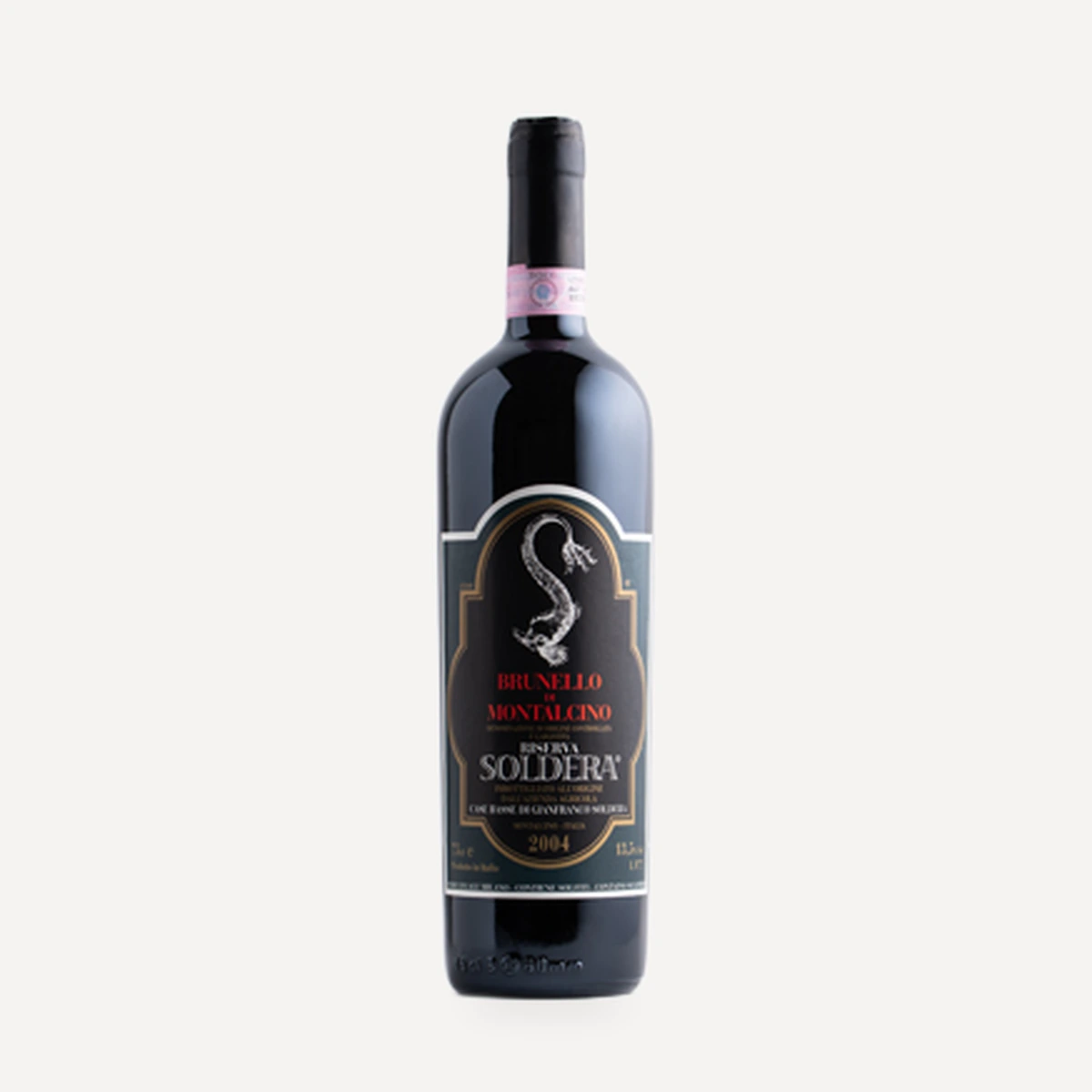
Brunello di Montalcino Soldera DOCG
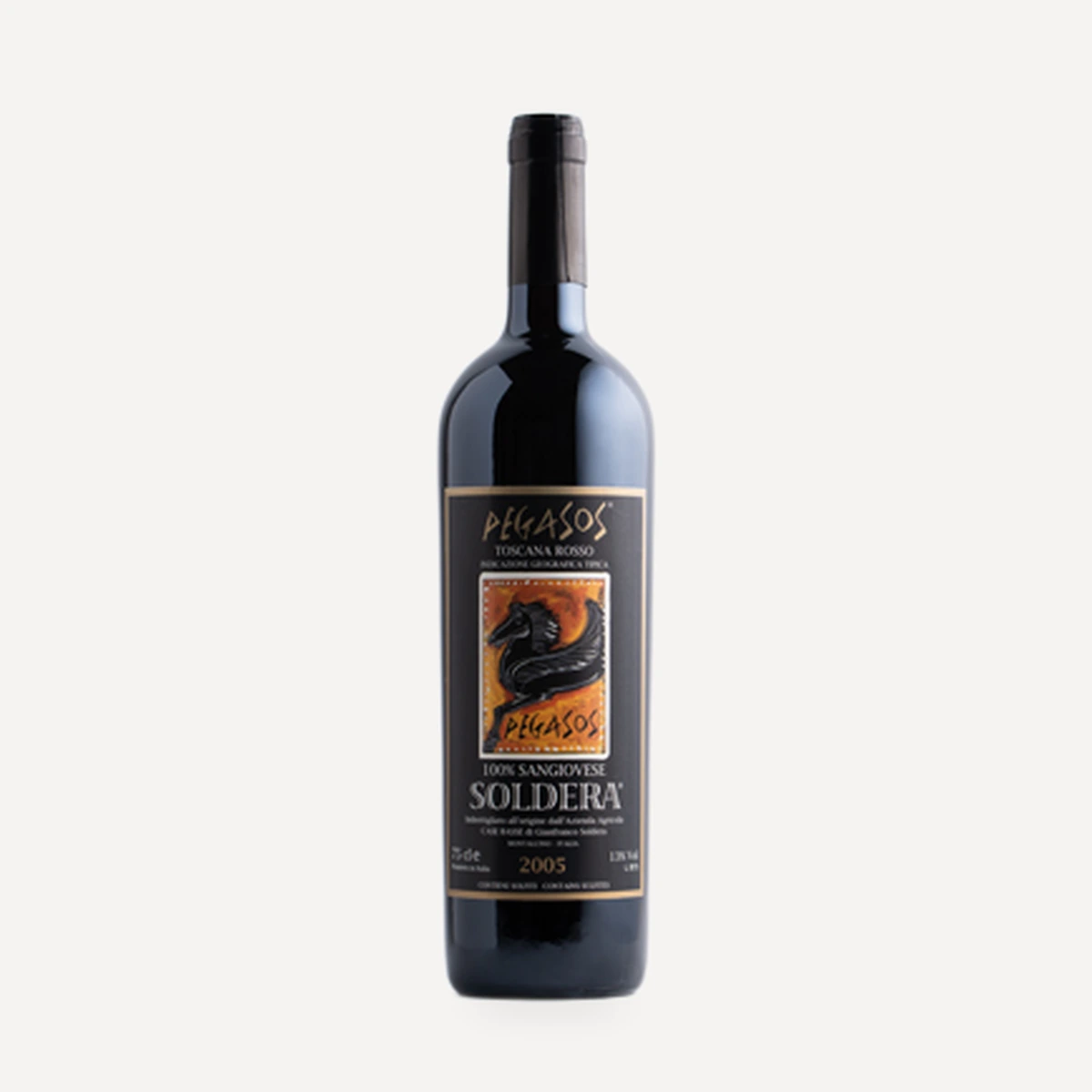
Soldera Pegasos 100% Sangiovese IGT
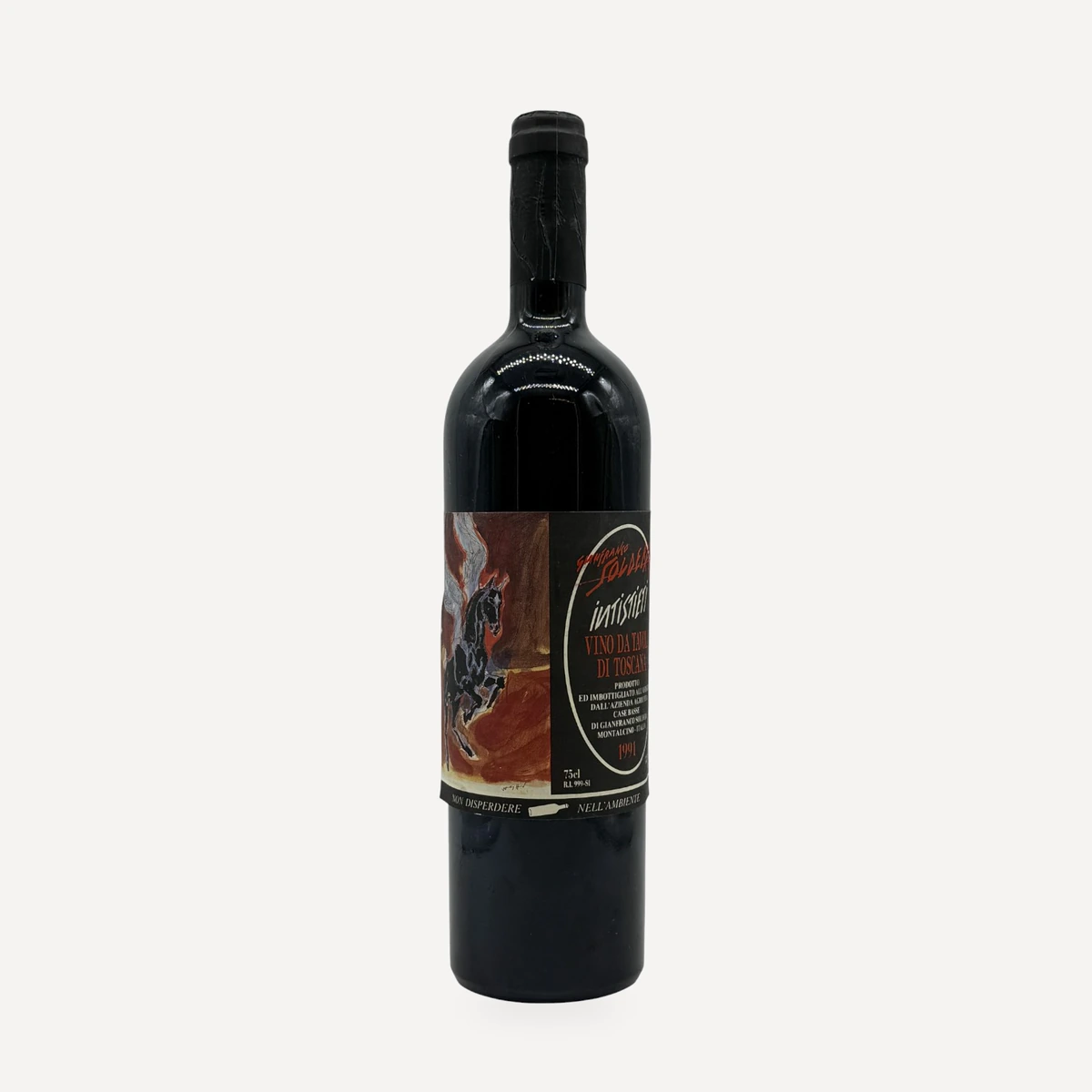
Soldera Intistieti (table wine)