History
Before Aia Vecchia
The Bolgheri-born Pellegrini family had worked as grape growers in the Bolgheri area for several generations. For decades, the family sold its grapes to prominent local wineries before establishing an estate of its own.
1995–1998: vineyards, foundation and the first wine
In 1995, the family replanted vineyards on three of its Bolgheri properties with Merlot, Cabernet Sauvignon, Cabernet Franc and Petit Verdot.
The Pellegrini family launched the Aia Vecchia project in 1996, seeking to produce small lots of high-quality wines centred on Bordeaux varieties. Hungarian winemaker Tibor Gal provided oenological guidance as selected land was acquired on the Tuscan coast, including Bolgheri and Maremma Grossetana.
New Zealand agronomist Daniel Schuster was engaged to plan the new vineyards. Individual sites, varieties, clones and rootstocks were selected carefully; the rootstocks came directly from Bordeaux. The owners personally inspected the young vines at their nurseries to assess their quality and cultivation before purchase.
Aia Vecchia presented its first wine, Lagone, in 1998. The first harvest was grown in Bolgheri and vinified at the old family winery with Tibor Gal. The wine quickly attracted reviews from specialist publications including Wine Spectator and Wine Enthusiast.
2000–2008: expansion into Maremma and a new winery
In 2000, the family purchased two estates in Maremma, in the province of Grosseto, and planted new vineyards. The first vintage of Sor Ugo followed in 2001.
A new winery was acquired in the comune of Castagneto Carducci in 2002. It became the site for the estate’s transformation processes, from crushing through vinification.
In 2003, Vermentino and Viognier were planted on the Orbetello and Magliano in Toscana estates. Nicola Scottini joined Aia Vecchia as winemaker in 2005. The first Vermentino vintage was produced in 2008.
2010–2018: recognition, commercial development and further planting
Sor Ugo received Wine & Spirits magazine’s “Best Tuscany Red” recognition in 2010. A new commercial direction was introduced in 2012 to develop the Aia Vecchia brand.
In 2014, the family purchased another property on Via Bolgherese, described in English as the Strada del Vino in Bolgheri, and planted additional Cabernet Franc and Petit Verdot vineyards. Aia Vecchia marked Lagone’s twentieth harvest in 2018.
2022–2025: Orleto and a renewed visual identity
In 2022, Aia Vecchia presented Orleto 2018, its varietal Cabernet Franc. The estate restyled its logo and wine packaging in 2025.
Terroir
Coastal Tuscany
Aia Vecchia’s vineyards extend across two coastal Tuscan areas: Bolgheri and Maremma Grossetana. The old farmhouse from which the estate takes its name stands in the countryside between Bolgheri and Castagneto Carducci, close to the Tyrrhenian coast.
Bolgheri
The Bolgheri vineyards occupy the first hills overlooking the Tuscan coast. Their setting combines structured but varied soils with a Mediterranean climate. Heat, sunlight and light reflected from the Mediterranean contribute to the local microclimate. The reflected light supplements direct sunlight and supports earlier harvesting.
Mediterranean maquis and woodland surround and protect the vineyards. Planting decisions take the requirements of each variety into account so that the vines can make use of both direct overhead sunlight and light reflected by the sea.
The vineyard descriptions identify sandy, clay and limestone soils. Bolgheri and Castagneto Carducci vineyard sources range from 80 to 100 metres above sea level.
Maremma Grossetana
The Maremma holdings lie among hills facing the sea. Summers are warm and breezy, while winters are mild. The vineyards face Monte Argentario and are positioned to receive abundant sunlight.
The Orbetello and Magliano in Toscana vineyards are described at elevations of 100–150 metres above sea level, with sand, clay and limestone in their soils. The broader Bolgheri–Maremma vineyard source is described at approximately 100 metres.
Winemaking
Vineyard planning began at the level of the individual site. Agronomist Daniel Schuster worked with the family to match parcels with varieties, clones and different rootstocks. Plant material was sourced directly from Bordeaux, and the owners personally inspected the young vines at their nurseries to assess their quality and cultivation before purchase.
Plantings were oriented according to the needs of each variety and the availability of direct and sea-reflected sunlight. Spur-pruned cordon is used in the Bolgheri vineyards, while Guyot is used in the Orbetello and Magliano in Toscana vineyards; both systems occur across the combined Bolgheri–Maremma sources.
Production is deliberately limited. Vineyard work receives close attention through the growing season, and grapes are harvested by hand. Fruit from each variety and vineyard is kept distinct for vinification, fermentation and maturation.
All transformation processes, from crushing through vinification, take place at the winery in Castagneto Carducci. Its production approach combines stainless-steel technology with maturation in wood.
The cellar work follows the same emphasis on detail applied in the vineyards. Grapes from each variety and vineyard are handled through individual vinification, fermentation and maturation. Stainless-steel tanks are used for fermentation, while the estate’s cellar programme also employs barriques and subsequent bottle maturation. Production is kept limited as part of the quality strategy.
Philosophy
Aia Vecchia presents quality as the result of natural conditions combined with human work and commitment. Its approach seeks to preserve the distinguishing character contributed by each terroir, grape variety and vineyard while producing wines with structure, balance and harmony.
The estate gives equivalent importance to precision in the vineyard and in the cellar. Its stated principles include limited production, close attention to every intervention, hand harvesting, separate handling of grapes by variety and vineyard, and respect for the land.
The Pellegrini family established the project with the goal of making small lots of high-quality wines centred on Bordeaux varieties. Vineyard design therefore began with detailed choices concerning sites, varieties, clones, rootstocks and planting material rather than treating the holdings as a uniform source of fruit.
Wines

Sor Ugo
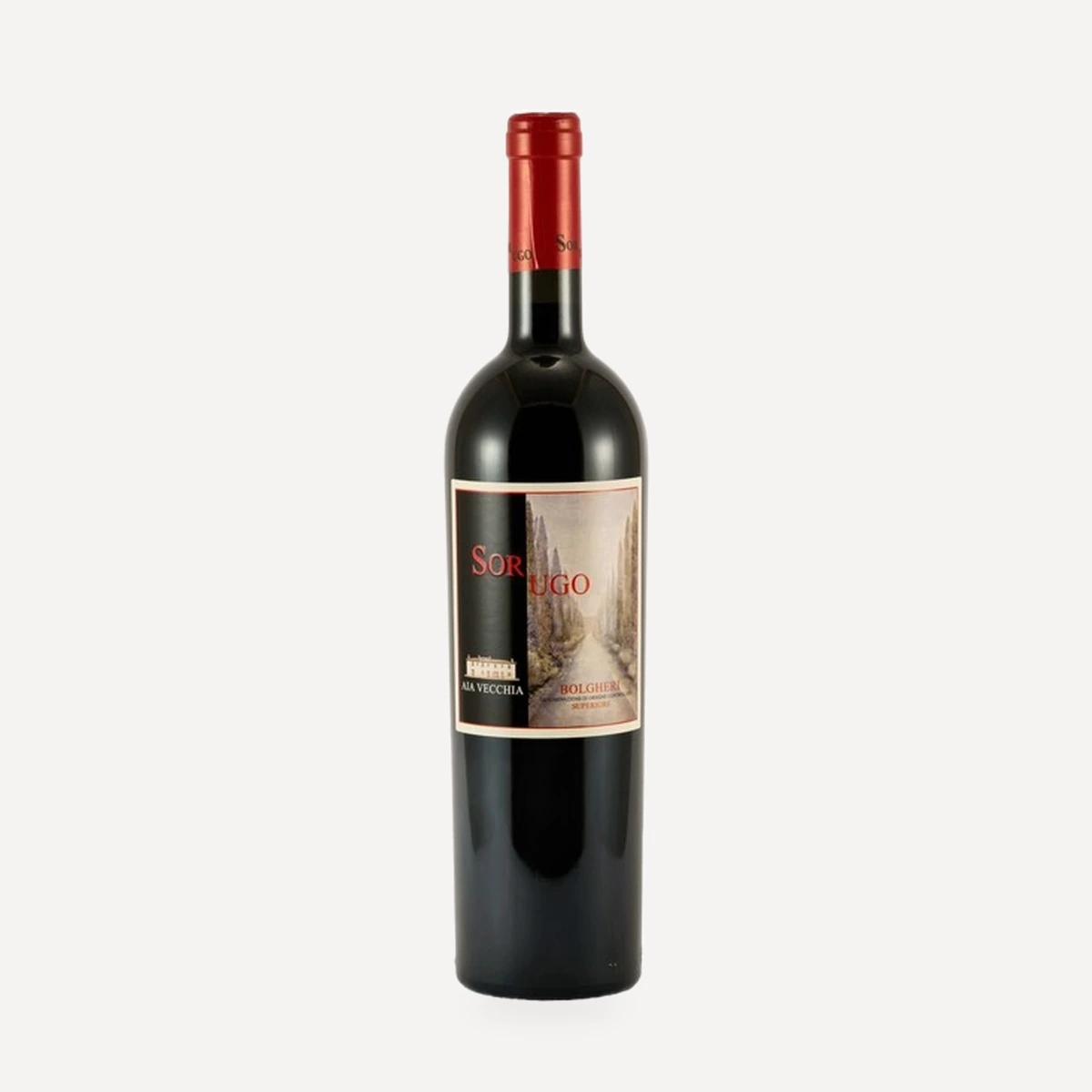
SorUgo Bolgheri Superiore DOC
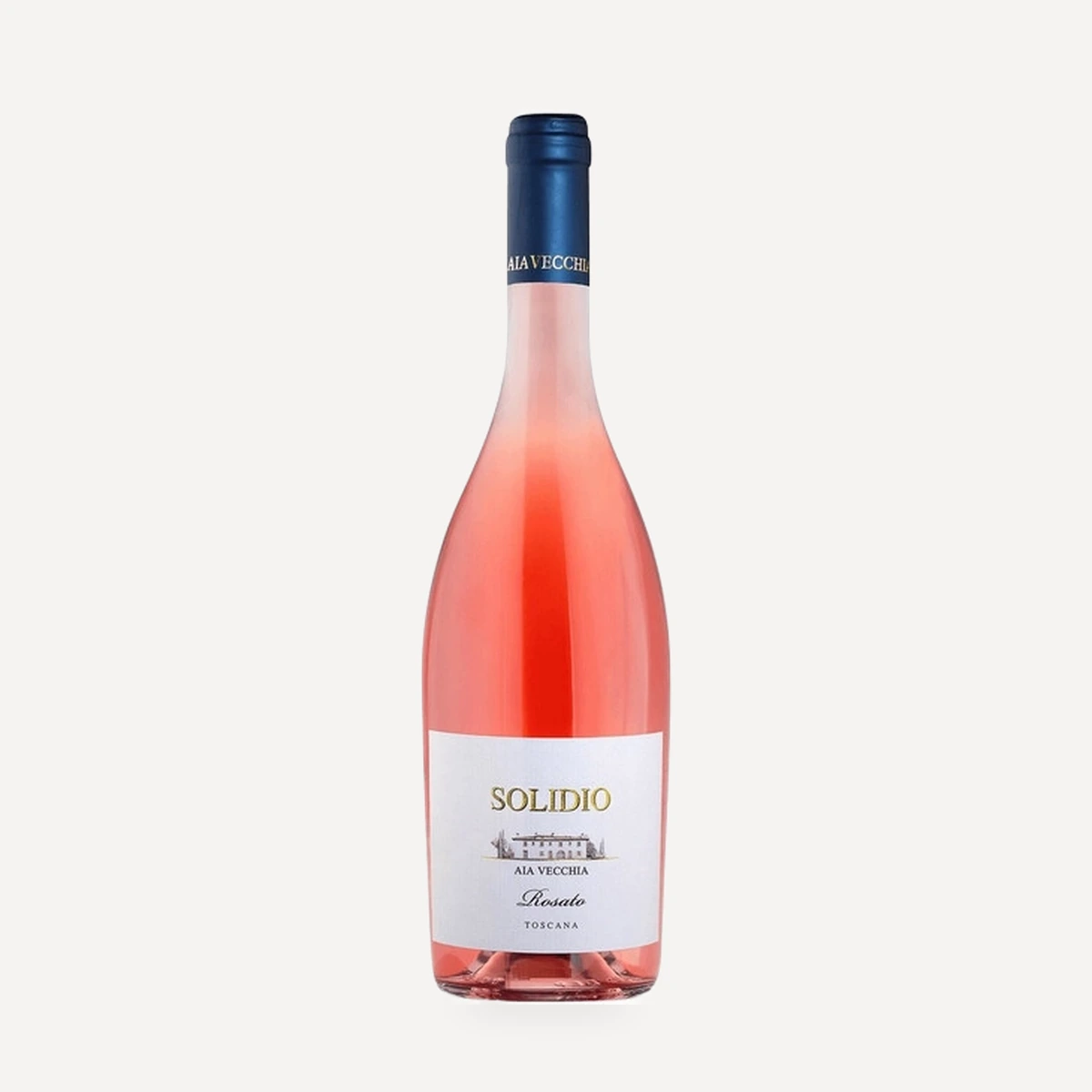
Solidio Rosato Toscana IGT

Lagone

Vermentino

Orleto