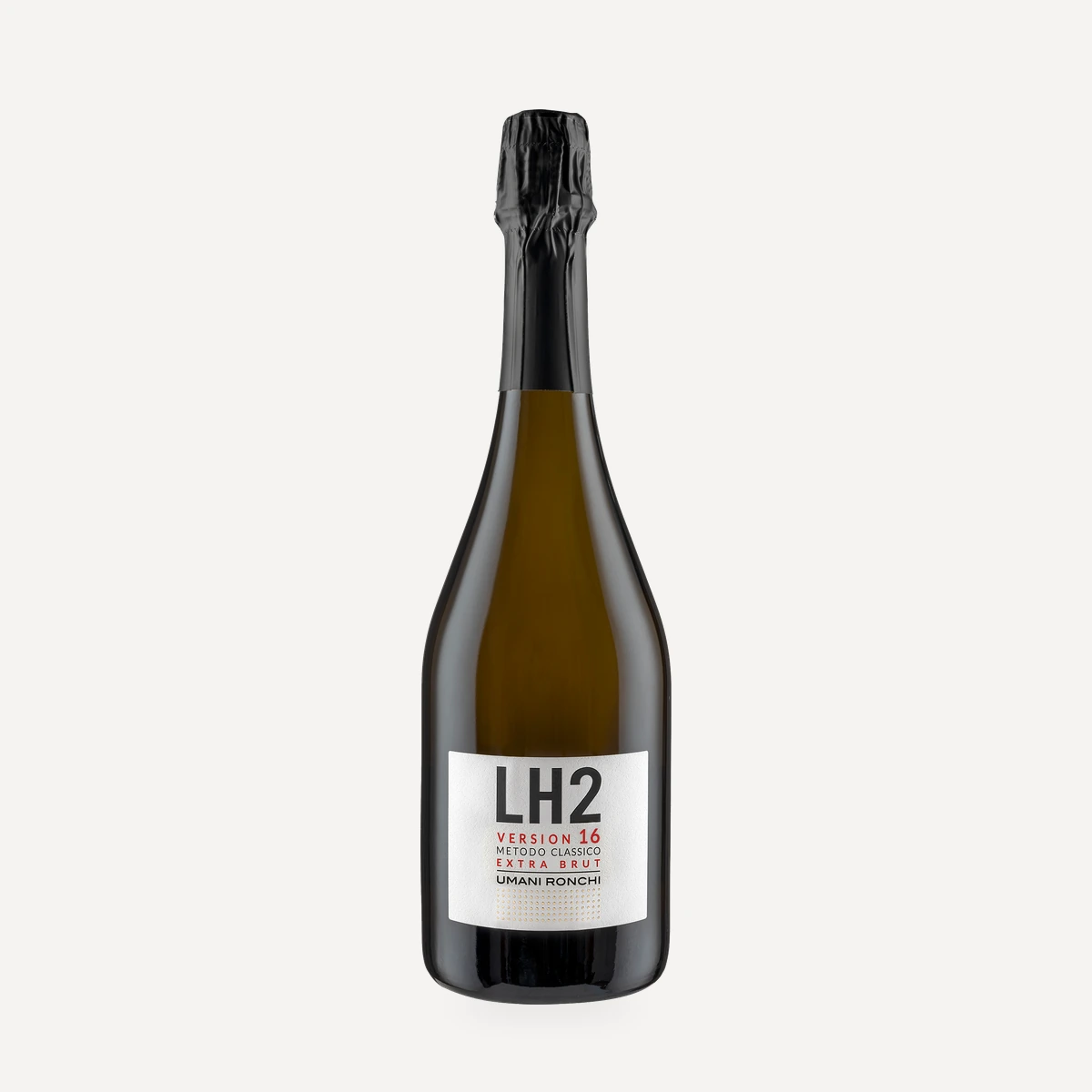
About this wine
Vineyard and terroir
The fruit comes from Guyot-trained vineyards in the Verdicchio Hills of Marche, situated on slopes on both sides of the Esino Valley at 200–350 metres above sea level. The vines are 8–30 years old. Their very deep, moderately calcareous loam soils originate from Plio-Pleistocene formations. Yields do not exceed 7 tonnes per hectare.
Grapes
Blend proportions vary by version. The latest published release, Version 16, comprises 73% Verdicchio and 27% Chardonnay. Within the finished blend, 7% is Verdicchio from the 2022 harvest and 5% is Chardonnay from 2022; the prevailing vintage is 2023.
Vinification
Following gentle pressing, the free-run juice is rapidly chilled and clarified by cold settling. Chardonnay undergoes alcoholic fermentation in stainless steel before a portion is matured in small wood, while Verdicchio ferments and matures in stainless steel. Base wines from different vintages are assembled before the temperature-controlled secondary fermentation.
Ageing
In Version 16, 12% of the Chardonnay passes through tonneaux, while the rest of the cuvée matures in stainless steel. Bottle ageing on the lees continues for 25–30 months, developing the wine's maturity, balance and yeast-derived aromatic nuances.
Technical data
Residual sugar: 3.5–4.5 g/L. Available in 750 ml and 1.5 L bottles.
Tasting profile
Bright straw yellow with a fine, persistent perlage. Floral and fruit aromas evoke bergamot and mandarin alongside herbal notes and delicate nuances derived from contact with the lees. The palate is creamy and lively, leading to a long, mineral finish with fresh dried-fruit notes.
Serving and pairing
Serve at 6–8°C in a flute with a broad bowl and narrower rim, a shape intended to encourage oxygenation and the development of complex and tertiary aromas while preserving the perlage. Pair with fish dishes, shellfish or sushi.
Vintage notes
Version 16 is based principally on the 2023 harvest. Chardonnay was picked on 17 August and Verdicchio on 29 August. Heavy rainfall from autumn 2022 through spring 2023 increased downy-mildew pressure, addressed through targeted organic treatments and careful canopy management. A very warm summer began in mid-July; combined with water reserves accumulated earlier in the season, it supported optimal ripening and high overall quality, although yields were reduced.
Version 15 was based principally on 2022, a season shaped by a dry winter, delayed spring budbreak and an extremely hot, dry summer. Kaolin, brown-algae treatments, winter-sown cover crops and protective canopy management were used to limit heat and drought stress. Version 14 was based principally on 2021, when a cool spring delayed budbreak and was followed by a dry, very hot summer. Water, soil-fertility and canopy management were central to navigating the season.
Label / history
Each numbered version is conceived as an individual expression assembled from numerous details. A QR code on the back label provides the identity of the specific release.