Storia
Early vineyard material
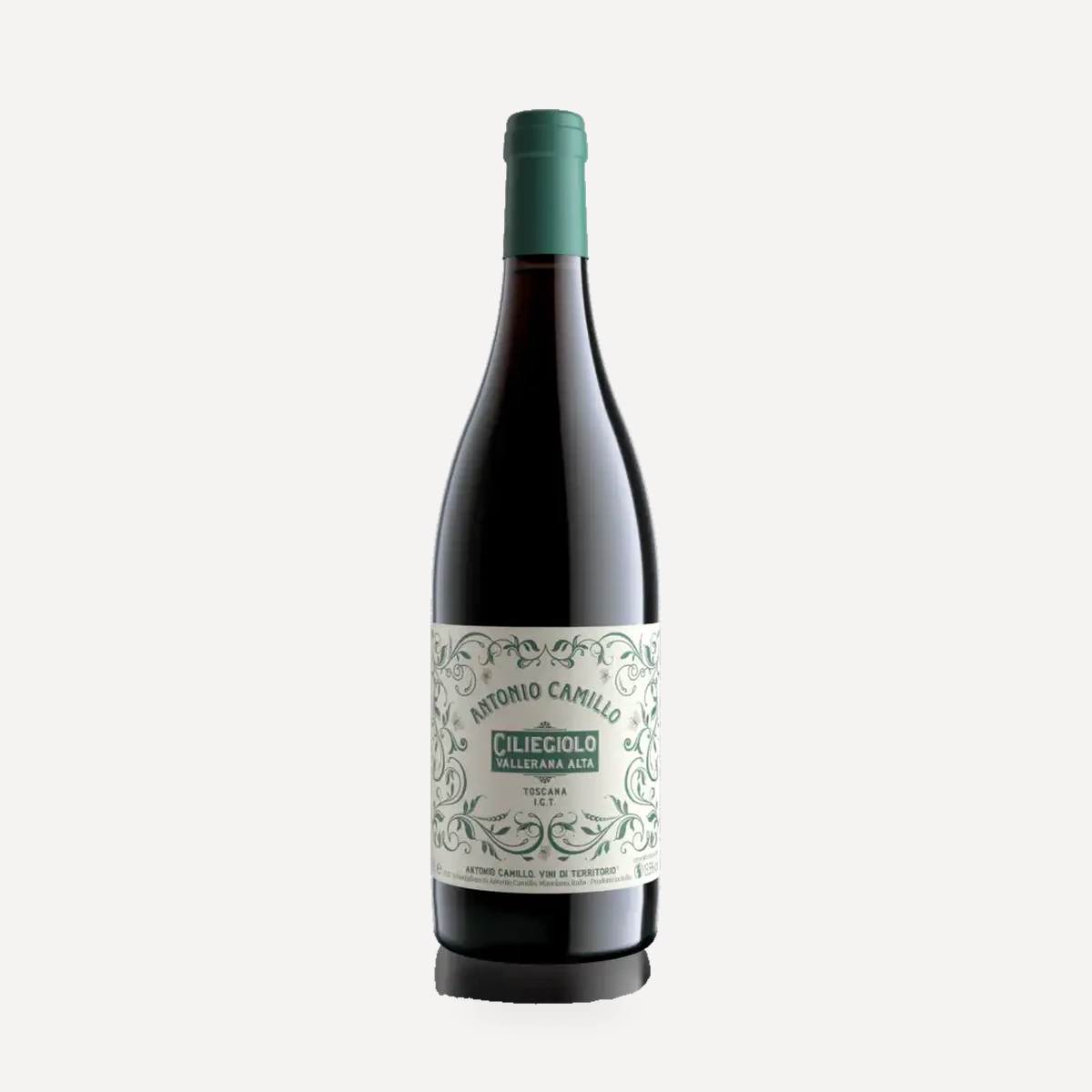
Several vineyards now associated with the project preserve plant material predating the winery itself. Half of the approximately one-hectare Vallerana Alta vineyard was planted in 1954 and the other half in 1965. The old Procanico vineyard at San Pietro, between Pitigliano and Sovana, dates from the early 1960s. Two Ciliegiolo parcels were planted in 1968. Other parcels were established later, including a Ciliegiolo planting in 2005 and a three-hectare Sangiovese parcel in Manciano in the early 2000s.
1991 — Antonio Camillo’s beginnings
Antonio Camillo began working in vineyards in 1991. His career progressed from agricultural labourer to cellar manager and then production manager. Years spent walking vineyards throughout Maremma and vinifying many different grapes shaped his understanding of the area’s agricultural vocation. This experience led him to seek vineyards in Maremma’s inland hills, selecting them for exposure, soil and vine age.
2006 — first own-label wine
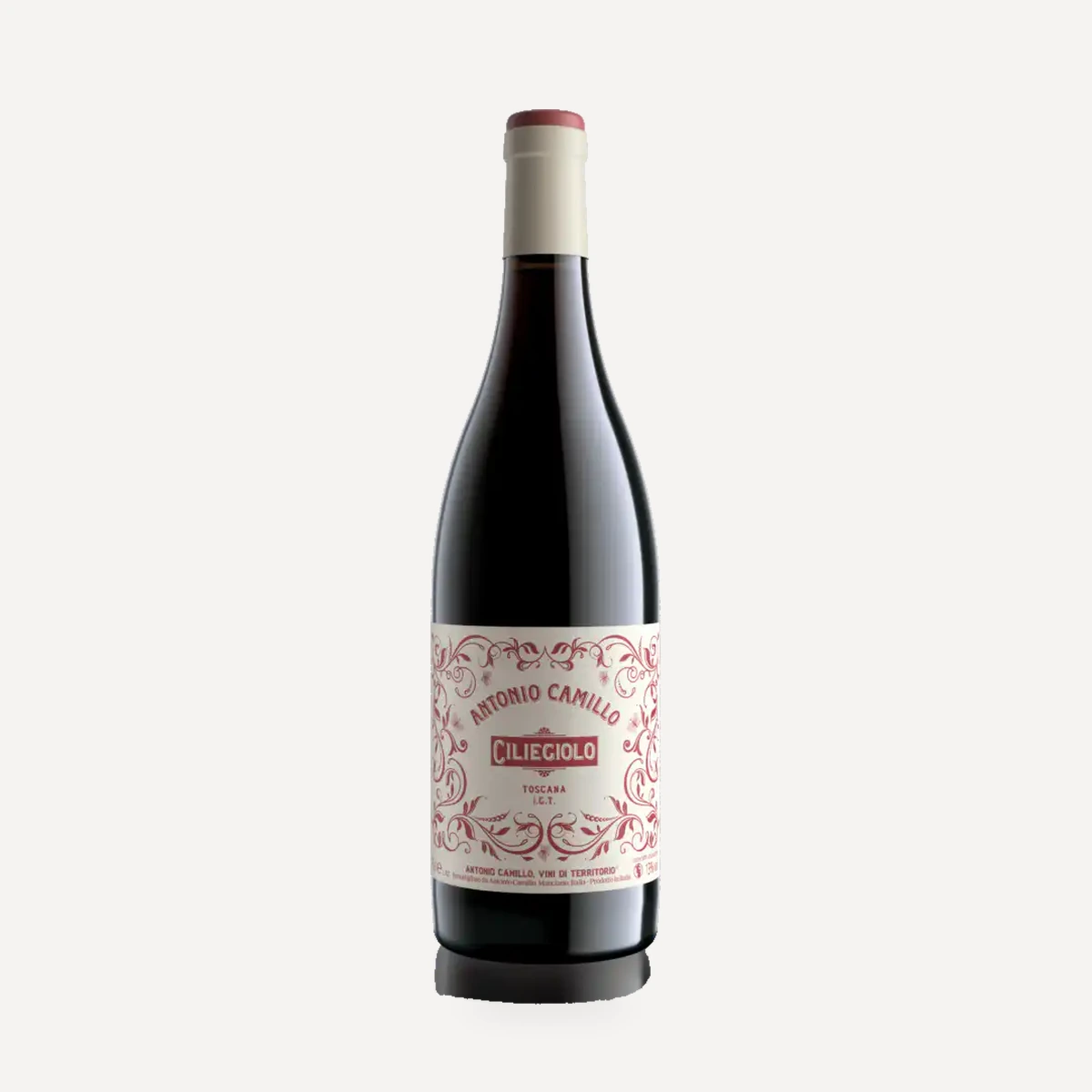
Camillo began making wine under his own name in 2006. The first production comprised a small number of Ciliegiolo bottles made in the cellar where he was then employed. Ciliegiolo became the project’s defining wine.
2008 — partnership and first cru vintage
Alessia began working with Antonio in 2008, becoming both his partner and closest collaborator. The same year brought the first vintage of Vigna Vallerana Alta, the single-vineyard Ciliegiolo later designated as the estate cru.
2011 — team building and recovery of old varieties
Nicu joined in 2011 and would later assume operational responsibility when circumstances diverted Antonio and Alessia’s attention. That summer Antonio Camillo and Ampelis ampelographer Enrico Bachechi began selecting rare white varieties from approximately 40-year-old vineyards belonging to Italo Ferri in Pitigliano. The vines were labelled and mapped row by row so the grapes could be harvested separately and buds collected for grafting during winter.
The work identified Procanico, Nocchianello, Duropersico and Verdello at Meletello and Greco at Poggio Cavalluccio. A microvinification produced a blend of 60% Procanico, 30% Nocchianello and 10% Duropersico. It initiated a long-term plan to return these historic grapes to production.
2015 — establishment of the Montemerano cellar
In 2015 Antonio, Alessia and Nicu moved to Montemerano and founded their own cellar. The initial equipment amounted to several used concrete tanks, while each of the three had a pair of pruning shears. This marked the transition from making a few own-label bottles at another workplace to operating an independent winery.
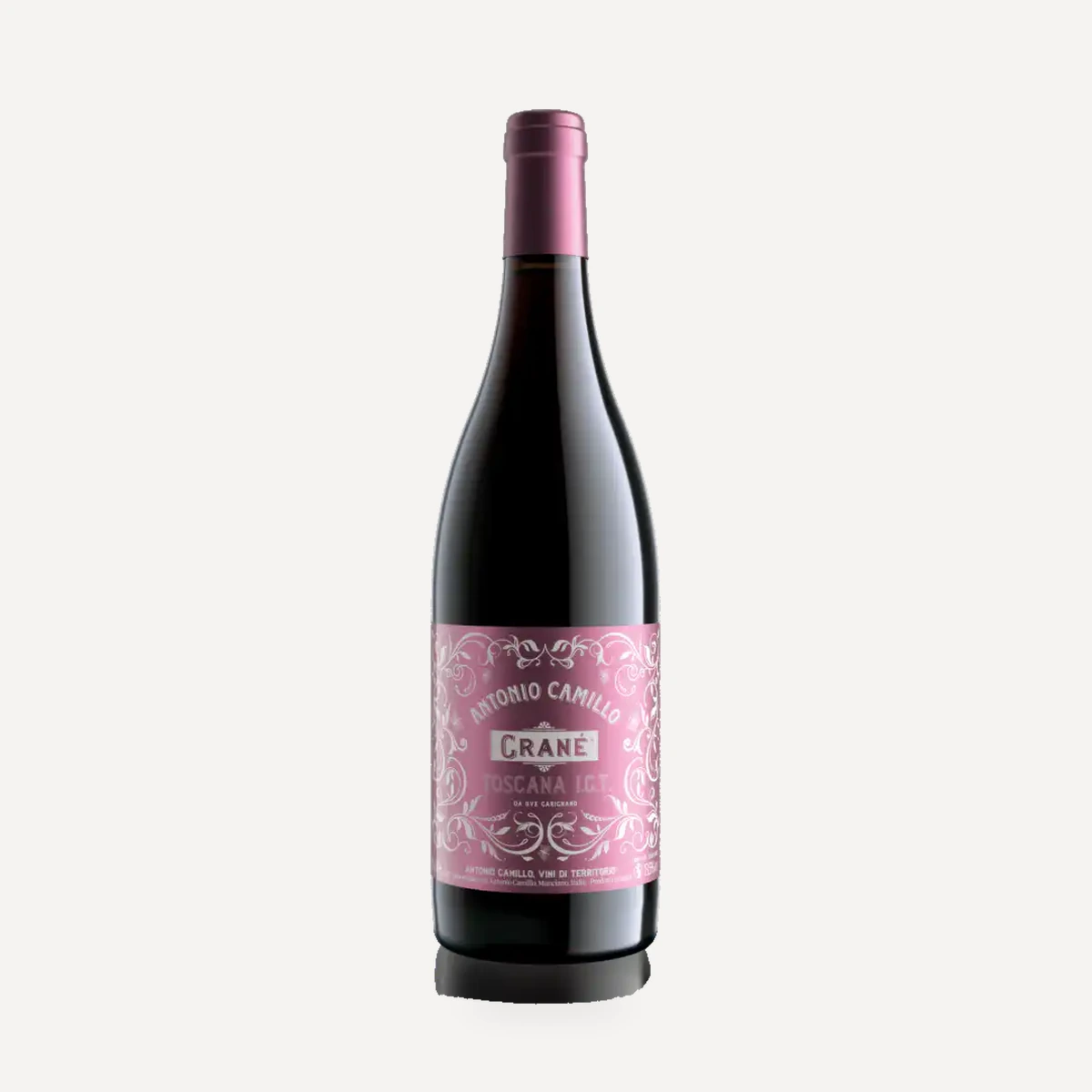
The Mediterranean-variety programme also grew out of four years of agronomic observation and microvinification. Its purpose was to recover Grenache and Carignano, locally known respectively as Tinto di Spagna and Granè.
2016 — expansion of the working team
Pietro joined in 2016 and became one of the longest-serving collaborators. The team subsequently expanded to ten people—five women and five men—with responsibilities spanning vineyard work, tractor operations, administration, cellar work and company management.
2019 — new plantings and grafting
In 2019 the winery planted three hectares and top-grafted one hectare with Grenache and Carignano. For each varietal bottling, 1,500 vines were top-grafted in vineyards that were then 14 years old. The Carignano grafting replaced Trebbiano: 750 vines received material recovered from old local vines and 750 received cuttings from an old vineyard at Neoneli in Sardinia. The Grenache grafting replaced Chardonnay, again dividing 1,500 vines equally between local old-vine material and cuttings from an old vineyard at Mamoiada in Sardinia.
Two rows of the recovered historic white varieties were also planted at San Pietro in 2019, continuing the work initiated eight years earlier.
2024 — Uve Storiche
The first 1,000 bottles of Uve Storiche were produced in 2024. In the same year, the recovery programme was extended with the planting of 3,000 vines belonging to the historic varieties.
The estate today
Antonio Camillo works with a ten-person team and cultivates 18 hectares across seven vineyards distributed between Pitigliano, Manciano and Capalbio. The vineyards and wines are organised around three themes: white wines, traditional red wines and Mediterranean wines.
Terroir
Geographic setting
The seven vineyards are distributed through inland and hilly parts of Maremma Toscana, between Pitigliano, Manciano and Capalbio. The winery itself is at Pianetti di Montemerano in the commune of Manciano.
Pitigliano and San Pietro
The old Procanico vineyard at San Pietro, between Pitigliano and Sovana, stands at approximately 250 m above sea level. Its soils are tuffaceous and volcanic in origin. The same soil type occurs in the younger Pitigliano Vermentino vineyards and is associated with the more mineral and vertical component of the resulting wine. Meletello and Poggio Cavalluccio, also at Pitigliano, preserve historic white varieties documented during the 2011 ampelographic project.
Manciano
The Sangiovese parcel lies in the heart of the commune at about 250 m. It covers three hectares and has compact clay with abundant stones. The ground is arid and naturally restricts the crop. Vermentino also grows at Manciano on red clay rich in stones. Other young plantings in Manciano contribute Ciliegiolo, Grenache and Carignano.
Manciano–Capalbio border
Three Ciliegiolo parcels lie near the boundary between Manciano and Capalbio at approximately 200–300 m. Their medium-textured clay soils are relatively loose and fertile. The broader area is characterised by red clay.
Vallerana Alta
Vallerana Alta lies in the commune of Capalbio at 350 m and is both the highest and oldest vineyard in the project. Its red clay is covered by red gravel or pebbles. This stony surface reduces fertility and improves drainage. The vines are considered to have reached a stable balance with their surroundings.
Mediterranean plantings
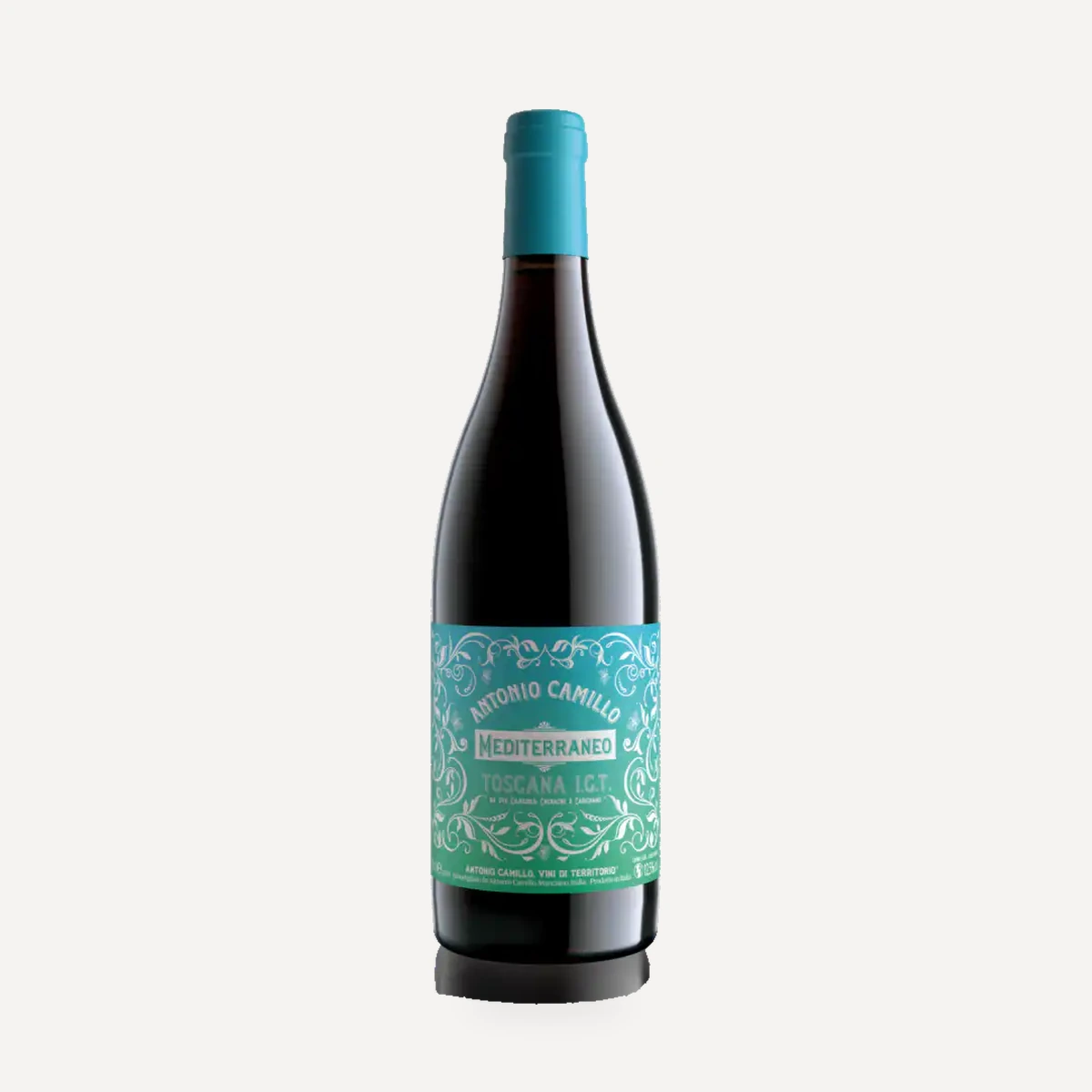
The Grenache and Carignano parcels have compact, arid clay with a substantial stony component. The project treats these varieties as part of Maremma’s long Mediterranean history, alongside the locally rooted Ciliegiolo.
Vinificazione
The 18 hectares are farmed under certified organic agriculture. Cultivation is also described as natural and excludes synthetic products.
Management is adapted to the soil and water conditions of each vineyard. Cooler sites retain permanent or seasonal grass cover. In drier areas, natural manure is applied and different plant species are sown according to the needs of the soil. Every operation from dormant pruning through harvest is carried out manually.
The project gives particular attention to old vines and massal recovery. Historic local material has been mapped, harvested separately and propagated through winter bud collection, new planting and top-grafting. The 2019 Grenache and Carignano programme combined local cuttings with material from old Sardinian vineyards. The historic-white programme progressed from selection and microvinification in 2011 to two rows planted in 2019 and another 3,000 vines in 2024.
Crop selection is explicitly practised in the Ciliegiolo parcels. Individual vines can bear 3–5 kg, and only perfectly ripe grapes are selected for bottled wine; the remaining fruit is directed to bag-in-box production. For the young Mediterranean vineyards, picking takes place a few days before full ripeness to retain the desired freshness and aromatic profile.
The Montemerano cellar was founded around a small collection of second-hand concrete vats, and concrete remains central to fermentation and maturation.
Fermentations start spontaneously with indigenous yeasts; selected commercial yeasts are not used. Sulphur dioxide is the only additive, employed at low dosage. Finished wines are bottled with total sulphur levels of 30–50 mg/L.
The cellar uses several degrees of skin contact. Part of the white production is fermented as white wine, while another component receives skin contact to build volume. The long-macerated historic white style spends approximately 20–25 days on skins, is drawn off into concrete, rests on fine lees and can be bottled one year after harvest without filtration. Red-wine macerations range from short periods for young, early-picked Mediterranean fruit to about 30 days for the single-vineyard old-vine Ciliegiolo. Open vats are used for the varietal Grenache and Carignano fermentations.
Concrete is the principal ageing vessel for the core wines. The cellar also employs a 20 hl oak cask for the old-vine Ciliegiolo and 600 L tonneaux for Grenache. Longer-lived bottlings combine vessel ageing with additional bottle maturation. Fine-lees ageing is used for Procanico, and at least one wine is bottled without filtration.
Filosofia
Antonio Camillo frames the winery as a working enterprise whose principal capital is the physical effort, intelligence and skill of its people. His personal approach places instinct and emotion alongside accumulated knowledge.
The project interprets the viticultural identity of inland Maremma and its promontories, where farming families historically made wine for their own consumption. Its aim is to connect that inherited culture with contemporary work, treating wine as testimony and as a narrative joining past and present.
Terroir is understood in human as well as physical terms: plants, soils and the surrounding environment are inseparable from the women and men who cultivate them. This relationship between agriculture and farmers has been described as Antonio Camillo’s “human terroir.”
The nine wines follow one agricultural vision but are organised into three families. The whites depart from the model of polished aperitif wines in favour of satisfying, thirst-quenching wines suited to food. The traditional reds are based on Sangiovese and Ciliegiolo and seek a simple interpretation close to the household wines once made by Maremma farmers. The Mediterranean wines bring Ciliegiolo together with Grenache and Carignano, presenting local and migrant grapes as compatible parts of a shared Mediterranean culture.
Old vineyards and endangered varieties are treated as living agricultural heritage. The recovery of Procanico, Nocchianello, Duropersico, Verdello, Greco, local Grenache and Carignano is therefore both a viticultural programme and a continuation of regional memory.
Vini
Ciliegiolo
Granè
Mediterraneo
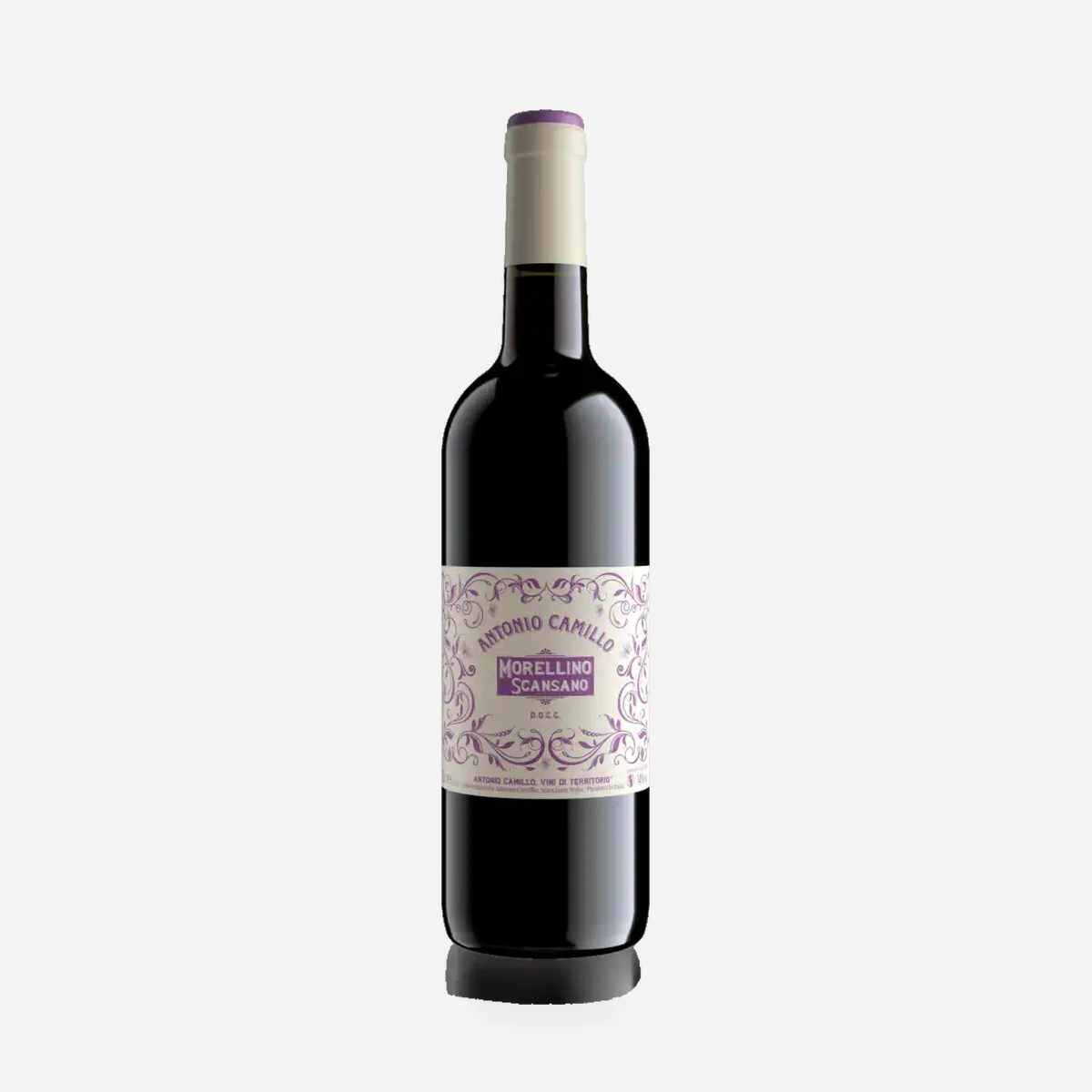
Morellino di Scansano
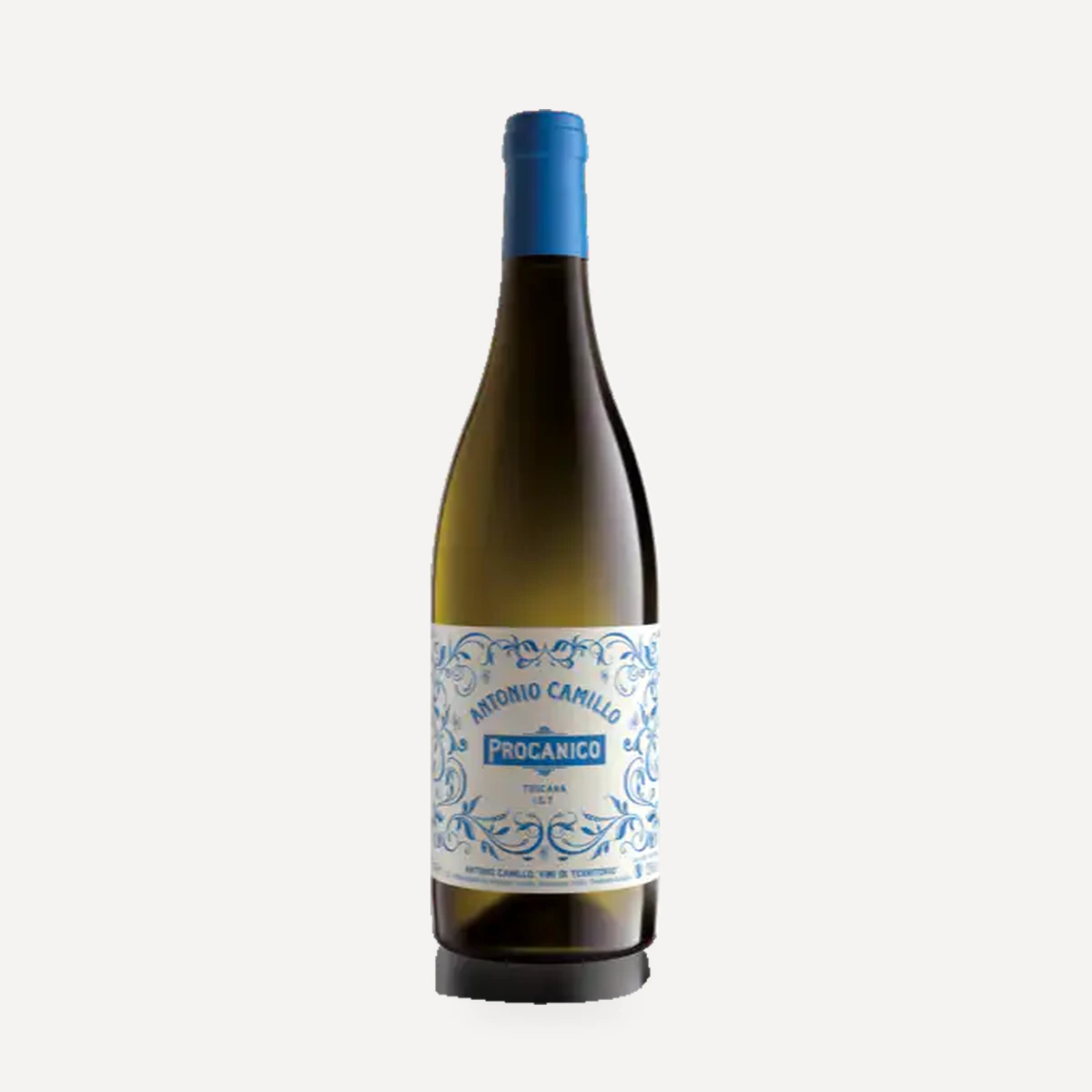
Procanico
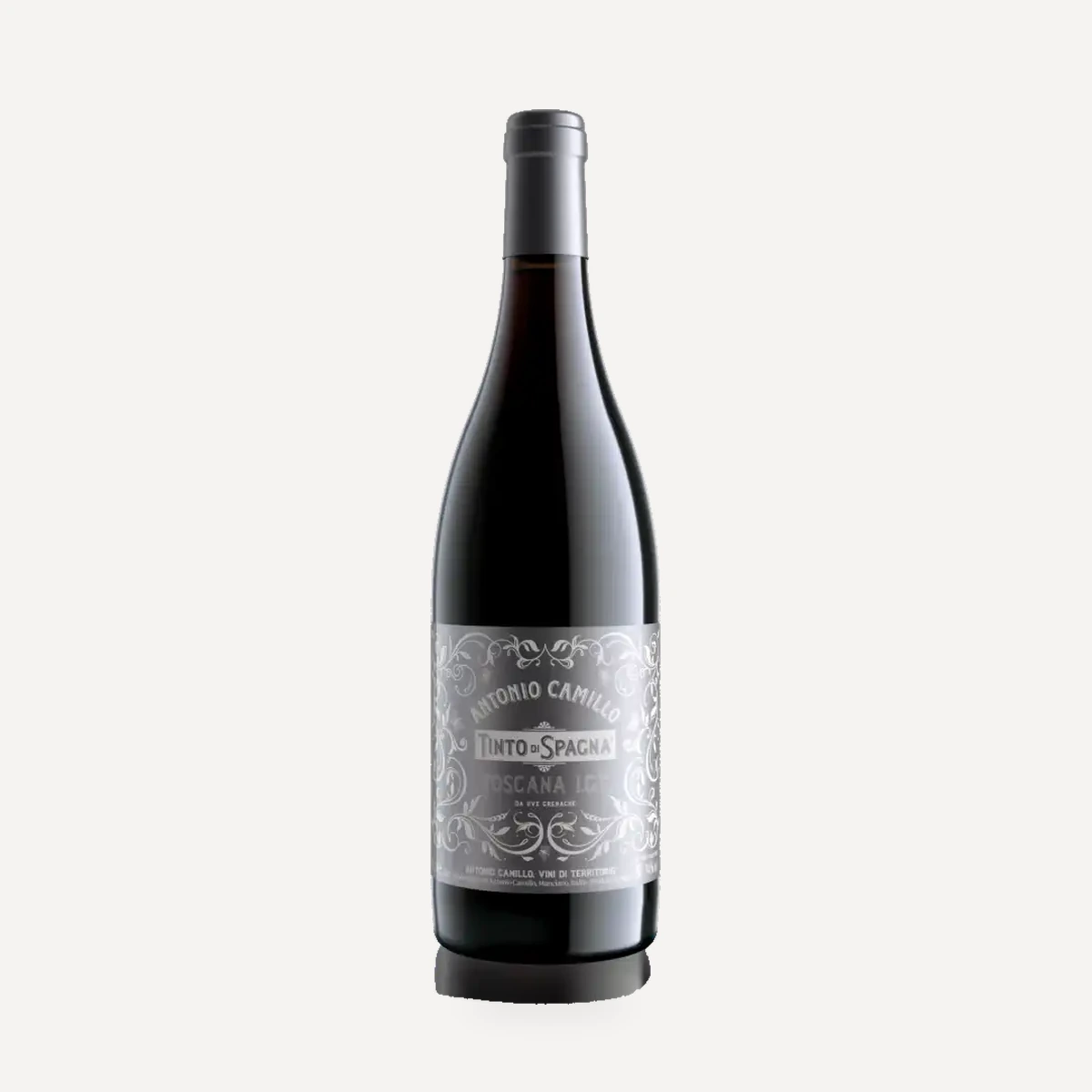
Tinto di Spagna
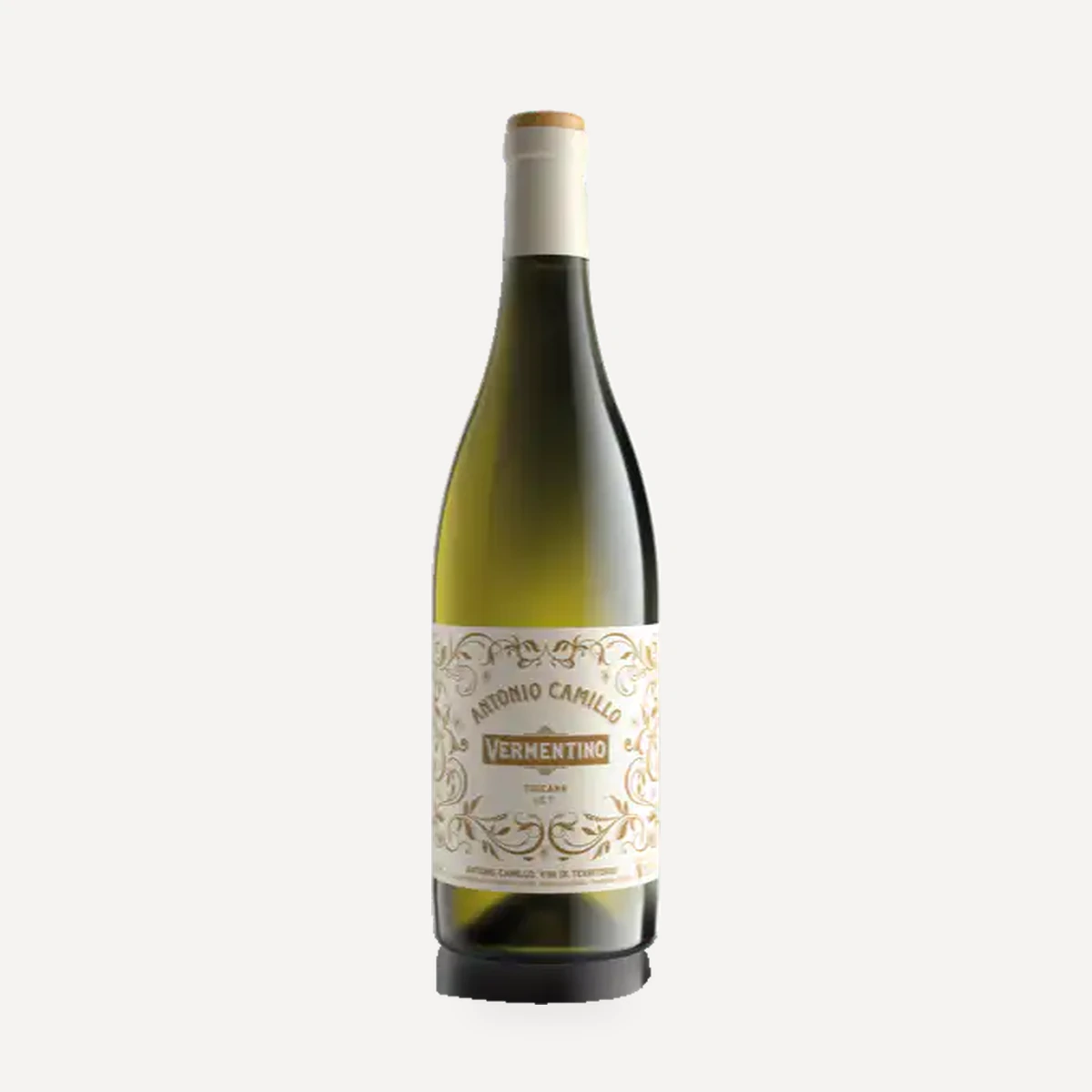
Vermentino