Storia
The Ferrara family in Tufo
The Ferrara family has lived in the lands of Tufo for five centuries. Its connection with farming and wine predates the establishment of the modern business: viticultural production was already undertaken by the family in the small hamlet of San Paolo in the early 1900s.
Benito and the creation of the winery
The winery as a formal enterprise emerged in the second half of the 20th century through the initiative of Benito Ferrara, Gabriella Ferrara's father. Recognizing the importance of having a family cellar in which to produce the wine, Benito committed himself to creating and developing the new business together with his wife, Michelina. The estate grew from an initial 2.5 hectares into a substantially larger family property.
Gabriella Ferrara and the present generation
Gabriella subsequently assumed responsibility for the winery. Together with her husband Sergio, she continued its development and expanded its presence in Italian and international markets. Their children Antonio and Lucia now participate in the management, maintaining the estate as a multigenerational family winery with exports around the world.
The present vineyard base is divided principally between Tufo, including Frazione San Paolo, for Greco, and Montemiletto for Aglianico. The portfolio has also expanded to include Fiano sourced from vineyards in Lapio.
Terroir
The estate's principal viticultural territory lies in Irpinia, with vineyards in Tufo and Montemiletto and an additional source vineyard in Lapio. The broader estate description places its sites on hillsides between 450 and 600 metres above sea level, with predominantly southerly exposure and medium-textured soils.
Conditions vary among the identified vineyard sources. Vigna Cicogna in Tufo stands at 400–450 metres, faces east and west, and has mixed clay, sand and limestone soils marked by underlying sulphurous veins. Other Greco vineyards around Tufo and Petruro reach approximately 400–500 metres; their soils range from clay-limestone to mineral-rich clay and limestone.
The Lapio Fiano source stands at 500 metres with east–west exposure and mixed clay and clay-limestone soils. Aglianico vineyards at Montemiletto occupy south-west-facing sites at approximately 500–700 metres on clay-limestone soils.
Vinificazione
The vineyards are predominantly trellised and Guyot-pruned. Reported planting densities range from 3,000 vines per hectare in Lapio to 5,000–6,000 vines per hectare in Tufo, Petruro and Montemiletto. Vine ages range from 3 years in the broader Greco holdings to as much as 60 years in Vigna Cicogna.
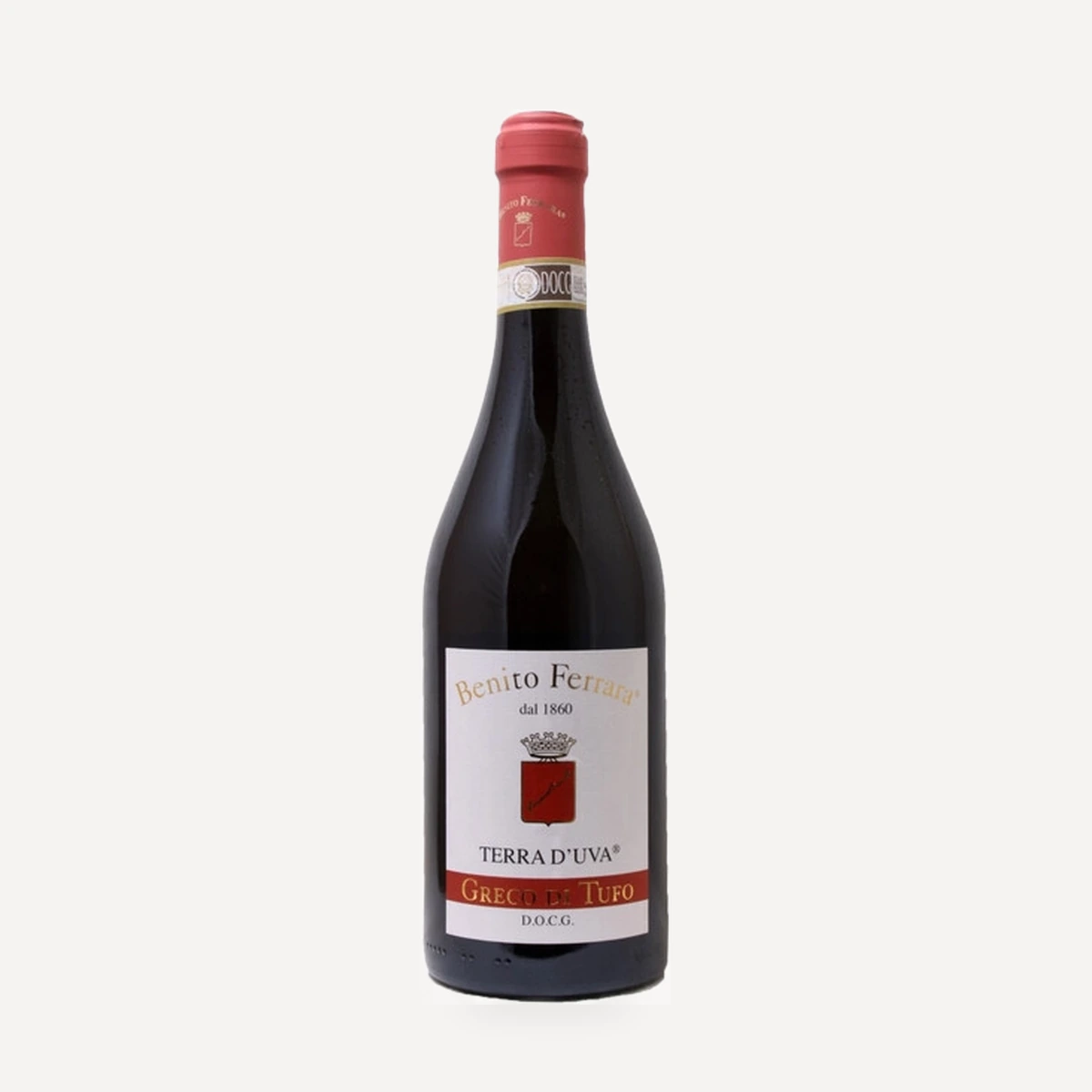
Yields differ by site and intended expression: 70–80 quintals per hectare for the Aglianico vineyards, 80 quintals per hectare for the multi-site Greco used in Terra D’Uva, 90 quintals per hectare for Vigna Cicogna and the Lapio Fiano source, and 100 quintals per hectare for the Greco and Coda di Volpe source used for Due Chicchi.
Manual harvesting in small 14 kg crates is specified for Vigna Cicogna, the Lapio Fiano source and the principal Vigna Quattro Confini expressions. The harvest calendar extends from late September for Fiano through early and mid-October for most Greco and Aglianico fruit, reaching late October for Aglianico destined for Taurasi, when full phenolic maturity has been achieved.
The cellar combines modern equipment with distinct protocols for white and red grapes.
For the principal white wines, the grapes undergo gentle pressing. The free-run must is protected from oxygen and clarified through natural sedimentation. Maturation takes place in stainless steel on fine lees, which are regularly resuspended: approximately four to five months for Sequenzha and Due Chicchi, four to seven months for Terra D’Uva, and five to seven months for Vigna Cicogna. These wines receive a further one or two months of bottle ageing.
Aglianico production uses destemming and crushing followed by maceration, daily pump-overs until drawing off, and fermentation in stainless steel. The Campania Aglianico remains entirely in stainless steel for approximately five to seven months before bottling. Irpinia Aglianico Vigna Quattro Confini matures in steel and receives two to three months in bottle. The Taurasi expression matures in French barriques until ready and then ages for six months in bottle.
The rosato is made by immediately soft-pressing harvested Aglianico. Across the current range, potassium metabisulphite is identified as a preservative and antioxidant, carboxymethylcellulose as a stabilizing agent, and protective-atmosphere bottling is used for several wines.
Filosofia
Benito Ferrara presents itself as a family winery shaped by continuity between generations, close attention to the land and the preservation of a recognizable house character. Its philosophy links inherited experience with an equipped modern cellar rather than treating tradition and technology as opposing approaches.
The family places particular emphasis on its long relationship with Tufo, careful vineyard management and the expression of individual sites such as Vigna Cicogna and Vigna Quattro Confini. Current management also reflects a commitment to continuity: Gabriella and Sergio work with Antonio and Lucia, extending a family project begun by Benito and Michelina.
Vini
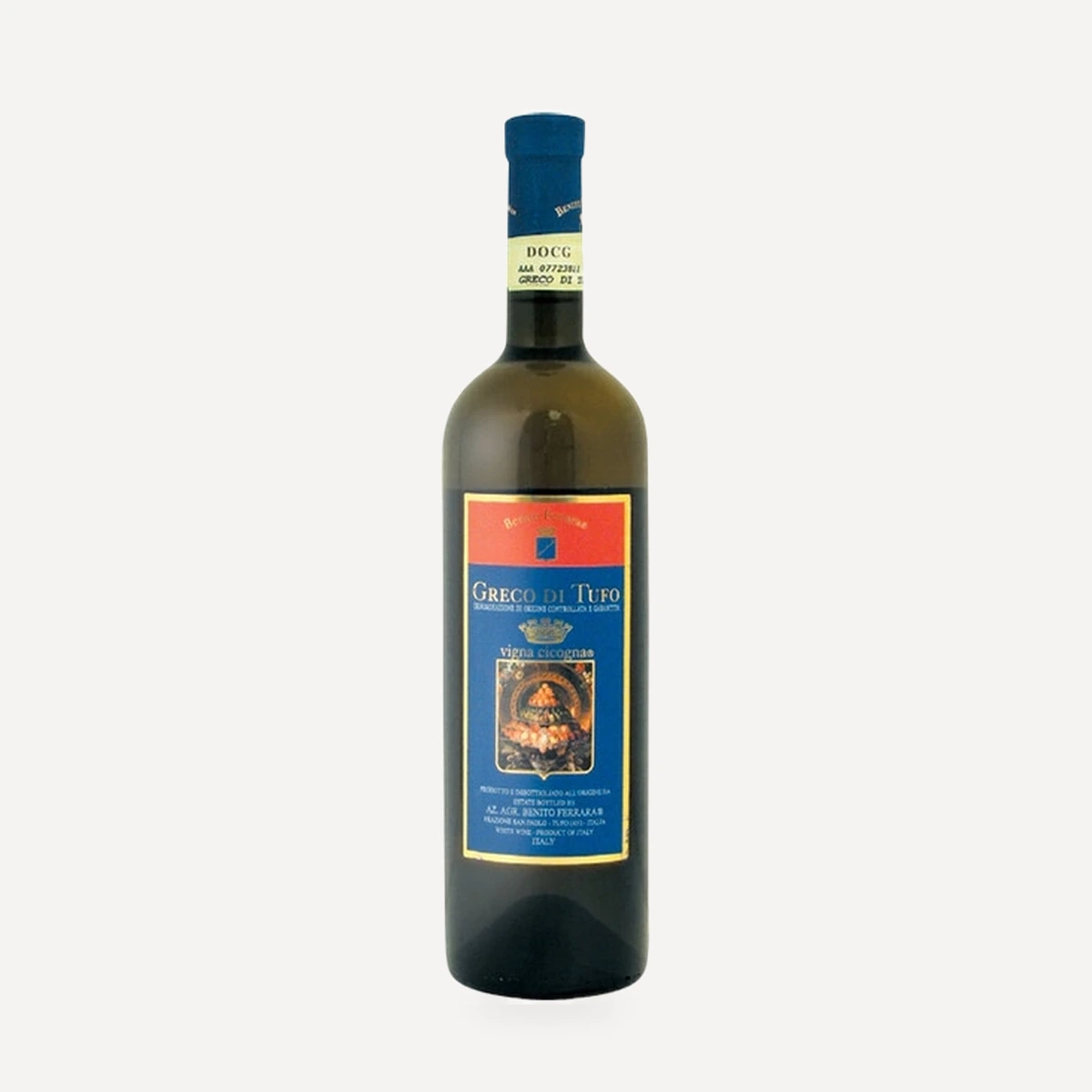
Benito Ferrara Greco di Tufo Vigna Cicogna DOCG
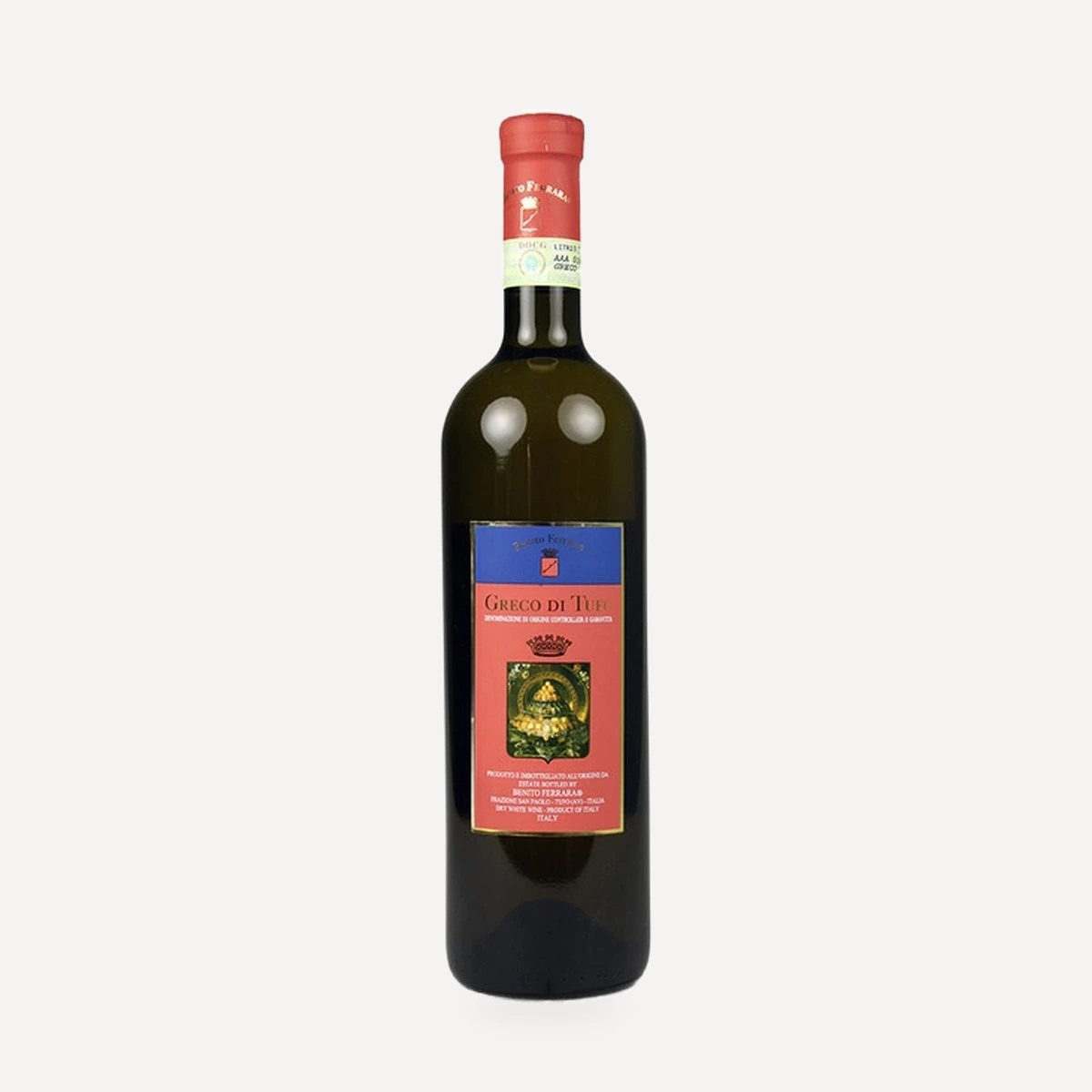
Greco di Tufo DOCG
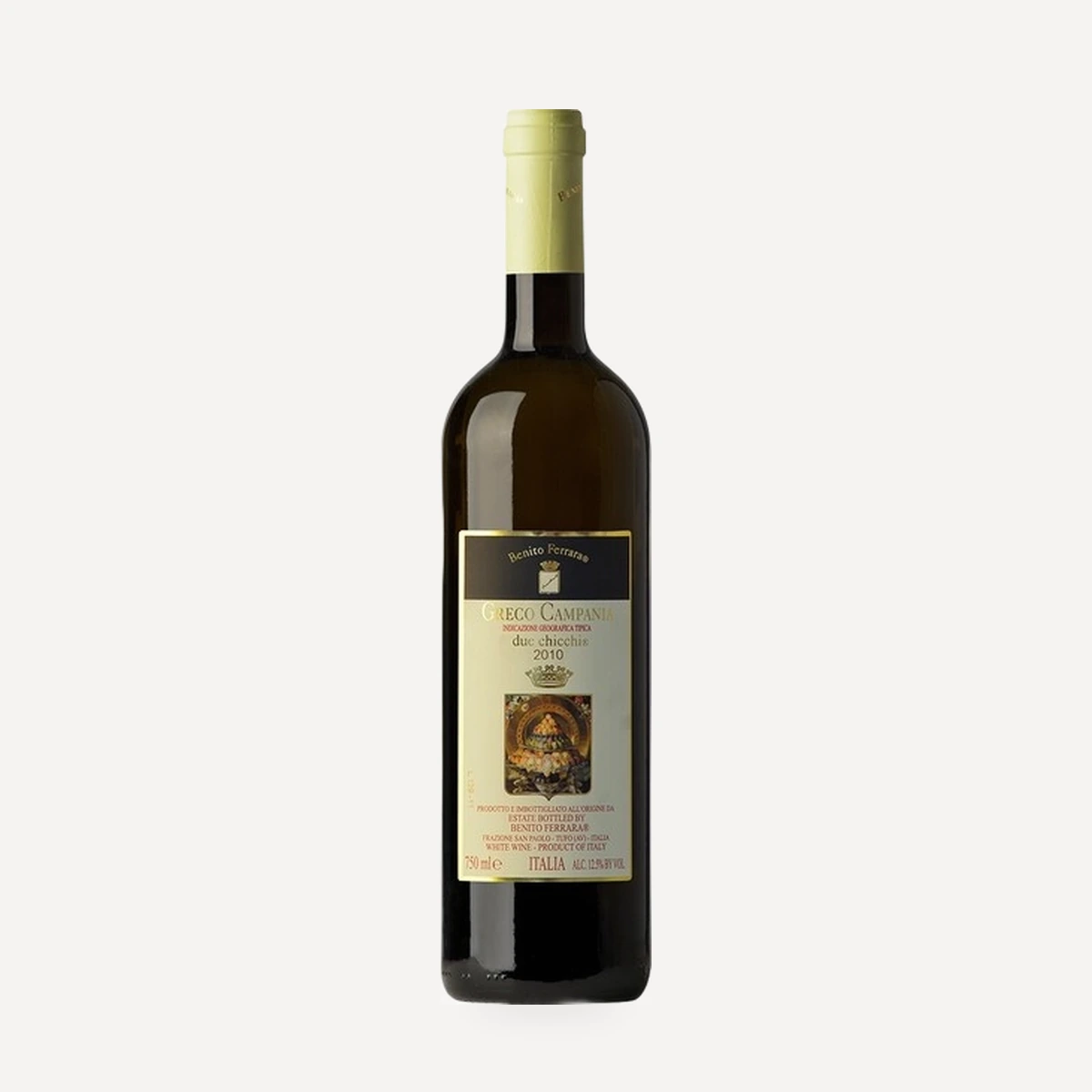
Due Chicchi Greco Campania IGT
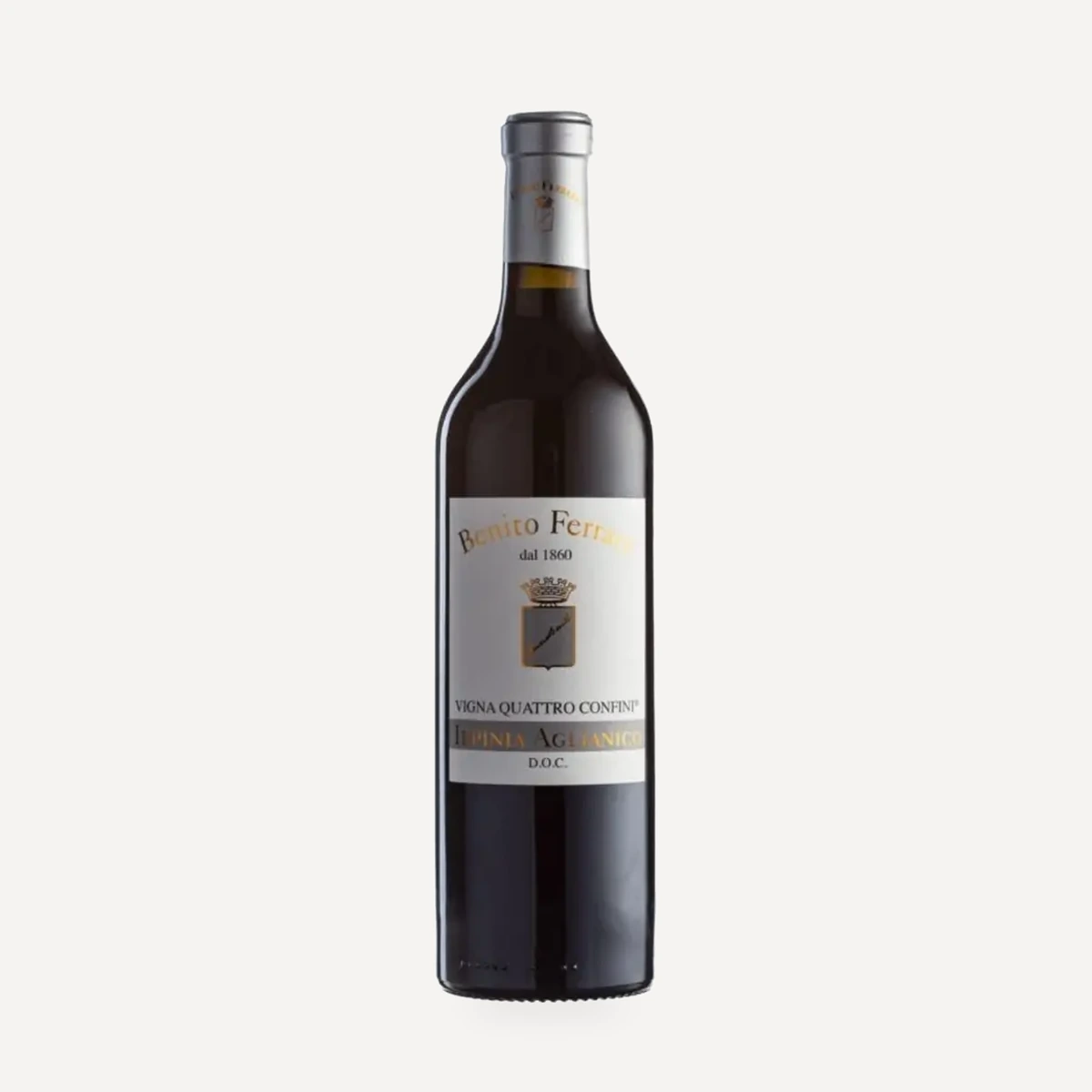
Vigna Quattro Confini Irpinia Aglianico D.O.C.