Storia
Historic vineyards and cellars
Cantina Giardino works with vineyards in Montemarano and Paternopoli that were planted during the 1930s. Its cellar occupies underground sandstone spaces in Ariano Irpino. Most of the caves were excavated during the eighteenth century, while one section is dated to the sixteenth century.
Foundation in 2003
Cantina Giardino began in 2003, created by a group of passionate wine drinkers. Daniela De Gruttola and Antonio di Gruttola are identified as its founders and natural winemakers. From the beginning, the project centred on old Irpinian vineyards and wines made without added sulphites, additives or processing aids.
New wines and preserved varieties
In 2005, Cantina Giardino vinified Coda di Volpe Rossa for the first time, producing 400 bottles. The variety had traditionally survived in small quantities within mixed vineyards. Over subsequent years it was grafted into sites considered less suitable for Aglianico, allowing production to grow.
The Paski project also began in 2005 for La Catagna, a trattoria in Bacoli closely connected with the winery’s early network. It was initially supplied in demijohns to keep costs low at a time when skin-macerated, unsulphured wines were poorly understood in the Italian market. The relationship with La Catagna continued, and the venue became a meeting place for several people important to the winery’s development.
Local wood and spontaneous-fermentation collaborations
Cantina Giardino introduced cherry-wood maturation in 2016. The winery identifies Antonio Cione of Caposele as its cooper and describes its cellar wood as locally sourced.
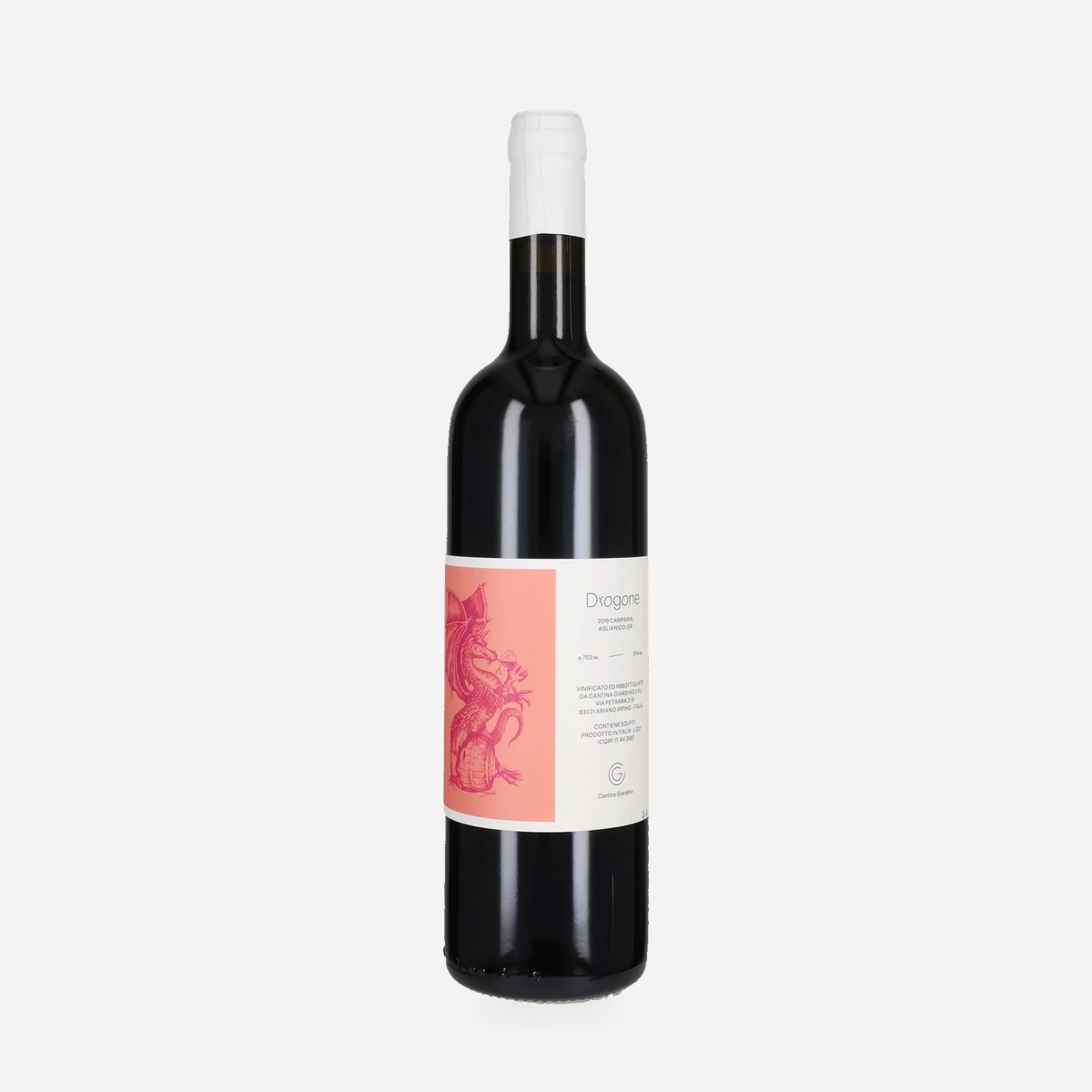
A collaboration with Jean Van Roy and Brasserie Cantillon also began in 2016 with Sophia Lambic, initially developed around fine wine lees. In 2017, Daniela and Antonio proposed working instead with already-fermented Aglianico pomace. This led to Drogone Lambic, combining mature lambic with fermented Aglianico skins prepared in chestnut barrels.
Film and cultural projects
In 2020 Cantina Giardino and Capetoste produced KANPAI! To good food, to man, to nature. Directed by Lorenzo Fodarella, the documentary follows Daniela, Antonio and their friend and importer Hisato Ota through nine Japanese cities. The journey connects natural wine with sustainable agriculture, spontaneous fermentation, ethical supply chains, food traditions and ancestral knowledge.
Daniela and Antonio later joined Massimo Lanini in creating ZeroZero, an event and movement for wines made from grapes alone, without added sulphites, additives or processing aids. Its principles connect farming without systemic treatments to unassisted cellar work, transparency and responsibility for agricultural risk.
Terroir
Cantina Giardino is based in Ariano Irpino and works old vineyards in the Irpinian territories of Montemarano and Paternopoli. The estate describes its geological context as volcanic and calcareous. The surviving mixed plantings preserve considerable vine age and varietal diversity, including small quantities of Coda di Volpe Rossa alongside better-known Irpinian grapes.
Vinificazione
The old vineyards are farmed organically. Cantina Giardino’s agricultural philosophy excludes systemic treatments and treats work in the vineyard as inseparable from its low-intervention cellar practice. The vineyards preserve old vines, mixed plantings and traditional Avellinese raggiera training. Documented harvest work in the old Montemarano parcels is carried out by hand. Coda di Volpe Rossa has also been propagated by grafting it into sites considered less suitable for Aglianico, expanding production of a variety that historically survived only in small quantities.
Cantina Giardino works in historic underground sandstone caves in Ariano Irpino. The principal spaces date from the eighteenth century, with one section attributed to the sixteenth century.
The cellar’s declared baseline is wine made solely from grapes: no sulphites, additives or processing aids are added, and the wines are not filtered. Fermentations are spontaneous. Production is organised in small batches, while individual cuvées employ extended skin contact and a range of vessels that includes concrete, terracotta amphorae, stainless steel, glass Wine Globes and wooden barrels.
Local wood is an important part of the cellar programme. Chestnut and cherry barrels are used, with the wood supplied and worked by Antonio Cione of Caposele. Cherry-wood maturation was introduced in 2016. Some wines are tasted directly from barrels or glass Wine Globes during cellar visits.
The same fermentation culture informs the collaboration with Brasserie Cantillon. It began with fine wine lees in 2016 and shifted in 2017 toward fermented Aglianico pomace matured in chestnut barrels before being combined with lambic.
Filosofia
Cantina Giardino defines wine as fermented grapes without technological correction: no added sulphites, additives, processing aids or filtration. Its philosophy links this cellar restraint to organic vineyard work, the exclusion of systemic treatments and acceptance of the risks inherent in farming and spontaneous fermentation.
Old vineyards, mixed plantings and local varieties are treated as living records of Irpinia. The use of traditional raggiera training and locally sourced chestnut and cherry wood extends this regional focus into both vineyard and cellar.
Through ZeroZero, Daniela De Gruttola, Antonio di Gruttola and Massimo Lanini frame purity not as a stylistic trend but as an agricultural, ethical and cultural position. The initiative emphasizes coherence, transparency, listening and exchange among growers who accept responsibility for their vineyards and work without cellar safety nets.
Vini
Adam
Drogone
Nude
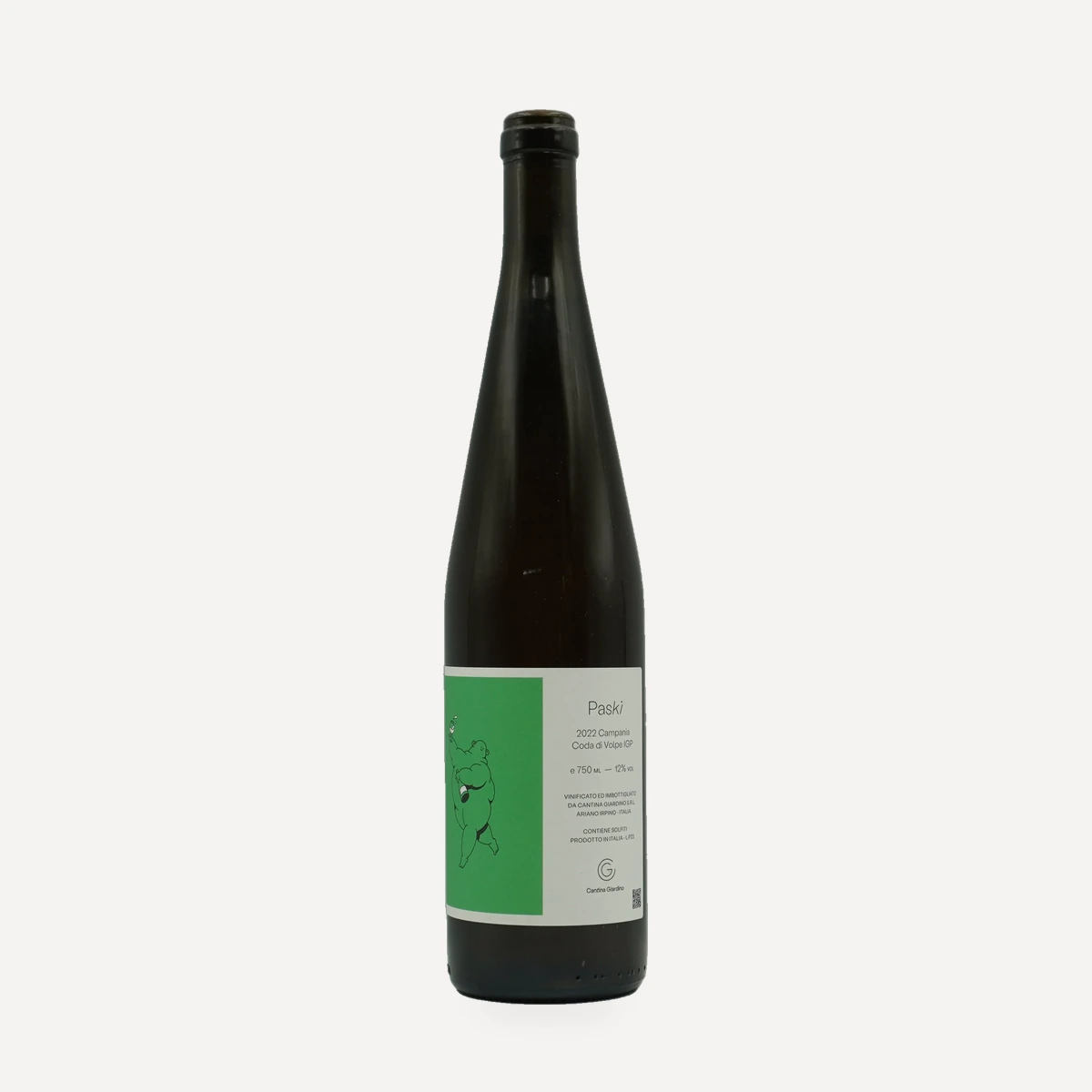
Paski
Primoaprile