Questo vino
Vineyard and terroir
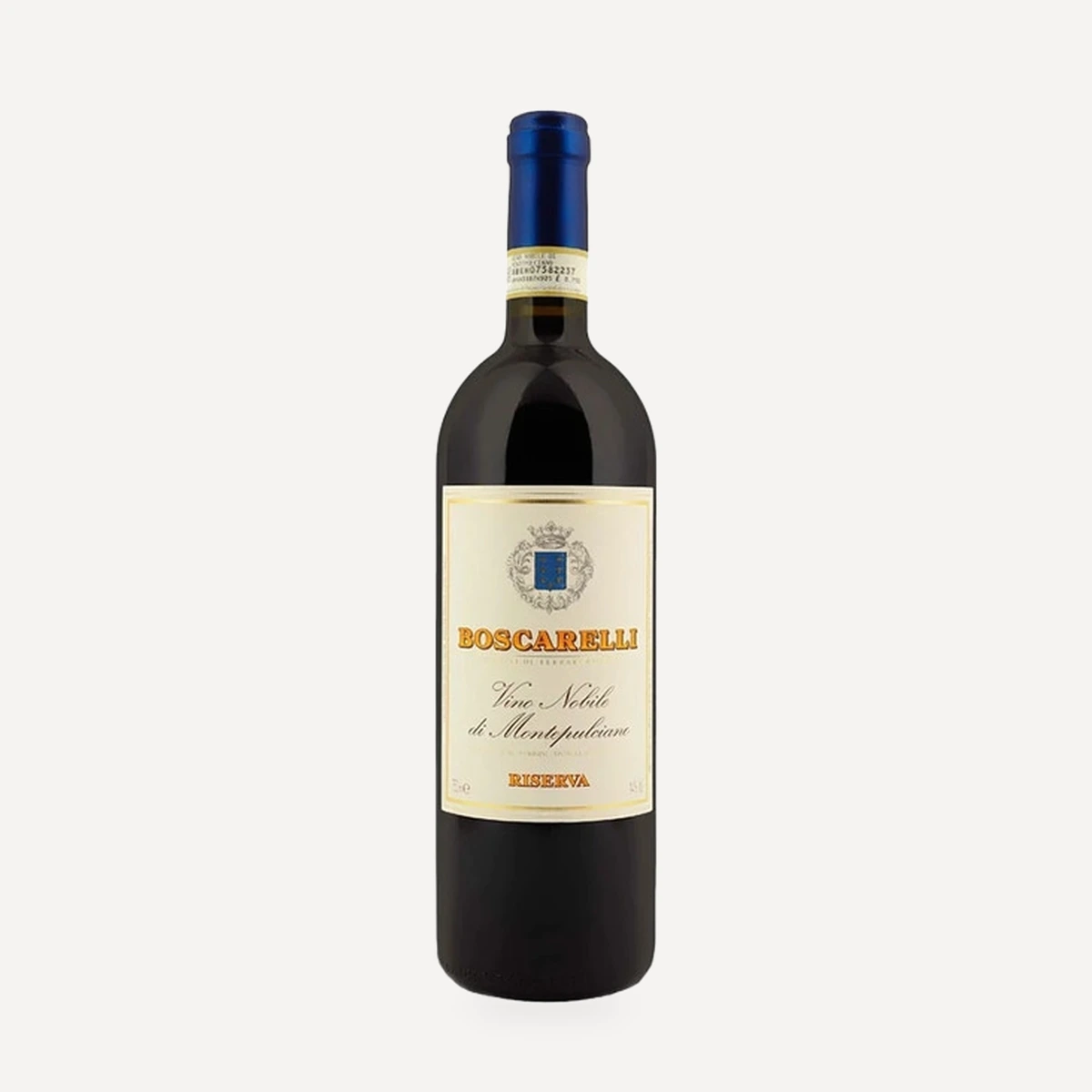
The Riserva draws on selected fruit from the historic core of the estate’s vineyards at Cervognano. The vines are at least 20 years old. Calcareous, alluvial and sandy soils contain significant proportions of silt, clay and minerals, together with a stony skeleton that varies across the sites. Average planting density is 6,500 vines per hectare.
Grapes
Mainly Sangiovese Prugnolo Gentile, complemented by Colorino. The use of mature vines is intended to provide greater complexity and long-term ageing capacity.
Vinification
The grapes are harvested by hand and transported in crates. Following destemming and gentle crushing, they ferment with indigenous yeasts in oak vats filled to no more than two-thirds of capacity. Fermentation lasts approximately ten days at 28–30 °C, with pumping over and manual punch-downs. When appropriate, maceration continues for another five to eight days.
Ageing
Maturation lasts 28–32 months in Slavonian or French oak vessels ranging from 5 to 25 hl. Malolactic fermentation takes place during this period. The wine then rests in bottle for several months before release.
Serving and pairing
The wine can develop for several decades. Depending on the vintage, its recommended optimum maturity is generally between the fifth and tenth year after harvest.
Label / history
The Riserva returned with the 2010 vintage after an absence of almost twenty years; its previous edition had been released in 1992. During the intervening period, the estate progressively selected and replanted its historic vineyards, studied clonal material and the response of Sangiovese to different pedoclimatic conditions, and explored combinations with international varieties. The complexity and structure of fruit from the first replanted native varieties led to the revival of a Riserva made solely from native grapes, following the approach used in the 1970s and 1980s.
Vintage notes
The 2016 vintage was described as balanced and classic, with structure, depth and vibrancy. It placed No. 31 in Wine Spectator’s Top 100 of 2022.