Storia
Egidio Corradi and the creation of Boscarelli
Poderi Boscarelli traces its foundation to 1962. Egidio Corradi, born into an old noble family from Montepulciano and trained in Economics and Commerce, had spent much of his life between Genoa and Milan working as an international broker. His ambition was to create a Vino Nobile capable of expressing the aromas and flavours of his native territory with elegance.
In 1962 Egidio acquired two small, semi-abandoned farms at Cervognano di Montepulciano. The land had previously been devoted to annual crops. During the 1960s his daughter, Paola Corradi, and her husband, Ippolito De Ferrari, moved into the project and transformed the properties into a specialized wine estate. They planted the first dedicated vineyards at 3,500 vines per hectare and created the first winery by renovating and adapting the old stables.
The first wines and early recognition
The first vintage was released in 1968. The estate’s original Vino Nobile di Montepulciano has remained its oldest and most representative label; from its first edition it accounted for about half of production, while its composition and maturation approach remained substantially consistent. In 1976 a Boscarelli wine was included among Veronelli’s 80 best wines of Italy.
Paola assumes leadership
Ippolito De Ferrari died in a road accident in 1983. Paola then took charge of the estate while their sons, Luca and Nicolò, were still adolescents. Continuing alone was a decisive personal challenge: circumstances required her to draw upon an independence and resolve that she had not previously needed to demonstrate.
Luca and the study of Sangiovese
Luca De Ferrari, born in Genoa in 1966, initially studied Political Science with the intention of becoming a diplomat. In 1988 he chose wine instead, joining Paola and the estate’s oenological team. His first harvest was that year. His work subsequently concentrated on vineyard management and wine style, with elegance, character and personality as the principal objectives.
Vigna del Nocio entered Boscarelli ownership in 1988. From 1991, the family began making specific selections of Sangiovese Prugnolo Gentile within the vineyard, distinguishing material by pedoclimatic conditions and by the Sangiovese clones present. The first Il Nocio vintage was also 1991. The work established a model in which differences of soil, mesoclimate, vine age, position and plant material are observed separately before the final blend is determined.
Boscarelli’s Rosso di Montepulciano, later named Prugnolo, entered production in 1989. Its present label was adopted in 2003.
Replanting the historic vineyards
The traditional Vino Nobile Riserva was last produced in 1992 before a pause of almost two decades. During the intervening years, Boscarelli progressively reselected and replanted its historic vineyards. The work investigated clonal selections, the different expressions of Sangiovese under changing pedoclimatic conditions and the relationship between Sangiovese and international varieties.
The Costa Grande selection had already been used in Boscarelli wines during the 1980s. Its vineyard was replanted in 2000 at 7,000 vines per hectare using massal selections from Vigna del Nocio together with selected clones.
Nicolò and the expansion of the estate
Nicolò De Ferrari was born in Genoa in January 1969. After a classical secondary education, a period studying Agriculture at the University of Perugia and subsequent Architecture studies in Genoa, he redirected his career toward the family estate. His first harvest was in 1996, and in 1997 he moved to Tuscany. He brought his interest in architecture and construction to the renovation and expansion of the winery while also working to modernize vineyard management.
Return of the Riserva and development of the crus
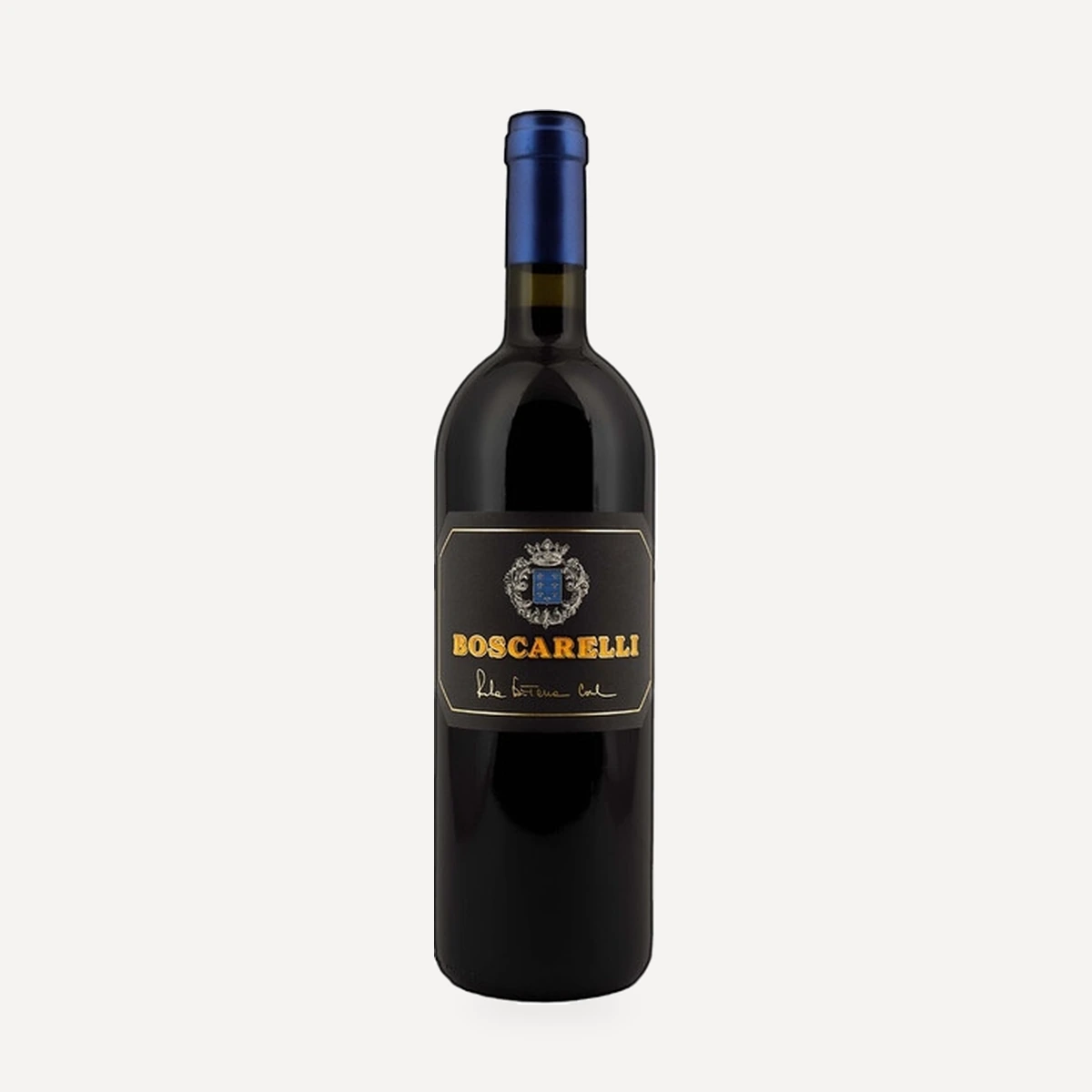
The Vino Nobile Riserva returned with the 2010 vintage. Grapes from the first replanted indigenous varieties had reached a level of complexity and structure that persuaded the family to revive a Riserva composed solely of native grapes, following the approach used during the 1970s and 1980s.
Sotto Casa was introduced with the 2011 vintage as the evolution of the former black-label Vino Nobile Riserva. Unlike the earlier wine, which drew on several parcels, Sotto Casa is a single-vineyard cru. It was conceived to combine the elegance, freshness and character of Sangiovese with the tannic structure and breadth of Cabernet Sauvignon and Merlot.
Beginning with the 2015 vintage, Costa Grande was vinified and bottled separately as a cru. Its earlier role as a vineyard selection was thereby converted into a distinct single-site expression.
The third generation and current direction
Luca and Nicolò represent the third generation at Boscarelli, with Paola remaining a central member of the family. Luca directs much of the work on wine style and vineyards, while Nicolò has led changes in vineyard management and the physical expansion of the cellar. Their stated challenge is to balance innovation with tradition, retaining the Etruscan roots of Cervognano while pursuing the fragrance, aromatic richness, elegance and identity of its vineyards.
Sebastiano completed his first Boscarelli harvest in 2023. The estate’s chronology identifies 2026 with new projects, continuing a family project that has passed through successive generations.
Terroir
Poderi Boscarelli is based at Cervognano, northeast of Montepulciano toward the Valdichiana. The principal vineyards occupy an eastern slope at approximately 300 m above sea level. Thermal ventilation supports a distinct microclimate and moderates conditions around the vines.
The soils are alluvial and generally well drained, with substantial sand and stony skeleton. Across the property, proportions of limestone, silt, clay, sand, minerals and stones vary with position and elevation. Boscarelli treats these variations as important distinctions rather than as a uniform soil profile.
Sangiovese, locally called Prugnolo Gentile, occupies approximately 80% of the vineyard parcels. Colorino, Canaiolo and Mammolo are the principal other indigenous red varieties. Merlot and Cabernet Sauvignon are planted according to the characteristics of individual soils, while estate bottlings also identify Syrah and Petit Verdot among the varieties cultivated at Cervognano.
The estate links site expression not only to soil but also to elevation, vineyard position, vine age and clonal or massal material. These factors determine the sequence of harvest and the separation of individual lots. More than 30 Sangiovese cuvées can result from a vintage before the final blends are assembled.
Vinificazione
Vineyard decisions are made at a detailed selection level. Harvest timing follows the optimal maturity of each lot, assessed through vine age, vineyard position and soil composition. Indigenous and international varieties are matched to the characteristics of individual soils, while Sangiovese material is studied through clonal and massal selections.
The first dedicated vineyards were planted at 3,500 vines per hectare in the 1960s. Progressive reselection and replanting later raised the common density of the principal Cervognano vineyards to approximately 6,500 vines per hectare; Costa Grande was replanted at 7,000 vines per hectare, and the Centoia Merlot vineyard at 6,000.
Grapes for the principal estate reds are harvested manually and transported in small crates. The sequence of picking can differ within a single vineyard: Vigna del Nocio’s sandy and clay-rich zones, for example, have distinct harvest times, while the varieties in Sotto Casa are also picked separately.
Seasonal work is adapted to conditions. In the wet 2018 growing season, rain repeatedly interrupted shoot thinning and saturated ground sometimes prevented mechanical plant-protection work while fungal risk, especially downy mildew, was high. In 2019, strong vine fertility and water availability produced vigorous growth; crop load was reduced in some vineyards during véraison to protect quality. Harvest then proceeded quickly to prevent overripeness and botrytis after late-September rain. The estate also recorded localized damage from European grape moth in that season.
The original winery was constructed by renovating and adapting the property’s old stables. Nicolò De Ferrari later led its renovation and expansion.
Production is organized around the separation of vineyard material. Grapes are picked at their optimal maturity according to vine age, location and soil, and each selection is fermented independently. A single vintage can generate more than 30 Sangiovese cuvées. The final compositions are assembled shortly before bottling, allowing the family to decide how individual soils, mesoclimates and vine selections should contribute in that year.
Across the estate’s red-wine production, the cellar repertoire includes destemming, gentle crushing, fermentation with native yeasts in oak or stainless-steel vats, controlled temperatures, pump-overs and manual cap punching. Maceration may continue after alcoholic fermentation. Depending on the intended expression, maturation can use Slavonian, French or Allier oak in several formats, along with cement or stainless steel. Malolactic fermentation takes place in the chosen maturation vessel for several wines. Individual lots or cultivars remain separate through maturation where required, with blending performed afterward. Light filtration is used when considered necessary, and bottle maturation precedes release.
Vino Nobile di Montepulciano is the production focus, representing approximately 80% of output. Annual production is currently presented as 150,000 bottles, divided by grape selection and maturation regime.
Filosofia
Boscarelli defines its work through family continuity, close observation of Cervognano and the pursuit of balance between innovation and tradition. Sangiovese Prugnolo Gentile remains the central reference, while the Etruscan roots of the area form part of the family’s sense of place.
The production philosophy aims to respect and maximize the expression of different soils and vine selections. Soil, mesoclimate, altitude, position, vine age and plant material are treated as variables to be understood independently. Separating selections through harvest and fermentation gives the family the freedom to interpret each vintage at blending rather than imposing an identical composition every year.
Luca De Ferrari’s stylistic objectives are elegance, character and personality, together with the fragrance and aromatic richness of the surrounding vineyards. The family presents Boscarelli as the practical expression of daily commitment across successive generations, with vineyard respect and consistency regarded as the foundation of long-term quality.
Vini
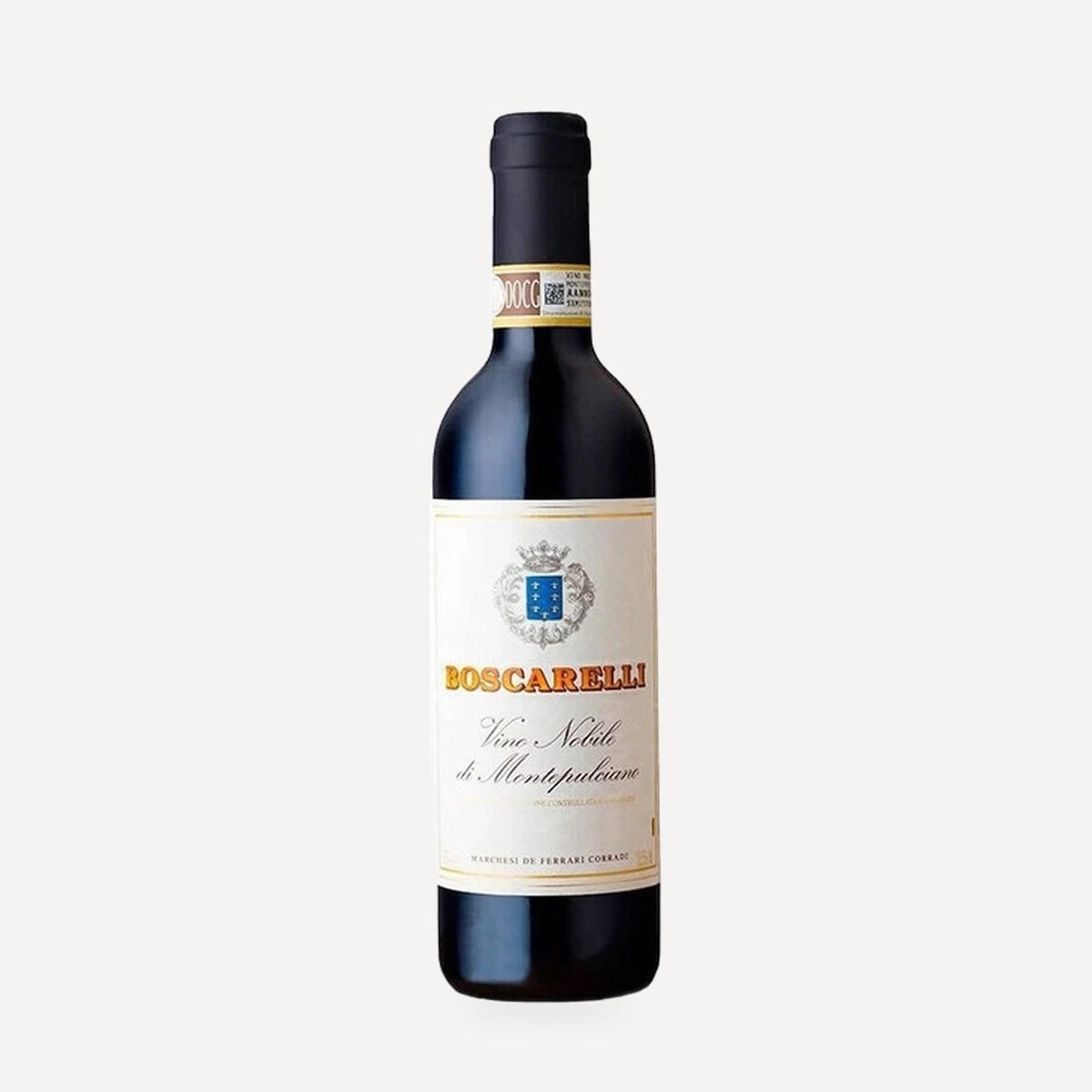
Vino Nobile di Montepulciano DOCG
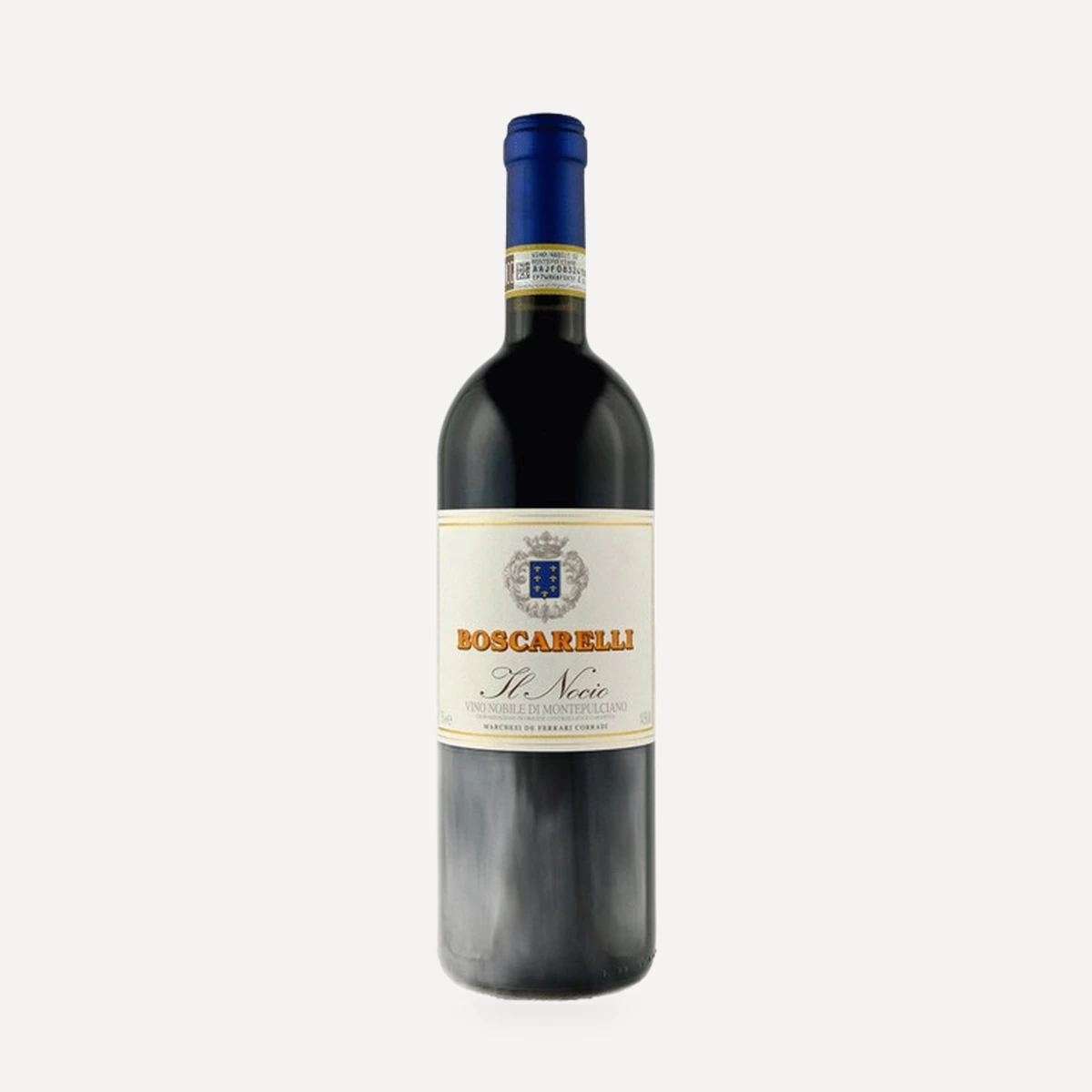
Il Nocio Vino Nobile di Montepulciano
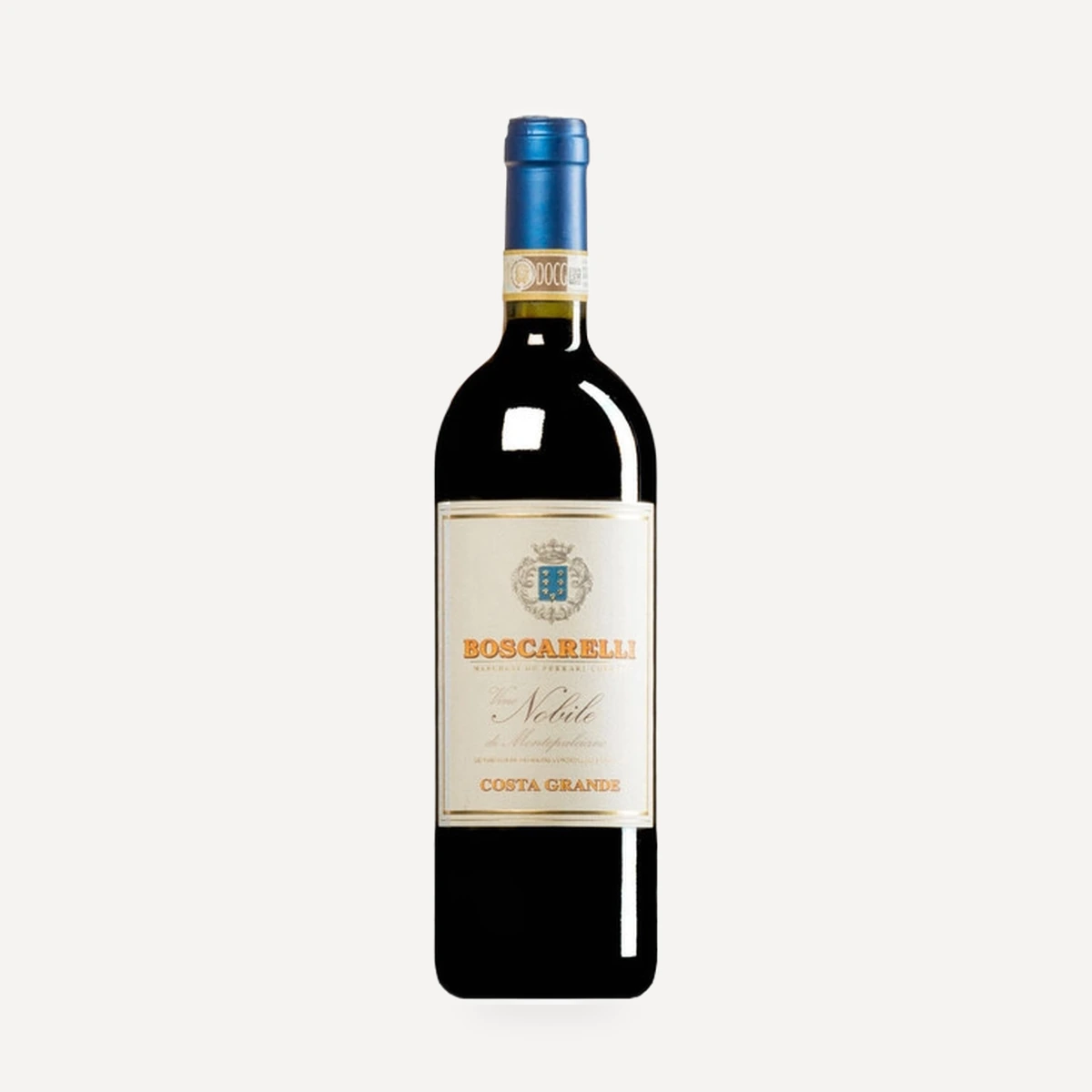
Costa Grande Vino Nobile di Montepulciano
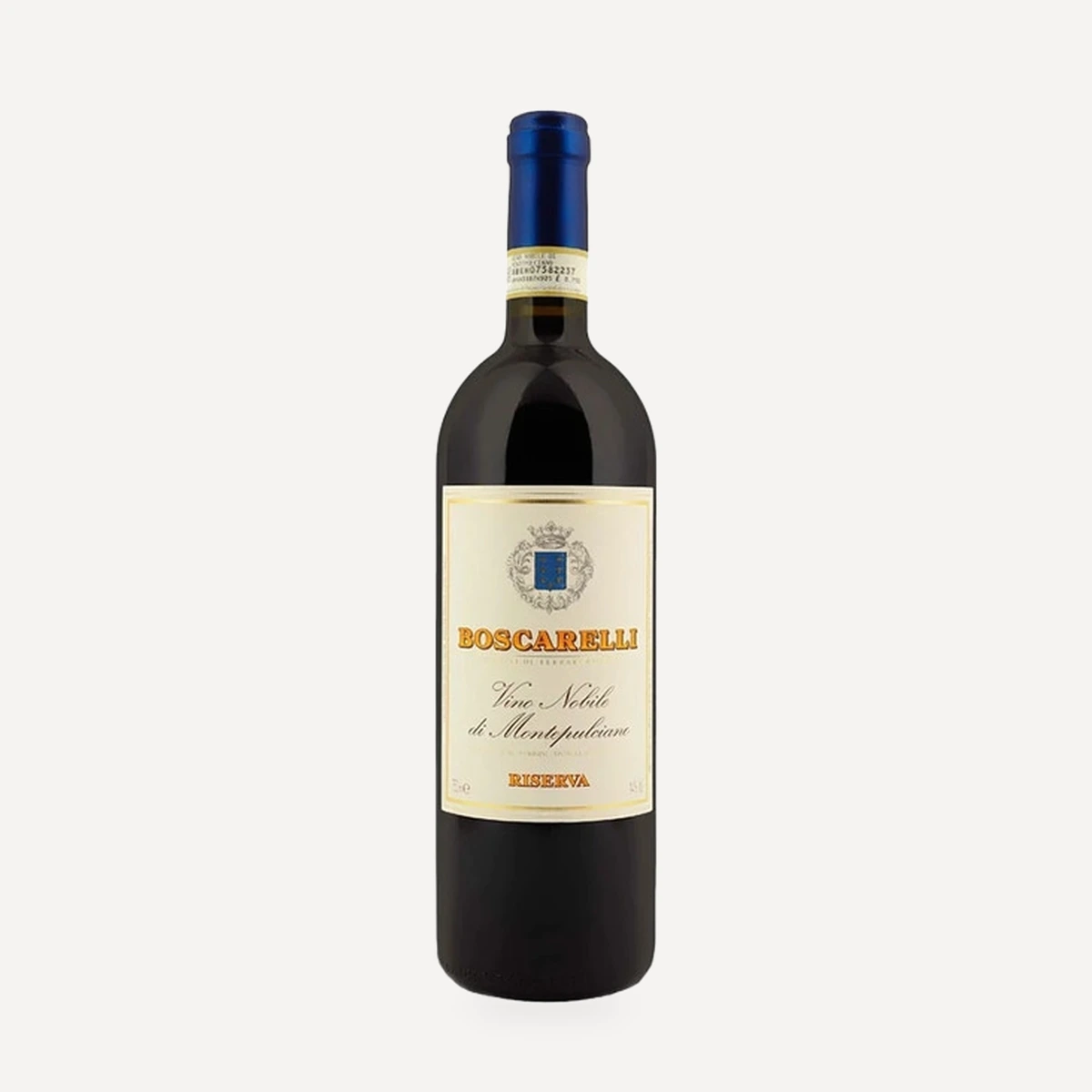
Vino Nobile di Montepulciano Riserva DOCG
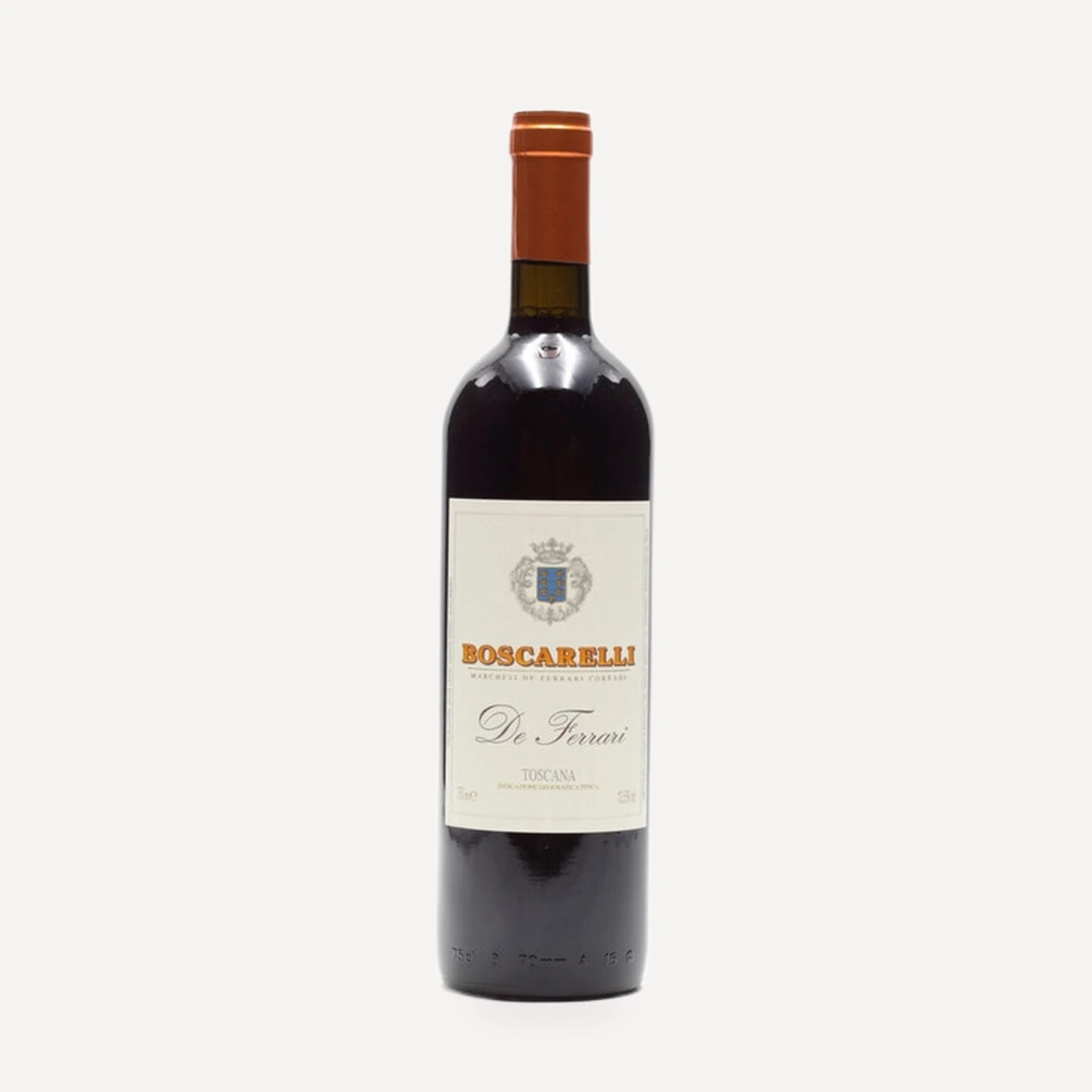
De Ferrari Toscana Rosso IGT
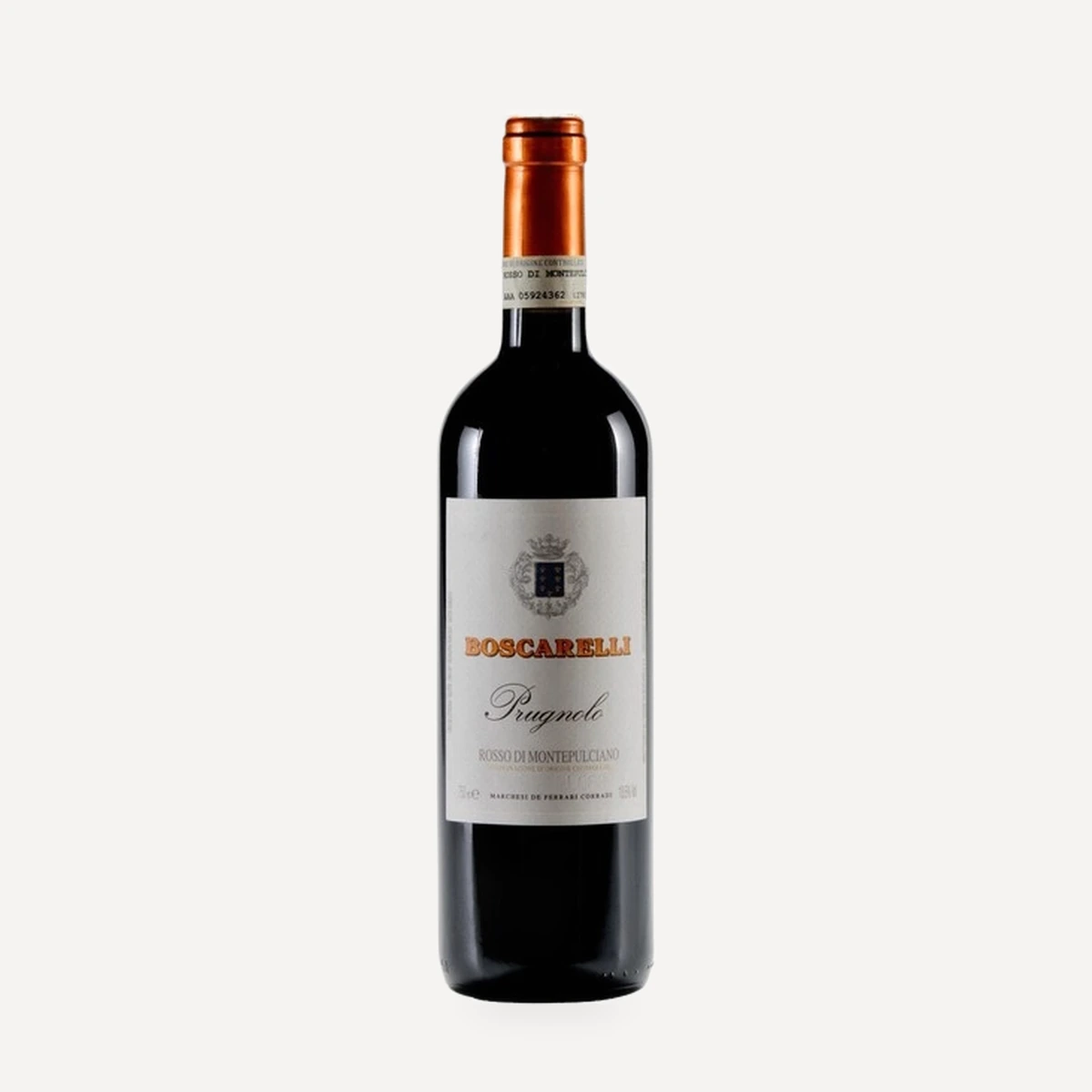
Prugnolo Rosso di Montepulciano
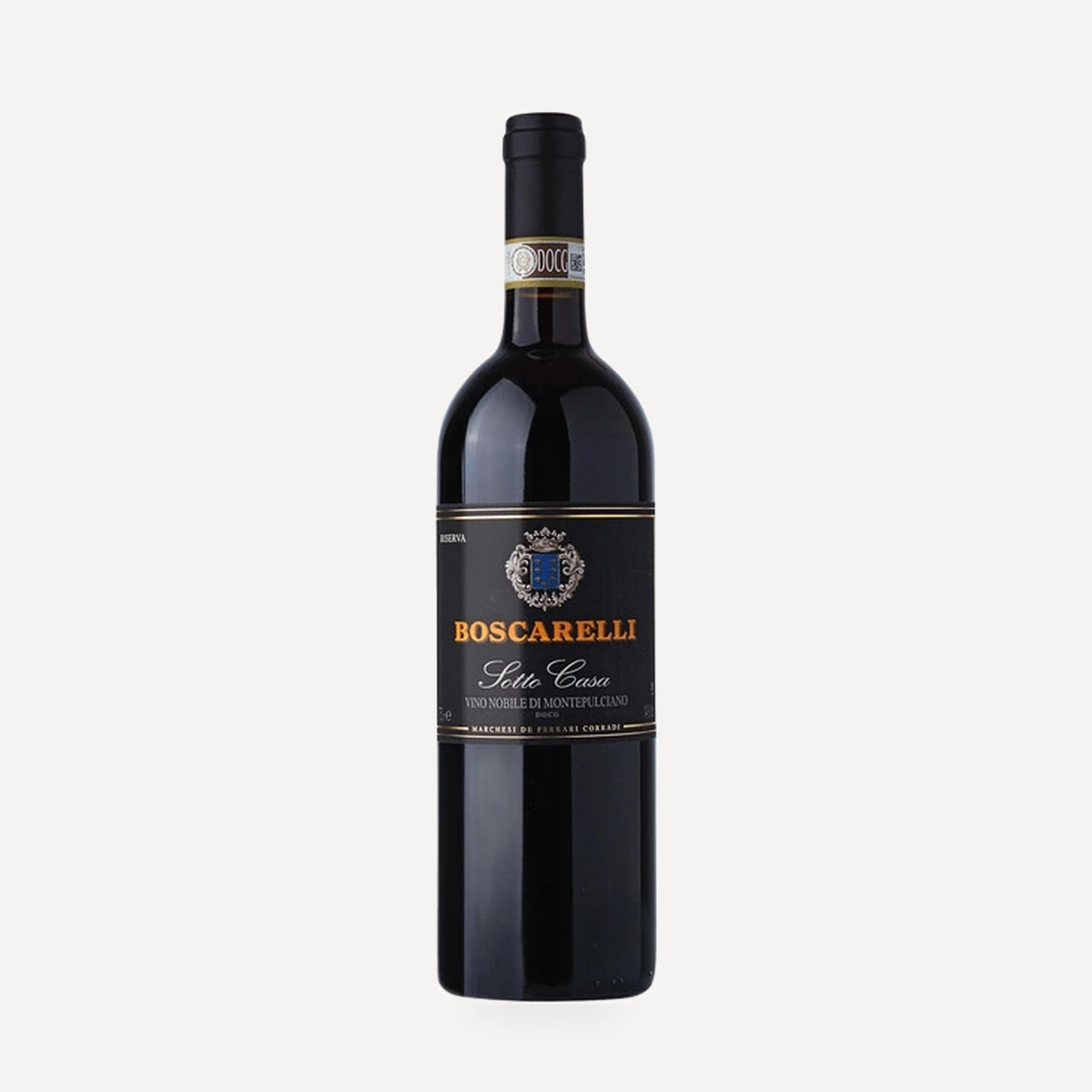
Sotto Casa Vino Nobile di Montepulciano Riserva DOCG
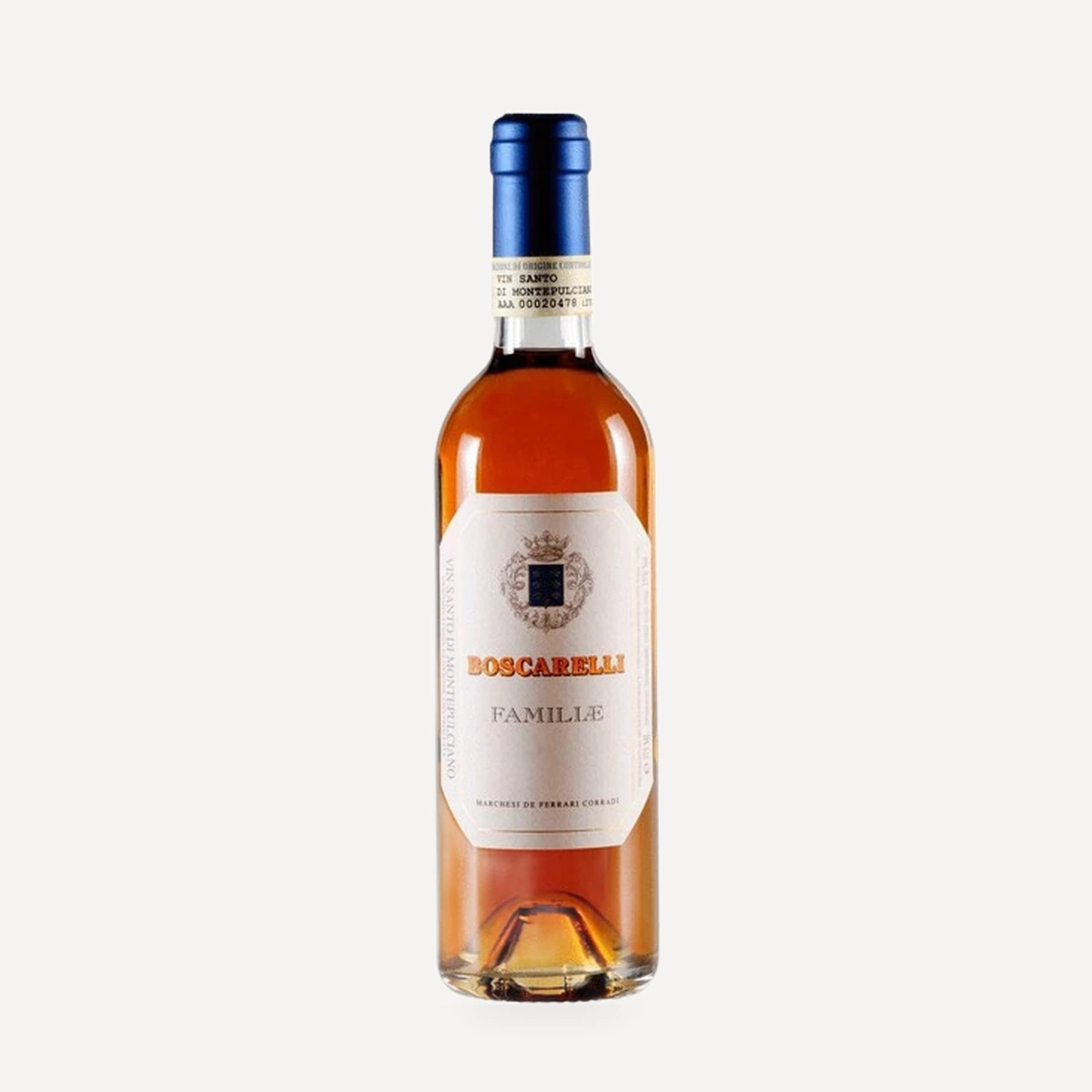
Familiae Vinsanto di Montepulciano Riserva DOC