Storia
Family roots in the late 1800s
The family’s involvement in Italian winemaking dates to the late nineteenth century and is described as a tradition extending for more than 150 years. Quality, integrity, respect for the land and a strong work ethic became the principles passed from one generation to the next.
Expansion across Italy
Over successive generations, the family’s activity expanded beyond one locality to encompass different Italian wine regions, territories and traditions. Candoni consequently developed as a multi-region collection rather than a range tied exclusively to one estate. Its wines have drawn on grapes from Veneto, Lombardy, Tuscany, Abruzzo and Sicily.
The family combined inherited winemaking experience with a willingness to pursue new opportunities and methods. Earlier family materials characterize this approach as a balance of tradition and innovation, with high-quality Italian grapes at the center of production.
Six generations and the current family chapter
Candoni now identifies its heritage as six generations of Italian winemaking. The present chapter is led by two sisters who were raised in the United States and now live in Italy. Their parents introduced them to wine, taught them to value their origins and gave them the knowledge and confidence to develop their own direction.
The sisters transformed that inheritance into a personally curated collection of Italian wines. They select wines for quality, character and authenticity, working with people they know and trust and choosing bottles they would serve at their own table. Their transatlantic upbringing informs their aim of sharing Italy through its people, places, regional traditions and wines while carrying their family story forward.
Terroir
Candoni draws on several distinct Italian growing areas rather than a single contiguous estate.
Eastern Veneto
The Veneto vineyards associated with the collection lie in northeastern Italy, at the foothills of the Alps and near the historic city of Portogruaro, approximately one hour from Venice. This is the source area identified for Prosecco and Pinot Grigio. The local combination of climate and soil supports these varieties, while cultivation is entrusted to experienced hands.
Pavia and Oltrepò Pavese, Lombardy
Pinot Noir and Moscato are associated with Provincia di Pavia in northwestern Italy. Warm days and cool nights favor a long, gradual growing season and help preserve the balance between acidity and sugar.
The Pinot Noir vineyards benefit from proximity to the Po River, which contributes to their microclimate. Their soils are well drained and rich in clay and calcareous marl. In the wider Oltrepò Pavese setting, the Alps help protect the area from cold and retain heat in the valleys, while stony ground absorbs warmth by day and releases it at night.
Chianti, Tuscany
The Tuscan component comes from the rolling hills in the heart of the Chianti area. Rich soils and sunny conditions support Sangiovese and Canaiolo Nero. Mild winters and relatively low rainfall allow the vines to recover their vegetative and productive balance before the grapes complete ripening during summer.
Abruzzo and Sicily
The organic collection also extends to Abruzzo for Montepulciano and Sicily for Merlot, connecting Candoni with both Adriatic and Mediterranean growing regions.
Vinificazione
Grape quality is the central criterion for the Candoni collection. Grapes are selected from several Italian regions, with regional specialization used to match varieties and styles to their growing areas. The Veneto vines near Portogruaro are described as carefully cultivated by experienced hands, while only selected Sangiovese and Canaiolo Nero fruit enters the Chianti blend.
The portfolio combines Classic wines with wines made from certified organically grown Italian grapes. The organic range encompasses Merlot, Montepulciano and Pinot Grigio in the current collection. These wines are also presented as vegan and gluten-free, and their packaging is recyclable.
Candoni is organized around the personal selection of finished Italian wines and collaboration with trusted people across several regions. Quality, regional character and authenticity guide inclusion in the collection, and all stages—from the vineyards to the people making the wines—remain rooted in Italy.
The portfolio allows both Classic and Organic approaches. Organic wines are made from certified organically grown Italian grapes. Vegan vinification excludes animal-derived products from clarification and stabilization.
Production techniques vary according to origin and style. The red-wine methods documented within the collection include controlled-temperature fermentation with skin contact, drawing off and pressing, and malolactic fermentation. The Chianti process uses destemmed and crushed grapes, indigenous yeasts and temperature-controlled cement tanks; spontaneous malolactic fermentation is followed by maturation in concrete and large untoasted barrels, blending and several months of bottle refinement. Pinot Noir from Pavia receives gentle pressing, a 48-hour maceration at 10°C, approximately seven days of fermentation and about one year in stainless steel before bottling.
Packaging is integral to the production identity. Ceramic colors are applied directly to the glass through silk-screen serigraphy and fixed by heat, making the decoration permanent rather than relying on a conventional paper label.
Filosofia
Candoni’s identity rests on family continuity, curiosity and respect for both the land and the people behind each wine. The inherited values of quality, integrity and hard work are paired with openness to new ideas and opportunities.
The current selection philosophy treats wine as more than a label: people, place and care are considered part of every bottle. The sisters personally choose wines they trust and would be comfortable sharing with friends, looking for regional character and an authentic connection to Italy.
Classic and Organic wines coexist because Candoni does not define quality through a single production model. Organic practices are valued, while equal respect is given to producer knowledge, established traditions and the individual character of each origin. The objective is to preserve the family inheritance without presenting it as static, adding the sisters’ own perspective to six generations of experience.
Sharing is another recurring principle. Wine is understood as a means of connecting family, friends, cultures and tables, with hospitality, conversation and making room for others forming part of the brand’s idea of sisterhood.
Vini
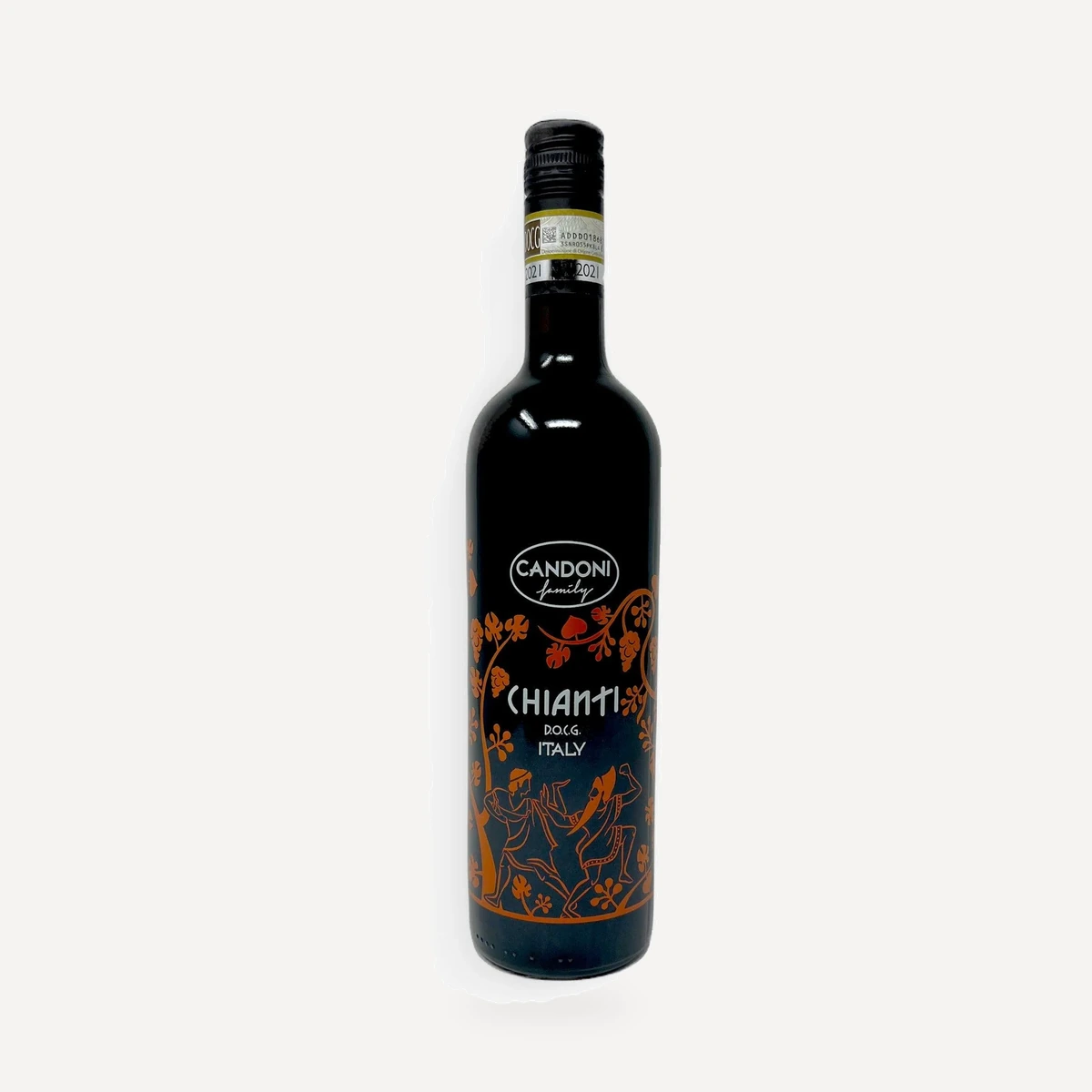
Chinati
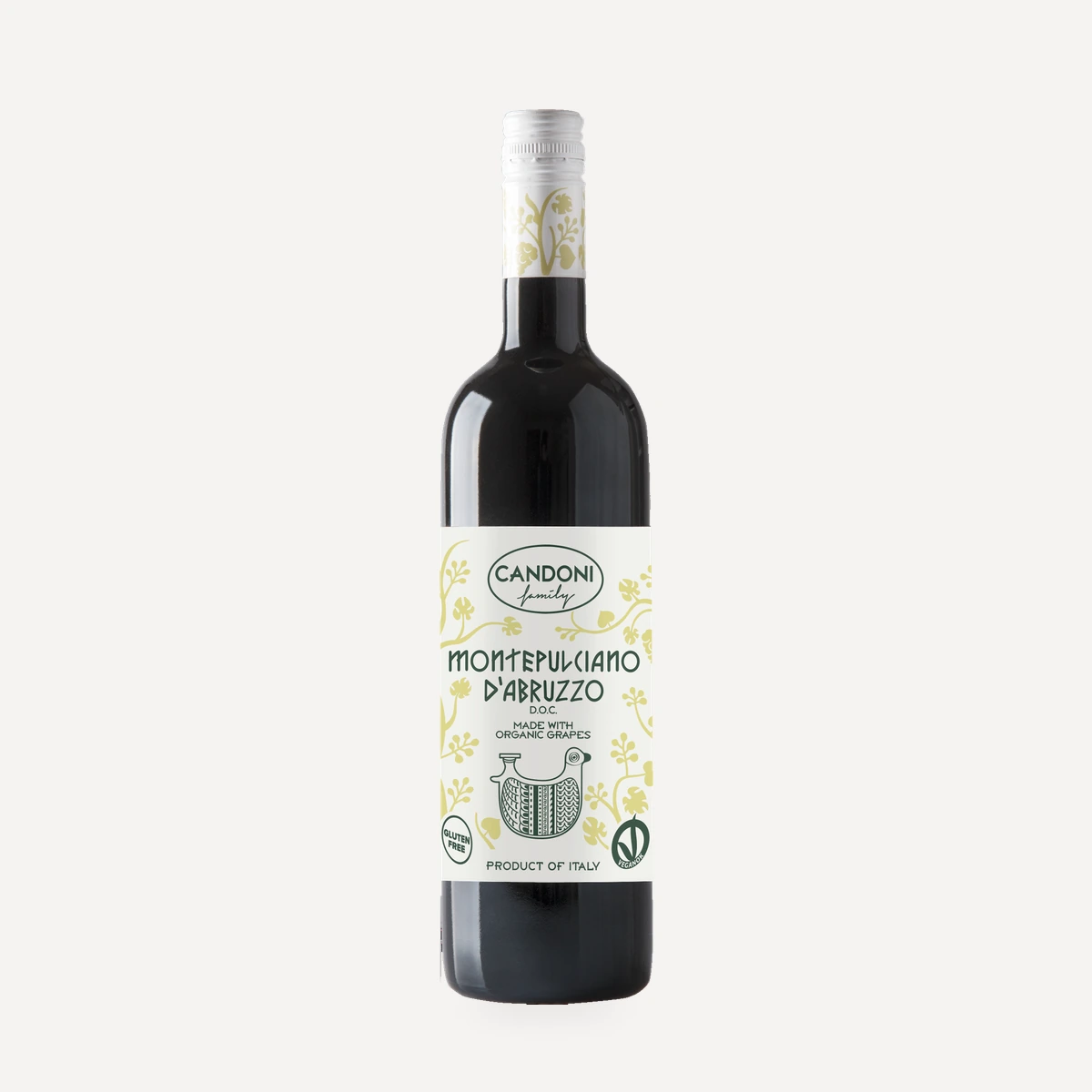
Organic Montepulciano d’Abruzzo
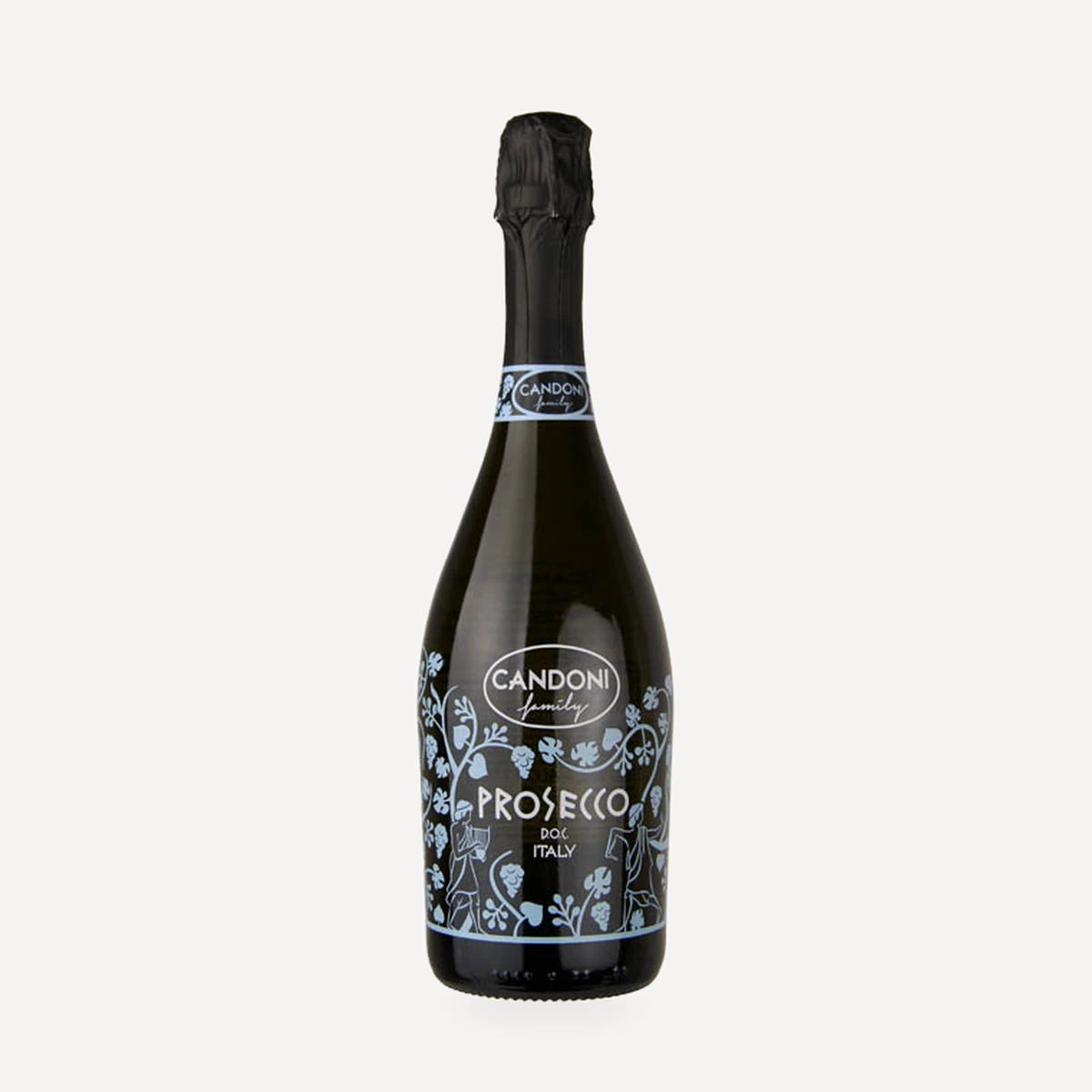
Prosecco
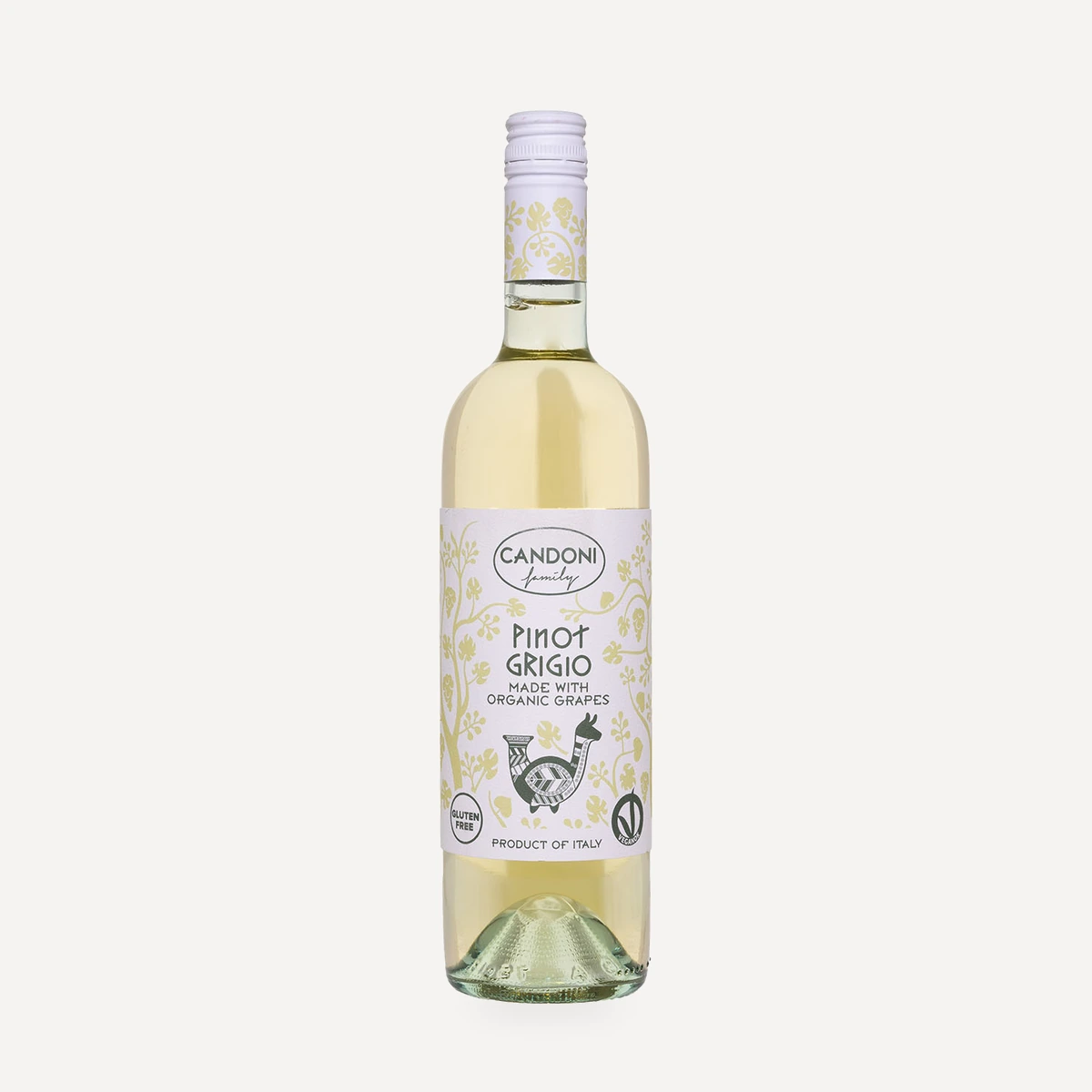
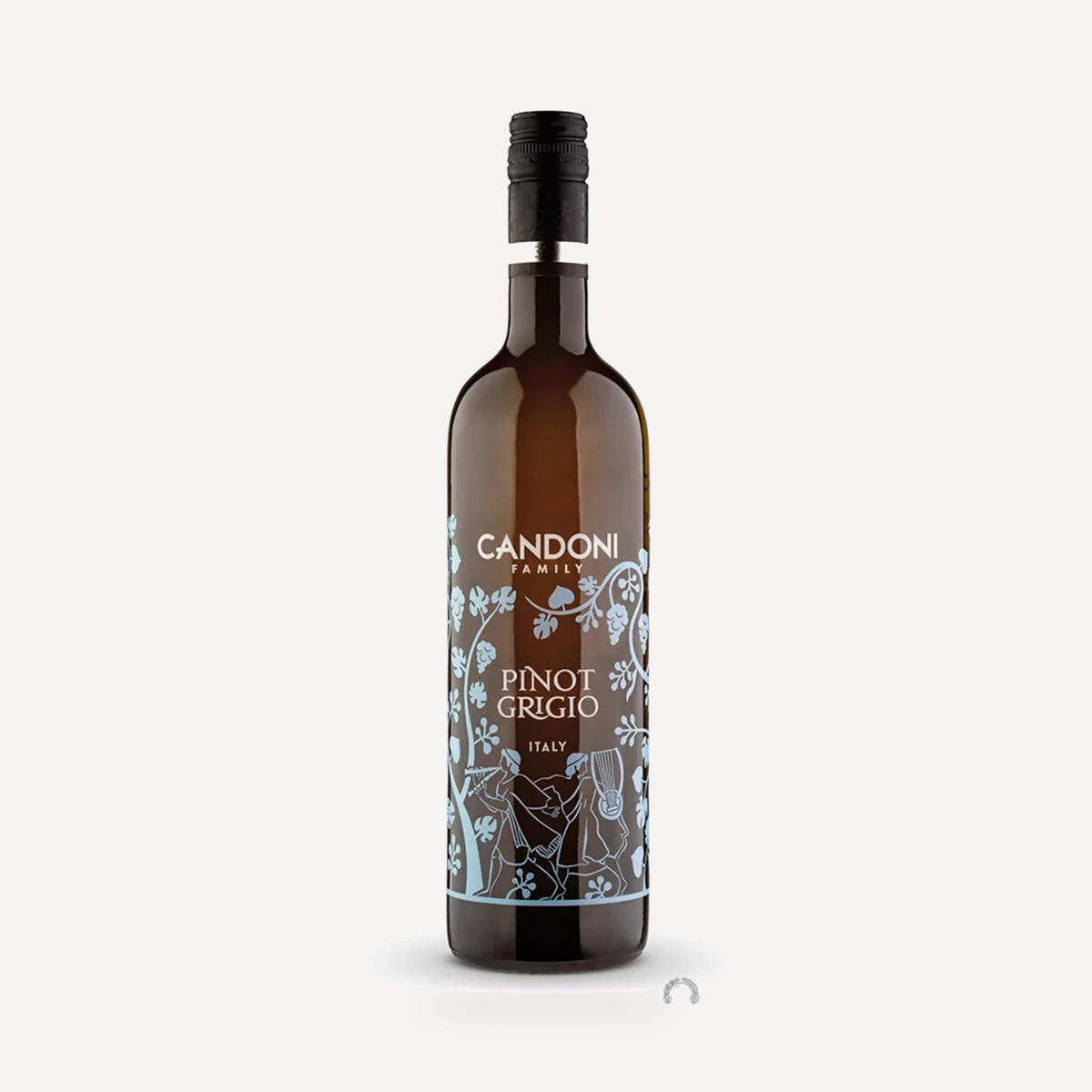
Organic Pinot Grigio
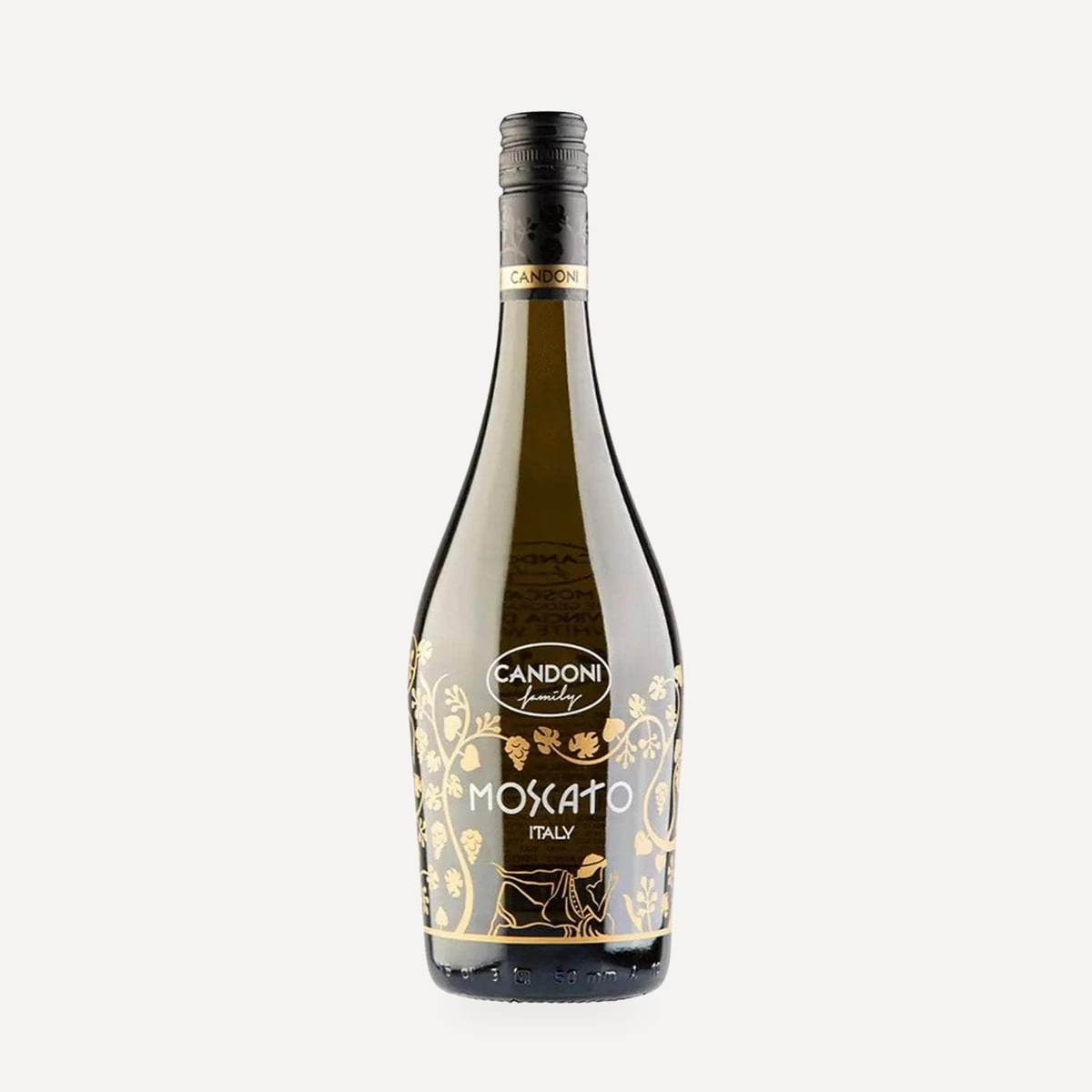
Moscato
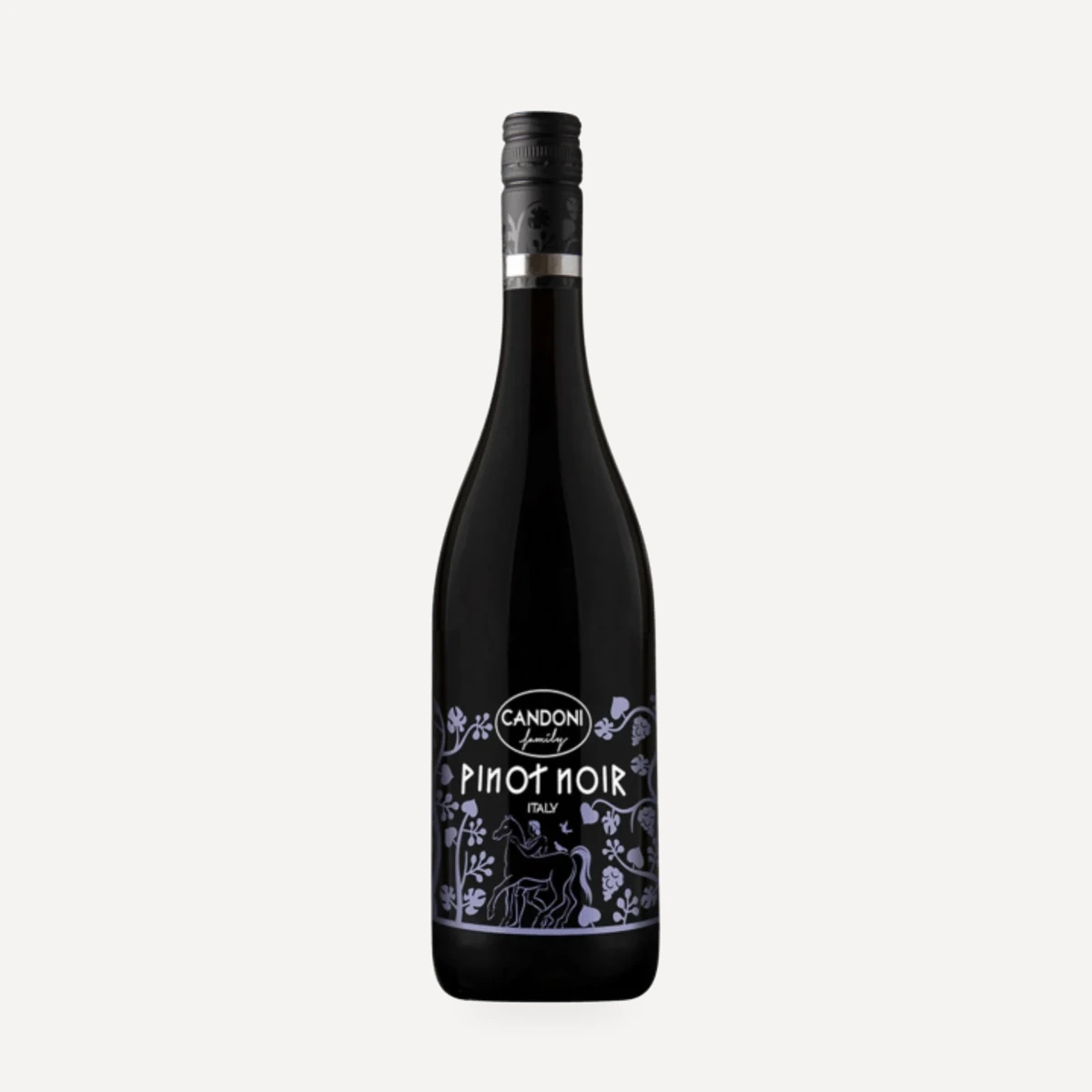
Pinot Noir