Storia
Earlier vineyards
The vineyards now associated with Casa Raia include Sangiovese vines planted at Montalcino in 1975. Further terraces were planted in 1997. At Castiglione d’Orcia, vineyards of Merlot, Cabernet Sauvignon and Cannaiolo were also established in 1997.
Scarnacuoia has a much longer viticultural precedent: Biondi Santi planted the first Sangiovese in this historic area around two centuries before Pierre Jean Monnoyer began his project.
Arrival in Montalcino, 2004
Pierre Jean moved to Montalcino in 2004. There he met Lionel Cousin of Cupano, who recognized the potential of the Scarnacuoia terroir and encouraged him to begin making wine.
Foundation and apprenticeship, 2006–2008
Casa Raia began in 2006, when Pierre Jean rented the vineyards of Ludmilla Temertey’s Podere Scarnacuoia. The holding included vine-covered terraces immediately below Montalcino’s medieval walls.
The first years were a period of practical training. Pierre Jean worked alongside biodynamic and natural-wine estates including Campi di Fonterenza and Pian dell’Orino. Casa Raia’s first two vintages were made in host wineries while the project lacked a dedicated cellar.
An independent cellar, 2009
In 2009 Pierre Jean built Casa Raia’s own cellar in Montalcino. From that point, vinification and bottling were carried out directly by the estate.
New plantings and expansion, 2011–2021
New plots of loose-bunched Sangiovese were planted in 2011 and 2015. The northern terraces at Montalcino received another planting in 2021, while new Sangiovese parcels were established at Castiglione d’Orcia in the same year. The Castiglione plantings joined the Merlot, Cabernet Sauvignon and Cannaiolo vineyards dating from 1997 and became the basis of Bevilo, Casa Raia’s Toscana IGT blend.
Rosso di Montalcino and current production
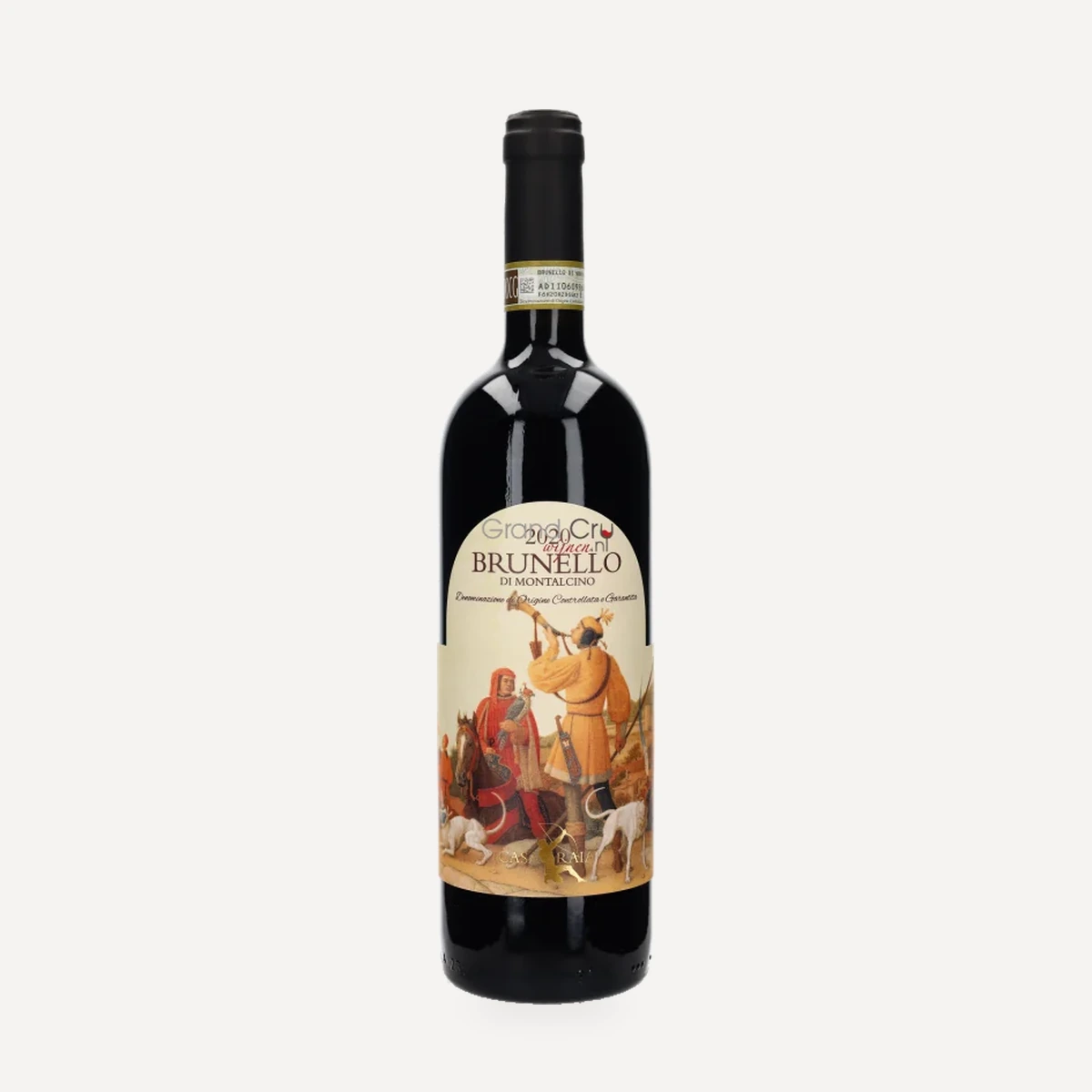
Rosso di Montalcino production began with the 2024 vintage. Current output comprises approximately 5,000 bottles of Brunello di Montalcino, 4,000 bottles of Rosso di Montalcino and 8,000–10,000 bottles of Toscana IGT from Castiglione d’Orcia.
Terroir
Casa Raia occupies a promontory on the south-western slope below the medieval village of Montalcino, with the estate and surrounding vineyards immediately beneath the town’s ancient walls. Its vineyards are distributed between Montalcino and Castiglione d’Orcia in Tuscany’s Val d’Orcia.
Montalcino
The Montalcino vineyards surround the estate on the hill’s south-western side. Sangiovese vines planted in 1975 grow in poor soils rich in stones and galestro, conditions associated with the estate’s long-ageing Brunello. Northern terraces planted in 1997, 2011 and 2021 have soils combining sand, silt, clay and stones. These terraces contain selected clones of Sangiovese Grosso and supply Rosso di Montalcino.
Castiglione d’Orcia
The Castiglione d’Orcia vineyards lie along the Via Francigena. Their soils are loose and predominantly silty. Plantings include Merlot, Cabernet Sauvignon and Cannaiolo dating from 1997, supplemented by new Sangiovese parcels planted in 2021.
Vinificazione
Both the Montalcino and Castiglione d’Orcia vineyards have been farmed according to organic principles from the beginning of the Casa Raia project. Vineyard decisions are guided by observation of the soil, plants and surrounding climate rather than by attempts to force uniform results. Work follows the natural cycle of the seasons, with each vintage accepted as an individual expression of its conditions.
The planting strategy combines inherited vineyards with new parcels. At Montalcino, selected Sangiovese Grosso clones occupy the northern terraces, while the estate’s 2011 and 2015 expansion introduced loose-bunched Sangiovese. New Sangiovese was also planted at both Montalcino and Castiglione d’Orcia in 2021.
Casa Raia’s first two vintages were vinified in host wineries. Pierre Jean completed a dedicated cellar in Montalcino in 2009, after which the estate began carrying out its own vinification and bottling.
The cellar approach is based on few interventions, skilled manual work and patience. Fermentations are spontaneous, and time is treated as an essential part of transforming the grapes without obscuring their origin. The objective is to preserve vintage variation and produce wines regarded by Casa Raia as natural, living and expressive of their place.
Filosofia
Casa Raia’s philosophy is built around allowing the land to speak. Decisions begin with attention to the soil, vines and climate, and vineyard work follows the rhythm of the seasons without trying to impose a predetermined result on each vintage.
The estate describes balance as the outcome of harmony between people and nature rather than control. The same outlook extends into the cellar through spontaneous fermentation, minimal intervention, experienced hands and patience. Time is regarded as an ally that can transform the grapes slowly while preserving their origin.
Vintage differences are embraced rather than standardized. The intended result is a group of living wines that are never identical and that retain the light, strength and elegance associated with Montalcino. Authenticity, craftsmanship, care for the land and attentiveness over time form the project’s central values.
Vini
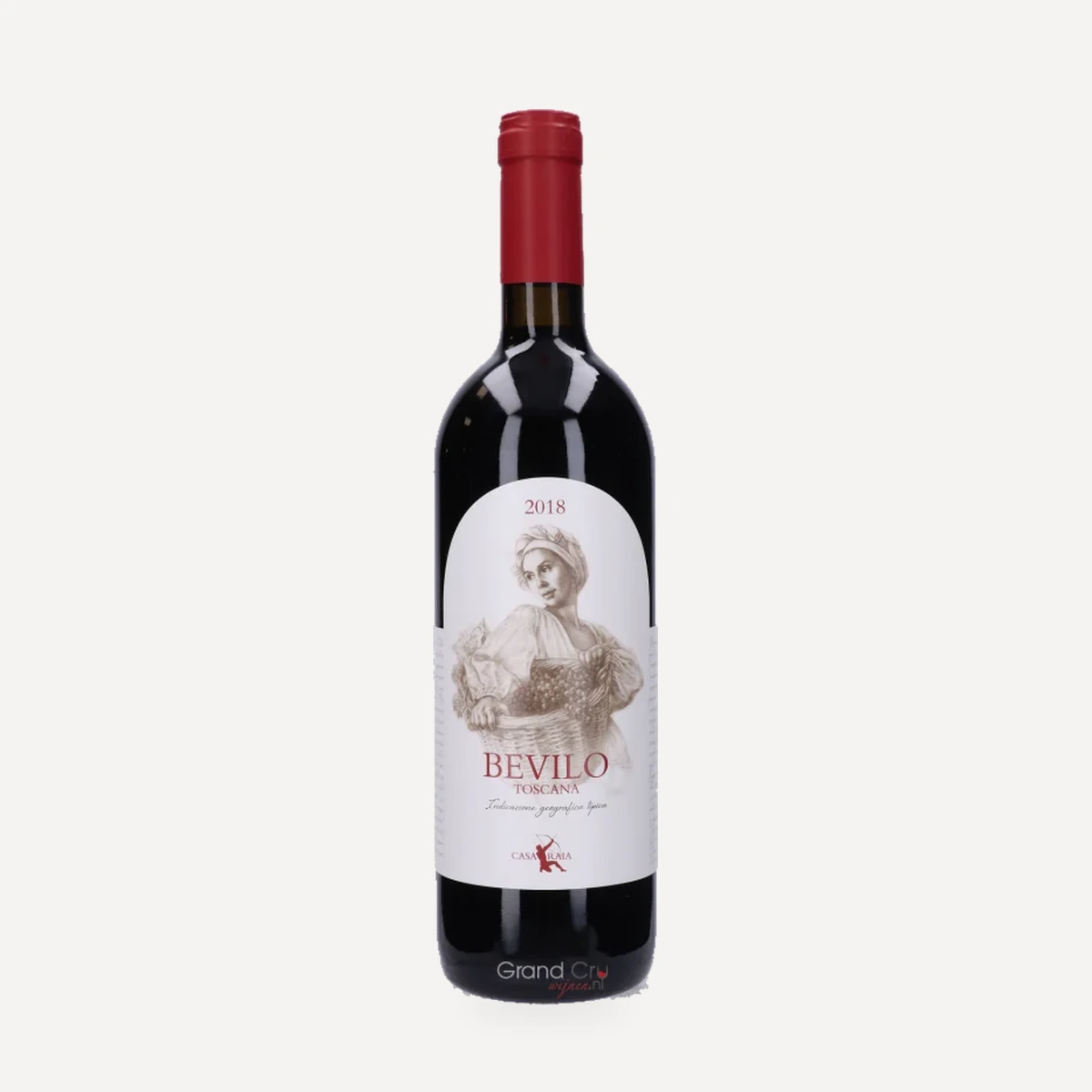
Bevilo Toscana IGT