Storia
Origins in Lu Monferrato
The Casalone family’s winegrowing history in Lu Monferrato begins in 1734. Petrus Hieronymus Casalone arrived there as a tenant farmer and winegrower in the service of the Marchesi Millo. The family has continued cultivating vines in Monferrato for almost three centuries, passing its understanding of wine as an artisanal vocation from one generation to the next.
Nine generations
The family genealogy records nine generations. Petrus Hieronymus and Ursula Margarita Jugalium de Casalone are associated with 1734, followed by Carolus Joseph and Anna Maria in 1745; Joannes Laurentius and Maria Carolina Albertis in 1794; Petrus Joannes and Teresa Trisoglio in 1828; Luigi Antonio Giuseppe and Francesca Cattana in 1865; and Secondo Giovanni Pietro and Ernestina Capra in 1890.
The seventh generation comprises Francesca, recorded in 1921; Pietro, in 1925; and Ernesto, in 1933, together with Maria Luisa Verri. The eighth generation comprises Pier Angelo, recorded in 1961; Francesca, in 1962, with Mauro Berra; Elisabetta, in 1966, with Corrado Boccaccio; and Paolo, in 1969, with Romina Curci. The ninth generation includes Paolo, recorded in 1991; Simone, in 1994; Cristina and Luca, both in 1997; Mattia, in 2007; and Alice, in 2009.
Ernesto Casalone and the post-war estate
Ernesto Casalone led the business from the 1950s until his sons Pierangelo and Paolo entered the enterprise. Remembered as both a dreamer and a determined figure who looked continually toward the future, he remained central to the family and estate until his death in 2021.
From the 1970s, Casalone produced three distinct interpretations of Barbera del Monferrato: Rubermillo, a Barbera del Monferrato Superiore DOCG matured in small oak casks; Bricco Morlantino, a Barbera del Monferrato Superiore DOCG matured in traditional oak vessels; and Bricco Santa Maria, a Barbera del Monferrato DOC matured in tank. This established parallel cellar approaches for the same regional variety.
Recovery of Malvasia Moscata
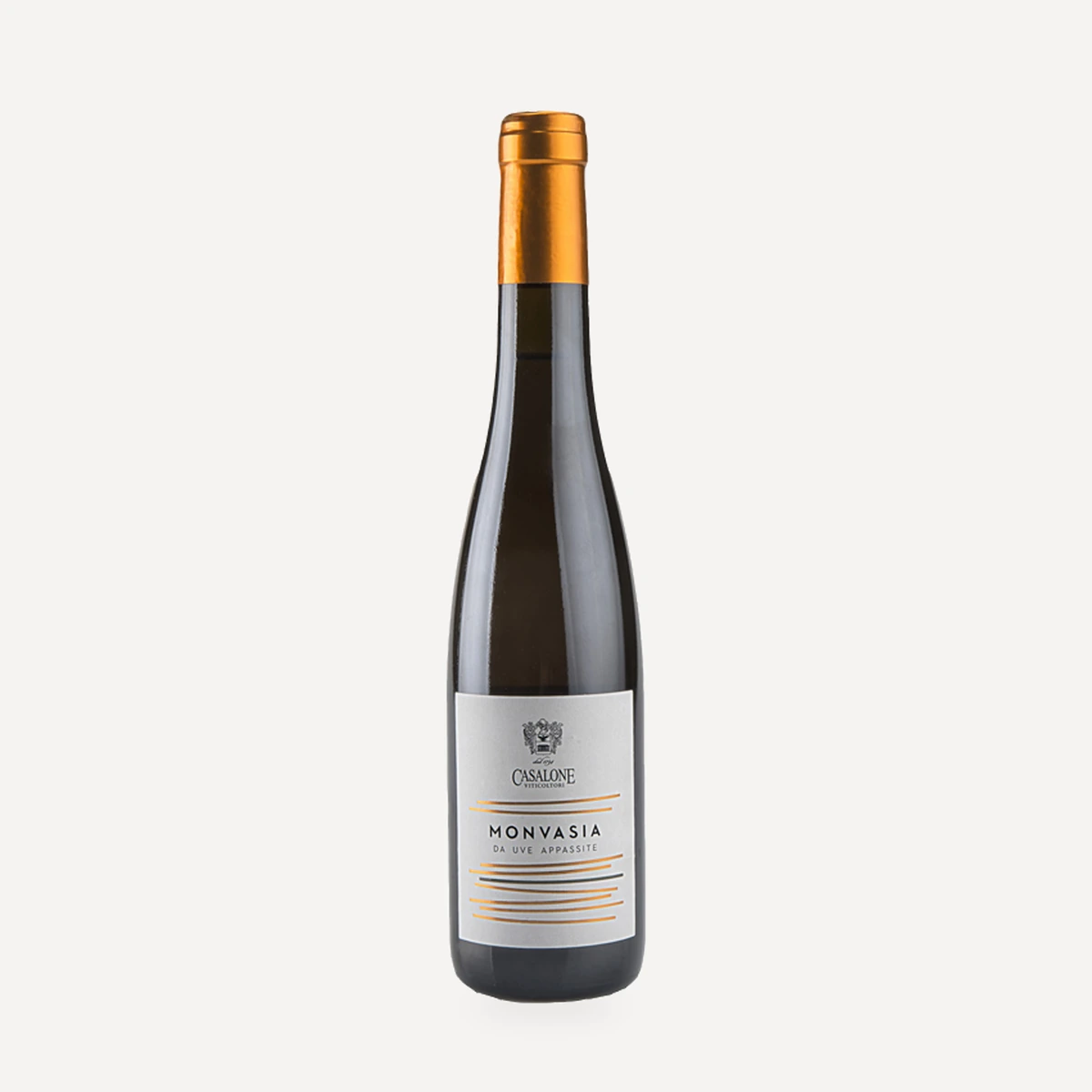
During the 1980s, Ernesto Casalone and Maria Luisa Verri backed the recovery of an old vine known locally as Malvasia Greca. It had almost disappeared, but their decision to preserve and cultivate it shaped the family’s production over the following decades. The variety was subsequently entered in Italy’s National Register of Vine Varieties under the name Malvasia Moscata. Casalone now works with it in still, sweet, dried-grape and traditional-method sparkling expressions.
Diversification and renewed Grignolino
Alongside the traditional Monferrato varieties Barbera, Grignolino, Freisa and Cortese, the estate introduced Merlot and Pinot Nero. These international grapes support both a Barbera–Merlot–Pinot Nero blend and varietal Pinot Nero matured through different cellar regimes.
Beginning with the 2014 harvest, Casalone added a limited Grignolino matured for 40 months in tonneaux. The wine was dedicated to Pietro Francesco Guala’s painting I Canonici di Lu, linking the family’s production to the artistic and ecclesiastical history of Lu. This oak-matured interpretation continues alongside Grignolino made in the estate’s traditional tanks, including masonry vessels built in 1932.
The estate today
The family’s ninth-generation identity is rooted in 10 hectares of vineyards. Its contemporary approach combines inherited practices—including the continued use of historic masonry vats and traditional oak vessels—with temperature control, stainless steel, selective use of smaller oak formats and traditional-method sparkling-wine production.
Terroir
Location
Casalone stands on Bricco Santa Maria at Lu Monferrato, amid the vine-covered hills of Basso Monferrato Casalese. Lu e Cuccaro Monferrato lies between Asti, Alessandria and Casale Monferrato: approximately 20 km from each of those centres and about 100 km from Turin, Milan and Genoa.
Hills and soils
The estate works 10 hectares across the named hills of Bricco Santa Maria, Bricco Morlantino and Bricco San Benedetto. Clay-limestone soils occur on Bricco Santa Maria and Bricco Morlantino. The Cappelletta locality near Bricco Santa Maria is distinguished by calcareous marl.
Bricco Morlantino is described as particularly well exposed. On Bricco Santa Maria, substantial day-to-night temperature variation during the ripening season creates a specific microclimate used for Pinot Nero. The clay-limestone heart of the hill is also used for selected Barbera, while the calcareous marl at Cappelletta supports Grignolino.
Bricco Santa Maria and Bricco San Benedetto jointly supply Barbera, Merlot and Pinot Nero for the estate’s blended Monferrato Rosso.
Vinificazione
The vineyards are trained to Guyot. Grass cover is maintained between or beneath the vines across the parcels described in the current range; in the most restrictive Barbera regime, it is used specifically to limit vine vigour.
Crop regulation varies according to parcel and intended expression. Selected blocks are pruned to a low, very low or otherwise limited number of buds per vine. Cluster thinning is practiced, including thinning at veraison for the Barbera–Merlot–Pinot Nero vineyards. The most selective Barbera regime combines severe bud restriction, grass cover, cluster thinning and a further selection during harvest. Grignolino destined for extended tonneaux maturation is selected by choosing the best bunches in the vineyard.
Malvasia Moscata vineyards may combine Guyot pruning, grass cover and thinning. Grapes intended for traditional-method sparkling production are picked early, in August, to retain acidity and aromatic intensity. Grapes intended for dried-grape production are harvested in an overripe state.
No organic, biodynamic or other farming certification is identified.
Cellar vessels
The cellar combines historic and modern equipment. Masonry fermentation vats dating from 1932 remain in use for Barbera and Grignolino. Stainless-steel tanks support fermentation and maturation, while the oak programme includes small oak casks, 15-hectolitre traditional oak vessels, tonneaux and French oak casks in their second and third passages.
White and sparkling production
Malvasia Moscata for still white wine is softly pressed, fermented under temperature control and matured for several months in stainless steel. Traditional-method sparkling production begins with an early August harvest intended to preserve freshness and aromatic intensity. After the first fermentation, tirage takes place in bottle the following spring; the wine then remains on its lees until disgorgement. Sweet and dried-grape interpretations are also produced from Malvasia Moscata, including fruit harvested in an overripe state and partially fermented grape must.
Red-wine fermentations
Red-wine practice includes gentle or standard crushing and destemming as well as whole-cluster maceration. Barbera macerations generally last about 10–12 days, with intensive pump-overs for the more structured interpretations. Grignolino receives particularly gentle crushing and destemming and a short maceration around 25 °C; the longer-aged selection is macerated for several days with brief, frequent pump-overs at a comparatively low temperature to preserve its aromatic delicacy.
Pinot Nero macerates for approximately 12 days at lower temperatures than most other estate varieties, including regimes capped at 25 °C. Whole-cluster Freisa and the whole-cluster red cuvée undergo approximately 10 days of maceration.
Maturation and blending
Maturation ranges from several months in tank to approximately one year in stainless steel or historic vats. Barbera may spend 10–12 months in small oak casks or about 12 months in traditional 15-hectolitre oak vessels. Pinot Nero may mature for about 15 months in second- and third-passage French oak followed by four to five months in bottle, or for 18 months in tonneaux followed by roughly 12 months in magnum.
The Barbera, Merlot and Pinot Nero components of the estate blend are vinified separately. They undergo approximately 12 days of maceration and malolactic fermentation in oak, then mature separately in oak for about 15 months. The final blend is assembled one month before bottling.
Selected Grignolino is matured in oak tonneaux for a minimum of 40 months. A special traditional-method sparkling release remained on its lees for 100 months.
Filosofia
Casalone’s guiding idea is that making wine is not merely an occupation but an art that must be handed from one generation to the next. Tradition, passion, dedication and an ongoing search for quality form the family’s stated foundation.
The approach is not framed as a rejection of modernity. Ancient practices and inherited vessels are retained where they remain useful, while contemporary technology is adopted for temperature control, stainless-steel work, precise extraction and traditional-method sparkling production. The continued use of masonry vats built in 1932 sits alongside parcel selection and differentiated oak maturation.
The recovery of Malvasia Moscata expresses the family’s commitment to local heritage. Ernesto Casalone and Maria Luisa Verri chose to preserve a vine that had nearly disappeared, turning it into a defining element of the estate’s modern identity. The family also treats individual varieties according to their character: Grignolino and Pinot Nero receive gentler, cooler extraction to safeguard aromatic delicacy, while Barbera is interpreted through several distinct maturation vessels.
Vini