Storia
The Ciacci family estate
The agricultural roots of the property extend to 1850, when the Ciacci family became owners of Tenuta di Sesta. The family cultivated vineyards and olive groves alongside grain crops. Period photographs preserve images of estate life during the 1950s.
The first Brunello
In 1966, Giuseppe Ciacci bottled the family estate’s first Brunello di Montalcino. The same year also saw the creation of the local producers’ consortium and the recognition of Brunello di Montalcino as a Denominazione di Origine Controllata.
Creation of Collosorbo
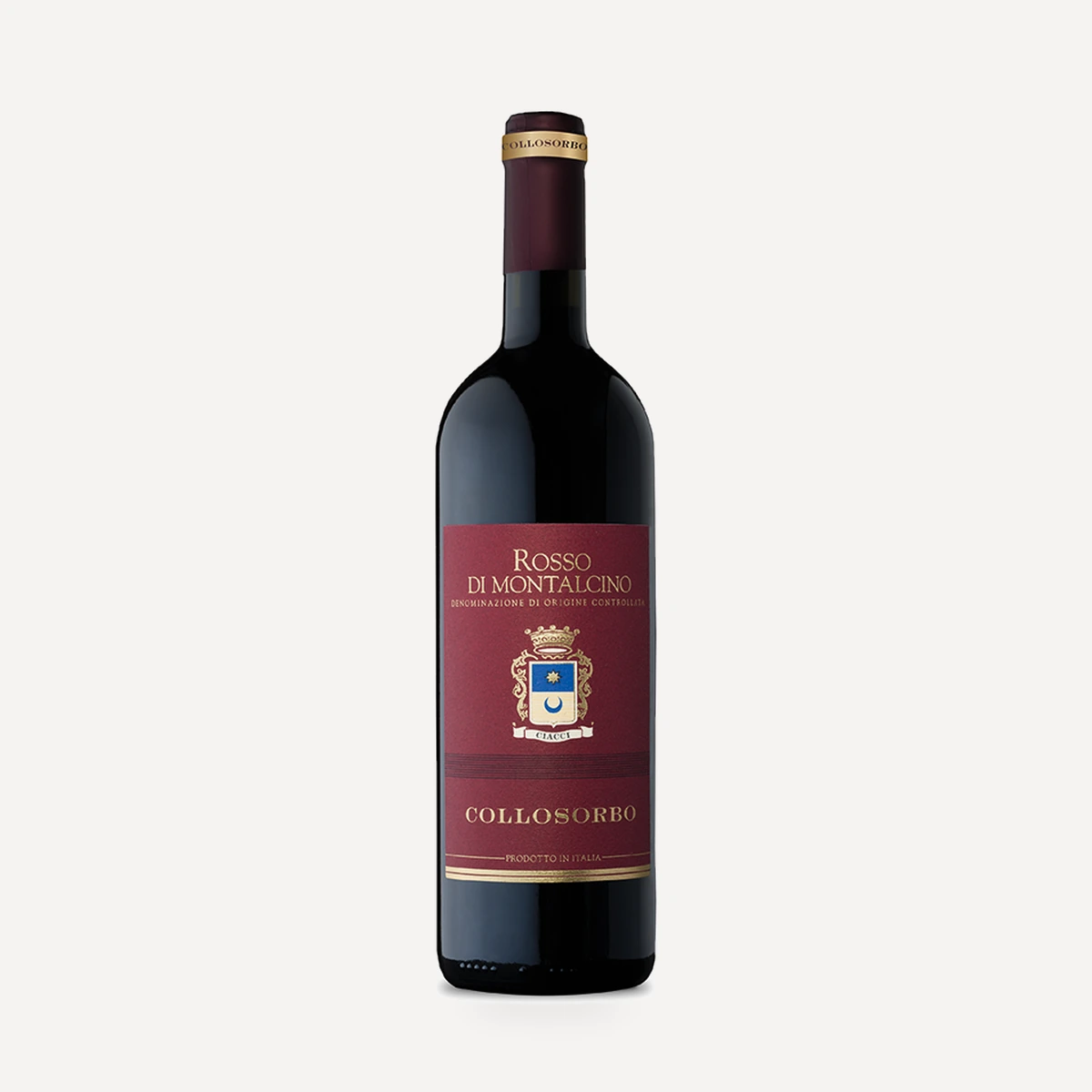
Tenuta di Collosorbo was created in 1995, when Giovanna Ciacci established the estate following the hereditary division of Tenuta di Sesta. Collosorbo retained the Ciacci family crest as a visible link with the family’s earlier agricultural and winegrowing history.
Management subsequently developed around Giovanna and her two daughters. Giovanna assumed general direction, Laura Sutera Sardo took responsibility for viticulture and winemaking, and Lucia Sutera Sardo combined her agronomic background with responsibility for the commercial side of the business. Paolo Caciorgna works alongside Laura as an enologist.
Quality and environmental management
A company policy dated 1 November 2024 formalized commitments concerning product quality and safety, legal compliance, traceability, resource use and environmental protection. The estate operates a management system certified to EN UNI ISO 9001:2015 and UNI EN ISO 14001:2015.
Terroir
Collosorbo lies in the southern sector of Montalcino, between Sant’Angelo in Colle and Castelnuovo dell’Abate. Its 35 hectares of vineyards stand at approximately 250 metres above sea level. The estate is sheltered by the surrounding hills and nearby Monte Amiata, while maritime influence contributes to a warm, well-ventilated climate suited to Sangiovese.
Despite their proximity, the vineyards are not uniform. Much of the ground is calcareous clay, associated here with fine, complex aromas, good acidity and substantial extract. Iron-bearing soils are recognizable by their red colour and contribute a mineral character. Other vines grow on pebbly ground associated with greater structure and higher potential alcohol.
This variation is addressed through clonal selection and parcel-by-parcel harvesting according to vigour zones, allowing grapes from differing conditions to be handled at their appropriate stage of ripeness.
Vinificazione
Most cultivation work is performed manually. Vineyard management combines clonal selection with close monitoring of ripening and the division of harvest work by parcel and vigour zone.
The estate uses customized green manures and conducts studies concerning winter pruning and broader agronomic management, with the stated aim of increasing respect for the entire ecosystem. Training systems include single and double spurred cordon, selected according to vineyard and variety.
At harvest, grapes are selected according to ripeness and picked by hand into small baskets. The best Sangiovese parcels may be revisited two or three times to refine the selection. Fruit is transferred rapidly to the cellar, and some selections undergo an additional check on a sorting conveyor.
Historic cellar
The oldest section of the cellar contains an underground tunnel. Narrow passages lead from it into small caves excavated in tuff and considered likely to be of Etruscan origin.
Fermentation and extraction
Grapes are destemmed and crushed gently. Fermentation takes place in stainless-steel vats under controlled temperatures. Extraction relies on pump-overs rather than punch-downs. This gentler approach permits longer skin contact while pursuing complexity and elegance. Repeated tasting and chemical analysis are used to decide the appropriate moment for racking.
Maturation
Sangiovese matures in French and Slavonian oak vessels ranging from 12 to 57 hl. Differences in vessel size and barrel age allow maturation to be adapted to the evolution of each lot. Syrah, Cabernet Franc, Cabernet Sauvignon, Merlot and Petit Verdot are generally matured for about a year in small French-oak barriques when used in the estate’s international-variety blends. Individual lots may also use 12 hl French-oak barrels, and blending is followed by further bottle maturation.
Filosofia
Collosorbo connects its wines with family history, inherited winegrowing traditions and continued study, innovation and research intended to express the terroir more precisely. The retained Ciacci family crest symbolizes continuity with the estate’s earlier history.
Giovanna Ciacci, Lucia Sutera Sardo and Laura Sutera Sardo describe themselves as three distinct personalities: Giovanna brings rigour, Lucia a combative determination and Laura a sense of joy. They present collective decisions as sometimes difficult but identify common ground in trust in people, teamwork, the balance of passion with reason, and a continuing search for elegance and harmony. Their outlook combines pride in tradition with a willingness to reconsider established ideas.
Environmental protection, product safety, traceability and efficient use of natural resources form part of the estate’s current management policy. Its declared values are ethics in relationships with personnel, customers and suppliers, and integrity through compliance and accountable conduct.
Vini
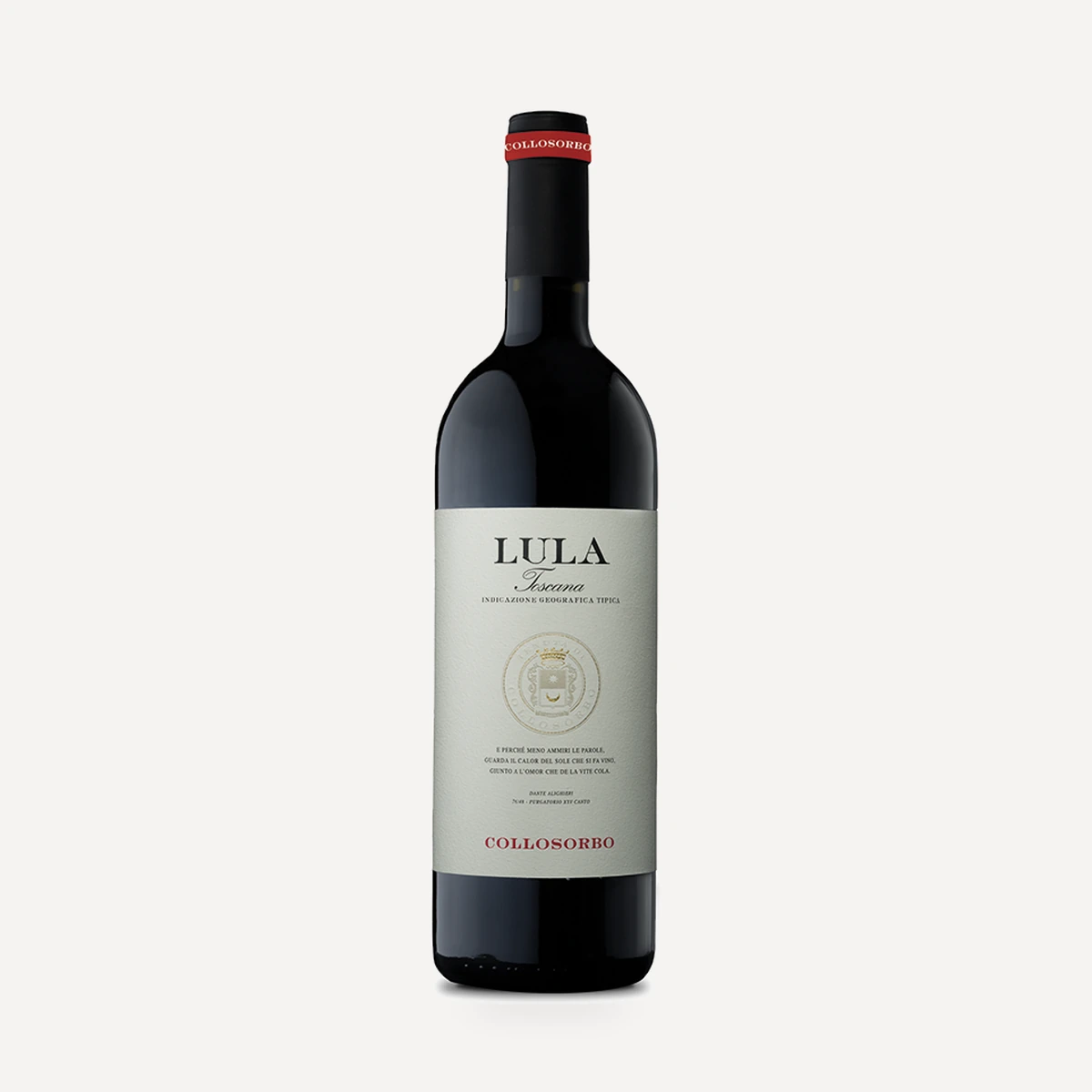
LuLa Toscana Rosso IGT