Storia
Sienese origins and settlement in Montalcino
The Costanti were a Sienese patrician family by the fifteenth century. An early surviving trace is the coat of arms of Giovanni Costanti, a jurist who served as rector of the university in 1506; the arms remain in the university’s Rettorato Palace.
Scipione Costanti distinguished himself in the defence of Montalcino. His son Marco Antonio, born in June 1549, spent his childhood amid the events surrounding the fall of the Sienese Republic. On 21 April 1555, the Costanti were among 242 noble families—and 435 other Sienese families—who moved to Montalcino as Florentine Guelf power threatened Siena, hoping to preserve Sienese independence there.
Blaise de Montluc, commander of the French forces allied with Siena, described rubbing his pale face each day with the deeply coloured, firmly structured wine of Montalcino. The gesture was intended to reassure the besieged population, although the commander’s health had been weakened by privation.
In 1559, Panfilo dell’Oca surrendered the town’s keys to the Florentine and Spanish forces, bringing the Republic to an end. The Costanti nevertheless remained in Montalcino and acquired extensive landed property. From then onward, the family’s history became closely connected with the town and its wine culture.
The hereditary title and agricultural estates
Crescenzio and Carlo Costanti departed from the family’s predominantly Montalcino-centred path by serving the Republic of Venice. Their service in 11 naval engagements and six battles on land brought them the hereditary title of Counts in 1711.
Later generations concentrated on agriculture. They cultivated extensive properties received through concession or acquired through local marriages. The family’s holdings stretched from the original Colle al Matrichese to Castello di Bibbiano and onward to Sovignano, a few kilometres from Siena.
Around the middle of the eighteenth century, another Crescenzio Costanti emerged as an attentive and respected winegrower. He travelled frequently to France to follow developments in oenology. Convinced that difficult, stony hillsides produced the best wine, he opened a new vineyard in such terrain. The work uncovered Etruscan antiquities and contributed to the archaeological history of Montalcino. His portrait remains at Colle al Matrichese.
Tito Costanti and the early history of Brunello
Count Tito Costanti was both a lawyer and a winegrower. Together with other Montalcino producers, he was associated with the earliest recorded use of the name Brunello for the town’s wines.
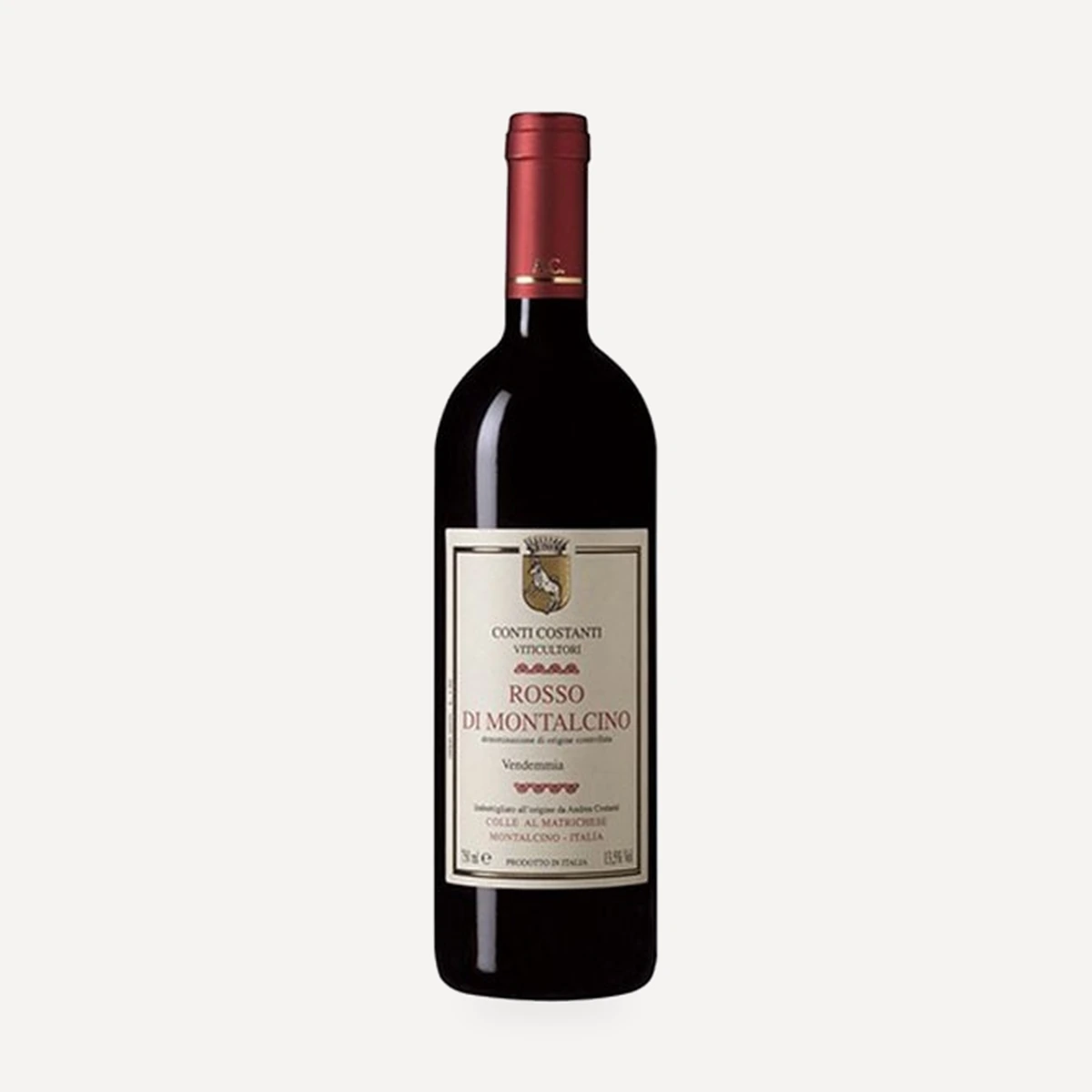
At the Provincial Wine Exhibition of Siena in August 1870, Tito presented a Brunello from the 1865 harvest. The five-year-old wine had an alcoholic strength of 14%. He also presented a wine from the 1869 harvest under the Brunello name, considering it worthy of that identity despite being only one year old. The two wines anticipated the later distinction between the extended maturation of Brunello di Montalcino and the younger expression represented by Rosso di Montalcino.
Emilio Costanti and wider distribution
The family’s commitment to Brunello continued through Emilio Costanti, a physician and winegrower. He expanded the commercial reach of the wine from Colle al Matrichese. Until the early 1960s, the bottles were almost impossible to obtain outside a small circle of selected friends and a few foreign enthusiasts of little-known crus.
Costanti Brunello had circulated principally at dinners of the Pescara Rotary Club, whose local section Emilio presided over. It subsequently became better known in Italy and abroad. Demand quickly exceeded the estate’s small output, then measured in only a few hundred bottles. Emilio also revived and refined the family’s historic label, helping establish the identity of the Montalcino cellar.
Andrea Costanti since 1983
Andrea Costanti assumed responsibility for Colle al Matrichese in 1983 while still very young. He inherited stewardship of one of the comparatively few Montalcino labels then recognised for high quality.
His work has sought harmony between the character of the vineyards and a personal aesthetic centred on elegance, aromatic breadth and complexity. He has pursued wines designed for long development rather than immediate accessibility, combining respect for Brunello tradition with continuing technical innovation. Vine age, distinctive vine biotypes, substantial diurnal temperature changes and the composition of the soils are treated as central elements in this approach.
Terroir
The estate occupies Colle al Matrichese in Montalcino. Its vineyards lie at approximately 310–400 metres above sea level, with particular care given to exposure. The elevation produces pronounced temperature variation that supports aromatic development.
The soils are extremely poor in organic matter but rich in stony components. Their geology is identified as Cretaceous-era galestro. A shell fossil found within a vineyard illustrates the sedimentary material present in the terrain. The difficult, rocky character of the hillsides has been associated with wine quality within the family since the eighteenth century.
Vinificazione
Sangiovese, known locally as Brunello, forms the core of the vineyards, complemented by three more recently planted hectares of Merlot and Cabernet. Vine age ranges from 6 to 25 years, while planting density varies between 3,333 and 5,500 vines per hectare.
Exposure was selected with particular care across vineyards situated at approximately 310–400 metres. Harvest normally takes place at the beginning of October. No vineyard treatment, soil-management or certification regime is specified.
Fermentation takes place on the skins in stainless-steel vats. Depending on the vintage, skin contact and fermentation last between 14 and 21 days.
Brunello matures in 30 hL Slavonian oak casks that range from 3 to 15 years old, as well as in 5 hL oak vessels. Younger wines are matured in medium-toast Allier oak barrels of 225 and 335 litres; these barrels are used at three years of age.
The approach to Riserva is selective rather than routine. Andrea Costanti reserves the designation for the strongest Brunello from an exceptional harvest, a level he expects approximately three times per decade. The intended result is a more tannic and acidic young wine capable of developing for decades and therefore requiring substantial bottle maturation.
Filosofia
Andrea Costanti’s approach seeks a direct harmony between the character of Colle al Matrichese and his own conception of wine as an experience of elegance, aromatic breadth and pleasure. The goal is not immediate simplicity but long-lived, complex wine that needs time to mature.
Tradition and innovation are treated as complementary. Brunello’s established identity remains the foundation, while continuing technical changes are accepted when they strengthen aromatic expression, depth, persistence and longevity. Vine age, distinctive biotypes, soil composition, elevation and temperature variation are regarded as essential contributors to that objective.
Riserva follows an explicitly traditional hierarchy: it represents the best Brunello from an exceptional year rather than a separate cru or single-vineyard category. Its greater youthful tannin and acidity are understood as the structure required for decades of ageing. Authenticity and resistance to short-lived stylistic fashion are central to the estate’s stated ideal.
Vini
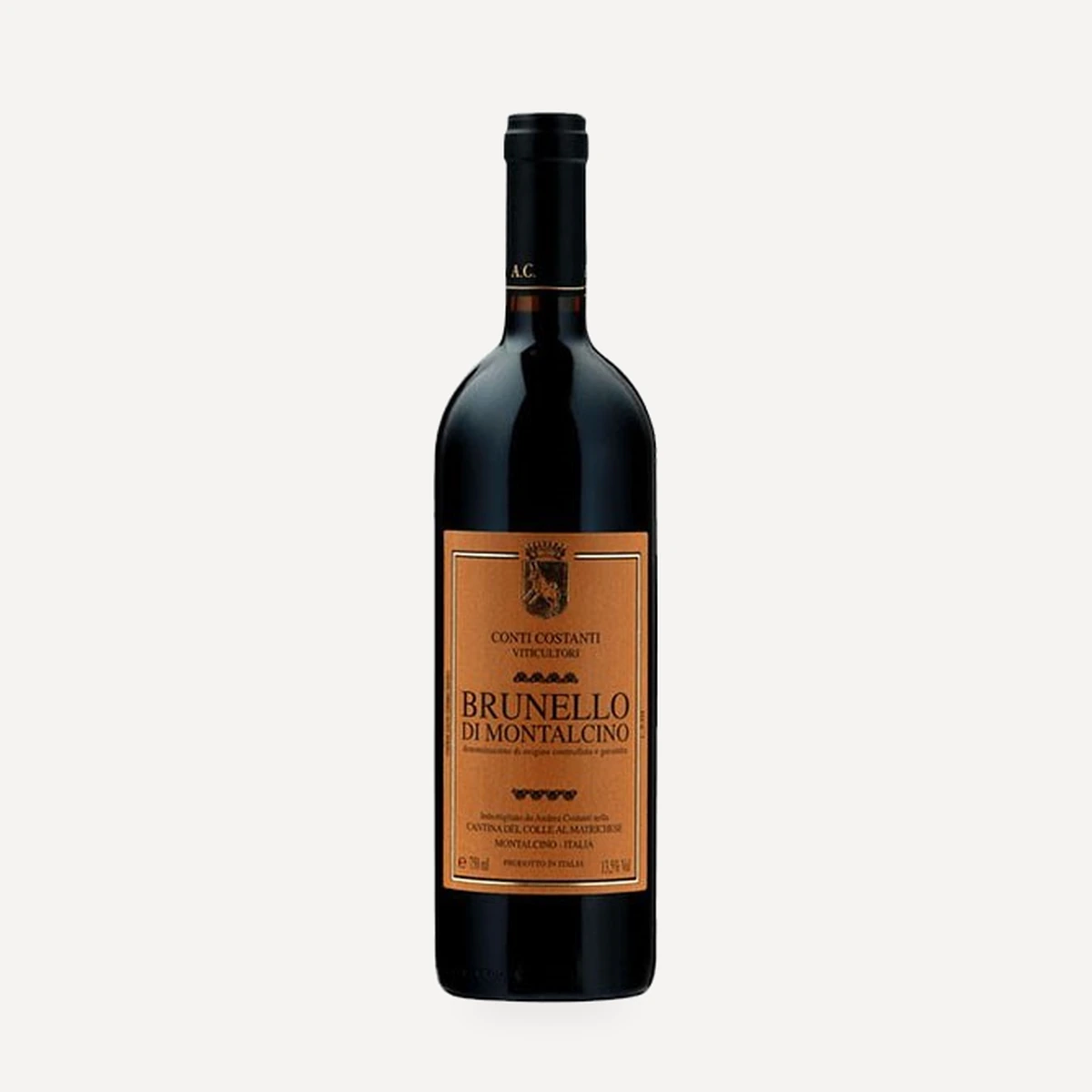
Brunello di Montalcino DOCG
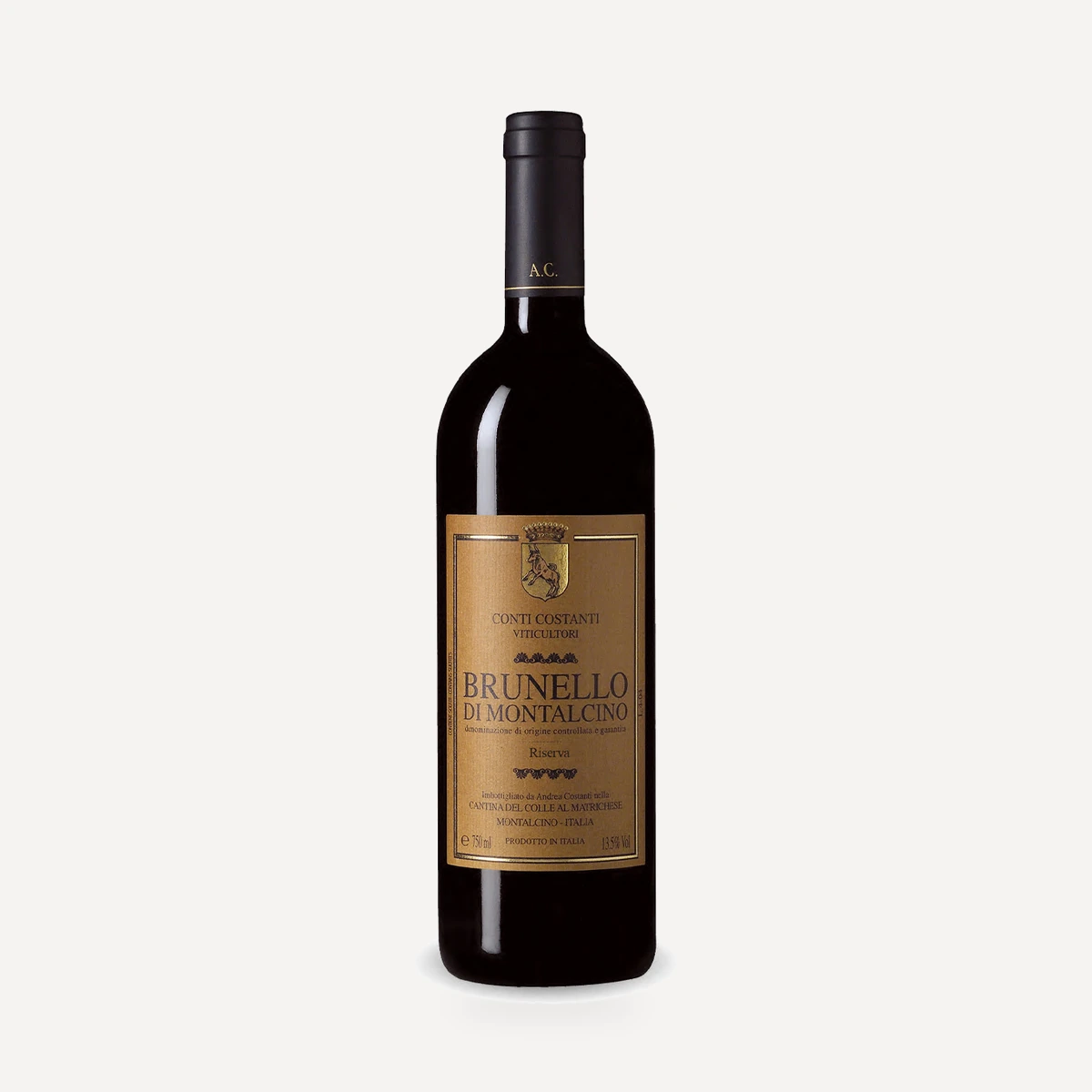
Brunello di Montalcino Riserva