Storia
Formation of an independent path
Giampiero Antonio Diruggiero was born and raised in Basilicata and later made Umbria his home and workplace. His relationship with agriculture began early through family tradition and direct contact with the land. He trained as an oenologist and subsequently gained professional experience in Tuscany, Veneto and Friuli Venezia Giulia. These stages developed his technical knowledge while helping him define a personal direction within contemporary winegrowing.
In 2019, Diruggiero left the conventional path to work independently. He returned to a more agricultural and essential conception of wine, rooted in the places where the grapes grow and supported by cellar work intended to guide rather than impose. This decision ultimately produced two geographically distinct identities: Dune Bianche in Basilicata and Due Dune in Umbria.
The Umbrian project
Due Dune developed as the Umbrian expression of Diruggiero’s work. Its growth has depended on shared relationships and collaboration, particularly the partnership with Marisa Mastrosimone. Their different skills and experiences are brought together within a common vision of wine.
The project established its vineyards on the hills of the Valle Umbra, in the municipalities of Cannara and Bettona. Approximately 2 ha are in production. A further 0.5 ha was planted in 2024. All vinification takes place in Umbria, and the working cellar is in Bevagna.
Production has remained deliberately small and is approximately 10,000 bottles, although the quantity changes with each vintage. Vineyard management, fermentation, maturation and bottling are followed directly rather than organized around industrial-scale production.
The 2024 perpetual-reserve project
Beginning with the 2024 harvest, Diruggiero introduced a non-oxidative perpetual reserve for all of his wines. Part of each new vintage is added to the existing reserve, preserving the character of the new season while carrying forward material from preceding years. The reserve is maintained in completely filled vessels to prevent oxidative development, using exhausted barrels or 54-litre glass demijohns.
The 2024 vintage therefore marks the final harvest intended to exist entirely on its own and the first component of a continuing multi-vintage mass. Diruggiero describes the concept as an “infinite vertical”: instead of presenting past vintages separately, each successive wine retains part of the vintages that preceded it. The purpose is not to correct vintage variation or manufacture uniformity, but to treat time as an ingredient and give the wines an accumulating memory.
Terroir
Due Dune is the Umbrian expression of the wider Dune Bianche undertaking. Its vineyards occupy hills in the Valle Umbra within the municipalities of Cannara and Bettona.
One individually identified site is a Pinot Grigio vineyard of less than 1 ha at Santa Croce, a frazione of Cannara. It had been planted approximately fifteen years before the 2024 account in which it was described.
The range brings together native and international varieties established in the Valle Umbra. The documented grapes are Sangiovese, Grechetto, Trebbiano Toscano, Malvasia, Malvasia di Candia, Pinot Grigio, Merlot and Cabernet Sauvignon.
Vinificazione
The vineyards are managed according to a restrained-intervention approach. Copper, sulfur and zeolite are the only vineyard treatments identified for Due Dune, and their use is limited to the minimum considered necessary.
The project links technical experience with agricultural sensitivity and direct personal control. Vineyard decisions form part of a continuous process followed through fermentation, maturation and bottling, allowing work to remain at an artisanal scale rather than being organized around industrial production.
All Due Dune wines are vinified in Umbria, with the working cellar located in Bevagna. The cellar approach is deliberately essential and low-intervention: fermentations begin spontaneously without selected yeasts, and no chemical processing aids are used. The dedicated Due Dune description specifies that the wines are neither fined nor filtered.
Skin maceration is an important part of the approach, but its duration is adapted to the characteristics of the grapes rather than fixed by a standard recipe. Maturation takes place in exhausted wooden vessels of different sizes. Neutral wood is used to accompany development without imposing a dominant oak character or disturbing the wine’s balance.
The broader production philosophy combines minimal intervention with technical precision. Considerable attention has been devoted to understanding fermentation, managing maturation and maintaining wine stability. Sulfur dioxide is used in very restrained quantities across the broader project, while direct oversight extends from vineyard work to bottling.
Beginning with the 2024 harvest, the wines enter a non-oxidative perpetual-reserve system. A portion of each vintage is retained and joined by wine from every subsequent harvest. The reserve remains in completely filled exhausted barrels or 54-litre glass demijohns, preventing oxidation while preserving an accumulating record of successive seasons. This is not intended to correct one vintage with another or create a uniform profile; it is designed to make time and continuity part of the wine’s composition.
Filosofia
Due Dune is guided by the idea that wine should bring together place, experience and agricultural sensitivity. The cellar is intended to accompany the grapes rather than force them into a predetermined style, while the Umbrian wines retain an identity distinct from the related Basilicata project.
Diruggiero’s stated objective is to allow the place of origin to remain legible without treating low-intervention wine as an excuse for defects or imprecision. Spontaneous fermentation, adaptable maceration, neutral vessels and restrained additions are therefore combined with careful study of fermentation, maturation and stability. Wine should remain alive and expressive but also pleasurable to drink.
Small production permits personal control from vineyard management through bottling and leaves room for experimentation outside industrial production logic. The range deliberately includes both native and international grapes established in the Valle Umbra, interpreted through a consistent production sensibility rather than through standardized recipes.
The perpetual-reserve program extends this philosophy into the dimension of time. Diruggiero rejects the idea that a wine or producer can be fully represented by one isolated harvest. Each season changes the vineyard, climate and winemaker; retaining a portion of successive vintages allows those changes to accumulate rather than beginning again from zero. The intended result is a continuing history—an “infinite vertical”—rather than a snapshot of one year.
Vini
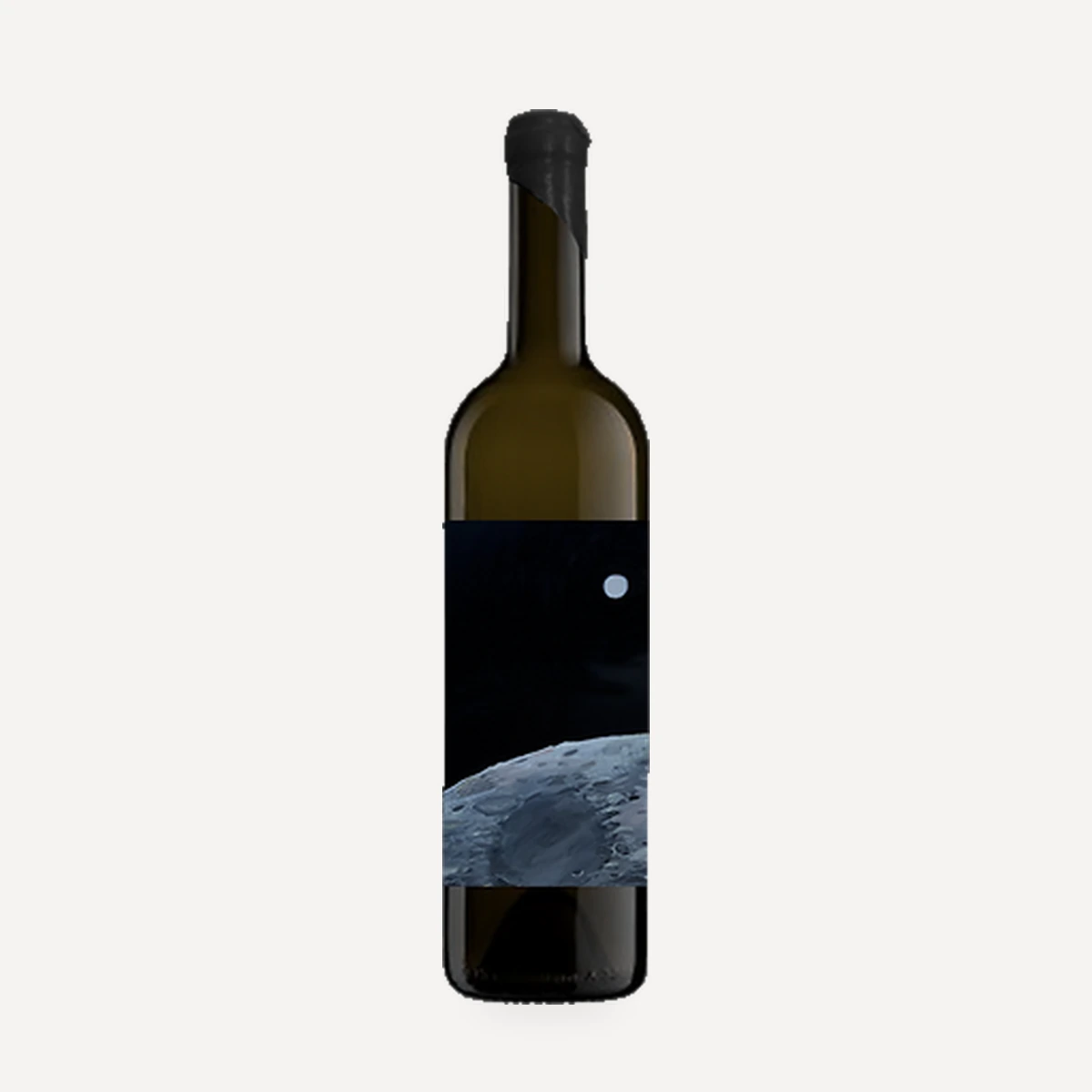
Crisium