Storia
Agricultural origins
Fabbrica di San Martino belongs to the historic agricultural landscape of the hills around Lucca. From the Middle Ages onward, the area's prominent families invested proceeds from banking and finance in productive land. Large estates were traditionally divided into two complementary parts: an enclosed residential complex containing the manor house, garden, kitchen garden, orchard and service buildings, and a productive estate organized into farms with houses and agricultural buildings.
The early villa and the eighteenth-century estate
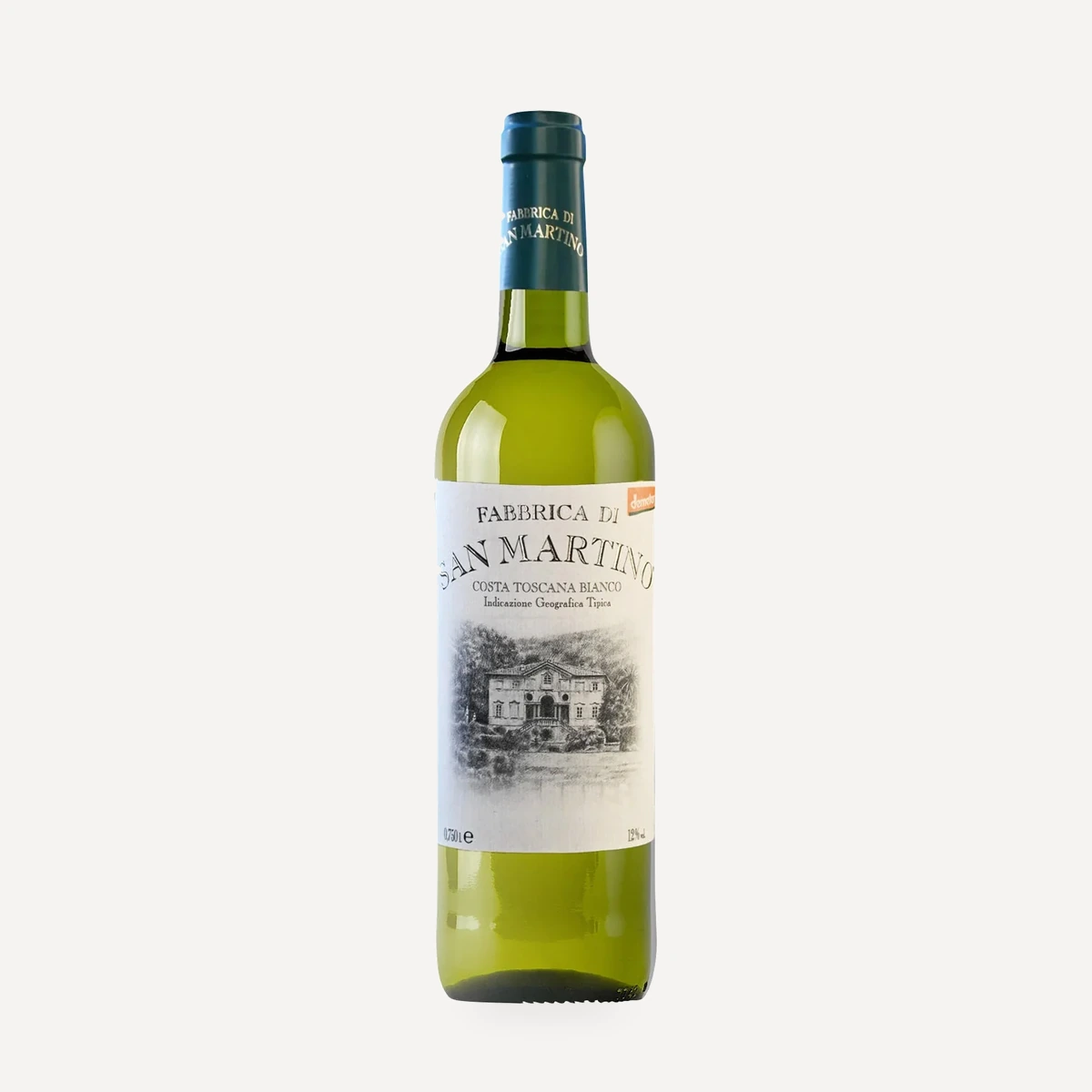
The present Baroque villa incorporates part of an earlier rural villa dating from the sixteenth century. In 1735, Count Lorenzo Sardi, a silk merchant, commissioned the construction of the current manor house upon those older structures. It became one of Lucca's significant eighteenth-century villas.
The farmhouse beside the villa was built in 1751. Together with the manor house and the agricultural land, it formed part of an estate in which residence and farming remained closely connected.
Family continuity
San Martino belonged to Giovanna Tronci's family for years, and she was born and spent her early childhood there, surrounded by the estate's natural environment. Her family later had to leave while she was attending high school, but she retained a strong attachment to the place and sought to preserve its history, traditions and agricultural identity. Across successive generations, the family has worked to maintain the estate's agricultural vocation and pass on the character of its territory.
Restoration and wine production in 1999
In 1999, Giovanna Tronci restored the old farmhouse so that it could accommodate friends and visitors interested in nature. In the same year, Giuseppe Ferrua began producing his own wine, bringing his long professional experience in restaurants and his interest in food, hospitality and wine to the estate.
The estate today
Fabbrica di San Martino now extends over 20 hectares. Vineyards producing wines under local denominations coexist with olive groves, woodland, the eighteenth-century villa and its associated farmhouses. The restored farmhouse retains original floors, ceilings, furnishings and architectural materials, while the estate continues to combine agriculture, wine production, olive-oil production and hospitality.
Terroir
Fabbrica di San Martino lies in Tuscany on the green hills northwest of Lucca, approximately 5 km from the city centre. It is situated in the Colline Lucchesi DOC winegrowing area and along the Strada del Vino e dell'Olio di Lucca. Its recorded coordinates are 43.87703° N, 10.47261° E.
The estate looks south across Lucca, its historic walls and the surrounding plain, with views encompassing the Serchio River and the encircling mountains. Its 20 hectares form a mixed agricultural and natural landscape of vineyards, olive groves and woodland. The cellar's approach treats the incoming grapes as an expression of the soil's minerality, the conditions of the growing season and the character of each variety.
Vinificazione
Fabbrica di San Martino is certified organic by Bioagricert and biodynamic by Demeter. Synthetic pesticides, herbicides and fertilizers are excluded throughout the farm.
The estate treats the farm as an interconnected whole rather than focusing solely on output. Organic material generated on the property is recycled to limit outside inputs and sustain the balance between soil, plants and the broader environment. Biodiversity is encouraged through the coexistence of vines and other crops with bees, cows and donkeys. Soil fertility, vitality and long-term productivity are central objectives.
Agricultural operations are planned with the biodynamic calendar, taking account of astral cycles and their perceived influence on plants. Preparations made from organic and mineral materials are applied at specific times. Preparation 500, horn manure, is used to encourage humus formation and soil fertility. Preparation 501, horn silica made with crushed quartz, is intended to stimulate the functions of light and heat and enhance photosynthesis. Both are diluted and dynamized in water before being sprayed on the soil or vines.
During winter, the estate sows a mixed green-manure crop. Each plant in the mixture has a regenerative or soil-improving function; incorporation of this vegetation supplies nitrogen and organic matter and supports soil life. The estate reports that continued biodynamic cultivation has made its soils darker, richer in humus and more biologically active over successive years.
The vineyard is observed closely rather than managed toward a predetermined output. Plant and soil conditions guide interventions, and natural vine cycles are respected. Red and white grapes are picked by hand. Truck use is deliberately limited to reduce carbon-dioxide emissions and avoid unnecessary soil compaction or disturbance.
Grapes enter the cellar as expressions of soil minerality, the growing season and their individual varieties. The objective is to retain those distinctions through fermentation and bottling rather than standardize them.
Fermentation relies exclusively on yeasts naturally present on the grapes; laboratory or other externally sourced yeasts are avoided. Fermentations proceed naturally, without additives or clarifying agents. Wines are generally bottled without filtration, and sulphur-dioxide levels are kept low.
These choices are intended to retain the original character of the fruit and its connection with Lucca. The resulting wines are expected to vary with each growing season rather than reproduce a uniform profile from year to year. Across the range, the estate also uses steel, tonneaux and 1,000-litre oak vessels according to the individual bottling, while hand harvesting, indigenous yeasts and restrained cellar intervention remain recurring practices.
Filosofia
Nature and individuality
Fabbrica di San Martino presents nature as the governing principle of the estate. The villa, vineyards, cellar, olive groves and agricultural products are treated as inseparable parts of one place, managed with respect for its land and history. Natural variation is valued: products are not expected to conform to a standardized model, just as fruit gathered from a wild tree may possess its own distinctive character.
Farming as a connected system
The biodynamic approach regards soil, plants, animals, the sky and human work as parts of an interconnected whole. The principal aim is not output alone but the preservation of soil fertility and vitality. External interventions are limited, farm-generated organic matter is recycled, and biodiversity is encouraged. In the vineyard, observation replaces attempts to force production; the vines and soil determine what work is needed.
Territory through wine
Food and wine are understood as ways of experiencing their place of origin. In the cellar, indigenous yeasts, natural fermentation, the avoidance of additives and clarification, generally unfiltered bottling and restrained sulphur use are intended to maintain territorial and vintage character. The wines are consequently accepted as changing from one year to another rather than being made to reproduce a fixed profile.
Personal stewardship
Giovanna Tronci's emphasis on small details extends to the restoration and hospitality activity, while Giuseppe Ferrua connects wine quality with attentive work in nature and the shared experience of tasting. Their stated objective is to transmit the estate's history, agricultural identity and daily relationship with its landscape.
Vini