Storia
Roman origins of the name
The name Caspri is traced to Eliano Casperio—also rendered as Aelianus Casperius—a Roman senator, praetorian prefect and loyal general under Emperor Domitian. He had a residence on this land in the 1st century AD and also served under the emperors Domitian and Nerva. No identifiable Roman structures survive within the estate, but the discovery of a section of the Cassia Adrianea near the villa and estate boundary points to a Roman settlement of some importance in this part of the Valdarno.
The estate takes shape
The estate is described as dating back to the 17th century. Around the middle of the 18th century, the property began to assume its present form: the manor house was built and Caspri's first vines were planted.
In 1821, Caspri appeared in the Tuscan archives within the Catasto Leopoldino. The cadastral documents delineated the estate clearly for the first time, recording boundaries already very similar to those of the present property.
During the first half of the 20th century, Caspri remained a relatively self-contained agricultural world beside the community of Rendola. Viticulture expanded strongly during this period. The property subsequently passed through several hands while its physical extent remained largely unchanged.
The beginning of the current project
Suzanne Syz and Bertrand Habsiger began working together in 2005. The land they encountered was arid, hard, unproductive and poor in minerals and other substances capable of sustaining crops. Restoring its fertility required patience, knowledge of biodynamic agriculture and approximately four and a half years of work.
Caspri's current identity as a biodynamic wine estate dates from 2006, when Suzanne Syz took ownership after recognizing the property's potential and chose to produce biodynamic wines. The soil was progressively revived through biodynamic practices, including plant-based herbal infusions and decoctions intended to re-establish healthy vegetative processes.
In 2007, Alsatian winemaker Bertrand Habsiger introduced biodynamic principles across the vineyards, olive groves and vegetable garden. Under his direction, the estate combined the cultivation of established Tuscan varieties with trials of non-local grapes. Canaiolo, Ciliegiolo and Sangiovese remained the principal red varieties, while Malvasia and Trebbiano supplied the whites; Syrah, Grenache and Pinot Noir were added through adaptation trials.
The restored estate developed into a mixed agricultural property producing wine, extra-virgin olive oil, vegetables and preserves. Annual wine production reached approximately 35,000 bottles.
Terroir
Fattoria di Caspri lies at Rendola, in the commune of Montevarchi, on the strip of land separating the Valdarno from the Chianti area. Its ten hectares of vineyards occupy the Valdarno hills within a landscape that also includes olive trees, cypresses, pines and vegetable gardens.
The vineyards experience a semi-continental climate moderated by a marine influence. Their position, soil composition and climatic setting are presented as the principal elements shaping the character of the fruit.
The land was arid, hard, unproductive and mineral-poor when the current project began. Biodynamic cultivation progressively restored its vegetative activity and fertility. Within the property, Poggio Cuccule is identified as the driest locality; its old Sangiovese vines are associated with fine texture and depth of expression.
Vinificazione
Biodynamics governs the vineyards as well as the olive groves and vegetable garden. The approach is based on treating the farm as a living agricultural system, respecting natural cycles and producing without depleting the soil or disrupting its existing biological processes.
No chemical products or pesticides are used. Vines and soils receive herbal teas and decoctions made from plant extracts, intended to support healthy vegetative development and restrict parasites. The wider programme includes the sowing of green manure and restrained, respectful tractor use.
These practices were introduced to rehabilitate ground that was initially arid, hard, unproductive and poor in minerals. The objective is to care for the soil rather than exploit it, allowing fertility and biological activity to recover. Biodynamic principles are applied throughout the mixed farm rather than being confined to the vines.
Fermentations are spontaneous and take place in 1,200–1,500 L wooden fermenters. The wines mature in 500–600 L wooden barrels.
Chemical additions, including sulphur dioxide, are avoided during production and bottling. Some wines receive a coarse filtration before bottling. The white varieties Trebbiano and Malvasia may be vinified together with extended skin contact.
Filosofia
Caspri presents biodynamics as an ethical commitment extending across the whole farm. Its philosophy treats the agricultural ecosystem as a living organism and calls for attentive observation of the Earth's natural rhythms and cycles.
The stated goal is to produce without impoverishing the soil or interfering with its biological processes. Biodynamic and traditional methods are regarded as the sustainable response to pollution and agriculture driven by overproduction. Abstaining from chemicals and pesticides, limiting mechanised intervention and using green manure are intended to let the land express itself through the quality and integrity of its produce.
The estate links quality directly to harmony with nature. Its work combines respect for established Tuscan grapes with experimentation involving other varieties, without imposing a rigid stylistic boundary on the cellar.
Vini
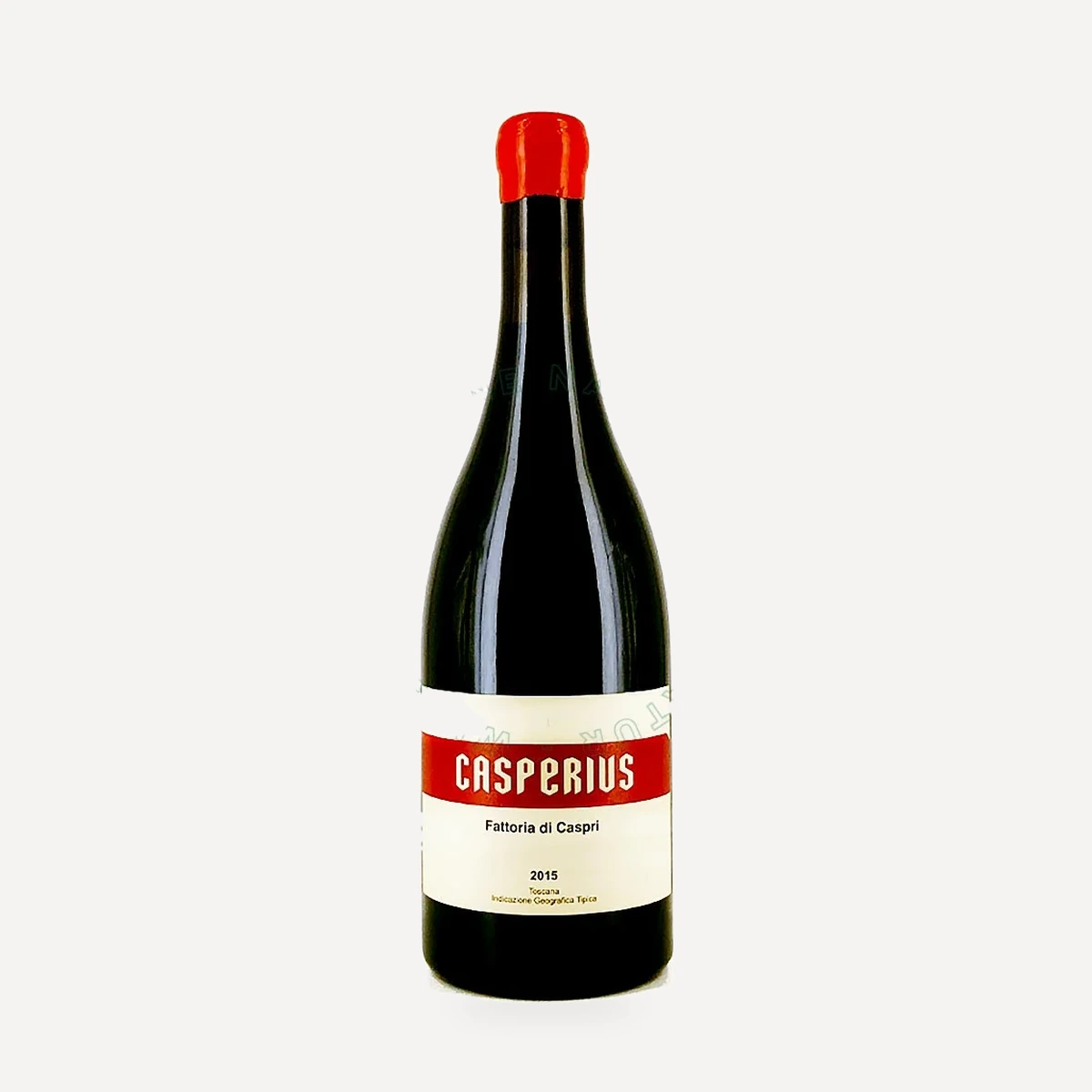
Casperius
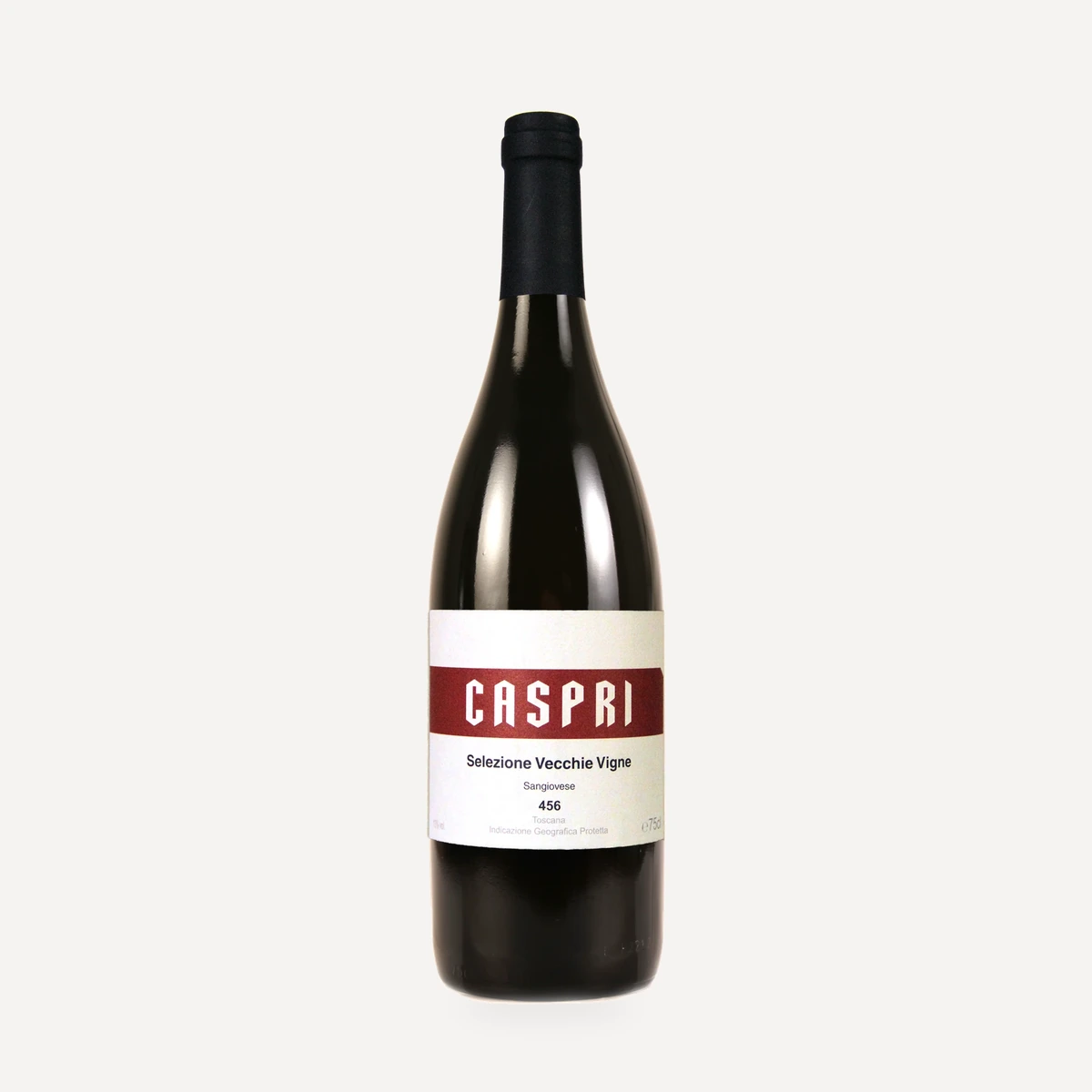
Selezione Vecchie Vigne