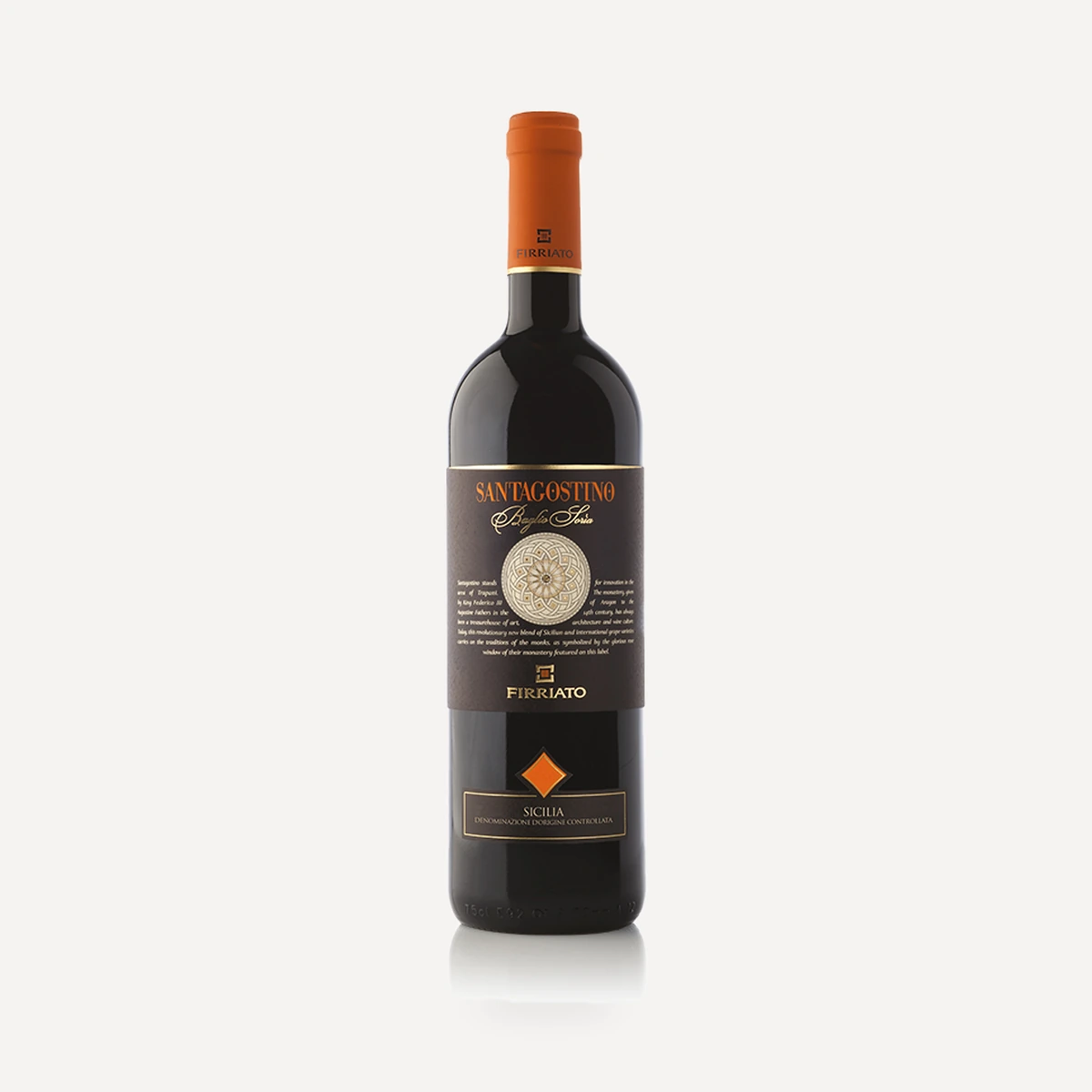
Questo vino
Vineyard and terroir
Santagostino Rosso is grown at the Baglio Sorìa Estate in the Trapani countryside, close to the western Sicilian coast. The south to south-west-facing vineyard lies at 200 m above sea level. Its clay-limestone soils contain a high proportion of red marl and retain consistent moisture below ground, helping the vines avoid water stress even in particularly dry years. The vines are cordon trained and spur pruned or Guyot trained, planted at 4,500 vines per hectare, with a yield of 70 quintals per hectare.
Grapes
Nero d’Avola and Syrah. The wine was an early Sicilian combination of a native and an international variety.
Vinification
Syrah is picked manually in the first decade of September, followed by Nero d’Avola in the second decade. Traditional red vinification takes place at controlled temperature in stainless-steel tanks. Malolactic fermentation is completed.
Ageing
Eight months in American-oak barriques followed by 12 months in bottle.
Technical data
Alcohol: 14% vol. Serving temperature: 16–18°C.
Tasting profile
Dense, deep ruby with vivid purple traces. Concentrated aromas of morello cherry, berries, rhubarb, cloves, aromatic herbs and plum mingle with liquorice, ink and tobacco leaf. The palate is suave, soft and caressing yet powerful and exuberant, with lively flavour and velvety tannins.
Serving and pairing
Serve at 16–18°C. A featured pairing is a revisited caponata of aubergine, pepper, celery, onion, tomato, olives, capers and almonds.
Vintage notes
The 2016 season was mild and balanced, allowing the red grapes to ripen slowly and develop fine, dense tannins. Another vintage narrative records an exceptionally hot season in which the fruit was picked unusually early—Syrah on 21 August and Nero d’Avola on 28 August. That wine showed ruby colour with violet reflections, Mediterranean scrub and spice, a soft entry, rounded tannins and supporting acidity.
Label / history
Produced for more than 30 vintages, Santagostino Rosso is closely identified with Baglio Sorìa and with Firriato’s early work combining Nero d’Avola and Syrah.