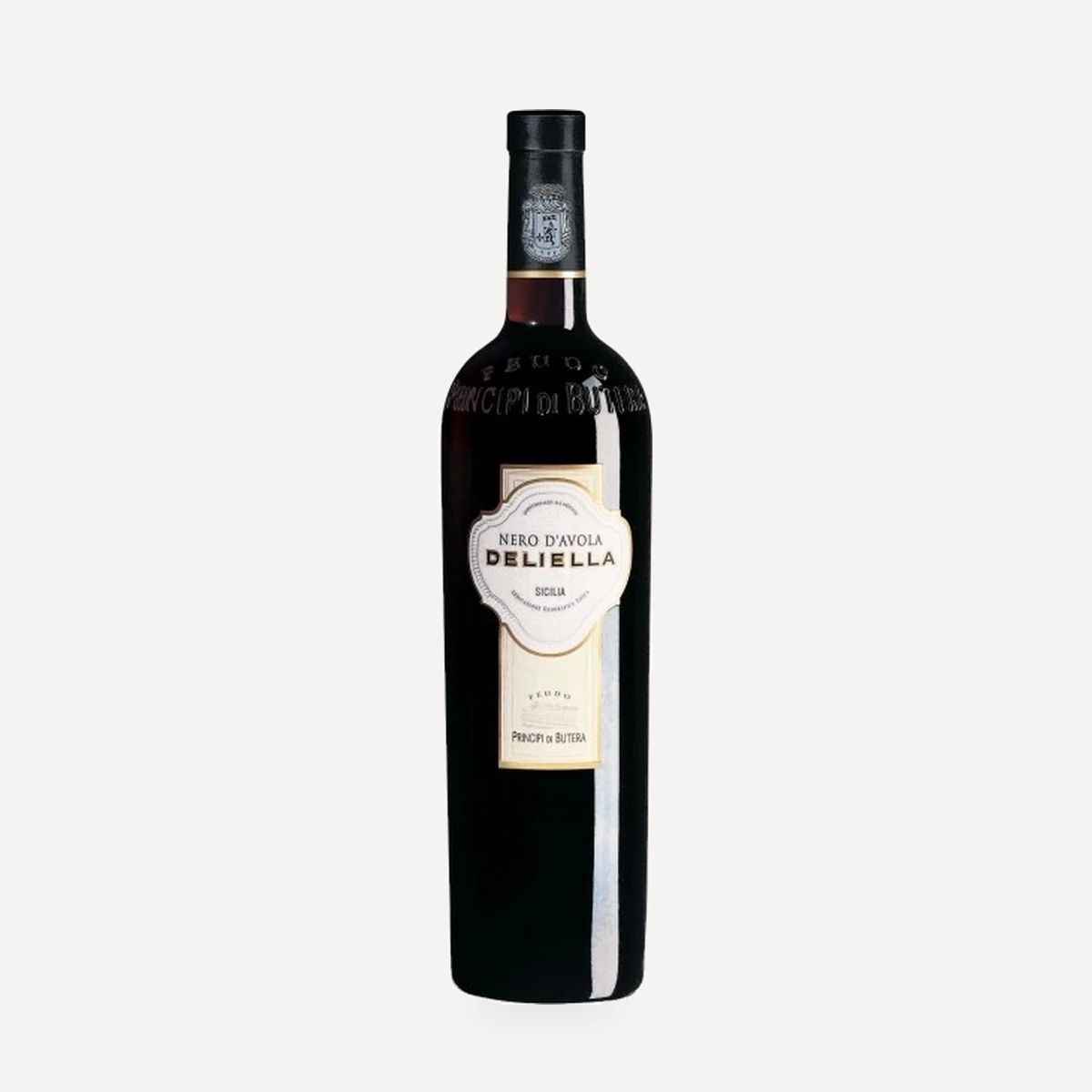
Questo vino
Vineyard and terroir
Deliella is the estate’s premier cru and takes its name from Contrada Deliella, where Principi di Butera is located. It comes from a single 5.5 ha vineyard at 350 m above sea level. The soil combines clay, silt and sand with abundant stony material and active limestone reaching 15%.
Planting density is 4,200 vines/ha and yield is limited to 40–50 q/ha. The vines are spurred-cordon trained and pruned with a system designed to preserve the plant’s natural sap flow by limiting the size of pruning cuts. Canopy work is performed manually. Leaves are removed on the eastern, morning-facing side to encourage gradual ripening through light, strengthen the skins and reduce the risk of overripening. Strict bunch thinning further limits yields, while cultivation beneath the rows has allowed herbicides to be eliminated.
Grapes
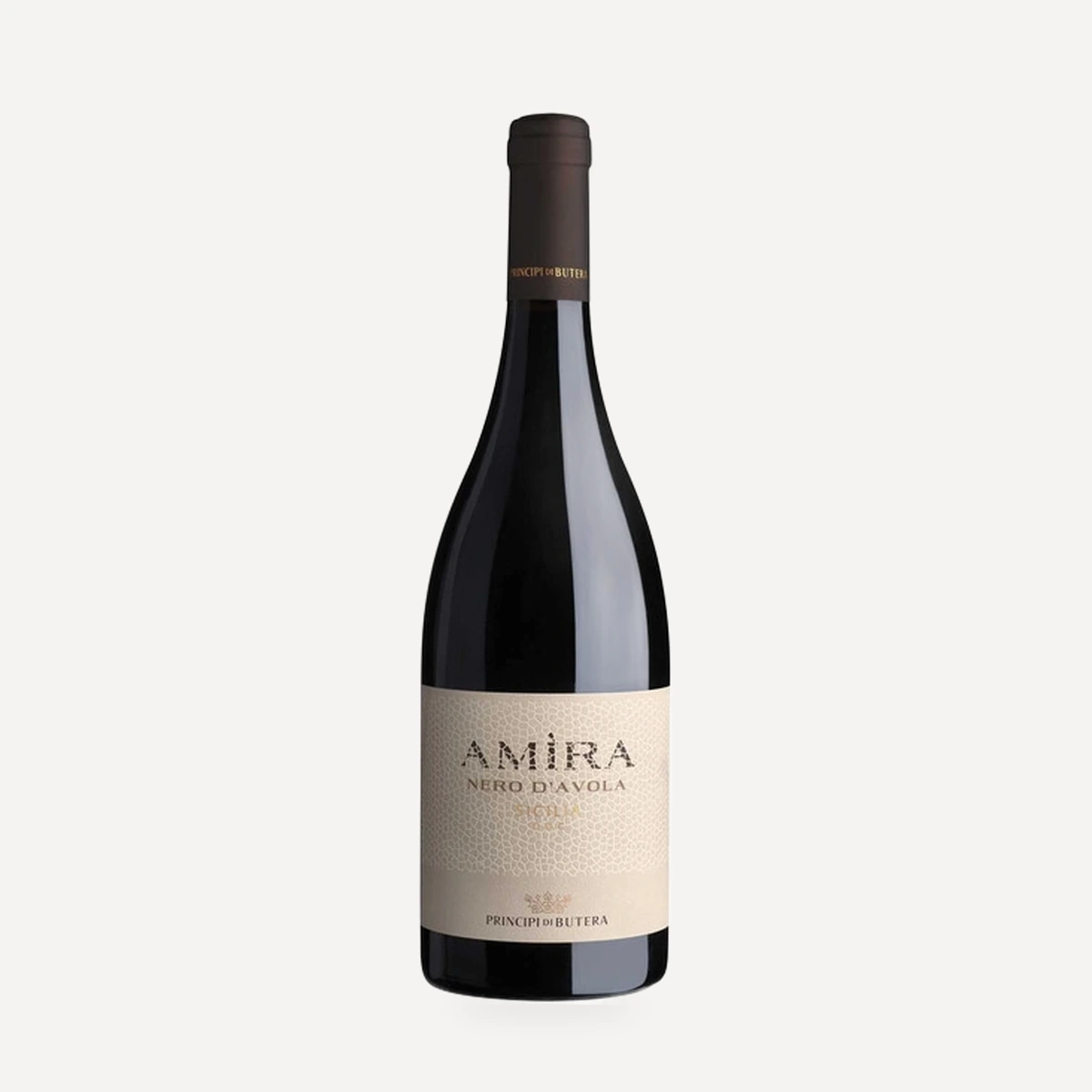
100% Nero d’Avola.
Vinification
The 2016 fruit was picked manually into 15 kg crates during the first half of October.
Ageing
The wine matures for 14 months: 90% in large 30 and 60 hl barrels and 10% in second-use 350 L tonneaux. The components are assembled in stainless steel before approximately one year of bottle ageing.
Technical data
- Alcohol: 14% vol.
- Production: 12,000 bottles
- Formats: 750 ml and 1,500 ml
- Ageing potential: up to 20 years
- First vintage: 2000
Tasting profile
Ruby red. The refined bouquet combines cherry and ripe morello cherry with fresh blueberry and raspberry, underlined by a pronounced flinty mineral note. The palate is bold, full and sumptuous, with substantial structure held taut by fresh minerality. The finish is long, silky and intense.
Serving and pairing
Serve at 16–18 °C. Pair with full-flavoured first courses, grilled or sautéed white and red meats, baked lamb, and mature cheeses that are not blue-veined.
Vintage notes
The 2016 growing season was regular throughout the principal phenological stages. A cool, dry spring was followed by a summer punctuated by occasional rain, few heat spikes and marked day–night temperature differences. These conditions encouraged balanced, gradual ripening. The comparatively late harvest began in early October and produced fragrant, crisp and juicy Nero d’Avola.