Storia
Origins in the late nineteenth century
Fornacelle began as a farm on the Tuscan coast at the end of the nineteenth century. Its founder, Giulio Batistoni, worked the local vineyards as a tenant farmer for the Counts Della Gherardesca. He eventually acquired the family's first parcel of land and later left it to his son, Osvaldo.
The estate's name preserves the memory of the numerous old furnaces once found in the area. Remains of these structures still lie beneath the winery cellar.
The second and third generations
Osvaldo subsequently transferred the property within the family. His daughter Marisa and her husband, Vincenzino Billi, developed it into a broader agricultural business. Alongside wine and extra-virgin olive oil, the farm produced fruit and vegetables. This mixed-farming identity remained part of Fornacelle's development, with an olive grove of about 1,000 trees complementing the vineyards and horticultural crops.
The 1996 transition
The decisive modern phase began in 1996, when Stefano Billi assumed responsibility for the family inheritance. He planted new vineyards and selected varieties and clones in relation to the soils of the estate's different plots. Silvia Menicagli, Stefano's wife, later joined him in managing the property.
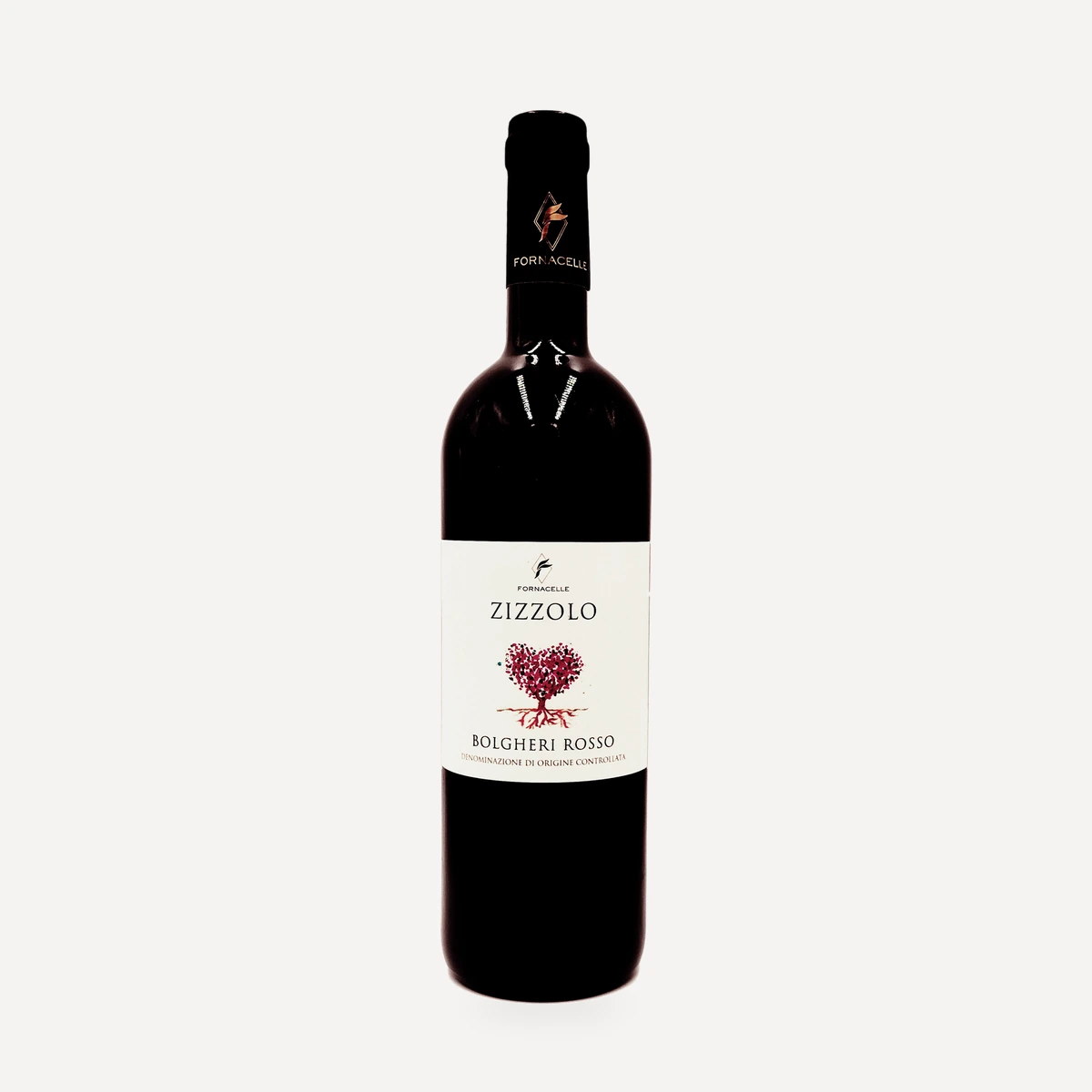
Several vineyard blocks were established during this period. Plantings dating from 1998 include the vines associated with Guarda Boschi, Vigna allo Zizzolo, Foglio38 and Erminia. White-variety plots associated with the Fornacelle, Vincenzino and Vermentino bottlings were planted in 2002.
New wines and a purpose-built cellar
The first vintage of Erminia was made in 2008, the year Stefano and Silvia's daughter Erminia was born. The wine became part of the estate's Artistic Collection, in which artworks are used on the labels to connect cultivation, craftsmanship and artistic expression.
In 2018, Fornacelle completed a new vinification and ageing cellar beside the estate courtyard. The building was conceived as a low-environmental-impact intervention integrated into the surrounding landscape. A temporary installation by Franco Menicagli, made from simple reclaimed materials, was placed in the barrel cellar to explore the dependence of human work on nature and the surrounding environment.
Today, the 15-hectare estate remains in the Billi-Batistoni family and is managed as a fourth-generation family property. Nine hectares are under vine, and annual production is approximately 60,000 bottles across the Classic Bolgheri and Artistic collections.
Terroir
Fornacelle lies on the Tuscan coast in the commune of Castagneto Carducci, along the Via Bolgherese and within the Bolgheri DOC. The estate vineyards occupy predominantly level ground at approximately 50 metres above sea level, while individual vineyard descriptions range from 40 to 60 metres.
Landscape and climate
The lowest extension of the Colline Metallifere forms a natural amphitheatre facing the sea. This hill chain protects the area from cold north-easterly conditions, while the nearby sea tempers excessive heat. Air currents circulate between the hills and coast, generating day-to-night temperature variation that supports aromatic development and grape ripening.
Geology and soils
The area is maritime, with low to medium-height relief. Its geology is principally Pleistocene, shaped by marine and wind-borne deposits, with a small presence of flysch toward the east. Conditions vary substantially between microzones.
Across the estate, the soils include medium-textured profiles with stones or shell material, stony ground, sandy loam with marine sediments and gravelly deposits. Some individual sites are described as Pliocene or Pleistocene. The estate treats this soil variability as a source of distinct character in the grapes and as the basis for matching varieties and clones to particular plots.
The Bolgheri Amphitheatre and its combination of coastal position, soils and moderated climate provide the setting for Cabernet Sauvignon, Merlot and Cabernet Franc, as well as the estate's white varieties. Concepts from Professor Attilio Scienza's University of Milan zoning study have informed Fornacelle's interpretation of this environment.
Vinificazione
Fornacelle manages its 9 ha of vines through sustainable agricultural practices intended to respect the surrounding environment and seasonal cycles. The approach combines inherited farming knowledge with modern techniques.
Before planting, individual soil types were analysed and used to guide the choice of grape varieties and clones. Planting densities range from 6,000 to 8,000 vines per hectare. Training is adapted to the variety and site, with both spurred cordon and Guyot in use.
Each vine is treated individually during pruning, bunch selection and harvest. The family regards direct knowledge of each vineyard's history as essential to this detailed work. Every phase is managed personally, with the objective of obtaining one high-quality harvest each year.
The estate also conducts an ongoing practical assessment of site and varietal potential: in each vintage, a quantity of the best-performing single-variety wine is bottled separately. The published material describes sustainable management but does not identify an organic, biodynamic or other third-party viticultural certification.
Cellar
A new vinification and ageing cellar was completed in 2018 beside the estate courtyard. Designed as a low-environmental-impact project, the structure was integrated into the surrounding landscape. It includes a barrel cellar used for maturing the estate's principal red wines.
Fermentation and extraction
Fornacelle combines modern and traditional methods, selecting the process according to grape variety. Its techniques extend from fermentation and maceration in stainless steel at controlled temperatures to vinification in open barrels.
Open-barrel alcoholic fermentation is used for superior red wines. This labour-intensive process relies on yeasts naturally present on the grapes. Repeated manual punch-downs integrate the components of the fermenting must. Fermentation in contact with new barrel wood is intended to bring the fruit and oak together from the outset and develop fine tannins.
At the end of alcoholic fermentation, the wine is racked. The barrels are then closed and the free-run wine remains in them for ageing. Across the range, the estate also uses closed barrels, French oak, stainless steel and bottle maturation, with the precise method chosen for the grape and intended expression.
Annual production is approximately 60,000 bottles, divided between the Classic Bolgheri line and the Artistic Collection.
Filosofia
Fornacelle's production philosophy begins with farming knowledge and respect for nature's seasonal cycles. Modern, sustainable techniques are used to safeguard the characteristics of the estate's environment rather than impose a uniform model upon it.
The family views the vineyard and human work as parts of one dynamic system. Its role is described as observing, understanding and accommodating the vine so that human effort works together with the vineyard's own energy.
This principle is applied vine by vine. Pruning, bunch selection and harvest decisions are adapted to the characteristics of the individual plant. In the cellar, the same logic leads to a search for the most appropriate vinification method for each grape type. The objective is the best possible result while preserving the territorial character of the grapes.
Tradition and experimentation coexist in this approach. The Classic Bolgheri range concentrates on the established potential of Bolgheri and its characteristic varieties, while the Artistic Collection adds an experimental, handcrafted and creative dimension. Its labels reproduce artworks and express the family's idea of an inseparable relationship between life and the vine.
Vini
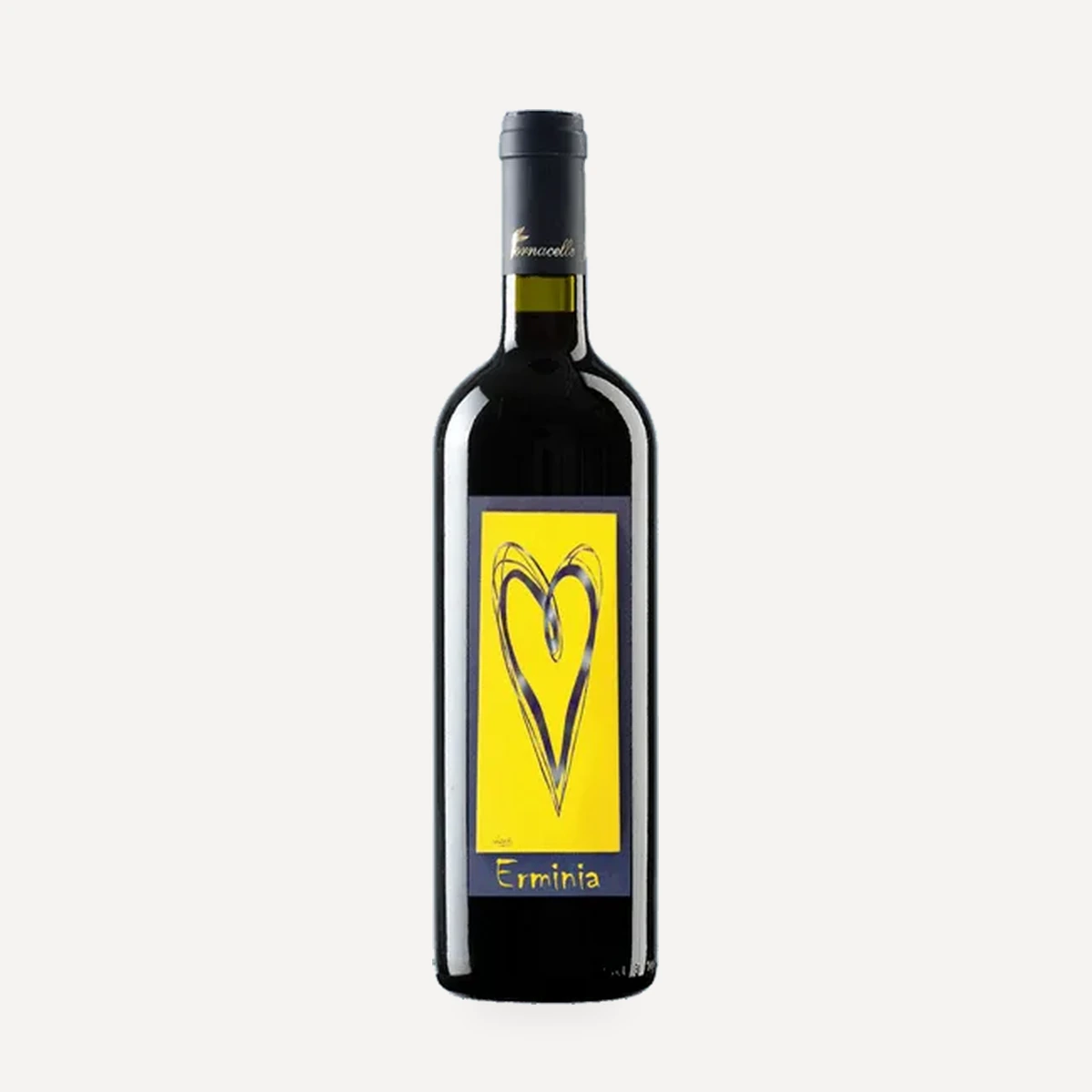
Erminia Toscana I.G.T.
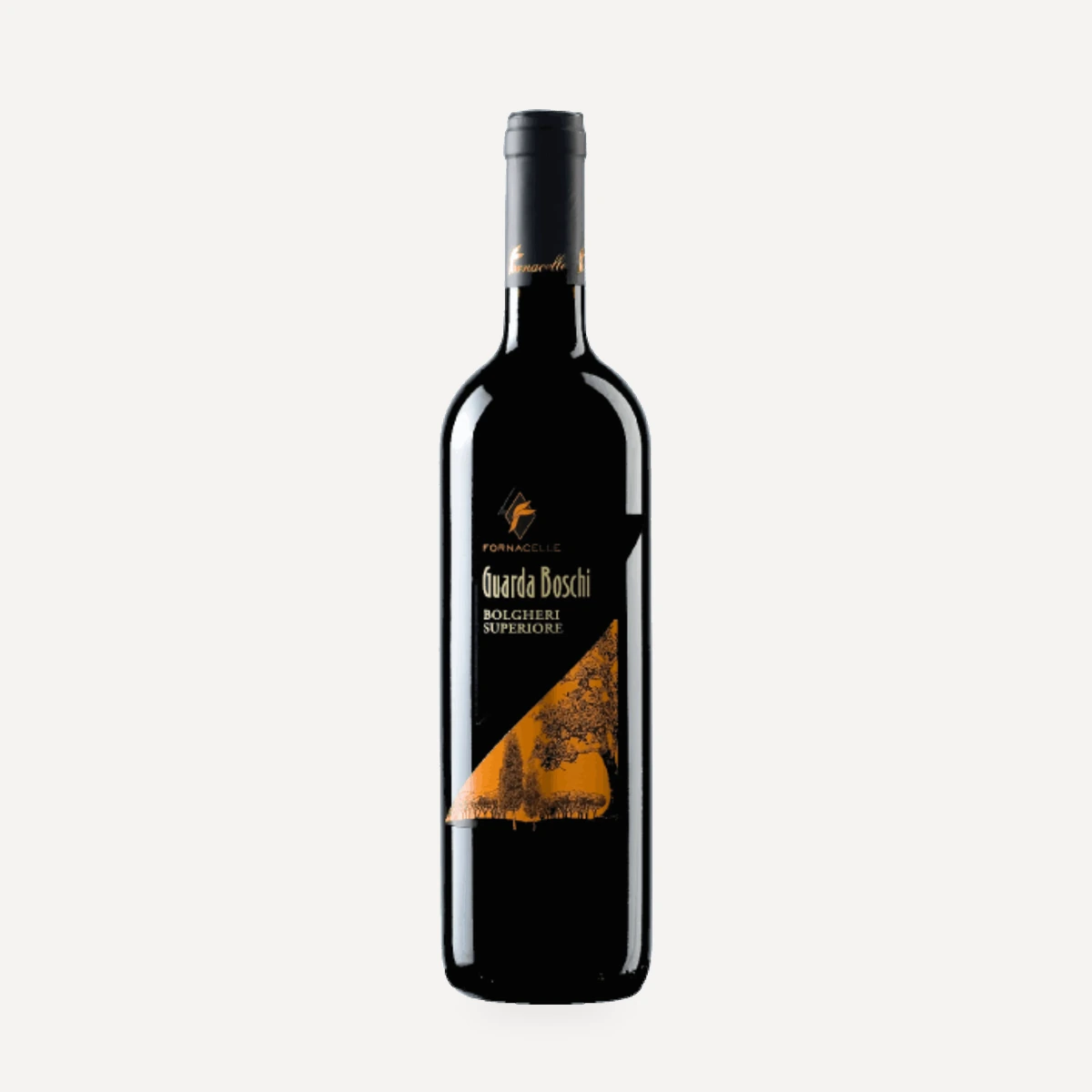
Guarda Boschi Bolgheri D.O.C. Superiore