Storia
Foundation and the first Brunello
Ruggero Biliorsi founded Azienda Agricola Fornacina. The estate’s first Brunello was produced from the 1981 harvest, establishing the activity around the traditional wine of Montalcino.
The second generation
Management subsequently passed to Ruggero’s son Simone Biliorsi, who runs Fornacina with the assistance of his brother Mauro. They retained the founding objective of expressing the character and values of the estate’s land while continuing to make Brunello according to the estate’s understanding of Montalcino tradition.
The family developed the project with consulting oenologist Attilio Pagli and consulting agronomist Folco Giovanni Bencini. Their work combines traditional Brunello production with protection of the surrounding environment.
Organic certification
Fornacina received certification for wine made from organically grown grapes in 2004. ICEA oversees the estate under operator code B1295 and regularly inspects the stages of the organic production chain in accordance with European rules.
A certificate issued on 9 April 2024 identifies Simone Biliorsi as the operator responsible for production and preparation at Podere Fornacina. Valid through 9 April 2027, it includes organic wine, organic plant products and plant products in conversion. Its product directory covers Brunello di Montalcino DOCG, Brunello di Montalcino Riserva DOCG and Rosso di Montalcino DOC as organic wines.
The present cellar
The cellar is arranged over two levels, with its lower floor 7 m underground. It was conceived to introduce a measured degree of modernity while keeping the complete production sequence in one facility: vinification, maturation and bottling. A separate customer area is devoted to tastings and direct sales. Large oak casks remain central to the maturation of Brunello.
Terroir
Location
Fornacina stands at Podere Fornacina on the outskirts of Montalcino, at WGS84 coordinates 43° 02′ 47.19261″ N and 11° 30′ 50.86942″ E. Its vineyards occupy two distinct parts of the Montalcino hills.
Three hectares surround the winery at approximately 400 m above sea level, on a south- to southeast-facing slope. A further two hectares lie on the southern side of Montalcino in the Castelnuovo dell’Abate area. The estate values the complementary character of grapes from these two separate hillsides and brings them together in its production.
Soils
The vineyard soils range from alkaline, medium-textured ground to galestro. No separate soil profile is assigned to each of the two vineyard areas.
Wider Montalcino setting
Montalcino occupies a hill rising to about 600 m, approximately 40 km from Siena. Its territory covers more than 24,000 ha and is bounded by the Ombrone, Asso and Orcia rivers. Roughly half of the territory is wooded; vineyards, olive groves and cereals predominate on the cultivated land.
Vinificazione
Fornacina cultivates its vineyards organically, regarding nature conservation and respect for the territory as integral to wine quality. Organic certification dates from 2004 and is controlled by ICEA under operator code B1295.
ICEA conducts regular inspections across the organic production chain in accordance with European requirements. The certificate issued in 2024 covers organic production of unprocessed plants and plant products, plant production in conversion, and organic wine production. Its product directory includes organic wine grapes or grapes for processing as well as wine grapes in conversion. The associated land schedule records 5.7 ha of organic specialised tree crops, 0.07 ha of specialised tree crops in conversion and 0.05 ha of land classified as tare in conversion.
Vines are planted at approximately 4,500 plants per hectare and trained to cordone speronato. Vineyard work is based on a continuous presence among the vines and careful bunch selection both before and during harvest. Grapes for the estate’s wines are picked in September or October once suitable ripeness has been reached. Production is restricted to fruit obtained from the estate’s own land.
The two-level cellar consolidates vinification, maturation and bottling within the estate; one level is 7 m underground. Its design combines functional modern facilities with a traditional maturation programme based on large oak casks.
Estate Sangiovese is harvested in September or October at appropriate ripeness. Red-wine vinification takes place in temperature-controlled stainless-steel vats and includes a long maceration with traditional pump-overs. Malolactic fermentation follows. The wines are subsequently matured in large Slavonian oak casks and then bottled; the length of cask and bottle maturation varies by category. Large oak casks are particularly central to Brunello maturation.
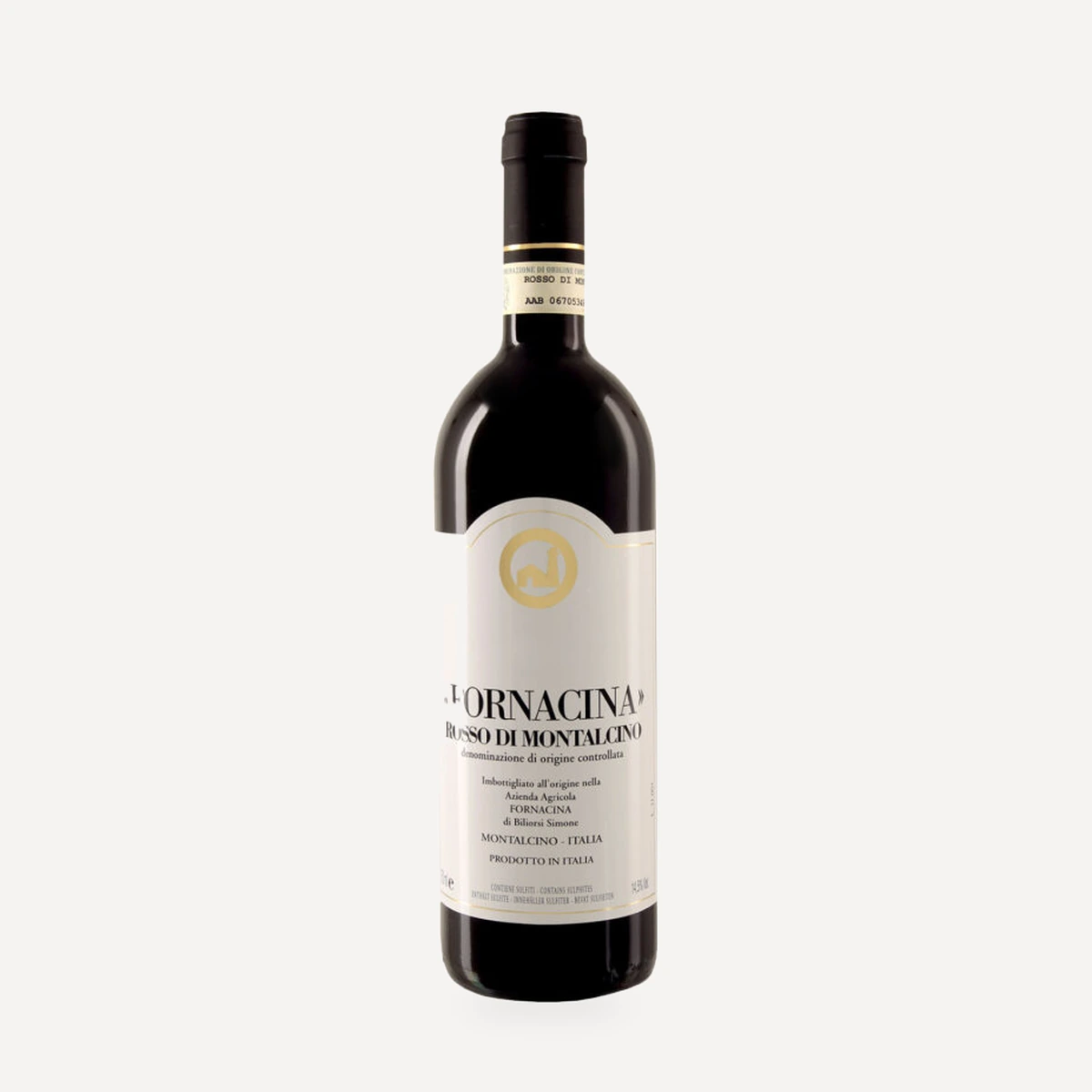
Only production derived from Fornacina’s own vineyards is marketed. Average output is 20,000–25,000 bottles annually across Brunello di Montalcino DOCG, Brunello di Montalcino DOCG Riserva—made only in exceptional or best vintages—and Rosso di Montalcino DOC. Marc remaining after fermentation is distilled into Grappa di Brunello. The grappa is produced through a traditional process using steam-heated copper stills and its Riserva expression is matured in barriques.
Filosofia
Fornacina’s work is guided by the objective of making wine from grapes that convey both the character of its territory and the commitment of the people who cultivate it. The Biliorsi family associates Brunello with a passion transmitted from one generation to the next and treats continuity with Montalcino tradition as a defining principle.
The estate presents quality, attachment to the land and protection of nature as inseparable priorities. Its small-scale project balances tradition with a measured use of modern facilities: the cellar accommodates every production stage, while large casks remain fundamental to maturation.
Organic cultivation is intended to preserve the estate’s close relationship with its surroundings. Continuous work in the vineyards, bunch selection and the complementary character of fruit from two different Montalcino slopes form the agricultural basis of this approach. Production remains limited to what can be obtained from the estate’s own holdings.
Vini
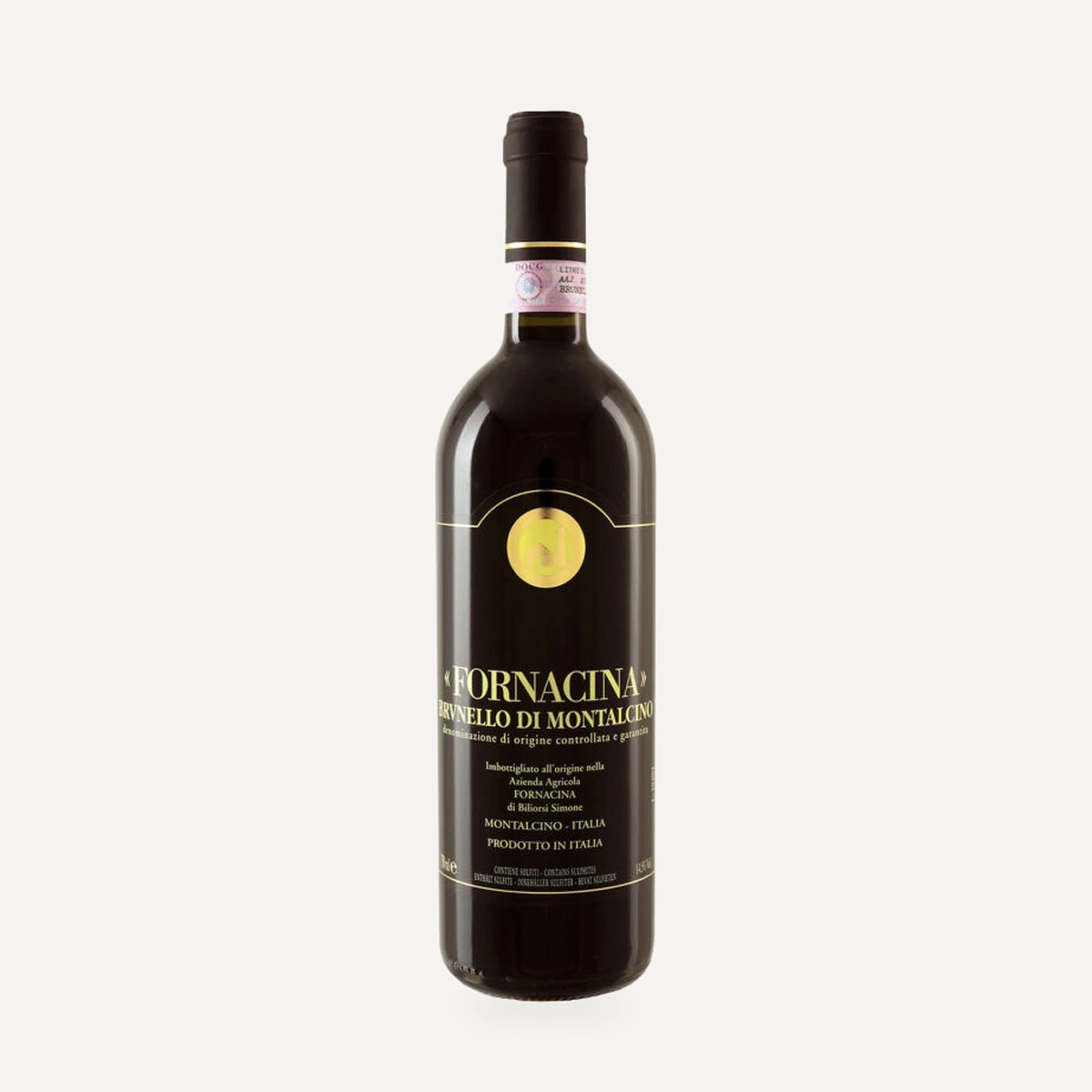
Brunello di Montalcino DOCG
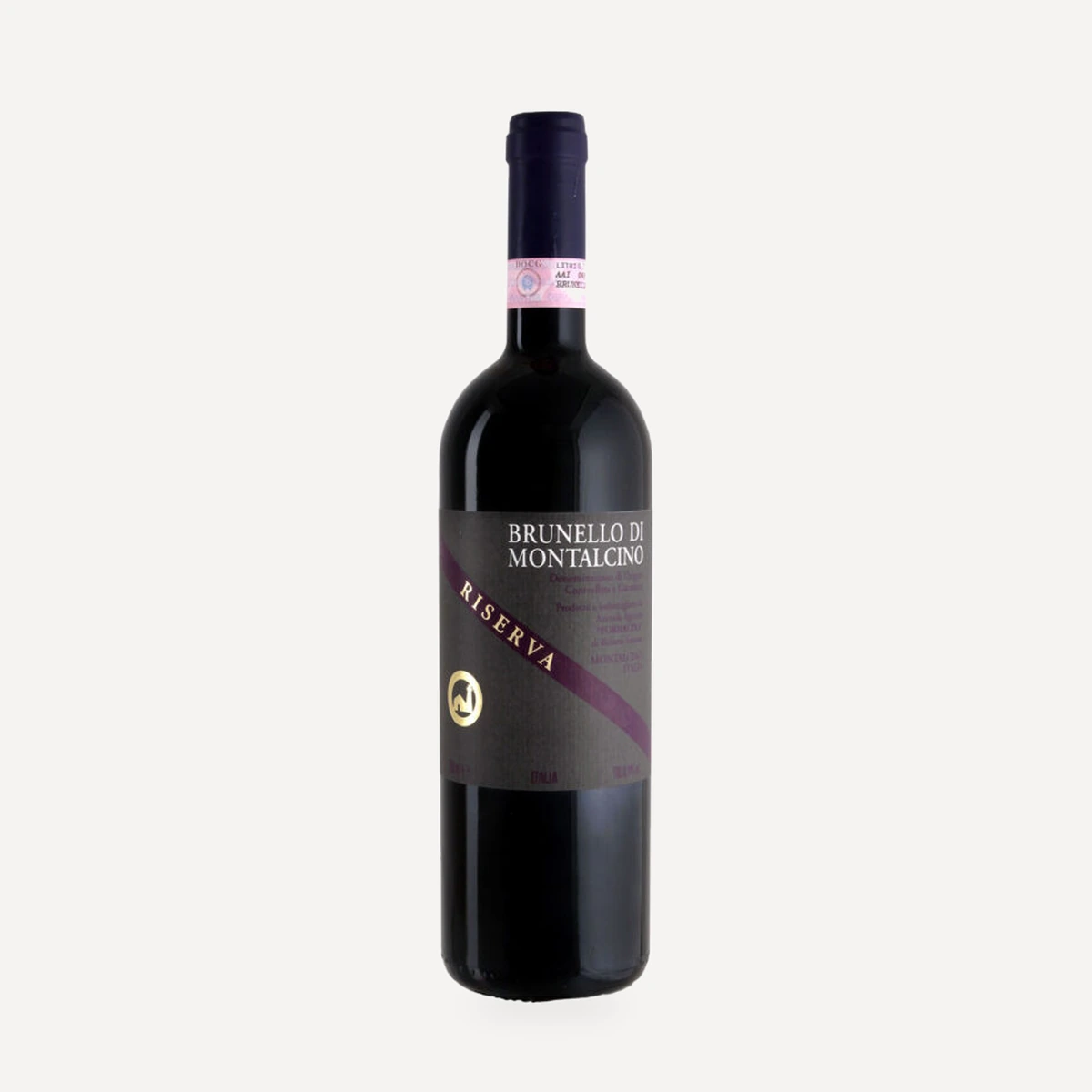
Brunello di Montalcino DOCG Riserva