Storia
From Romagna to Montalcino: 1870–1906
The Zannoni family’s history in Montalcino began in 1870, when cattle breeder Giovanni Zannoni left Romagna and settled among the hills of Montalcino.
The arrival at La Fortuna: 1907
In 1907 Giovanni’s eldest son, Angiolino Zannoni, arrived at the La Fortuna farm. The sharecropping property consisted of a new rural house and four hectares of land. Family tradition holds that the holding was won at a gaming table—an episode associated with the fortuna, or luck, from which the farm took its name.
Angiolino married Quirina, described as a country woman, and they had six children. Their son Gino Zannoni subsequently emerged as the family member responsible for the farm, managing it with his wife Iva until the end of the sharecropping era.
Purchase and vineyard development: 1965
In 1965 Gino and Iva, together with their son Gioberto, purchased the farm they had long sought to own. They began renovating the rural building and established specialized vineyards intended for Brunello production.
The Consorzio and the first wines: 1967–1974
As Brunello developed and expanded as an appellation, a group of large and small Montalcino producers laid the foundations of the Consorzio del Brunello in 1967. Gino Zannoni was one of its 25 founding members.
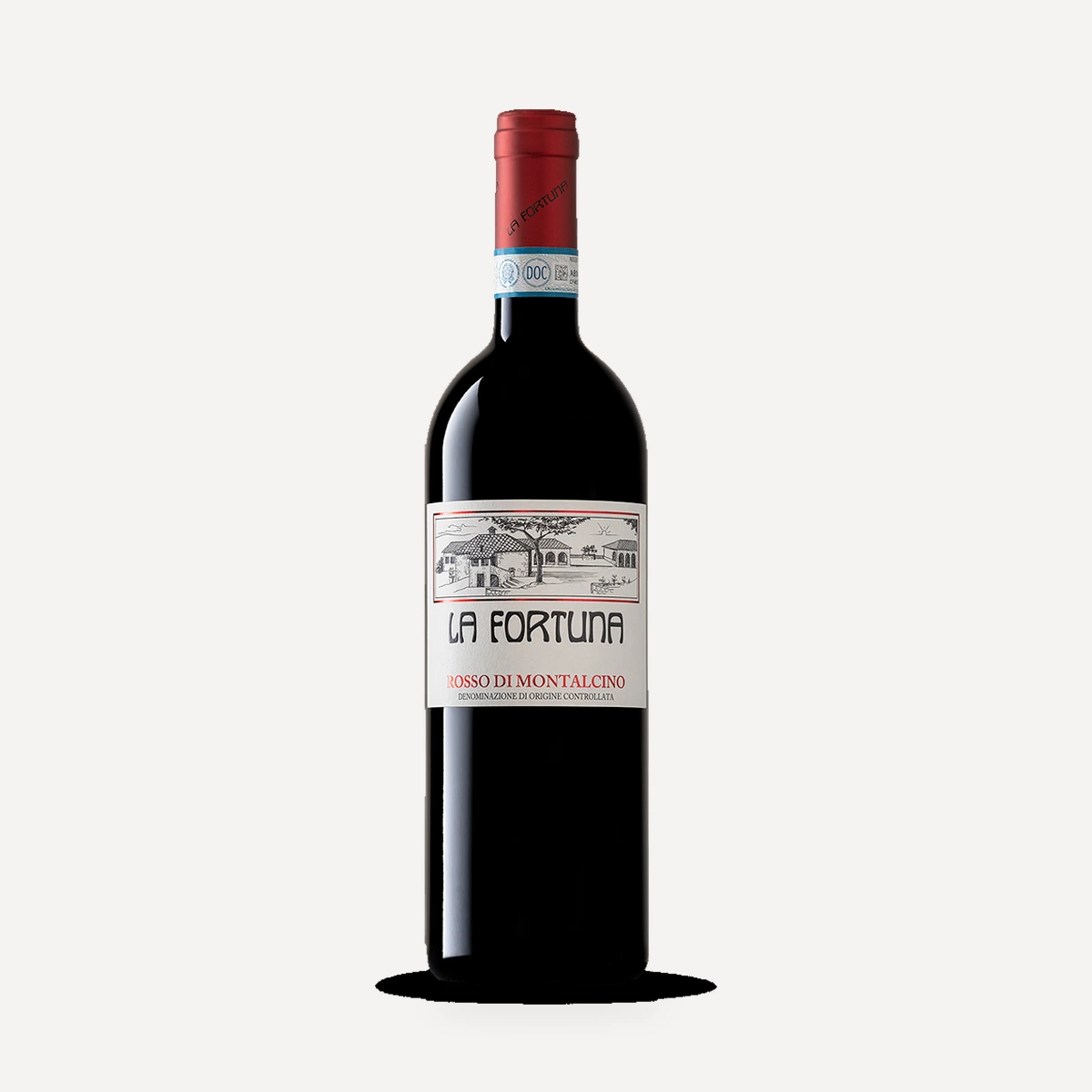
Fortuna produced its first Rosso di Montalcino in 1971. Its first bottle of Brunello di Montalcino followed in 1974.
The fifth and sixth generations
Gioberto Zannoni and Felicetta became the parents of Angelo and Romina. Angelo and Romina represent the fifth generation of wine producers at Fortuna and manage the estate with their mother, combining respect for inherited practice with research and innovation. A sixth generation, still very young, is presented as the future recipient of the family’s accumulated work and values.
Estate and cellar expansion
The original cellar occupies a semi-underground structure beneath the historic farm building. It was enlarged progressively as the vineyard area increased. The later acquisition of the La Campana farm added a second underground cellar, now used as a dedicated ageing facility. The winery complex and operating centre were developed through the restoration of the traditional Tuscan farmhouse while adapting it to contemporary production requirements.
Terroir
Two sectors of Montalcino
The 40-hectare estate is divided into two geographically distinct holdings. Its principal sector lies northwest of Montalcino, below the hill of the historic centre, while the southern sector is near Castelnuovo dell’Abate, with vineyards facing toward the Alta Maremma. The operating centre occupies the northwestern holding amid hills, vines and olive trees in a UNESCO-listed landscape.
Northwestern slope
The northwestern holding includes 13 hectares of vines on moderately sloping ground at 280–350 metres above sea level. Conditions vary appreciably from one plot to another. Stony soils of Eocene origin, galestro, alberese and tuff alternate with looser sandy and clay-rich soils. The mild climate permits slow, progressive ripening.
Sangiovese from this sector is associated with savoury and mineral character, pronounced yet elegant aromas, retained acidity and ageing potential.
Southern slope
The five hectares near Castelnuovo dell’Abate stand at approximately 250 metres above sea level on pronounced slopes. The soils are rocky, mineral-rich, low in organic matter, relatively infertile and highly draining. The sheltered position protects the vineyards from prevailing northern winds and saline winds arriving from the sea, producing warmer conditions. A marked difference between daytime and nighttime temperatures supports grape ripening.
Fruit from this sector is associated with greater structure, intensity, power, alcoholic weight and spicy aromatic character.
The two-sector composition
The estate combines material from the northwestern and southern holdings in its Brunello di Montalcino, seeking equilibrium between body and perfume, structure and aroma, and between power and elegance.
Across the proprietary Brunello holdings, vineyard elevations are also characterized as spanning 220–400 metres, with southeastern exposure and sandy-loam soils containing abundant stones.
Vinificazione
The estate farms 18 hectares of vines distributed between the 13-hectare northwestern holding and the five-hectare southern holding. The vineyard area is divided by registration into 13.5 hectares for Brunello di Montalcino, two hectares for Rosso di Montalcino, two hectares for Sant’Antimo and the remaining approximately 0.5 hectare for IGT production.
All 18 hectares are trained to bilateral spurred cordon. The estate description characterizes the vineyards as between 10 and 30 years old, while current bottling information documents selected producing vines reaching 40 years of age. Specialized Brunello vineyards have formed part of the estate’s development since the plantings begun after the family purchased the property in 1965.
Cellar organization
The original cellar is a semi-underground structure beneath the historic farm building. It expanded progressively alongside the increase in vineyard area. Acquisition of the nearby La Campana farm added a second underground cellar and a distinct ageing space.
The complex is divided into specialized working areas. Vinification takes place in a modern room equipped with temperature-controlled stainless-steel tanks. The principal ageing cellar retains a more traditional arrangement, with 27-hectolitre Slavonian oak casks used for both the annata and Riserva versions of Brunello di Montalcino.
The La Campana ageing cellar receives Brunello Giobi, Rosso di Montalcino, Sant’Antimo DOC and Toscana Rosso IGT. These wines mature in French oak barriques and tonneaux.
The winery and operating centre combine the restoration of a traditional Tuscan farmhouse with the functional requirements of contemporary vinification. Average production is approximately 100,000 bottles annually: 50,000 bottles of Brunello di Montalcino DOCG, 20,000 of Rosso di Montalcino DOC, 15,000 of Sant’Antimo DOC and 15,000 of Toscana Rosso IGT.
Filosofia
Fortuna’s approach places the vineyard at the centre of Brunello quality. The two holdings are treated as complementary sources: the northwestern sector contributes savoury and mineral expression, aromatic elegance, acidity and ageing potential, while the warmer southern sector contributes structure, intensity and spice. Their combination is intended to achieve harmony between body and perfume, structure and aroma, power and elegance.
The family frames its work through passion, sustained labour, respect, knowledge, dedication and long-term vision. Continuity between generations is paired with research and innovation rather than presented as simple preservation of inherited methods.
In the cellar, this position is expressed through the coexistence of temperature-controlled stainless-steel vinification and traditional oak ageing. The stated objective is to draw the best from each product and vintage while preserving elegance and reinforcing the individual personality of the wines. Restoration of the Tuscan farmhouse and adaptation to modern production needs follow the same balance between continuity and technical development.
Vini
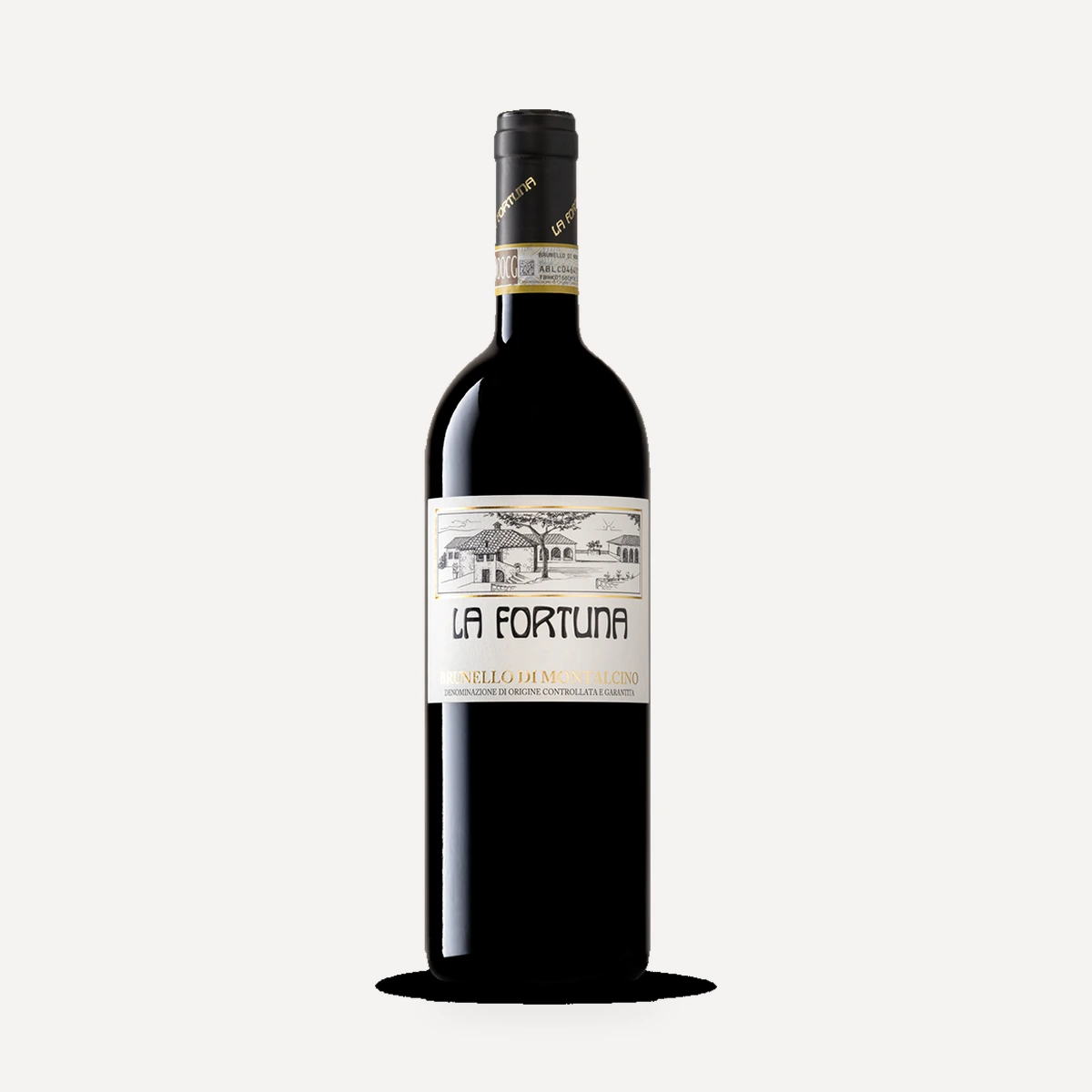
Brunello di Montalcino
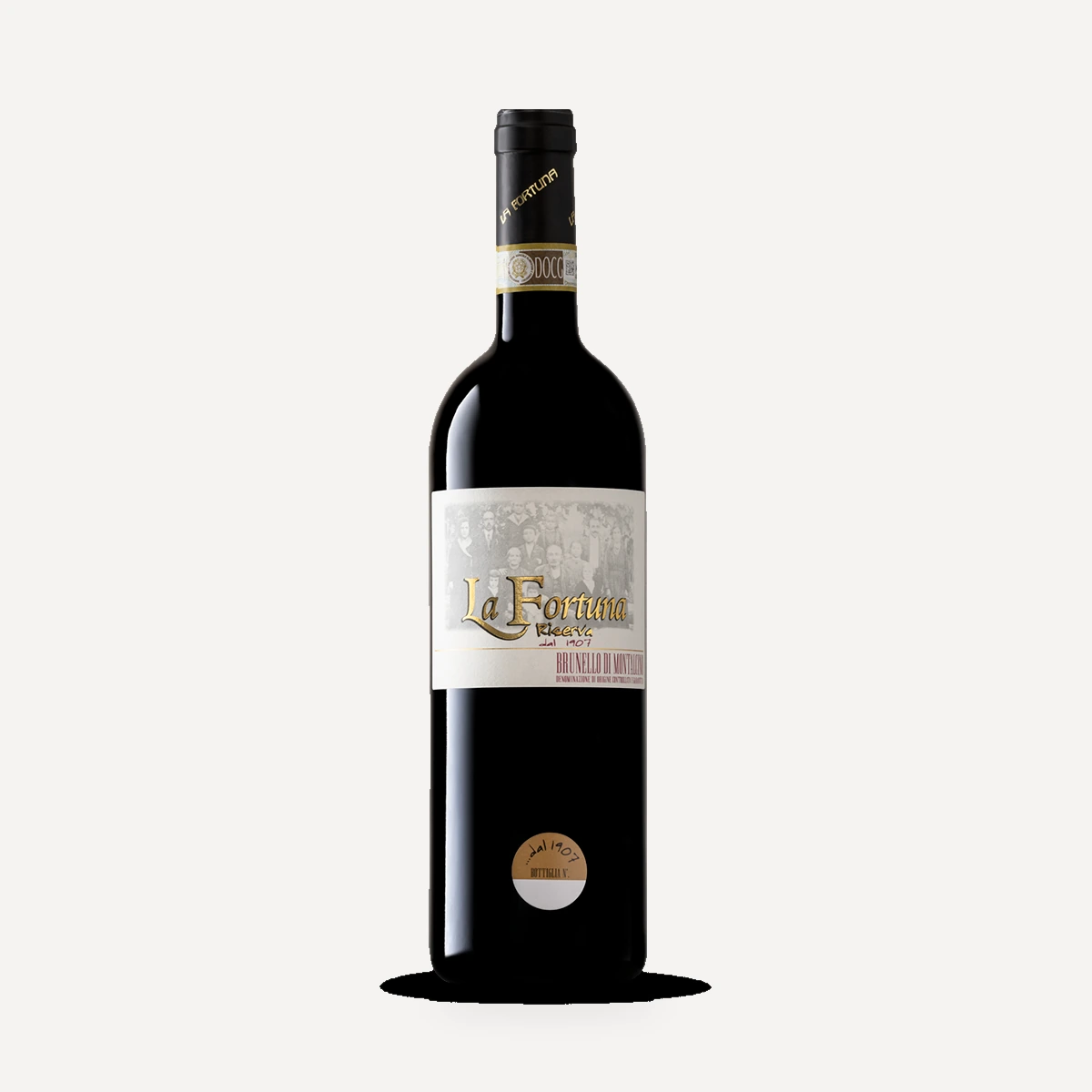
Brunello di Montalcino Riserva
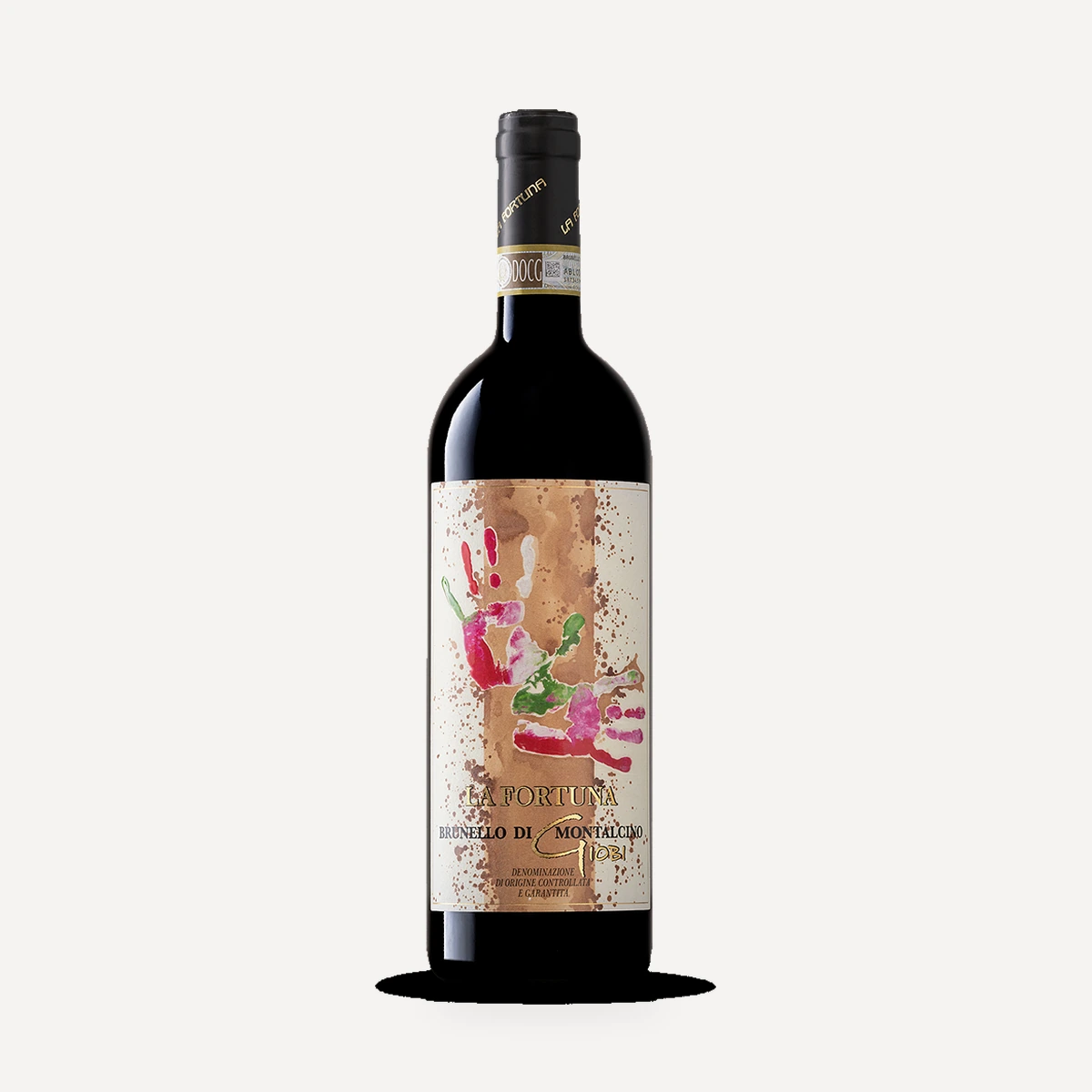
Brunello di Montalcino Selezione Giobi