Storia
Family roots
The Pacenti family traces its lineage to the 14th century, when the surname was still Piacenti. The family is presented as an aristocratic Tuscan lineage connected with Saint Catherine of Siena.
From sharecropping to an estate of their own
The family moved to Montalcino as sharecroppers, passing from one farmhouse to another. Rosildo Pacenti, born in 1924, inherited a close relationship with the land and continued a mixed-farming tradition based on livestock, wheat, olive trees and vines.
In 1962 Rosildo fulfilled his ambition of owning land by purchasing the Canalicchio estate. He remained in the countryside during the period of industrialisation, when many rural inhabitants were moving to towns and cities.
The first Brunello
Rosildo produced the family’s first bottle of Brunello in 1966. He had committed himself to the potential of the Canalicchio territory and to the ability of its indigenous Sangiovese to produce high-quality wine. The estate consequently identifies 1966 as the beginning of its activity as a Brunello producer.
Franco Pacenti and the specialised wine estate
Rosildo’s son Franco supported the estate from an early age and contributed to its growth. The formal generational transition took place in 1988, when Franco assumed responsibility for managing and structuring the business.
In 2000, encouraged by Brunello’s growing success, Franco discontinued the estate’s other agricultural activities to concentrate on viticulture and higher-quality wine production. New Sangiovese vineyards brought the planted area to 10 hectares. He also constructed a new, modernly equipped cellar designed to remain integrated into the Val d’Orcia landscape.
The third generation
Lisa, Franco’s eldest daughter, joined the business in 2009 and took responsibility for its commercial and administrative work. Serena, Lorenzo’s twin, joined in 2011, bringing training in hospitality and cooking to the estate’s visitor programme. Lorenzo, born in 1990 and trained in viticulture and oenology in Florence, entered in 2015. His arrival marked a change in wine style and production, with a stronger technical focus on expressing the Montalcino terroir.
Lorenzo, Lisa and Serena now represent the third generation and lead the family business together, each with a distinct area of responsibility. Lorenzo follows production from vineyard to bottle; Lisa manages commercial and administrative matters; Serena develops hospitality and serves Tuscan dishes derived from family recipes. Their work combines the values received from Franco and Rosildo with technical viticulture, renewed presentation and a broader hospitality programme.
Terroir
The estate lies in Canalicchio on the north-eastern side of the Montalcino hill, within the Val d’Orcia. The vineyards stand at approximately 300 metres above sea level.
Montalcino is described as a hill warmed by influences from the Maremma Sea and protected to the south by Monte Amiata. The surrounding territory is bounded by the Orcia, Asso and Ombrone rivers. Val d’Orcia has held UNESCO World Heritage status since 2004.
The vineyard soils have a strong clay component and contain magnesium, potassium, boron and manganese. New hillside vineyards are oriented north–south to favour exposure, air circulation and cooler conditions. The combination of elevation, ventilation and clay soils underpins the estate’s interpretation of Sangiovese.
Vinificazione
Viticulture combines accumulated family experience with a technical response to changing climatic conditions. A weather station uses several detection points among the vineyards, allowing conditions to be monitored and measures to be directed where they are needed. New vineyard sites are selected on the hill and planted on a north–south axis to promote exposure, ventilation and cooler temperatures.
Green manure is used both to manage weeds and improve soil structure. During summer it is followed by a mulch of dry straw that helps retain soil moisture. Pruned vine shoots are composted and returned to support fertility. Mating disruption is used against the grapevine moth, Lobesia botrana.
Yield regulation includes two stages of selection. An initial selection is made at fruit set, followed around véraison by a detailed green harvest. Each vine is checked and whole clusters or parts of clusters may be removed to balance vegetative growth and fruit production. The aim is to encourage the plants to achieve their own equilibrium while intervening precisely when thinning is needed for even ripening and the accumulation of polyphenols and aromas.
Production follows a classical interpretation of Sangiovese and links vineyard precision with restrained cellar work. Fermentation takes place in temperature-controlled stainless-steel tanks. Extraction is managed through pump-overs and délestage, followed by extended skin maceration designed to proceed gently over time.
After vinification, the red wines mature in large Slavonian and French oak vessels. The role assigned to this stage is to allow Sangiovese to develop fully while preserving elegance and the character of its origin. The overall style is framed around tradition, vintage identity and a direct expression of the Montalcino territory rather than standardisation.
Filosofia
The family’s central principle is that the quality of a wine begins in the vineyard and depends on expressing its terroir. Lorenzo Pacenti links technical training and scientific observation with an artisanal approach, treating the individual person behind the wine as the element that interprets place and gives each wine an unrepeatable signature.
The third generation seeks to respond dynamically to climate change while retaining the experience accumulated by the family. Its stated objective is to produce authentic Montalcino wines rather than standardised products, allowing Sangiovese, the territory and each vintage to retain their identity.
Tradition and modernity are treated as complementary. The estate preserves a classical style, large-oak ageing and inherited family values while using monitoring technology, targeted vineyard work and contemporary presentation. The family also regards hospitality as part of its work: bringing visitors into the vineyards and cellar, and introducing them to the people behind the wine, is intended to communicate the connection among land, labour and wine.
Vini
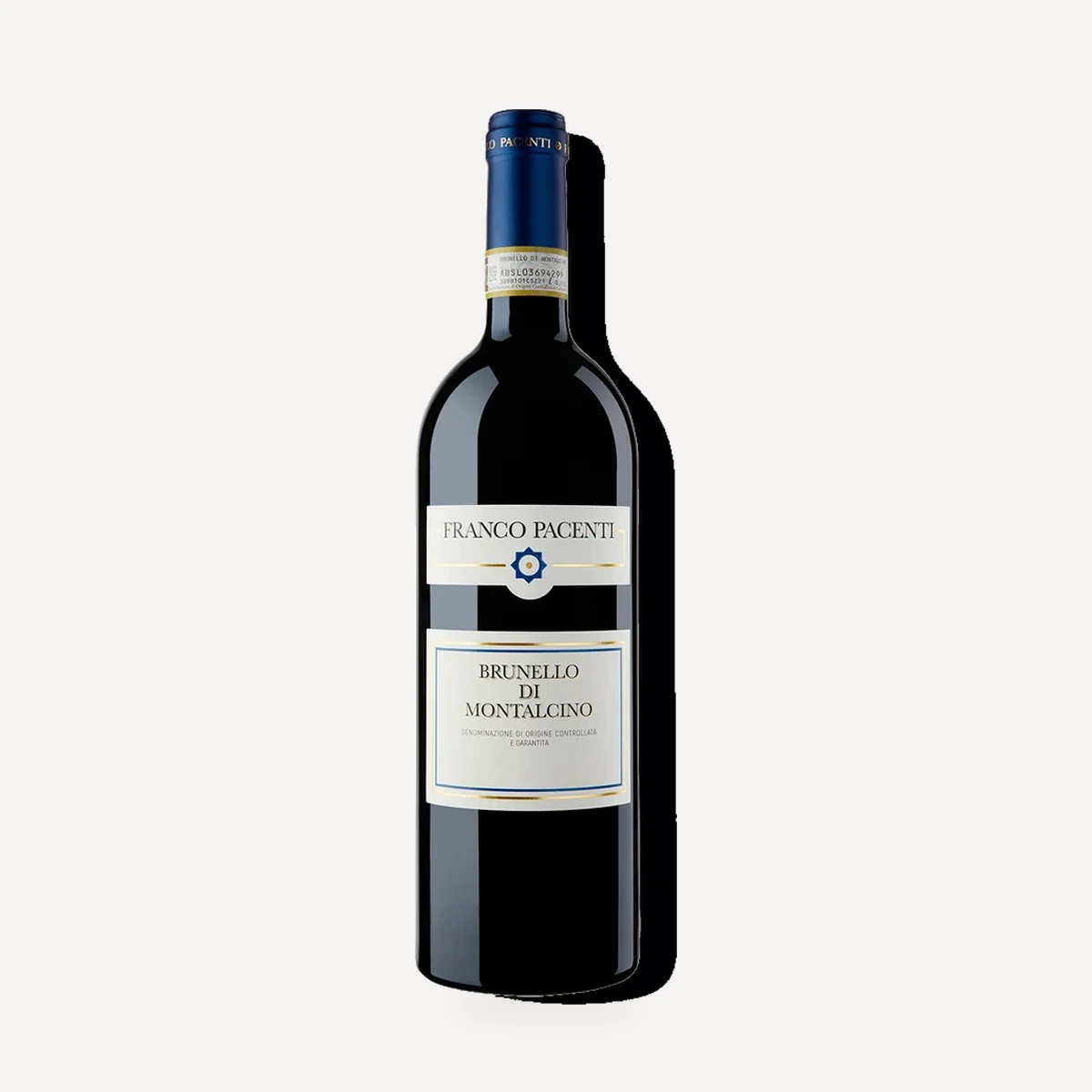
Brunello di Montalcino
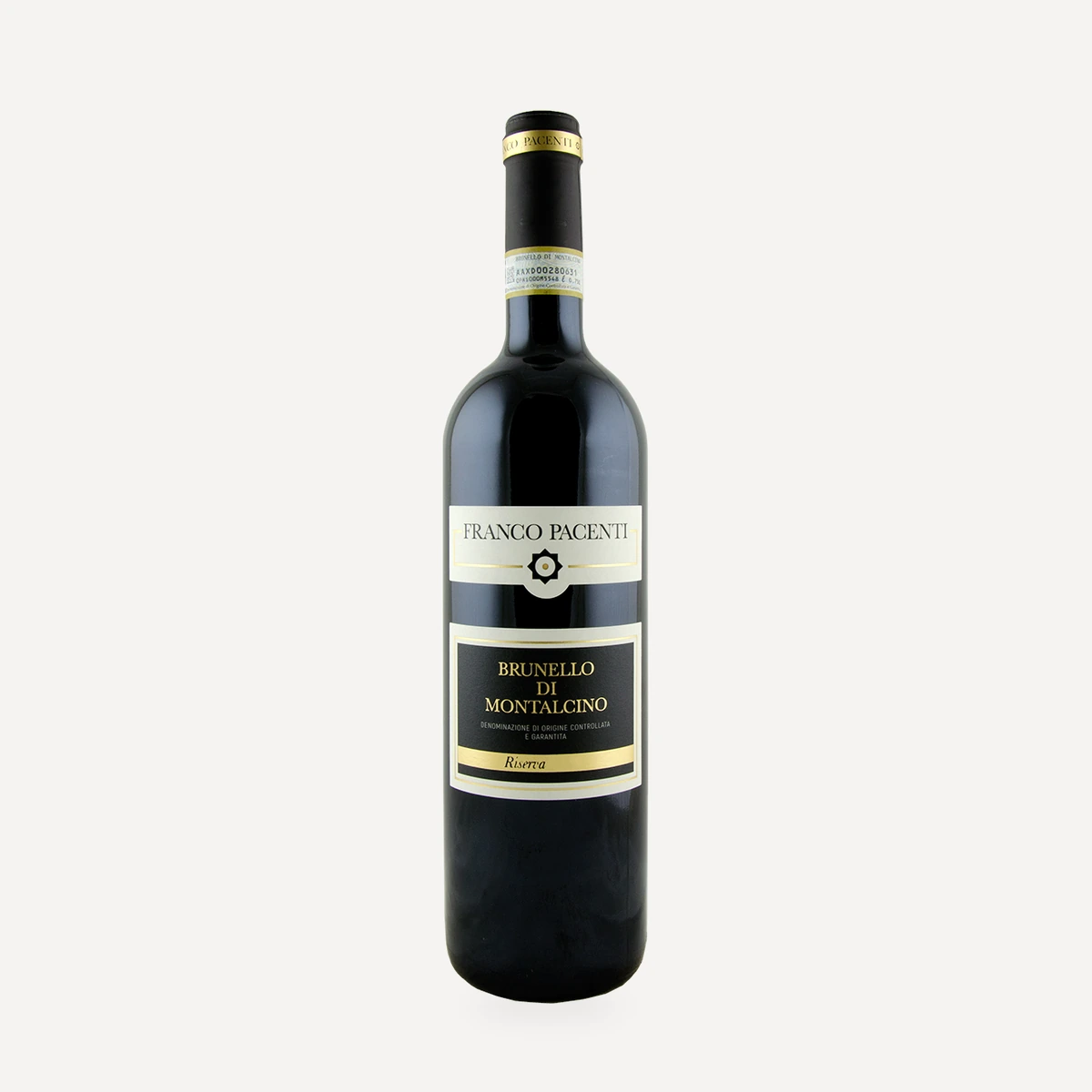
Brunello di Montalcino Riserva
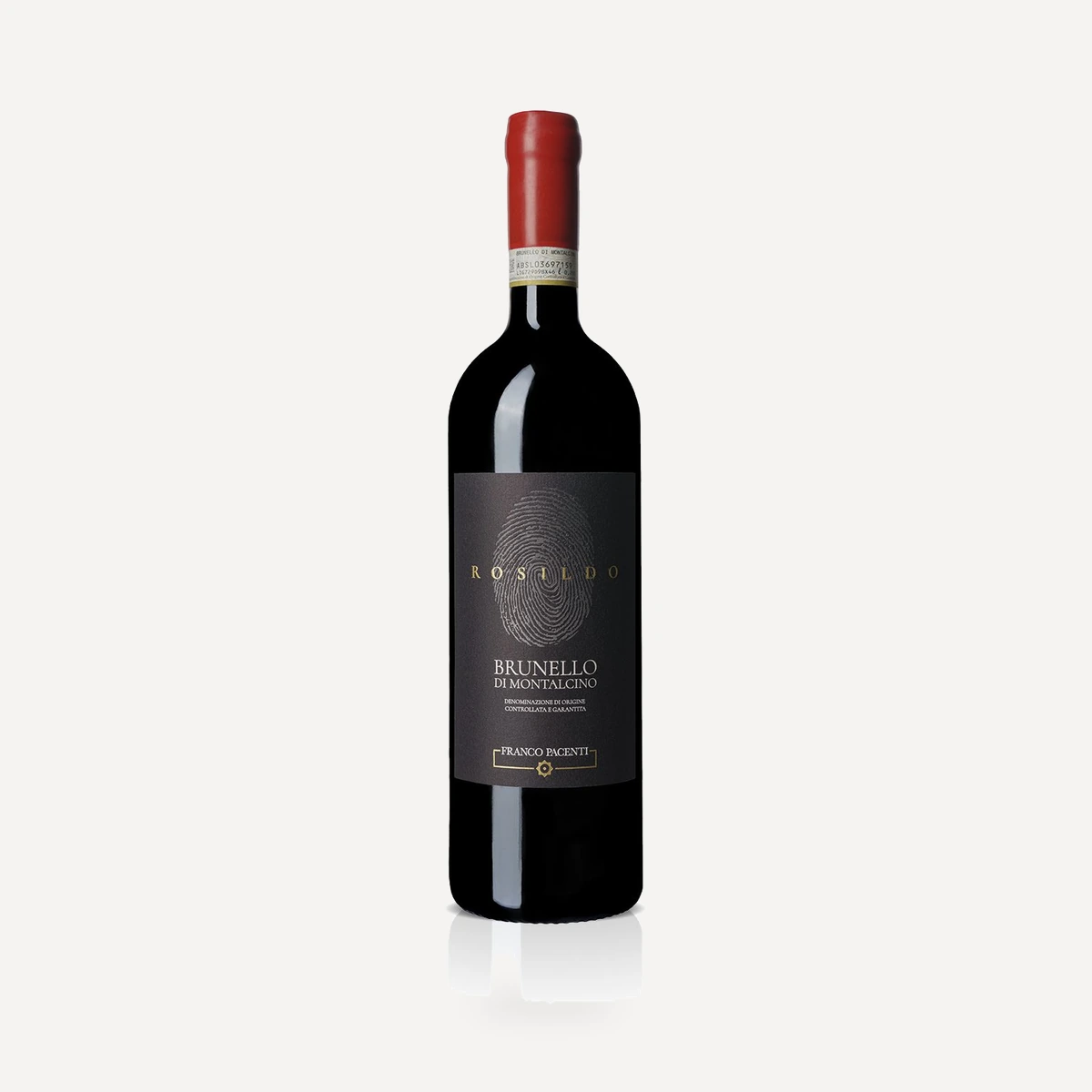
Brunello di Montalcino “Rosildo”