Storia
2016 — The first Ellis release
Ellis Langhe DOC Bianco was first released in January 2016 from the 2008 vintage. The limited-production cuvée brought together Arneis from Corneliano and Chardonnay from Novello, with the components matured separately before assembly: ten months in steel for Arneis and twelve months in used barrels for Chardonnay.
Terroir
The vineyards represented in the range extend across several communes and distinct geological settings in Piedmont’s Langhe and Roero areas.
Castagnito
The Castagnito vineyards have south-west exposure and grey-white calcareous clay soils of marine origin. Both Nebbiolo and the Nebbiolo–Barbera blend come from this setting. The vines average 30 years old, with a planting density of 4,445 vines per hectare and an indicated crop of 2 kg per vine.
Canale
The single Barbera vineyard at Canale faces south-west. Its ancient soils are associated with the local Rocche: sandy, friable, ochre-coloured formations. Astian marls dating to the Middle Pliocene characterize the middle and upper slopes. The vines are 20–30 years old and planted at 4,445 vines per hectare, with an indicated crop of 2 kg per vine.
Corneliano and Novello
The Corneliano and Novello sites used for Arneis and Chardonnay have west to south-west exposures. Their ancient soils combine sand, limestone and clay and are characterized by sandy, friable Rocche. Planting density is 5,000 vines per hectare, the vines average 18–20 years old, and the indicated crop is 2 kg per vine.
The Corneliano Arneis vineyard is described more specifically through ochre-coloured, sandy and friable Rocche and Middle Pliocene Astian marls on the middle and upper slopes. Its west to south-west-facing vines are 15–20 years old, planted at 5,000 vines per hectare and cropped at approximately 2 kg per vine.
La Morra and Case Nere
The La Morra Nebbiolo vineyards face south to south-west and grow on calcareous-clay soils identified as Elveziano. Planting density is 4,300 vines per hectare, the vines average 35 years old, and the indicated crop for the Passione di Re parcel is 1.8 kg per vine.
Case Nere is identified as a Barolo cru and MGA in La Morra, situated between the Fossati and Cerequio vineyards. It shares the south to south-west exposure, Elveziano calcareous-clay soil, density of 4,300 vines per hectare and average vine age of 35 years.
The 2016 Case Nere growing season began with mild temperatures and little precipitation in January and the first half of February. Early-season development was delayed, but the vines recovered during August and September as phenolic compounds accumulated. The harvest was among the longest of the preceding years and was rated as a five-star vintage in the Case Nere presentation.
Santo Stefano Belbo
The Moscato Bianco vineyard at Santo Stefano Belbo faces south-west. Its marine-sedimentary geology dates to the Tertiary or Miocene and consists principally of light-grey calcareous marls and sandstone assigned to the Langhian–Serravallian. The vines average 30–40 years old and are planted at 4,000 vines per hectare, with an indicated crop of 3 kg per vine.
Vinificazione
Harvesting is carried out by hand across all described vineyard sites. Timing follows the varieties and locations: Moscato Bianco is picked from late August through the first week of September; Arneis and Chardonnay during the first half of September; Barbera from late September into early October; and Nebbiolo in October, with Case Nere picked in the second ten days of the month.
Planting densities range from 4,000 to 5,000 vines per hectare. The oldest stated age range is 30–40 years at Santo Stefano Belbo, followed by the 35-year-old La Morra and Case Nere Nebbiolo, 30-year-old Castagnito vines, 20–30-year-old Canale Barbera, 18–20-year-old Corneliano–Novello vines and 15–20-year-old Corneliano Arneis. Indicated crops range from 1.8 kg per vine for the La Morra Nebbiolo to 3 kg for Moscato Bianco; most other sites are listed at 2 kg per vine.
Red grapes are mechanically crushed and destemmed before temperature-controlled fermentation. Pumping-over is used daily and, in several fermentations, is performed at least twice per day; the Case Nere protocol instead specifies daily punch-downs. Selected indigenous yeasts are used. Maceration varies with the material: five to six days for the Castagnito and Canale wines, ten to fifteen days for Passione di Re, and fifteen to eighteen days for Case Nere.
Oak élevage is adapted to each red-wine program. Castagnito Nebbiolo matures for twelve months in 50-hL oak casks; the Nebbiolo–Barbera blend spends twenty-four months in 75-hL oak; and Canale Barbera spends eighteen months in 55-hL oak. Passione di Re receives twenty-four months in Slavonian oak followed by twelve months in bottle. Case Nere matures for at least thirty-six months in small Slavonian-oak casks.
For the Arneis and Chardonnay white-wine program, the grapes are mechanically crushed and destemmed, the must ferments under temperature control with selected indigenous yeasts, and the components are matured separately. Corneliano Arneis may be kept in steel for six to ten months, while the Chardonnay component of Ellis spends twelve months in used barrels, with no new oak. Decisions throughout Ellis’s élevage are made through repeated evaluation and continuous tasting.
Moscato Bianco is softly pressed. The filtered must is held in refrigerated tanks or cold rooms at approximately 0°C until it is needed for fermentation and the subsequent development of effervescence. Selected indigenous yeasts are used.
Filosofia
Vineyard origin is treated as a defining component of wine character, with the range organized around contrasting communes, exposures and geological formations. Selection begins in the vineyard through limited crops, manual harvesting and attention to vine age and planting density.
Élevage is tailored to the grape and intended development of each wine, ranging from steel to large oak and small Slavonian-oak casks. For Ellis, maturation decisions follow careful evaluation and continuous tasting rather than a wholly predetermined schedule.
Vini
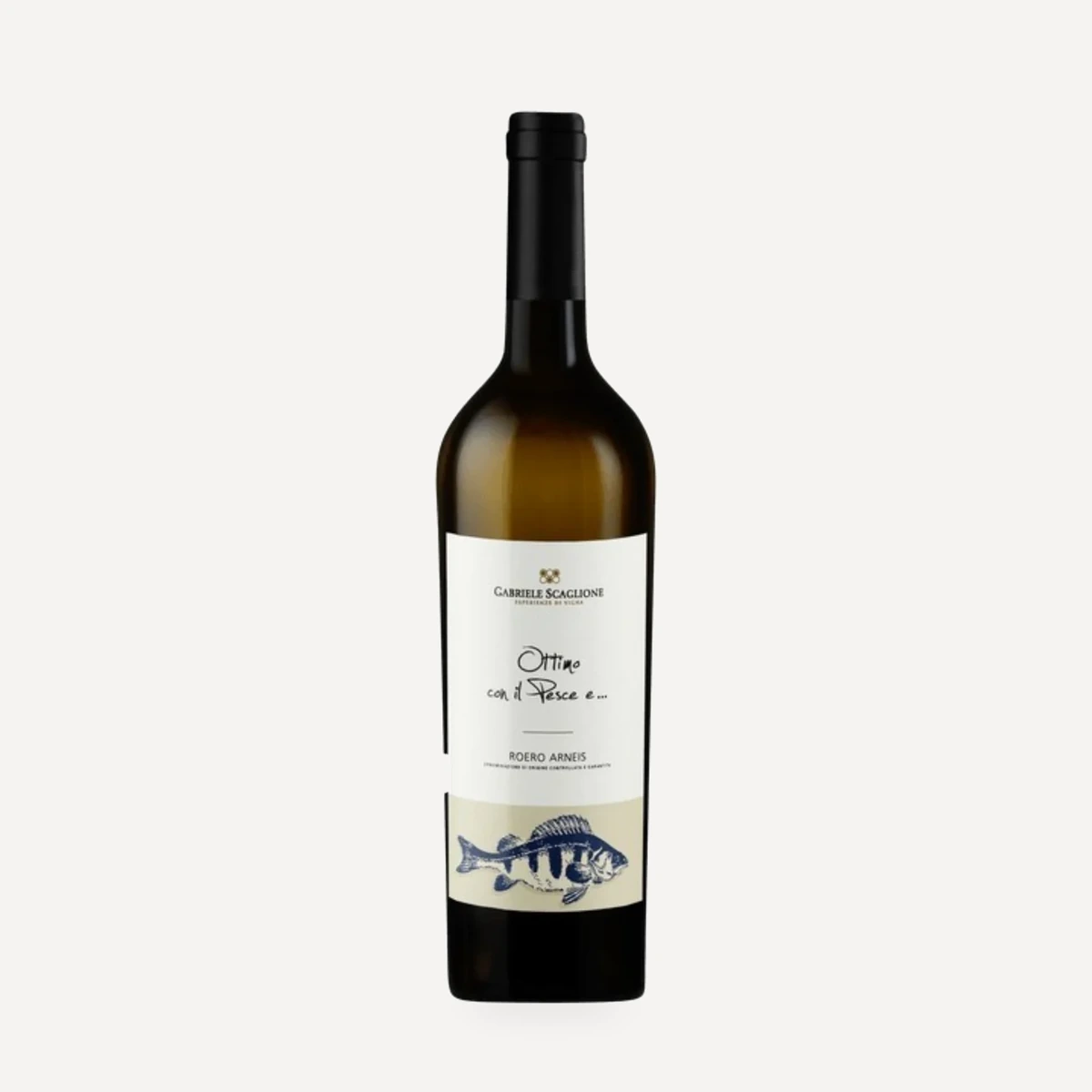
Ottimo con il Pesce e …
Passione di Re