Storia
Renaissance roots
The Gini family has cultivated vineyards at Monteforte d’Alpone since at least the Renaissance. Antonio Gini is remembered as the founding ancestor. His father named his two sons Santo and Antonio, the latter in honour of the local patron, Sant’Antonio Abate.
The family uses 22 January 1570 as its symbolic historical date. That day marked the wedding of Giobatta, Antonio’s son, and represents the consolidation of the family’s agricultural activity and enduring relationship with Monteforte. Fifteen generations of winegrowers have followed, passing experience and practical knowledge from father to son.
Giuseppe and Olinto Gini
Giuseppe Gini founded the winegrowing business inherited by his son Olinto, who was born in 1929. Giuseppe already understood the ageing capacity of Soave in the early twentieth century: he carried both a young wine and one from the preceding year, an early expression of the family’s interest in comparing vintages over time.
Olinto’s life combined considerable sacrifices with professional fulfilment, supported by his wife, Maria Pia. His passion and expertise earned him the name “Mastro Vignaiolo.” Alongside producing wine, he worked to promote the Soave denomination.
Sandro and Claudio enter the estate
In 1979 Sandro became an oenologist and developed a strong interest in research and innovation. His study of indigenous yeasts identified more than 100 different species active in the cellar. Seeking to preserve this microbial diversity, he eliminated sulphur dioxide from grape vinification, a decision presented as a world first that attracted considerable attention at the time. The family associated the change with purer, more pleasurable wines.
In 1981 Claudio began agricultural school, where he encountered organic and biodynamic viticulture. Traditional natural practices then regained a central place in the vineyards: green manure, grass cover, and protection of the woods and trees surrounding the vines for their contribution to biodiversity and soil fertility. Claudio continued the natural, organic cultivation of the family’s vineyard holdings.
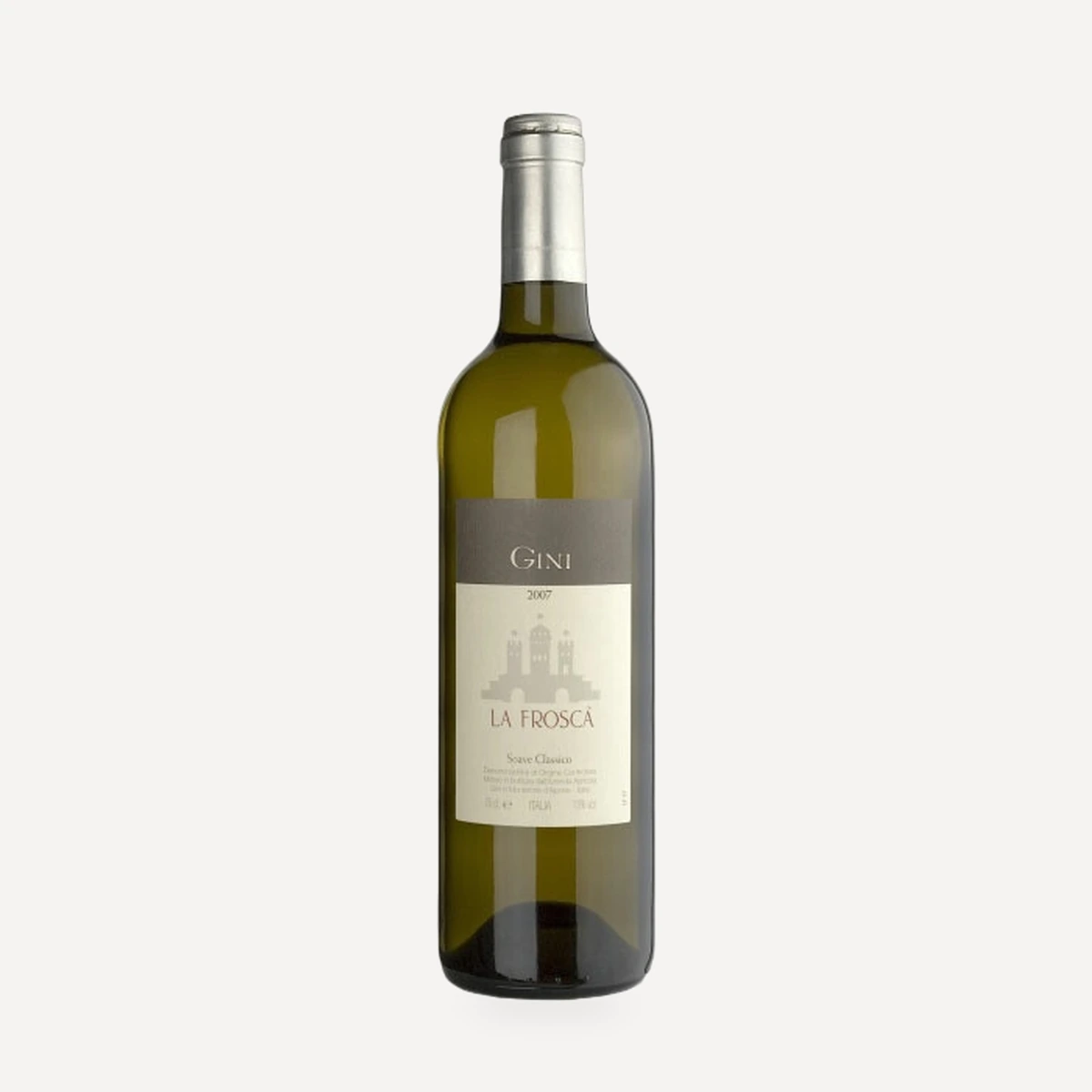
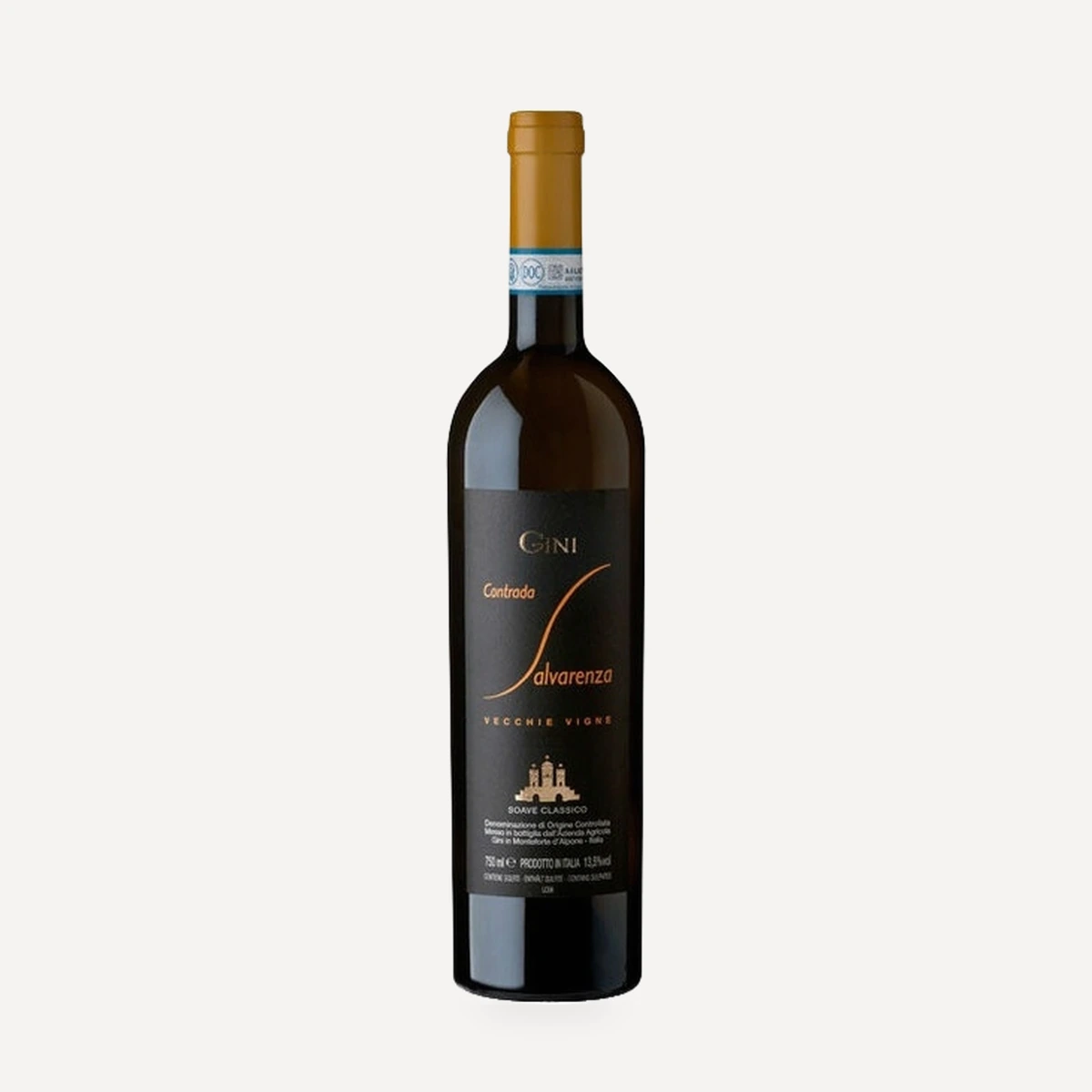
During the 1980s the brothers took charge of the business. They sought to preserve and enhance its old-vine patrimony while creating two named crus: La Froscà in 1985 and Contrada Salvarenza in 1989.
Campiano and Tenuta Scajari
From 1987 the family began caring for land at Campiano, undertaking environmental restoration and improvement while respecting the site’s natural characteristics. This opened a new chapter devoted to high-altitude Pinot Nero, Chardonnay and Sauvignon.
Repeated study journeys to Bourgogne included visits to grands crus and exchanges with local growers. These experiences informed the planting of vineyards at a very high density of 13,000 vines per hectare, intended to restrict the quantity of fruit carried by each vine. The high-altitude vineyards lie around 500 metres on Monte Mirabello and Monte Serea, enclosed by old woodland. This work gradually created what became Tenuta Scajari.
Organic continuity and the extended family
Over the following four decades, Sandro and Claudio worked continuously between vineyard and cellar. Their sister Marta and their respective wives, Luisella and Monica, worked alongside them. The shared objective was to protect and enhance the family’s land and century-old vineyards through entirely organic methods, with purity, authenticity and respect for nature as guiding concerns.
Years of research and waiting culminated in the Valpolicella Superiore Le Mattoline and Amarone Riserva Scajari labels. Amarone Monte Serea subsequently joined them, broadening the expression of Tenuta Scajari’s elevated, wooded landscape.
The business now involves a wider generation of the family. Sandro’s children Francesco, Matteo and Barbara work alongside Claudio’s children Letizia and Andrea, as well as their nephew Davide. Together with the wider team, they cover vineyard, cellar and office responsibilities while continuing a family tradition counted across 15 generations.
Terroir
Monteforte and Soave Classico
Gini farms 35 hectares at Monteforte, in the historic hills of Soave Classico, including Froscà and Contrada Salvarenza. The principal geological elements are volcanic formations, tuff and basalt, accompanied in places by limestone and clay. The volcanic rocks are described as having formed approximately 60 million years ago. Century-old Garganega vines send their roots deep into this volcanic rock and draw on its mineral salts.
The individual hills have distinct microclimates. La Froscà combines a volcanic site with pronounced day–night temperature changes. Its documented vineyard lies at 180 metres, faces southeast and has volcanic soil. The broader Soave Classico vineyards represented in the estate blend stand between 100 and 200 metres, face southeast, and combine volcanic and calcareous soils.
The age of the vines, the complexity of the soils and the individual microclimates underpin Gini’s emphasis on white wines capable of preserving acidity and minerality through extended ageing.
Campiano and Tenuta Scajari
Tenuta Scajari occupies the high hills of eastern Valpolicella between Campiano and Monte Mirabello, at 400–600 metres. Parts of Monte Mirabello and Monte Serea are identified at about 500 metres. The vineyards are enclosed by old woodland and overlook the Castello di Illasi and Monte Baldo.
The soils are clay-rich, with volcanic outcrops. More detailed descriptions identify clay-limestone material, red shale, tuff, volcanic lapilli and flint, together with distinctive mineral strata and stone fragments. Constant ventilation, strong solar exposure and the elevated setting support slow grape maturation. Monte Serea is distinguished by clear light, continuous air movement and soils combining red shale, tuff, lapilli and flint.
Vinificazione
Gini is certified organic and presents organic cultivation as a whole-estate commitment. The approach developed when Claudio studied organic and biodynamic viticulture in 1981 and restored practices associated with earlier generations.
Green manure and grass cover are used to support soil fertility. Woods and trees around the vineyards are retained as functional parts of the agricultural environment, sustaining biodiversity and the balance of flora and fauna. Lunar phases also guide vineyard work, reflecting an effort to align farming with natural cycles.
Old vines are treated as a central patrimony rather than a liability. Gini has made a deliberate commitment not to uproot historic Garganega vineyards, preserving vines that include century-old examples rooted deeply in volcanic rock. At Campiano, environmental improvement and recovery have proceeded since 1987 with close attention to the natural features of the site.
Planting density varies by territory. Documented Soave vineyards use Pergoletta veronese at 4,000 vines/ha. The high-altitude vineyards developed after study in Bourgogne reach 13,000 vines/ha, deliberately limiting the fruit carried by each plant. Harvesting in the documented Soave vineyards is manual, with grape selection; La Froscà clusters are placed in small wooden boxes.
Indigenous fermentations and limited intervention
Sandro Gini’s research identified more than 100 species of indigenous yeast active in the cellar. To protect this microbial diversity, he removed sulphur dioxide from the vinification of grapes. Indigenous yeasts remain a defining element of fermentation, while the broader philosophy favours minimum intervention and careful interpretation of each harvest rather than a fixed recipe.
The documented Soave process begins with selected, hand-picked grapes and soft pressing. Fermentation proceeds slowly with wild yeasts and without added SO2. The wine remains on its lees for at least six months in small stainless-steel tanks.
For La Froscà, selected hand-harvested bunches are carried in small wooden boxes and softly pressed. Controlled-temperature fermentation is divided between stainless steel and French-oak casks; the oak is seasoned for three years. Vinification and fermentation take place without SO2. Maturation lasts at least eight months on the lees, divided between steel and seasoned 228-litre oak barrels.
Time is treated as an active production tool. The traditional-method Camillo remains on its lees for at least six years. Recioto production includes meticulous bunch selection, slow natural drying and gentle pressing; Renobilis is produced only in suitable vintages from carefully selected botrytised Garganega. The cellar also maintains old vintages as a working record, using comparisons between past and present wines to reassess and improve current practice.
Cellar
The historic underground cellar is carved into volcanic rock and includes a dedicated maturation room. It remains both a working production space and the central setting for visits and tastings.
Filosofia
Gini describes time, inheritance and patient observation as the foundations of its work. The estate regards its old vineyards as both an agricultural and cultural legacy to be transmitted to future generations, and every wine as a continuation of the work of the preceding 15 generations.
Its stated cellar principle is to “let the grapes speak”: the role of the grower and oenologist is to listen and respond with care. This translates into minimum intervention, reliance on indigenous yeasts, vinification without added sulphur dioxide, and sensitivity to vintage variation. Each harvest is treated as an individual event requiring its own interpretation.
Quality is presented as non-negotiable, but inseparable from ecological balance. Organic cultivation, lunar rhythms, healthy hillside vineyards, biodiversity, and the equilibrium of flora and fauna form a single approach. Tradition is combined with research rather than preserved unchanged: Sandro’s yeast studies, Claudio’s organic and biodynamic training, high-density planting inspired by Bourgogne and the conservation of century-old Garganega vines all belong to the same programme.
The family also treats old bottles as active memory. Mature vintages are opened not simply for nostalgia, but to compare former decisions with current work, question established methods and continue learning. Longevity, minerality and increasing complexity are therefore both stylistic goals and measures of the vineyard’s capacity to express itself over time.
Vini
Contrada Salvarenza Vecchie Vigne
Maciete Fumé