Storia
An eighteenth-century masseria
The estate takes its name from Masseria Cacciagalli, the historic toponym of the property on which it stands. The masseria dates from the late eighteenth century and was subsequently acquired and enlarged by the Iannaccone family.
A family farming tradition
The property remained in Diana Iannaccone’s family for generations. Experience accumulated through the cultivation of vines, hazelnuts, chestnuts and olives developed into a farming tradition passed down over time. The renewed estate grew from a desire to preserve that agricultural inheritance while expressing the land and its history through wine.
Diana Iannaccone and Mario Basco
Agronomist Diana Iannaccone and wine enthusiast Mario Basco undertook the recovery of the family farm together. They first restored its agricultural cultivation and replanted vines where they had historically grown. Their work then expanded to the rehabilitation and restoration of the masseria’s ruined buildings.
Their viticultural project was organised around native Campanian grape varieties, biodynamic farming and cellar practices intended to retain the connection between the vines and their environment. Amphora became an important part of production, with approximately sixty vessels used for a substantial share of the wines.
2019: completion of the hospitality restoration
In 2019, restoration of the pre-existing historic spaces for hospitality was completed. Former agricultural buildings—including areas once used as the masseria’s granary and stores—were transformed into eight guest rooms and a restaurant. A swimmable biological lake was also created as part of the Wine Resort.
I Cacciagalli today
The estate now covers 40 hectares, including 11 hectares of vineyards. The remaining land comprises hazelnut groves, olive groves, chestnut groves, vegetable and legume plots, woods and uncultivated natural areas. Winegrowing forms part of a diversified biodynamic farm rather than an isolated monoculture. The restored masseria, Humus restaurant, guest rooms, biological lake and estate trails place wine production within a broader agricultural and hospitality project.
Terroir
I Cacciagalli lies in Alto Casertano, within the municipality of Teano and at the foot of the extinct Roccamonfina volcano. The estate occupies a position between the Apennines and the sea. Its agricultural environment is shaped by volcanic subsoil, a mild climate and the local landforms.
Two production localities are identified. Vineyards at Cacciagalli, Teano, stand at approximately 200 metres above sea level on loose volcanic, sandy-calcareous soils with good organic matter. Vineyards at Aorivola, Caianello, are at approximately 300 metres on volcanic, clay and calcareous soils, also with good organic matter.
Woodland and spontaneous uncultivated areas are retained alongside vineyards, hazelnut groves, olive groves, chestnut groves, vegetable gardens and legume fields. These different cultivated and natural environments are treated as components of the farm’s wider ecological balance.
Vinificazione
The entire diversified farm is managed according to the principles of organic and biodynamic agriculture. Its stated biodynamic framework encompasses crop rotation, closed production cycles, natural preparations, attention to cosmic forces, self-sufficiency and biodiversity.
Vines are integrated with hazelnuts, chestnuts, olives, vegetables, legumes, woodland and spontaneous uncultivated areas. The farm also keeps hens and other small farmyard animals, while its vegetable garden supplies the restaurant. Estate paths deliberately connect both the cultivated plots and the woods and uncultivated zones considered essential to the balance between people and their environment.
The principal wine vineyards are Guyot-trained, normally at 4,400 vines per hectare; the vineyards described for sparkling production are trellised at 4,500 vines per hectare. Published vineyard yields span 40–70 quintals per hectare, while the two sparkling-wine vineyards are expressed as 30 and 60 hl/ha. Grapes are harvested by hand. Fiano and Falanghina are generally picked in the third ten days of September, while Aglianico, Pallagrello Nero and Piedirosso are generally harvested in the first ten days of October.
The same farming principles extend to other crops. Olives and Teano chickpeas are hand-harvested; chickpeas are also shelled manually. Tomatoes are grown without synthetic fertilisers or pesticides and are harvested, selected and processed by hand. The restaurant’s vegetables follow natural seasonality.
I Cacciagalli works with native Campanian varieties and uses cellar methods designed to preserve varietal character and the relationship between vine and environment. Fermentations are carried out by indigenous yeasts. No cellar additives are used, sulphur dioxide is kept to a minimum, and the wines are neither fined nor filtered.
Amphora
Approximately sixty amphorae accommodate a substantial part of production. The estate values terracotta for its connection with ancient Mediterranean wine culture and for its ability to permit gradual evolution while retaining varietal identity. Amphora is used both for vinification and maturation; some wines receive long skin macerations in these vessels. Terracotta also forms part of the maturation sequence for one of the bottle-refermented sparkling wines.
Concrete and steel
Concrete tanks are used for both vinification and maturation. Some white-wine lots receive 12 hours of skin maceration before or during fermentation and remain in concrete. Steel is used for a stated nine-month maturation on the lees in one sparkling-wine process.
Bottle refermentation
Sparkling production includes tirage with fresh must from the following harvest. The wines undergo lees ageing, remuage on wooden pupitres and disgorgement. Another stated method combines amphora vinification and maturation with refermentation in bottle on the yeasts.
Across these approaches, hand-harvested fruit, spontaneous indigenous-yeast fermentation, minimal sulphur and the absence of fining and filtration form the common production framework.
Filosofia
I Cacciagalli presents wine as a means of giving voice to its volcanic land. The project began by returning vines to places where they had historically grown and choosing native Campanian varieties capable of expressing their environment.
Its guiding idea is that good wine originates in the vineyard and should be accompanied, rather than heavily reshaped, on its journey to bottle. Biodynamic agriculture is intended to reinforce the bond between the vine and its surroundings, while indigenous yeasts, minimal sulphur, the absence of additives, fining and filtration, and the use of amphora support a low-intervention cellar approach.
The philosophy extends beyond wine. Crop diversity, closed production cycles, natural preparations, self-sufficiency, biodiversity, woods and uncultivated areas all belong to a single conception of the farm. Hospitality, food and the restored architecture are likewise intended to operate with low environmental impact and to encourage a slower relationship with the landscape.
Family continuity is central to this identity: the renewed estate carries forward land held by Diana Iannaccone’s family for generations, combining inherited agricultural experience with research into biodynamic cultivation and multiple maturation vessels.
Vini
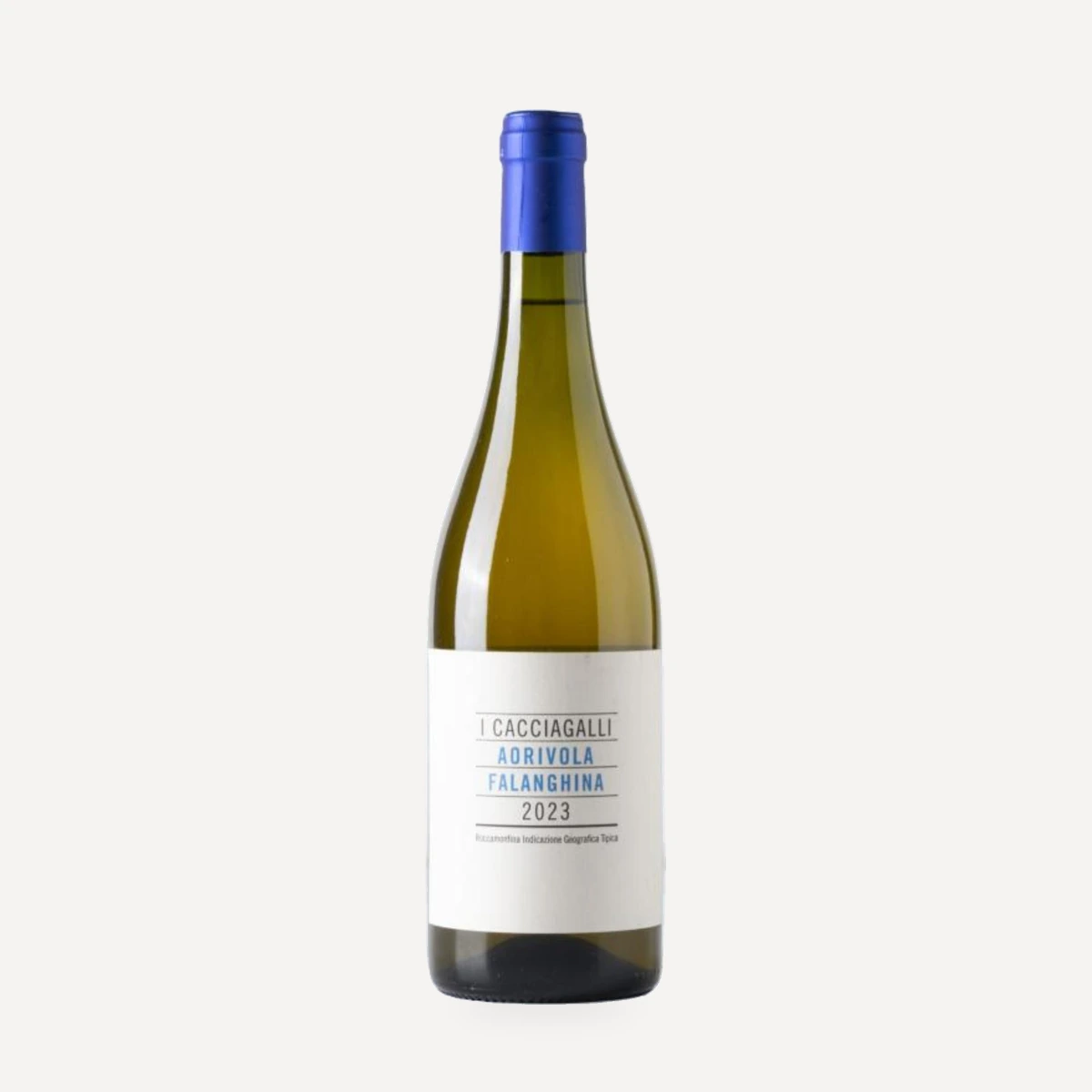
Aorivola
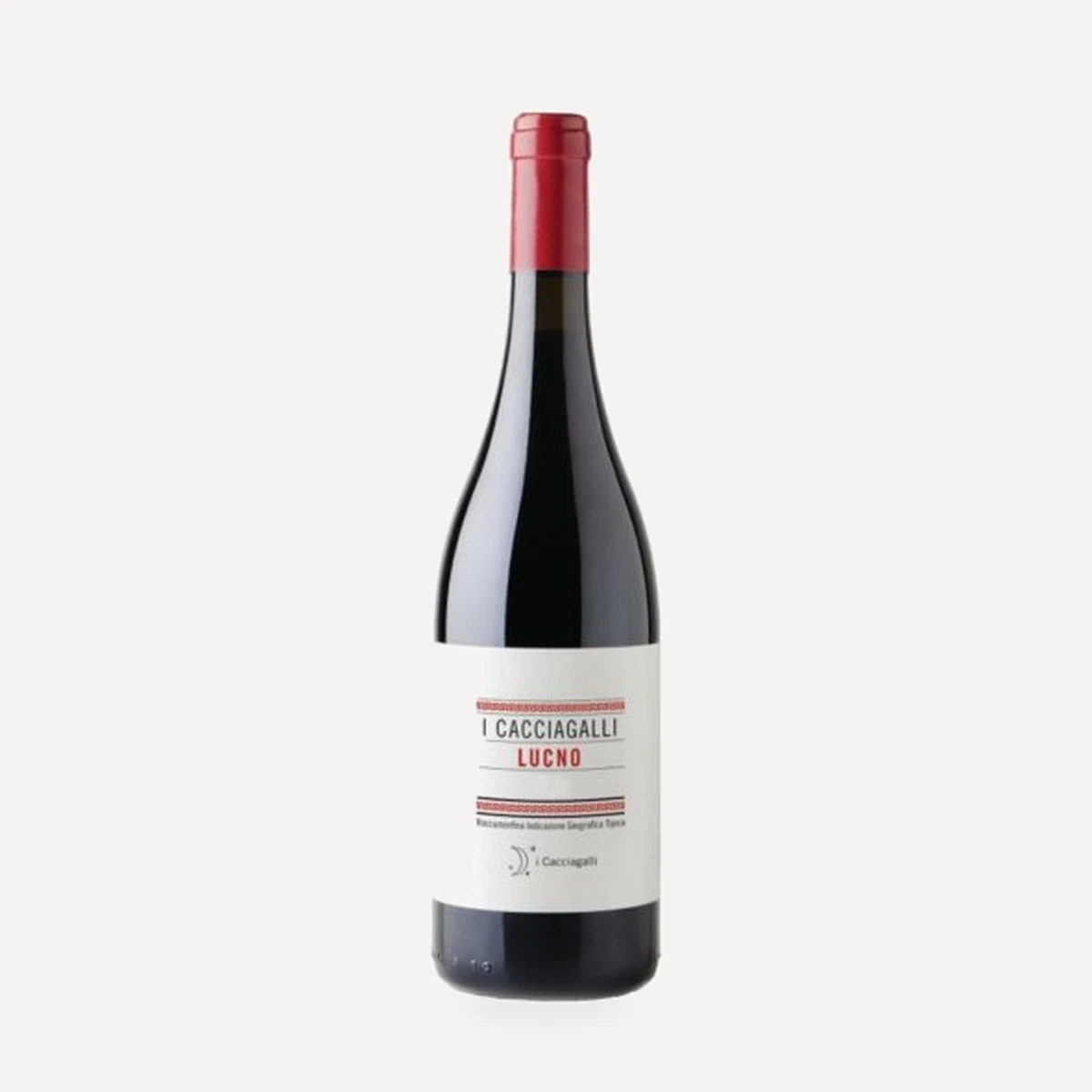
Lucno