Storia
Medieval origins
The built complex originated at the beginning of the 12th century as a watchtower within the extensive Arno Valley feudal holdings of the Conti Guidi. The tower is no longer separately visible: later construction absorbed it into the group of buildings that forms the present estate.
The Gatteschi estate and the 1582 record
By the end of the 16th century, I Veroni belonged to the noble Gatteschi family. Early fermentation vats constructed under their ownership remain visible. The oldest surviving agricultural record is the 1582 will of Bartolomeo d’Angiolo Gatteschi, personal physician to Cosimo I de’ Medici. It describes the individual poderi forming I Veroni and records the grape varieties cultivated within them.
The name derives from verone, an old Tuscan word for a covered or open terrace or loggia, particularly the sheltered landing at the top of an external farmhouse staircase. I Veroni once had several substantial masonry terraces; one survives. These structures gave their name first to the building complex and locality and subsequently to the estate and its wines. The broad terraces were also used to dry tobacco leaves and grain from the Arno Valley.
Nineteenth-century cellar and transfer of ownership
The property passed from the Guidi family to the Modigliani di Rufina family in the early 19th century. In 1809, winemaking rooms and a stone fermentation tank were constructed at the historic farm headquarters. Surviving portions have been restored and incorporated into the present cellar, principally for maturation in wood.
The Malesci family
Carlo Malesci purchased I Veroni at the beginning of the 20th century. The estate has remained with his family. During the 1950s, the attic rooms of the 18th-century villa became the Vinsantaia, housing the small caratelli used to mature Vin Santo. In 1957, Umberto, Lorenzo Mariani’s grandfather, began bottling and selling pure Sangiovese wine.
Podere Pianottolo housed sharecroppers until that agricultural system ended in 1973. The farmhouse was later restored for hospitality and renamed Podere I Domi.
Vineyard renewal and specialization
A major vineyard-replanting program began in the early 1990s. Lorenzo Mariani, the fourth generation, assumed management in 1996. Working initially with his friend and oenologist Emilio Monechi, he began reorganizing the business and concentrating it on specialized wine production.
New plantings followed in 1998, with the objective of creating specialized vineyards averaging approximately 90% Sangiovese and at least 5,000 vines per hectare. In total, 20 hectares were replanted: 16 hectares with selected Sangiovese clones, 2 hectares with international varieties and the balance with white grapes intended for Vin Santo del Chianti Rufina.
Modern cellar and organic transition
New fermentation and storage rooms were renovated in 2004, while the historic rooms continued to accommodate wood maturation. Andrea Paoletti joined in 2009 as consulting oenologist and agronomist, contributing to further vineyard and wine-development work. Organic viticulture was subsequently certified in 2013.
The estate now combines its restored historic cellar and attic Vinsantaia with temperature-controlled steel, concrete vessels, oak vats and casks. Its contemporary range centers on Chianti Rufina and Vin Santo del Chianti Rufina while also including Toscana IGT red, rosé and white wines.
Terroir
I Veroni lies in the hills of Pontassieve within Chianti Rufina, approximately 10 km from Florence and close to the ancient Pieve di San Martino a Quona. The 70-hectare property rises from approximately 100 to 350 metres above sea level, with the winegrowing land concentrated toward San Martino a Quona.
The two principal vineyard parcels were planted during the 1990s on pebble-rich limestone soils. The lower, steeper parcel associated with Chianti Rufina extends through elevations of approximately 150–250 metres and reaches a 30% gradient. Vigneto I Domi, in the Pianottolo locality, is identified at approximately 250 metres with southern to southwesterly exposure.
The Quona parcel lies below the historic Pieve di San Martino a Quona. Its principal planted section is identified at approximately 300 metres, while the parcel reaches as high as 350 metres. It has a south to southwesterly exposure and a 19% slope. The small Fornace vineyard is situated at approximately 200 metres with southern to southwesterly exposure.
Olive groves occupy the San Martino a Quona hill among the Sangiovese vineyards and descend on the northwestern side toward the Pelacane stream. The broader farm landscape also includes centuries-old olive trees, cypress rows, holm oaks and oaks.
Vinificazione
I Veroni’s vineyards are certified organic, with certification obtained in 2013 after the introduction of organic viticulture during the modern replanting program.
The vineyard structure reflects the specialization begun in the 1990s: 20 hectares were replanted, including 16 hectares of selected Sangiovese clones, 2 hectares of international varieties and a smaller balance of white varieties for Vin Santo. Planting densities average approximately 5,000 vines per hectare and rise above 5,600 vines per hectare in the principal named parcels.
Quona is spur-cordon trained and supported by wooden posts. Alternating rows carry a selected grass mixture. The estate has also been recognized for protecting soil fertility, managing water resources, introducing innovative weed-control methods and returning grape pomace to the vine rows as a nutrient source. Eco-designed bottles form part of the same sustainability program.
Grapes for the estate’s rosé are harvested manually into crates. Fruit intended for Vin Santo is picked late in October and dried on reed mats until January. Olive harvesting is likewise manual, taking place in October and November, followed immediately by cold mechanical extraction.
Cellar organization
The cellar occupies the historic I Veroni headquarters at the entrance to Pontassieve. Restored rooms created for winemaking in 1809 are used for maturation in wood. Fermentation and storage take place in areas renovated in 2004 and equipped with temperature-controlled stainless-steel tanks, concrete vessels and oak vats. The Vinsantaia remains in the attic of the 18th-century villa, where Vin Santo caratelli have been stored since the 1950s.
Sangiovese-based red wines
Estate Sangiovese is fermented with indigenous yeasts. The I Domi lot remains on the skins for approximately 15 days in temperature-controlled stainless-steel tanks, undergoes malolactic fermentation and matures for 12–14 months in Slavonian oak casks, followed by at least six months in bottle.
Quona undergoes an approximately 25-day temperature-controlled fermentation in concrete tanks and truncated-conical oak vats. Malolactic fermentation takes place in wood, followed by about 18 months in 500-litre French-oak vessels and approximately 12 months of bottle maturation.
Rosé and white production
Rosé fruit is harvested by hand into crates, crushed and destemmed, then fermented and macerated with the skins in stainless steel for approximately 24 hours under temperature control. After separation from the skins, it matures for approximately six months in steel.
Vermentino is gently pressed, fermented in stainless steel and matured in steel for about five months, followed by approximately two to three months in bottle.
Vin Santo
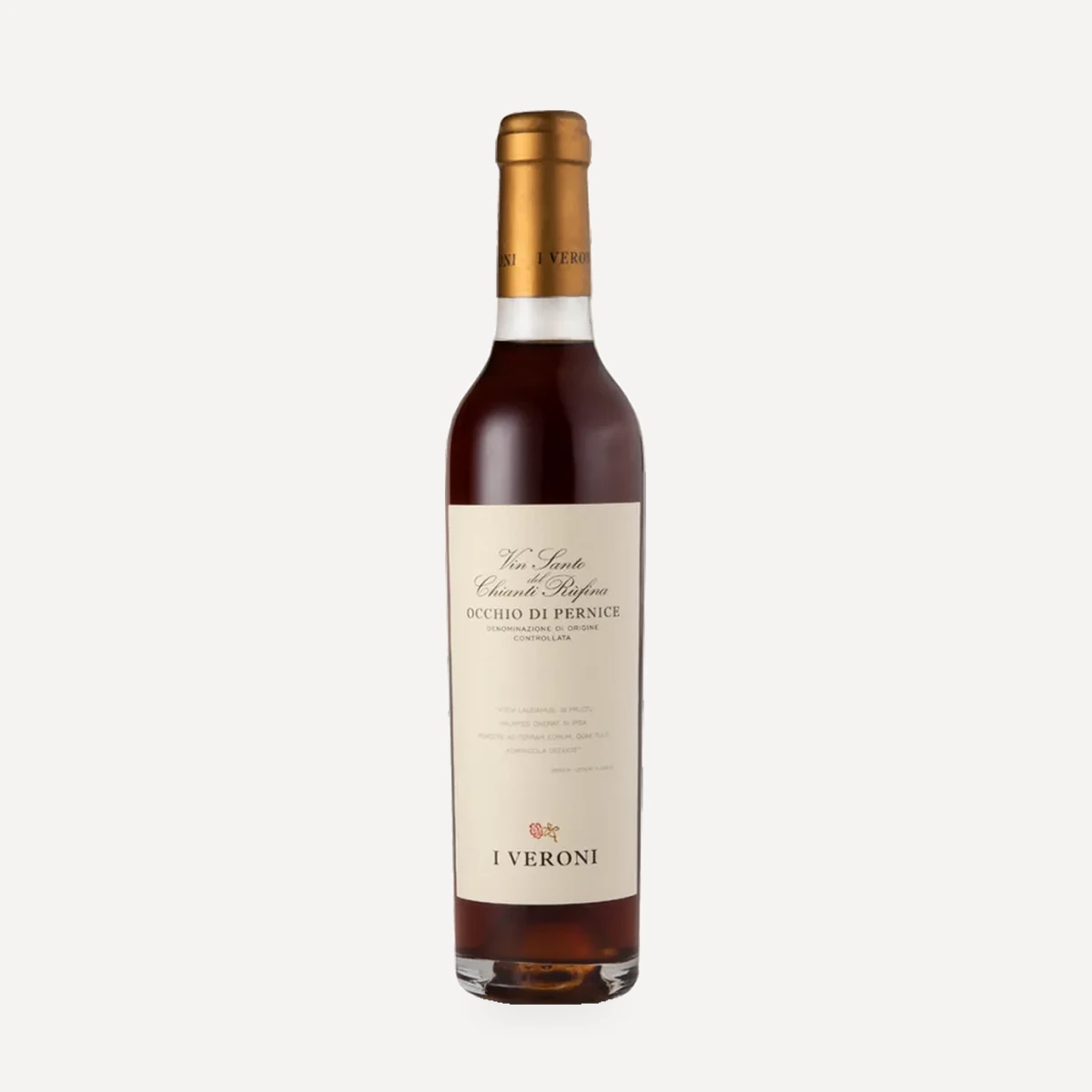
Sangiovese, Malvasia Toscana and Trebbiano are picked late in October and dried on reed mats until January. The dried fruit is gently pressed and the must is allowed to settle. Maturation lasts at least eight years in chestnut and oak caratelli, each holding no more than 100 litres, followed by approximately 12–14 months in glass.
Filosofia
I Veroni’s modern direction is based on specialization in wine production while retaining the physical and agricultural legacy of the historic farm. Sangiovese is the central variety, and the Chianti Rufina wines are intended to remain faithful to the local Sangiovese tradition.
The estate presents its work as a meeting of historic Tuscan vineyards and an updated cellar: traditional spaces, long-established practices and extended wood maturation coexist with selected clones, denser plantings, temperature control and modern fermentation vessels.
Environmental commitments encompass organic viticulture, protection of soil fertility, careful water management, non-conventional weed control, recycling pomace within the vineyards and adoption of eco-designed glass bottles. The restoration of Podere I Domi follows a related principle, preserving the original values and character of places associated with agriculture and rural life while adapting them for contemporary hospitality.
Vini
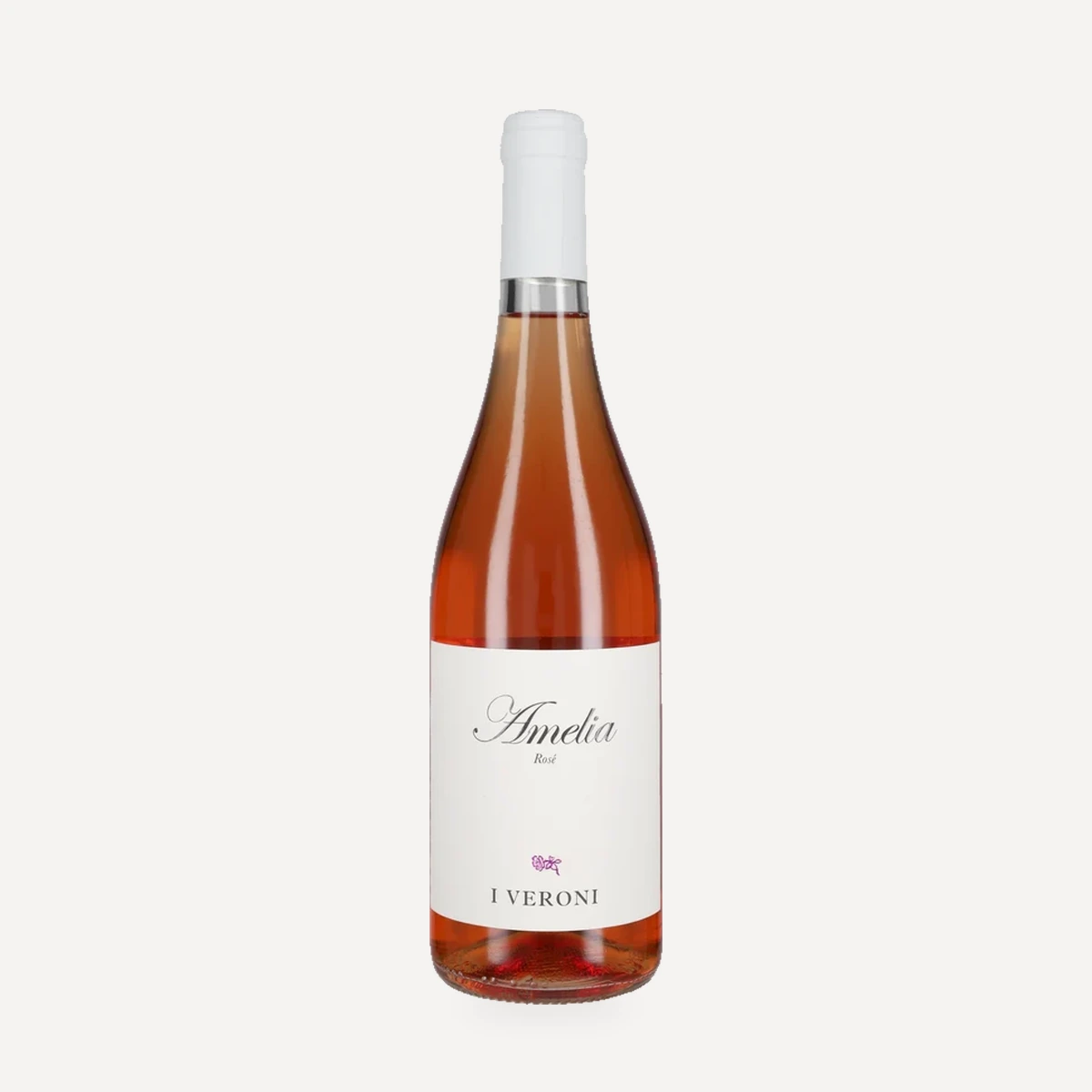
Amelia Rosè — Rosato di Toscana IGT
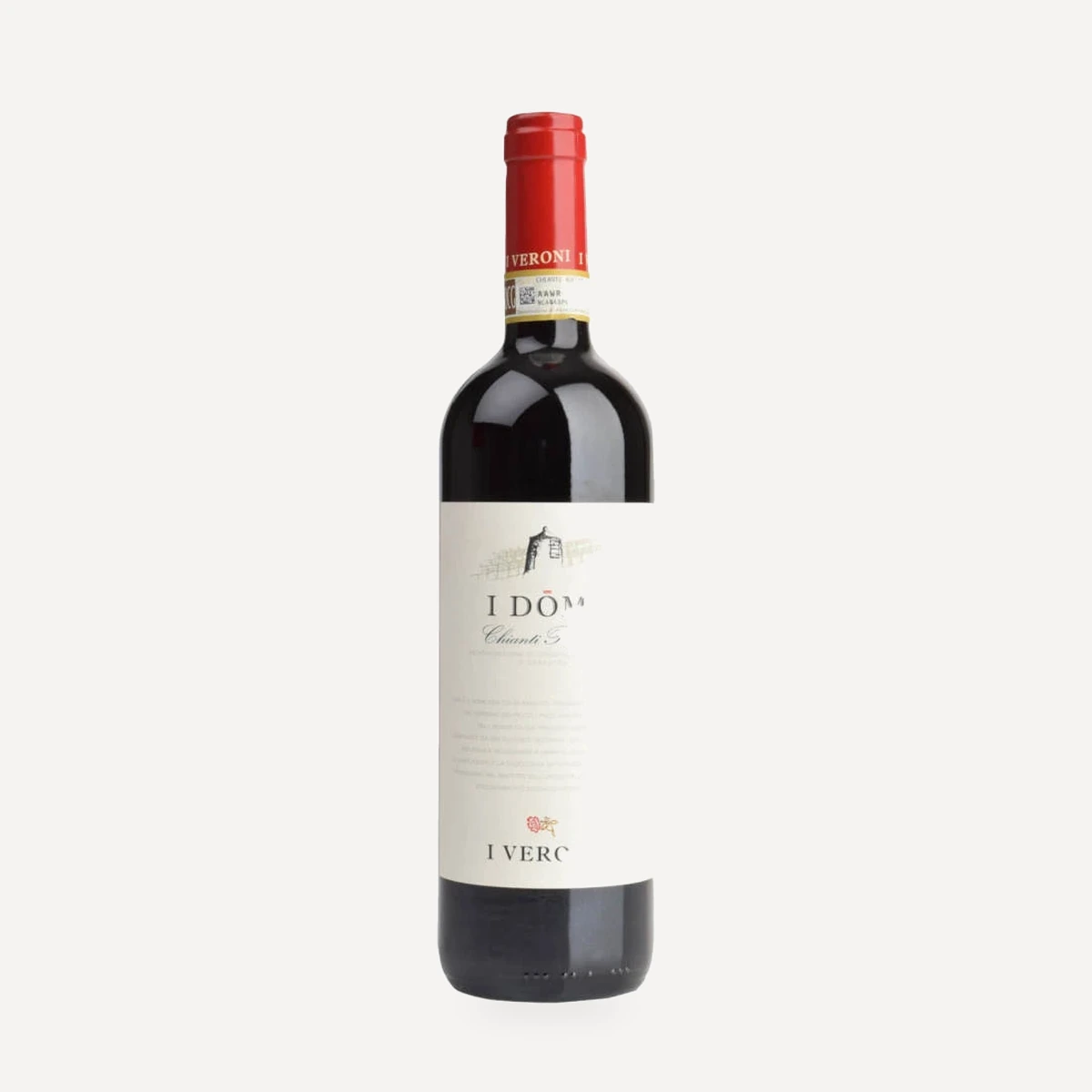
Chianti Rufina “Vigneto I Domi” DOCG