Storia
Historical origins
Grignanello occupies the summit of a hill at approximately 400 metres above sea level. A map in the Carte dei Capitani di Parte Guelfa, drawn at the end of the 16th century, represents the farm symbolically as a rural house identified as the “luogo di Franciesco Galilei.” Below it stands the church of Santa Maria, shown in the form it probably retained at that time.
The 18th-century farm
During the 18th century, the Podere di Grignanello belonged to the podesteria of Radda and was dependent on the Pieve di Santa Maria a Grignano. The holding extended over 122 stiora. This was slightly larger than the 80–100 stiora cited as the average size of an 18th-century Tuscan farm, although Grignanello's woodland and rocky, less readily cultivated ground made it representative of the traditional farm structure of the Tuscan hills.
The estate remains centred on the hilltop. Two principal buildings define the central settlement, with an old consecrated church standing in the space between them.
1962–1967: the old vineyards
The surviving vineyards were planted between 1962 and 1967. Their mixed local varieties preserve an earlier Chianti composition: Sangiovese, Canaiolo, Foglia Tonda, Colorino and Malvasia Nera in the red plantings, alongside Malvasia Bianca and Trebbiano Toscano. The estate later retained these varieties and their traditional proportions rather than adapting them to the modern Chianti Classico production rules.
2011: Mario acquires Grignanello
In 2011, Mario, originally from Turin and previously accustomed to city life, acquired Grignanello from a Florentine family. He undertook an extensive restoration intended to revive the borgo as both a working agricultural estate and a home.
The rebuilding programme favoured natural and reclaimed materials. Particular attention went to insulating walls and roofs, while the residences were equipped with simple, efficient wood-fired heating. The work was conceived and carried out by the people at Grignanello.
Under Mario's direction, the farming and wine project developed around sustainable agriculture, manual vineyard work, spontaneous fermentation, extended skin contact and the use of terracotta vessels. The estate also chose Toscana IGT rather than Chianti Classico status, preserving its traditional grapes and unglazed-amphora methods instead of altering them to meet the denomination's requirements.
Terroir
The estate stands on a hilltop at approximately 400 metres above sea level, between Panzano and Castellina in Chianti and near kilometre 26 of the Strada Statale Chiantigiana. Its land includes old vineyards, arable fields, woodland, rocky ground, olive trees and a lake.
The vineyards lie within the Chianti Classico area. Their fruit nevertheless enters Toscana IGT wines because the estate's traditional mixed plantings and use of unglazed terracotta amphorae do not conform to the current Chianti Classico production rules.
Terracotta is itself treated as a connection to the surrounding territory: the unglazed vessels are made with clay from Impruneta in Tuscany, about 20 minutes from Grignanello.
Vinificazione
The old vineyards are worked by hand. Manual operations include pruning, tying and harvesting; the estate grows its own willows and uses them to tie the vines.
Cultivation follows organic principles without herbicides, synthetic pesticides or synthetic fertilizers. The wine-growing operation is not organically certified; lavender is the sole certified organic crop. The old vines, planted between 1962 and 1967, give low yields and concentrated fruit.
The wider mixed farm supports vineyards alongside almost 2,000 olive trees, arable land, woodland and a lake. Approximately 20 ha of arable ground are partly cultivated with wheat, spelt and barley, while another 20 ha are woodland.
Terracotta vessels
Red and white grapes are vinified, macerated and matured in terracotta amphorae, jars and orci. The unglazed vessels are made from clay from Impruneta. Terracotta is neutral and mildly porous: it permits limited contact with oxygen during maturation without imparting its own flavour to the wine.
Fermentation and maceration
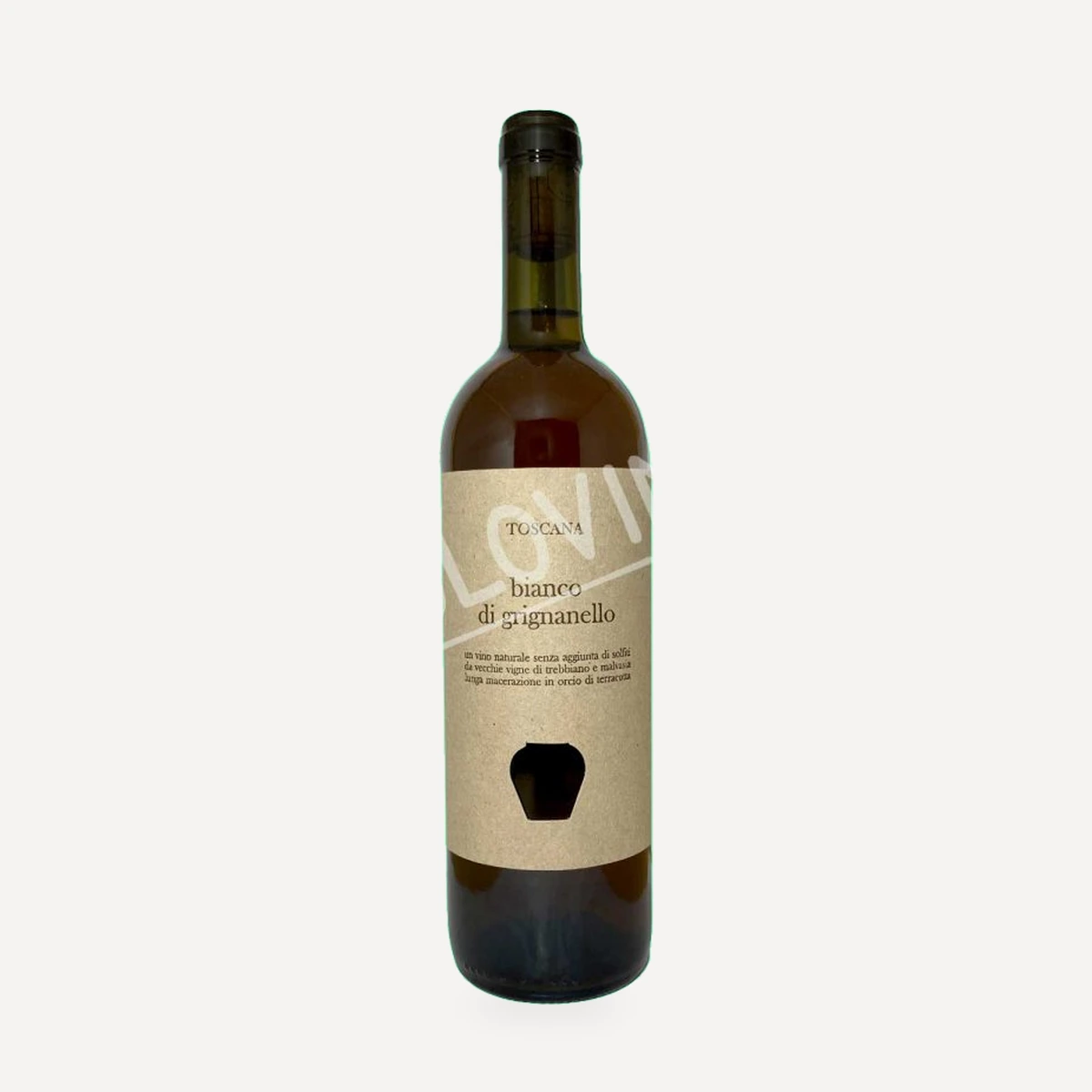
Fermentation begins spontaneously through yeasts naturally present on the grape skins and in the cellar; selected yeasts are not added. Skin contact lasts at least 60 days, with its exact duration adjusted to the vintage. White grapes can remain on their skins for approximately six months, while red-wine maceration can extend to around three and a half months. With Malvasia Bianca and Trebbiano Toscano, skin contact beyond roughly three and a half months can lead to natural clarification, softer tannins and stabilisation of the colour without intervention.
Additions and finishing
No sulphites or other additives are introduced, and the wines are neither filtered nor fined. Although sulphur dioxide forms naturally during fermentation, analyses of the dry wines record total SO₂ below 9 mg/L.
Packaging
Some wine is also packaged in 2-litre bag-in-box format. The inner bag prevents continuing contact with oxygen, while the outer carton protects against light and heat. The format was selected for its relatively low environmental impact and ability to preserve the wine after opening. Bottles use a specially selected closure and an internally designed label.
Filosofia
Grignanello's approach joins the cultivation of the land, winemaking, restoration and daily life within the borgo. Its declared aims are to move closer to the soil and its produce, revive life in small communities and recover values such as sharing.
Traditional local grapes and working methods take priority over denomination status. Although the vineyards are within Chianti Classico and the old blends reflect an earlier form of its wine, the estate chooses Toscana IGT. Current Chianti Classico rules require at least 80% Sangiovese and do not permit the estate's unglazed terracotta vessels. Grignanello therefore favours freedom of method and continuity with its chosen tradition over the appellation name.
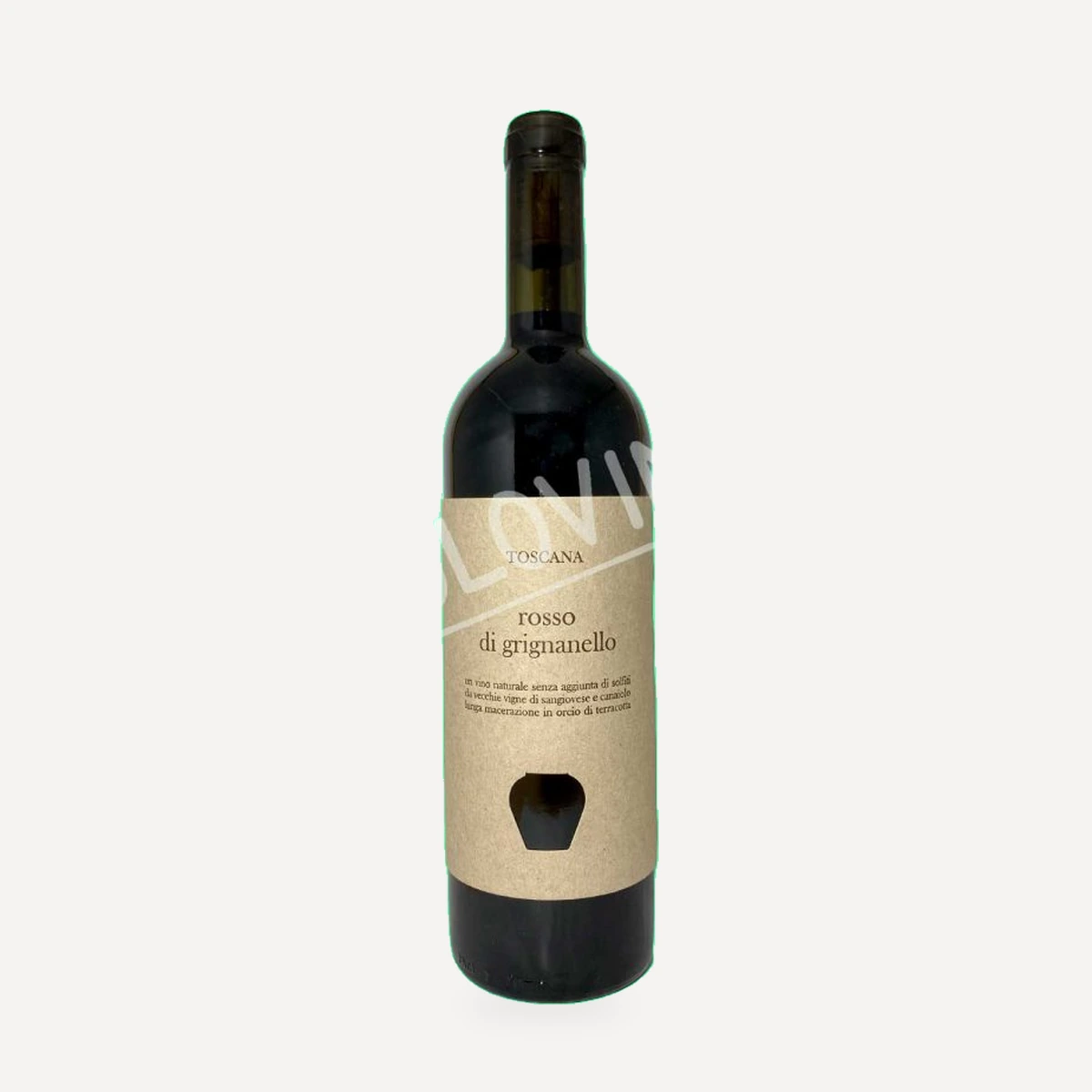
In the cellar, this position is expressed through spontaneous fermentation, long maceration, unglazed terracotta, no additives, no added sulphites, and no filtration or fining. The intention is for the vessels to avoid adding flavour and for the wine to express the grapes themselves.
The same outlook shapes the buildings and packaging. Restoration uses natural or reclaimed materials, efficient insulation and wood heating. The 2-litre bag-in-box was selected to reduce exposure to oxygen, light and heat while offering a lower-impact format; bottles, closures and house-designed labels form part of the same internally developed identity.
Vini
Bianco
Passione
Rosato